

The homely world of an oeconomist
Amartya Sen's autobiography attests to the value of a life lived in the twin pursuit of freedom and reason
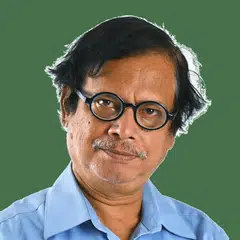
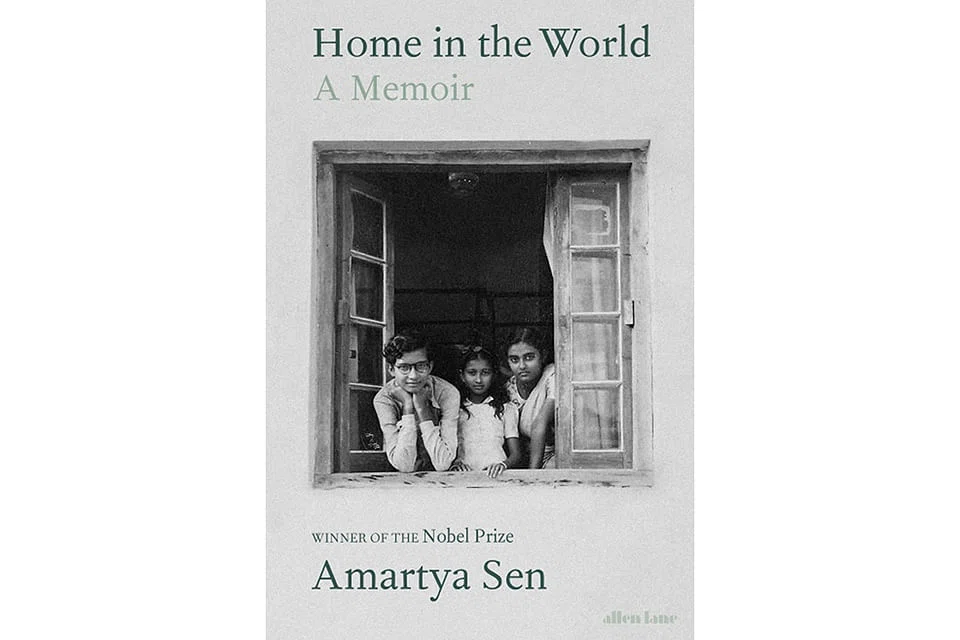
THE Nobel Laureate Amartya Sen's Home in the World: A Memoir revives the meaning of the word "oeconomy", or the art of supervising the material and moral resources of a household to uphold good order.
Sen, who won the Nobel prize in 1998 for his contribution to welfare economics, is an oeconomist. His published works speak of a global household at war with itself because of inequality, poverty, hunger, famine and the violent pursuit of single and divisive identities. However, rational argumentativeness, development, freedom and justice inhabit the same home. As a kind of global family elder, Sen takes his side firmly on the progressive side of the human oeconomy.
A public intellectual in the global league of discipline-straddling icons such as Noam Chomsky (linguistics) and Edward Said (comparative literature), Sen weds economics to the public purpose boldly. This autobiography attests to the irreplaceable value of a passionately examined life lived in the twin pursuit of freedom and reason.
Sen was born in 1933 in undivided Bengal, which witnessed the man-made horrors of the famine of 1943 and the traumatic Partition of the subcontinent in 1947.
He studied at the Nobel poet laureate Rabindranath Tagore's educational institution Visva-Bharati; Calcutta's Presidency College (intellectual home to the 19th-century Bengal Renaissance, which had invoked European ideas of the public good to change the frustrated destiny of colonial India); and Trinity College, Cambridge, whose first Asian Master he rose to become.
Professor of economics and philosophy at Harvard for many years now, Sen recounts his combative relationship with the world in this book. It recounts the story of a powerful mind bound on a lifelong quest for a world of material equity and moral beauty. It engages the reader on the need for ideas that can resist religious and secular division, ideological atrophy, moral attrition, and receding faith in the agency of the individual's elective companionship of the collective.

Sen makes his home in the future of the oeconomy as both an anchoring and an enabling feature of the human condition. In that spirit, he recounts his encounters with concepts such as the interplay between the labour theory of value and the needs principle, and the two-way interaction between ideas and material conditions.
Kenneth Arrow's social choice theory caught his attentive imagination even before he went up to Cambridge. There, he carved out his place between economists of various ideological persuasions such as Maurice Dobbs, Piero Sraffa and Joan Robinson. (He would encounter and engage so many economists later that to mention them all here would be to fill up the rest of this article.)
Finding his way between the truculent neo-classical and neo-Keynesian schools, Sen's guiding principle was the idea that, since "a society contains many people, the welfare of a whole society must be related, in one way or another, to the welfare of the individuals that make up that society".
In that context, Sen recalls the very purpose of economic study in the words of AC Pigou: "It is not wonder, but rather the social enthusiasm which revolts from the sordidness of mean streets and the joylessness of withered lives, that is the beginning of economic science."
That sense of economics as holding possibly the material key to human happiness provoked in Sen a corresponding alertness to the emancipatory potential of internationalism, without which domestic economics would be hobbled.
"We are all neighbours" in economics, one of his friends said. Oeconomics cannot survive, let alone flourish, in one country without the presence of a global household that is formed by common customs, practices and rules.
Sen's departure from the mainstream economics of his time, because of its refusal or inability to deal with the everyday lives of people, has given the world a thinker in the mould of the 15th-century Bengali poet Chandidas, who declared irrevocably that "Man is the highest truth we seek/There is no truth above that."
Sen's religious atheism manifests that irreverent folk-philosophical tradition on page after page of this stimulating book. It is a joy to read because of its dry wit and self-deflating observations of the intellectual high life at Presidency, Cambridge and Harvard. Sen's radical elitism towers over his age. But he also is immensely kind, a virtue witnessed by his mentions of Oxford.
So, how is Sen's world doing in my home? Several years ago, while I was working at a research institute here, I was sent to receive him at Changi Airport for his trip to the hotel. Fellow-Bengalis, we spoke in our mother tongue and I later got to call him Amartyada ("da" is an abbreviation of "dada", which means "elder brother" in Bengali).
As a fellow-student of Presidency (although my intellectual furlough lay in English literature and not his economics) and as a student at Cambridge (although in history), I believed that we had much in common. Indeed, as a Fulbright visiting scholar at Harvard, I had got him to autograph one of his books for me in Bengali there. I had "followed" him. That gave us much in common as fellow-travellers, I thought .
He did not think so. He was distant till, on that drive from the airport, I said to him that what made Singapore special was not the excellent road on which we were travelling (most airport roads are good) or the limousine in which we were travelling (Nobel laureates hardly use horse-drawn carts) but the HDB flats that we were passing by. I promised to take him on a trip to the real Singapore, an island city-state anchored by its vast public housing estates, the true gift of Independence.
Alas, I never got a chance to do so because he soon was engulfed by a veritable sea of appointments and of waves of successful Singaporeans waiting to see and hear him.
Sen's acerbic intervention in the Asian Values debate (on the side of liberty over authoritarian affluence) had not enamoured him to many here. However, his eyes lit up when he saw those HDB flats. He understood instinctively what it had taken me years as an HDB-dweller to realise: The HDB is Singapore's home in the world.
This book stops in the mid-1960s. That is when Singapore began to come into its own. It is to be hoped that its sequel will cover the experiences of people, ideas and nations such as Singapore which have moved out of some of the economic trajectories that captured the intellectual exertions of the early Sen and his contemporaries.
Meanwhile, it remains to wish Amartyada good health, good memories and even better wishes for the world.
Sen is a moral man. He must not lose. It is rather difficult to see him doing so. It was Tagore, in whose Santiniketan Sen was born, who named him Amartya. It means "immortal" in Bengali. Certainly, humans are not immortal, but their ideas can be. Sen's singular humane consciousness must outlive the illiterate divisiveness that is descending on the world. Oeconomics must win.
Amartya Sen's Home in the World: A Memoir (Allen Lane, 2021, 464 pages, S$53.50)
Decoding Asia newsletter: your guide to navigating Asia in a new global order. Sign up here to get Decoding Asia newsletter. Delivered to your inbox. Free.
Copyright SPH Media. All rights reserved.
TRENDING NOW

Inside Jensen Huang’s last hours as Nvidia CEO

Higher rates, weaker spending: Is the Philippines entering stagflation?
‘I’ll be buying more’: Singapore investors pour into Nvidia shares on Jensen Huang’s exit

Demand, tech capabilities position Apac and AI as Skyscanner’s next growth frontiers: CEO Bryan Batista

