The US should seek common ground with China before it's too late
Instead of competition versus cooperation, 'coopetition' should be the name of the game - and infrastructure is the best place to start.
THE year 2022 is likely to be a decisive one for US-China relations. Momentum has been building for some years for a more aggressive and confrontational approach towards China. Today there is a near-unanimous view across the political spectrum that the US should stand up to China on economic, strategic, and technological fronts.
But while hostility and rivalry are likely to be the new paradigm, a few signs indicate that the US and China are working to identify common ground. At the recent 2021 United Nations Climate Change Conference (COP26), the two nations issued a pledge - admittedly short on specifics - to work together to limit greenhouse-gas emissions. The following week, Presidents Xi and Biden held a 3-hour virtual summit, marked by differences but also including an expressed desire to establish guardrails and move the superpower relationship in a positive direction.
The need for long-term global economic stability is too great not to follow up and venture a limited and carefully defined cooperative approach. If the desire is genuine, infrastructure would be a good place to start. The story of the US and China's divergent paths on infrastructure is rich in policy lessons and suggests that there may in fact be a basis for cooperation - cooperation that might in turn provide a means for engaging China and moving it closer to our international rules-based system.
Sea change
The recent history of global infrastructure has been one of China's rise and America's decline. That represents a sea change. In the post-war period, the US was pre-eminent in infrastructure and used it as an instrument of foreign policy and global prestige. But in the 1970s the US began a sharp secular decline in public infrastructure investment that continues to this day, and which the recently passed infrastructure bill takes only a relatively small step towards reversing.
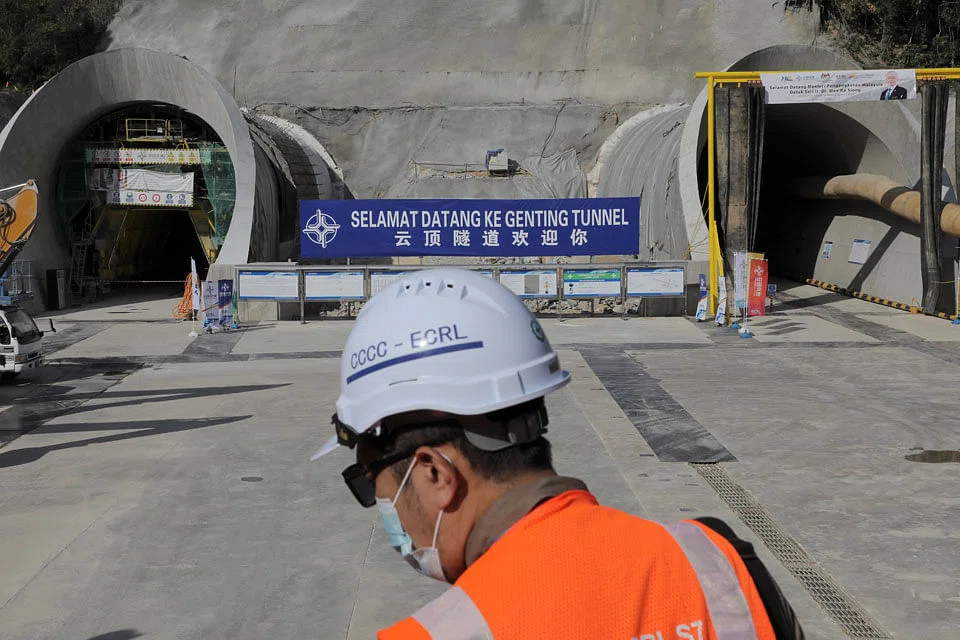
By contrast, from 1980, China began to move aggressively to fill the vacuum - first by acting decisively to create modern infrastructure at home, and then by exporting its capabilities and extending its global influence through the Belt and Road Initiative (BRI) and new multilateral institutions such as the Asia Infrastructure Investment Bank (AIIB). In the last decades, China has invested 8 per cent of its gross domestic product in infrastructure - in contrast with the US, where the total stands at less than 1 per cent.

China has multiple motives for globalising its infrastructure capabilities, and global power is only one of them. There is also an economic rationale caused by diminishing returns on domestic infrastructure capacity which pushed China to turn to export to maintain profitability of their infrastructure industries. In addition, regional infrastructure supports China's energy and agricultural requirements. China also invests in infrastructure to drive economic growth - a pressing need, since its per capita income is still substantially lower than that of the US and a resurgence of poverty incidence and persistent inequality remain a constant threat.
With the two nations on such divergent paths, is there a basis for cooperation? Indeed, there is. The US is finally waking up to the need for infrastructure investment - but at such a late point, and with so many needs to address, that direct competition with China would be unproductive. 'Coopetition' is a better approach.
Achieving it would involve these elements:
- Create multilateral institutions, not rival initiatives: First, rather than create its own competitor to the BRI - as Europe has done through its recently announced US$340 billion Global Gateway project - the US (and Europe as well) should inject capital into existing multilateral institutions such as the World Bank and the regional development banks.
- Aim to bring China into the fold: Second, work with China's BRI to integrate it more fully into the international rules-based system. That should include closer cooperation between China and multilateral institutions that have undertaken such development projects for decades and have established recognised standards for responsible investment. China has been listening to the criticism levelled at BRI and might well be open to such arrangements. The US and Europe will need to monitor to ensure that China continues to comply with international standards of project financing. Better-funded development finance institutions (DFIs), including national ones such as the US's Development Finance Corporation, can provide a platform for 'coopetition' with China rather than direct confrontation.
- Engage with China's infrastructure institutions where it makes sense. Third, the US should join AAIB, along with Japan. Much has been written about the mistake the US made when it chose to boycott this organisation. US and Japanese involvement would help ensure AIIB is well integrated within the rules-based global system. To the extent that Chinese firms undertake projects in weak economies that fail to meet those global standards, the US would then be better able to work with China to improve terms - or, if necessary, forcefully block such projects.
- Open the door - just a crack - to Chinese investment in US infrastructure. While the current environment is not ideal, the US should consider explicitly inviting China to invest in domestic infrastructure, but only in the context of comprehensive agreements. China should not be given carte blanche - the opportunity to invest is a point of leverage. Terms and conditions should certainly be imposed - both on investment specifics and to support US policy goals.
Make no mistake - cooperation with China on infrastructure is not a panacea. It should not be approached naively. China's actions in other areas remain hostile, and there are grave conflicts that are unlikely to be resolved in the foreseeable future.
But small, limited cooperation, if carefully defined and managed, might yet pay dividends. The project needs careful management. But it is well worth the risk.
The writer is a member of the Wilson Centre's Global Advisory Council, the US key non-partisan policy forum for tackling global issues, and a senior fellow at the Development Research Institute, NYU. He is also chairman of I Squared Capital. The views expressed do not necessarily reflect those of these organisations.
Decoding Asia newsletter: your guide to navigating Asia in a new global order. Sign up here to get Decoding Asia newsletter. Delivered to your inbox. Free.
Share with us your feedback on BT's products and services