
The year's best wine books
 Add BT as a preferred source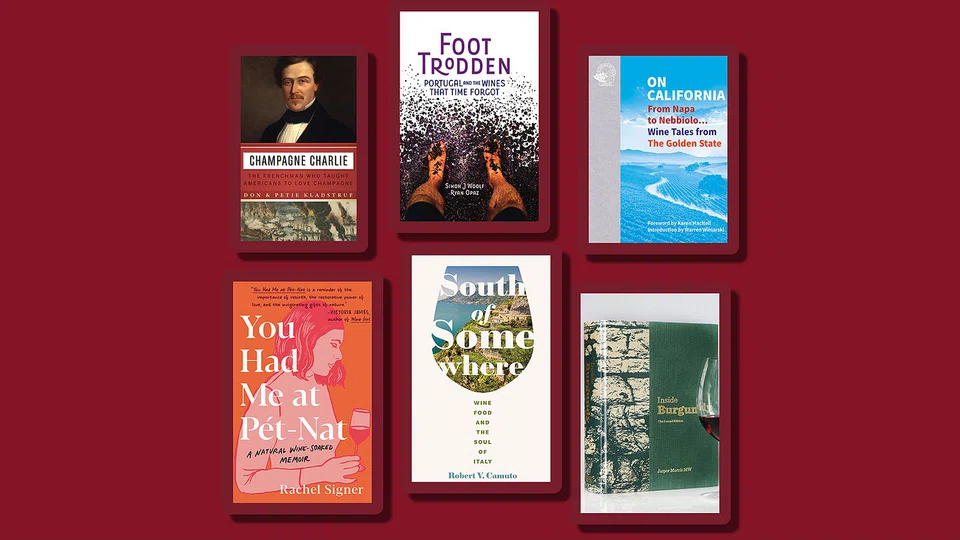
AS delightful a beverage as wine might be, a deeper understanding of culture and history invariably enhances the pleasure of opening a bottle. Here are 6 of the best books on wine published in 2021, each of which will broaden your perspective on what's in the glass.
South of Somewhere by Robert V Camuto
Through 3 books, the first set in France, the second in Sicily and the latest, in southern Italy, Robert V Camuto has explored the passions, personalities and convictions that compel idiosyncratic winemakers to push against institutional forces to achieve their visions. His new book, South of Somewhere: Wine, Food and the Soul of Italy (University of Nebraska Press, US$25), is his best yet, a sharp evocation of the people, places and points of view that capture the fatalism often encountered in southern Italy and the stubborn refusal of its inhabitants to knuckle under.
Camuto, a journalist with family roots on the Sorrento Peninsula south of Naples, succeeds in capturing southern Italy at just the right moment - when a younger generation, better educated and more worldly, is taking over. They want to improve farming, make wine with more precision and sell it for profits around the world rather than pennies locally, and they want to do it without compromising cultural traditions. His underlying message is that wine is both cultural expression and self expression.
Foot Trodden by Simon J Woolf and Ryan Opaz
Few historic wine-producing countries have evolved as quickly and intriguingly over the past 30 years as Portugal. Likewise, few are as little known and as sparingly chronicled. Foot Trodden: Portugal and the Wines That Time Forgot (Interlink Publishing, US$35) by Simon J Woolf and Ryan Opaz is an excellent introduction to the obscure history of Portuguese winemaking and its vitality and dynamic potential.
Navigate Asia in
a new global order
Get the insights delivered to your inbox.
Foot Trodden, named for the traditional method of crushing grapes with the feet - still common among port-producers in the Douro Valley - is an impressionistic travel guide through the major wine regions. It introduces readers to a well-chosen group of growers and producers whose deftly rendered individual stories and distinctive wines shine a light on the insularity of Portuguese history, the opening of the country, the challenges that continue to confront growers and producers, and the potential future of its wines.
Champagne Charlie by Don and Petie Kladstrup
In Champagne Charlie: The Frenchman Who Taught Americans to Love Champagne (Potomac Books, US$33), Don and Petie Kladstrup offer not only a fascinating portrait of the 19th-century founder of the Charles Heidsieck Champagne house but an evocative sketch of America and the wine business around the time of the Civil War.
Heidsieck's life seems almost improbable. He was born into a family of Champagne producers and merchants, but unable to find his place in the family business he started his own. Against much advice, he set his eyes on the US as the market in which his company could make its fortune. He achieved great success at first, selling Champagne through force of personality, a 19th-century model for today's 'brand ambassadors'. Through several arduous trips to the US, he became something of a celebrity - Champagne Charlie - who was the toast of politicians and socialites and whose travels were chronicled by newspapers. "A glass of Charles" became a synonym for Champagne.
The writing is easygoing and inviting, and the Kladstrups do not shy away from the moral contradictions of Heidsieck, who strongly denounced slavery in the US yet hoped for the South to win because it was good for business. You won't learn much about Champagne in this book. But it's engaging social history and excellent storytelling.
Inside Burgundy by Jasper Morris
Many books have been written about Burgundy over the years, but none currently is as useful and comprehensive a reference as the new second edition of Inside Burgundy (Berry Bros & Rudd Press, US$90) by Jasper Morris.
The book includes all one might expect in a guide: detailed characterisations of Burgundy's appellations, leading vineyards and producers, all enhanced by clear, detailed maps, along with examinations of the region's history, weather and geology, grapes, viticulture and production and a look at how its wine trade is organised. Morris also addresses issues of terroir and style, which are particularly appropriate to Burgundy.
You Had Me at Pet-Nat by Rachel Signer
Natural wine has spawned all sorts of fantasies among those peering in at that world. The unkind and deluded might sneer at hipster sommeliers saddling unwilling customers with their funky wines, made by unwashed hippies. More empathetic sorts might think of its denizens as wayward youth who must be permitted their mistakes before coming to their senses.
Rachel Signer's new book, You Had Me at Pet-Nat: A Natural Wine-Soaked Memoir (Hachette, US$28) demonstrates that young people in natural wine can be much like young people anywhere, trying to find a way to make a living doing what they find meaningful while searching for love and companionship.
As the story opens, Signer is a young, would-be writer in New York supporting herself by working in restaurants. What follows is an inviting coming-of-age story that, though it takes place in a world of indigenous yeast and native grapes, crown caps and biodynamic, back-to-the-earth farming, speaks to the universal yearning of anybody trying to find herself, overcome insecurities and settle on her place in the world.
On California
Academie du Vin Library is kind of a cultural miner, prospecting for worthy but forgotten wine books to republish interspersed with occasional new works.
Its latest book, On California: From Napa to Nebbiolo ... Wine Tales From the Golden State (US$45), offers a little of both. Its short selections from nearly 3 dozen writers offer impressionistic, thought-provoking views of the state and its winemaking history. Most were written within the last decade but a few stretch back to the 1980s and '70s, offering a wealth of perspectives on how California wine culture arrived at its current state. NYTIMES
Decoding Asia newsletter: your guide to navigating Asia in a new global order. Sign up here to get Decoding Asia newsletter. Delivered to your inbox. Free.
Share with us your feedback on BT's products and services

