There’s a new way to prove a US$38,200 watch is the real thing
Luxury houses are now tracking the authenticity and origin of their most coveted products using crypto’s underlying technology
FOR almost a decade, I have been listening to digital prophets predict a future where banks save billions of dollars, customers can trace their mangoes back to the organic farm where they were grown and financial intermediaries are a thing of the past, all thanks to the blockchain. I have been waiting for that future to arrive, but I have never come across it in my daily life.
Imagine my surprise, then, when I encountered the word “blockchain” inside a Miu Miu bag.
I had recently purchased the bag, and a little white card was tucked away in a pocket. On the piece of 100 per cent recycled fibre, it read: “This authentic Prada product’s certificate has been uploaded on Aura Blockchain Consortium’s platform to record and guarantee its integrity.”
Miu Miu’s parent company, Prada Group, is one of several major luxury houses investing in high-tech ways to track their most coveted and most expensive products. Over the past year, brands including Loro Piana, Louis Vuitton and Maison Margiela have launched services built on the Aura consortium’s blockchain that allow customers to verify that their item is not a knock-off.
The rise in counterfeit luxury bags
The hope is that tracking handbags, coats, watches and diamond rings this way could be a game changer in the industry’s fight against the ballooning counterfeits market. As much as US$464 billion worth of counterfeit and pirated products change hands each year, accounting for 2.5 per cent of world trade, according to a 2019 estimate by the Organisation for Economic Co-operation and Development.
Blockchain technology is just one of the weapons deployed by the sector in a years-long battle against fakes. Recent efforts include Richemont’s new platform for sharing information about lost or stolen watches and jewelry, and LVMH-owned Patou launching an artificial intelligence-based verification system called Authentique Verify.
Giving customers a more reliable way to prove their products are real could help raise the appeal of originals, while making it harder to sell fakes on the second-hand market. And by making it easier for customers to pass on or resell their products, the technology could help prove the case that many of these highly-priced items have some investment value.
“A digital certificate of authenticity is a huge, huge problem-solver,” said Stefano Rosso, chairman of the French fashion house Maison Margiela and chief executive officer of BVX, which are both part of OTB Group. “In parallel, it helps us market the product and track its origins.”
OTB is a member of the Aura consortium, which runs blockchain technology specifically for luxury brands. The consortium was founded in 2021 by LVMH, Prada Group and Richemont, and joined later by OTB and Mercedes-Benz. When customers look up one of the 600,000 OTB products registered, they do not just do it on any random website; the brands control which goods are registered on the platform.

The concept of a blockchain – where transactions are recorded online on a system run by many computer servers – first gained notoriety as the system underpinning such cryptocurrencies as Bitcoin. Information on blockchains is hard to tamper with, which many believe makes them an ideal tool for complex record-keeping, such as tracking a product’s origin or supply chain. It helps solve a big problem in the online world – lack of trust – that some believe is transferrable to products in the real world.
Other sectors have been toying with the technology for years, but have yet to implement any applications at scale. Wall Street, for instance, has been at the forefront of developing blockchain systems, but things have moved more slowly in a highly regulated environment with complex systems already in place. The consequences of an outage, say, in a system clearing equities trades would be quite different from a glitch in a system that tracks handbags. Some progress is still being made, but many projects announced years ago have yet to be implemented, while others have been scrapped.
Despite the billions of dollars invested, you would be hard-pressed to find mainstream adoption of applications beyond cryptocurrencies. The deployment of blockchain across luxury goods will be a significant test of whether the technology has any utility at a scale beyond its original use case.
Using blockchain for authenticity in designer handbags
OTB’s service allows customers to tap their smartphone, for example, on a new pair of Maison Margiela Tabi shoes, which have near-field communication (NFC) chips embedded in them. The chip instructs the phone to open a website with the product’s authenticity certificate, which is provided by Aura, and information about where the shoes were made (Italy).
Similarly, earlier this year, LVMH’s Loro Piana launched a service allowing customers to scan a QR code on labels of its high-end Gift of Kings garments to verify their authenticity – pretty important when buying one of its T-shirts, which can cost £1,665 (S$2,852). Customers can also register themselves as the garment’s owner and find information about its origins, down to the batch of fine merino wool used to make a T-shirt. (It is very soft and comes from select sheep farms in Australia and New Zealand.)
“We believe that blockchain is a strong enabler to augment everything related to traceability, origin, authenticity from the beginning of the story starting at the raw material level,” said Franck Le Moal, LVMH Moet Hennessy Louis Vuitton’s group IT and technology director. “One day every product in the luxury industry will be able to benefit or be augmented by a digital product passport or certificate.”
Some experts think otherwise.
“I remain sceptical about the robustness or usefulness of blockchain solutions that attempt to bridge physical assets with the esoteric nature of blockchain networks,” said Colin Platt, who advises and consults companies on blockchain projects. “What happens if I pull that NFC chip out of the bags, make 10,000 copies and put them in 10,000 fake bags? Who owns the real bag?”
Applications built using Aura’s technology use different layers of security including encrypted NFC chips, a spokesperson said.
Platt also wondered what would happen if people sold the bags without registering the change of ownership on the system. “If you sell the bag to your friend and don’t update the blockchain, who owns the bag?” he said. “You, or your friend?”
Prada Group integrated blockchain tracking into its new Fine Jewelry Eternal Gold line as it began work on building its sustainable supply chain for recycled gold that took more than one year to set up. The line made its debut in October and uses 100 per cent certified recycled gold and stones purchased from suppliers who meet high standards on human rights, labour safety, environmental impact and business ethics.
Customers can use their phones to tap a jewellery’s card – including that accompanying a yellow gold chain necklace that costs £25,500 – to pull up a certificate of authenticity, its carbon footprint and information on the material used. This helps to tell the brand’s sustainability story, as customers can verify that the materials used effectively meet the criteria that is advertised, said Timothy Iwata, Prada Group’s managing director of fine and high jewelry.
Making sure gifts, pre-owned luxury handbags are real
A digital certificate and tamper-proof online records of who owns a product could make it easier for customers to pass items on to family and friends, executives said. Traditionally, certificates of authenticity have been plastic or paper cards with serial numbers, which can easily be lost or thrown out over the years. An inherited item might not come with that certificate, making it hard for the recipient to know whether the product is authentic. Instead, the ownership information is stored online.
The technology would also make it less risky for luxury houses to enter the second-hand market, said Daniela Ott, Aura’s general secretary and a former chief operations officer at Kering’s luxury division. Companies could facilitate second-hand sales without worrying that they are fencing fakes.
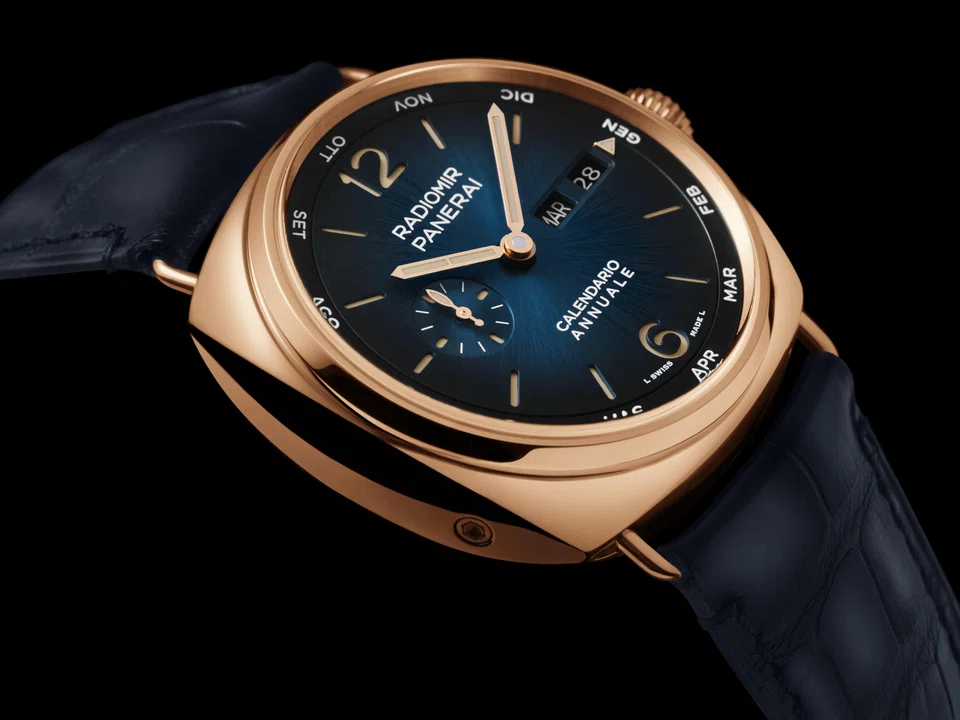
The technology can also help to track the product’s sale and repair history, said Pierre-Nicolas Hurstel, CEO of Arianee, a startup that works with consumer brands to build blockchain applications. Sitting at a cafe in Paris earlier this year, Hurstel showed information about the authenticity and history of his Panerai watch, which he had scanned with his phone. It included the date of sale, warranty expiry, and more.
Soon, Hurstel said, consumers could have a digital wallet on their phone containing certificates for all the valuable products they own. This could have an unexpected downside for luxury goods purveyors: A stronger second-hand market could make customers a bit too confident.
“This is not good for brands trying to avoid ubiquity and selling the promise of exclusivity,” said Luca Solca, senior research analyst for global luxury goods at Alliance Bernstein.
The importance of authentication in designer handbags
After I pulled the card out from my Miu Miu bag, I thought, “OK, so now what?” The card had no instructions for how to gain access to the digital certificate to verify its registration on a blockchain network. Was my bag actually on the blockchain?
After several rounds of questioning, Aura and Prada’s press teams said I could not yet certify the bag myself, but Prada Group could access the information through an NFC chip inserted in the item.
“By having the Aura label on their products, Prada Group is telling their customers that it has been injected onto the blockchain,” Prada said in a statement. “They have the comfort of knowing that it is authentic and has its immutable own identity.”
In other words, “trust us”.
My comfort levels were minimal. Especially after the bag’s strap broke in April and I took it to Miu Miu’s store on London’s New Bond Street for repairs. No one scanned it in front of me to verify its authenticity.
Instead, a salesperson looked up my details on a tablet. The store’s system pulled up the products I owned from the group. The bag and parts were collected, and shipped abroad for repairs. A few weeks later, a representative messaged me on WhatsApp to tell me the bag had arrived. I collected it by giving them my name and the bag model. That was that. BLOOMBERG
Decoding Asia newsletter: your guide to navigating Asia in a new global order. Sign up here to get Decoding Asia newsletter. Delivered to your inbox. Free.
Share with us your feedback on BT's products and services