

Tibetan Page-turner
Premier publisher Taschen has released a massive 70cm by 50cm book on Tibet's rare and ancient murals, priced at US$12,000

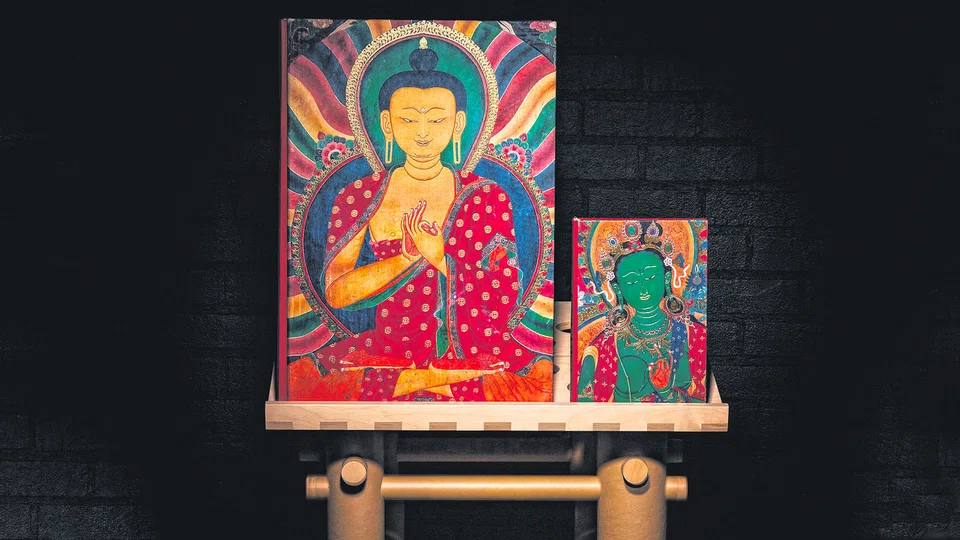
LARGE, RICH AND INTRICATE, Tibet's ancient murals are renowned for their cultural significance and have been compared by art historians to the Sistine Chapel paintings. But while the latter is an artistic accomplishment celebrated the world over, Tibetan murals don't get even a fraction of that fanfare. Many languish in far-flung Tibetan temples and caves in various states of disrepair, invisible to the rest of the world.
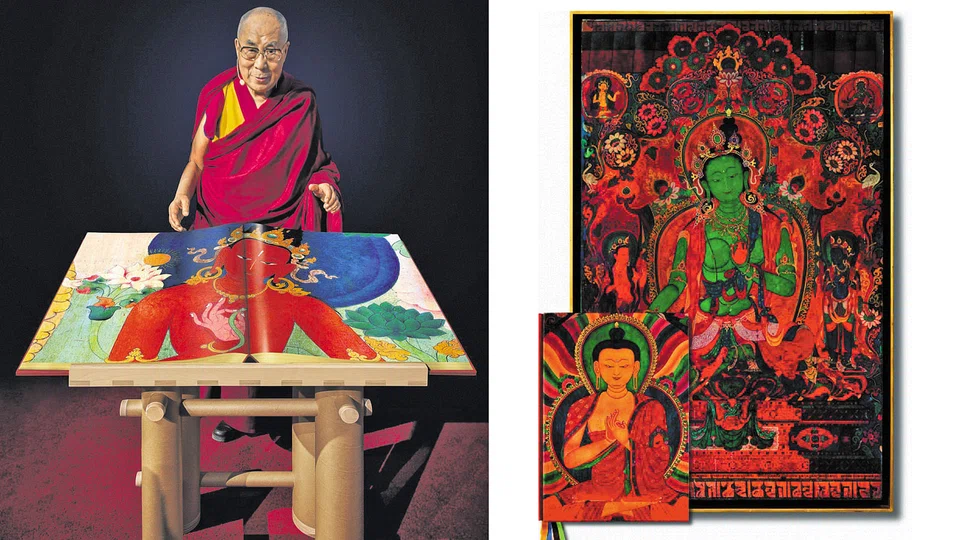
A new book by German publisher Taschen - the Rolls Royce of printing houses - is attempting to change that. Written and photographed by American journalist Thomas Laird, the massive hardcover Murals Of Tibet measures 70cms by 50cms, and is as tall and heavy as a preteen child. But the book's extraordinary size allows readers to immerse themselves in some 300 ancient murals displayed in much of their detailed glory. Some of these murals are as old as 1,000 years and as wide as 10 metres. They contain precious information about Buddhist thought, practices and culture, including images of yoga poses and intentional reincarnation.
Writer-photographer Laird, 65, had visited Nepal when he was a 19-year-old student. He instantly fell in love with the region and decided to live there for the next 35 years, working as a photographer, journalist and Himalayan trek guide. Here in Singapore to promote the book, he says: "The thing that moves me the most about the region is its people. When they take you into their homes, they offer you a cup of tea with both hands and a warmth in their eyes. There's an emotional maturity there that I find missing in the United States."
After converting to Buddhism, he took it upon himself to help preserve the wealth of Buddhist knowledge found in the murals. For 10 years, he lived among monks, farmers and shepherds in isolated mountains, valleys and deserts, to search for the murals that few people have seen. Many are hidden in dark buildings and caves, and have to be illuminated by torches or electric lights. Laird used high-end cameras and lighting equipment to capture a portion of a mural at a time, and stitched the portions together to form a whole image.
After amassing thousands of high-quality images, he approached Taschen to publish the book. The printing process turned out to be also painstaking, because of the sheer size of the pages. All the pages are printed in five colours, including gold, and there are six fold-outs that faithfully reproduce Tibet's most important murals. Because of the unusually high printing costs, each book is priced at US$12,000 and comes with a bookstand designed by Pritzker Prize-winning architect Shigeru Ban.
To help the sales of the book, Laird approached the Dalai Lama to bless and sign all 998 copies of the book. (He actually signed 1,100 copies, but his signatures in 102 copies appear smudged.) The Dalai Lama has said that he had had his first lessons on Buddhism from looking at the murals, even before he learnt to read. The book means much to him, as it allays some of his fears that Tibetan Buddhism's history will vanish without proper restoration of these murals.

"The Dalai Lama once told me that he did not cry when his mother died or when other bad things happen that are beyond his control," says Laird. "But he does start to weep whenever he thinks that the full knowledge of Buddhism cannot be transmitted in its pure, unadulterated form to the next generation."
The Collector's Edition of Murals Of Tibet is priced at US$12,000 and can be purchased at theartling.com. There is also a special Art Edition of 40 copies priced at US$30,000, which includes a large-scale reproduction of a mural depicting Green Tara.
Copyright SPH Media. All rights reserved.
TRENDING NOW

From legacy to launch: Francis Yeoh and Yeoh Pei Xien on family unity and YTL’s next‑gen ventures

Things to know about DBS’ incoming chairman Anthony Lim

Wealthy Indonesians snap up government bonds as yields near 8%: OCBC

From local AI partnerships to global opportunities: How MNCs help Singapore firms scale

