Too much of a good thing? Europe’s footballers grapple with a never-ending season
Some players and managers seem to relish the demanding number of matches being played while there are others who feel otherwise
 Add BT as a preferred source
Lee U-Wen
DeeperDive is a beta AI feature. Refer to full articles for the facts.
A TYPICAL European football season culminates with the Champions League final. But after England’s Manchester City lifted the trophy in Istanbul on Jun 10 by defeating Italy’s Inter Milan, that was hardly the end of this gruelling campaign that began over 10 months ago in early August.
Just days later, many players from those two teams – and dozens more from across the continent and beyond – linked up with their national teams to play even more football. These were competitive games with a trophy and qualification for next year’s European Championships in Germany at stake.
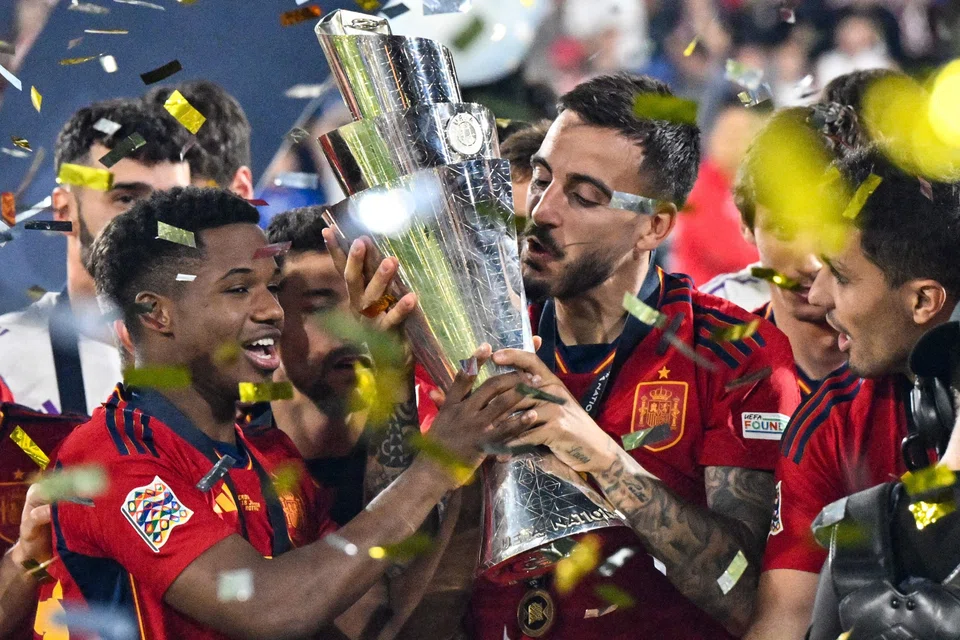
The final four teams still standing in the biennial Uefa Nations League met in the Netherlands last week, playing a total of four matches. Spain emerged the big winners after edging past Croatia in a penalty shootout on Sunday night.
And still, the season was not yet done. A round of qualifying matches for Euro 2024 took place on Tuesday (Jun 20) and Wednesday this week, with the highlight being Cristiano Ronaldo’s record-extending 200th appearance for Portugal, and true to form, the 38-year-old produced the winning goal in the 89th minute as a stubborn Iceland were beaten in Reykjavik.
Over in Oslo, the English Premier League’s top scorer Erling Haaland netted twice as Norway defeated Cyprus. Belgium and Scotland also trotted out nearly full-strength sides as they beat Estonia and Georgia respectively to stay on course to qualify for the finals next summer.
One game too many?
Of course, the season that just ended was not a typical one. Far from it, in fact. It was the first in history to have a Fifa World Cup right smack in the middle, thanks to the still-baffling decision to award the hosting rights to Qatar and then opting to move the quadrennial tournament – usually contested in June and July – to November and December to avoid the unforgiving summer heat in Doha.
Navigate Asia in
a new global order
Get the insights delivered to your inbox.
That meant the club season had to be halted for six weeks, with players involved in the latter stages of the World Cup getting additional time off to recuperate before rejoining their clubs.
The need to squeeze in all the club fixtures forced the campaign to start earlier and end much later.
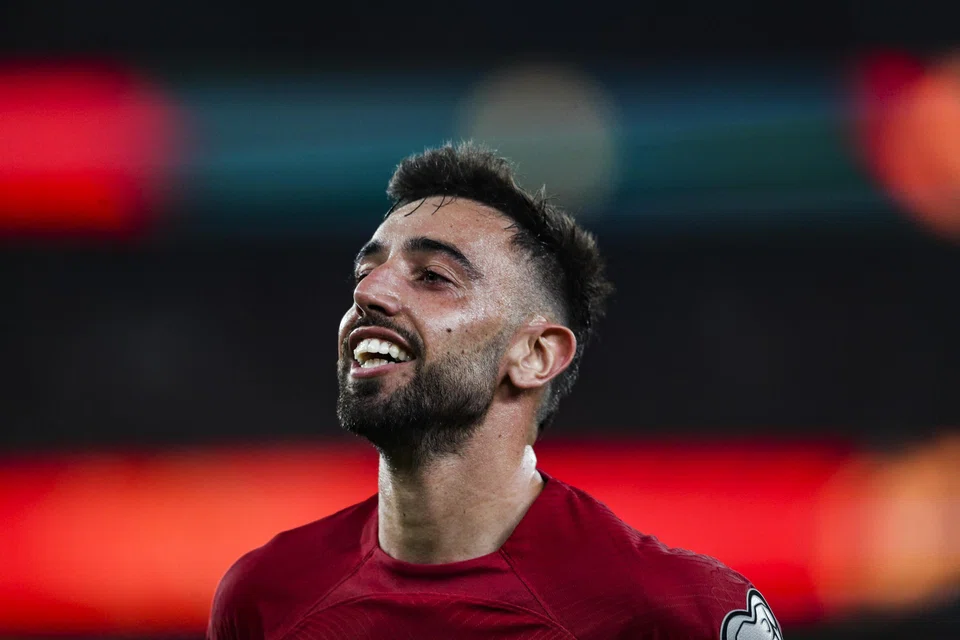
Bruno Fernandes, who plays for Manchester United in England and is a mainstay in the Portuguese national team, became the only player in Europe’s top five leagues to compete in 70 matches this season.
SEE ALSO



Many others played in excess of 60 matches, and often these came fast and furious, with three games in eight days the norm for many of Europe’s top teams.
Some players and managers seem to relish the demanding number of games being played, while there are others – such as Fernandes’ United teammate Marcus Rashford – who feel otherwise.
At a press conference before England’s Euro qualifiers against Malta and North Macedonia last week, Rashford lamented that players need to be given more time to recover, both physically and mentally, in order to be at their best.
The harshest critics out there will probably not have much sympathy for them, arguing that these multi-millionaires earn obscene weekly wages that are equivalent to what the average employees might take home in several years.
That’s beside the point, however. These football superstars are not machines, for they do need ample downtime to switch off and be with their families and friends, so as to return rejuvenated and motivated to play.
Fixture congestion to worsen
With football being the global powerhouse that it is today, it’s little wonder that clubs and national teams will have to play even more games in the years to come.
Governing body Fifa is expanding the annual Club World Cup to 32 teams, starting with the June 2025 edition of that tournament. The 2026 World Cup, to be held in the US, Canada and Mexico, will feature a record 48 teams, which mean a total of 104 matches (instead of the usual 64).
The situation will only get worse as broadcasters, sponsors and the bigwigs at Fifa demand more from the clubs and the players.
It’s mind-boggling that, just when the season has wrapped up, a new one is about to begin on June 27 – that’s next Tuesday – with the Champions League preliminary round. Less than three weeks from now, the pre-season tours will get underway, with the likes of Liverpool, Manchester United, Bayern Munich and Roma jetting around the world for a series of lucrative friendlies.
Is there such a thing as too much football, or too much of a good thing? For now, with no solution in sight to the demanding number of games being played, it’s a subjective question that doesn’t have a firm answer.
Decoding Asia newsletter: your guide to navigating Asia in a new global order. Sign up here to get Decoding Asia newsletter. Delivered to your inbox. Free.
Copyright SPH Media. All rights reserved.