Tradition meets tomorrow in South-east Asian furniture designs
Find Design Fair Asia helps catapult the region’s creatives onto the global stage

WHEN the Singapore Design Week comes round in the last week of September, one of its most anticipated anchor events is the Find Design Fair Asia – and, within that fair, the “Emerge” section.
“Find” stands for “furniture, interiors and design”. This, its third edition, showcases some 300 brands within a 17,000 sq m space.
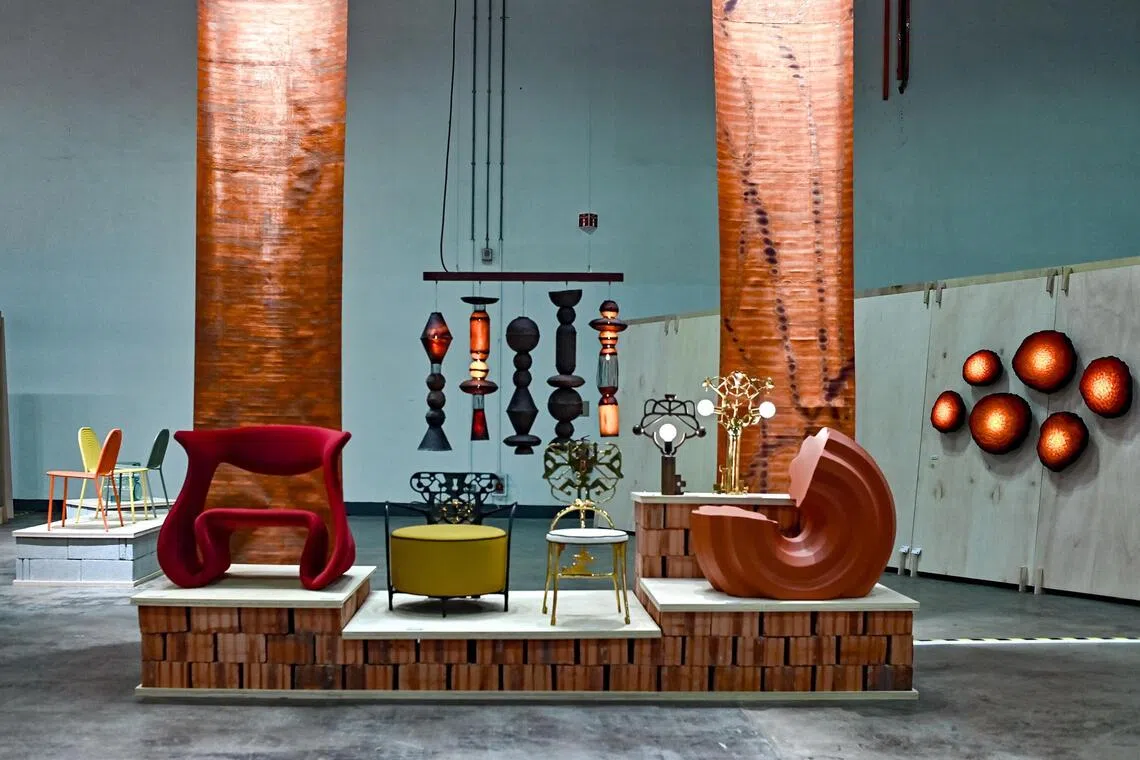
The Emerge section has, by now, become an annual gathering place of some of South-east Asia’s most innovative designers. Their engagement with the culture, traditions and native materials of the region is what makes the showcase particularly attractive for design lovers, looking to adorn their homes with distinctive pieces.
Once again, this year’s Emerge designers hail from Singapore, Malaysia, Indonesia, Thailand, Vietnam and the Philippines, displaying pieces that speak of the soil and spirit of their homelands. The showcase is curated by Design Anthology editor-in-chief Suzy Annetta and is only a section of a much larger fair that features several country pavilions, including those from Italy, Czech Republic and Portugal, as well as an array of top design studios.
Returning for another year, rising Indonesian designer Budiman Ong says: “Emerge has become a routine for me for the last two years, because it’s a chance to get connected, share insights and exchange knowledge with so many Asian designers under one roof.”
We speak with some of the South-east Asian designers about their latest creations and the challenges of taking their designs to the global stage.
Budiman Ong (Indonesia)
Bali-based designer Ong has been drawing raves for his unique approach to lighting designs that blend traditional craftsmanship with modern aesthetics. His studio Ong Cen Kuang (his Chinese name) focuses on creating handmade decorative lighting fixtures that celebrate the character of the materials and the skill of artisans.
His work is unique because he embraces imperfections, valuing the human touch over machine-made precision. In an industry characterised by mass production, his creations resonate with those seeking individuality. He also incorporates unexpected materials; banana paper and metal, for example, are crocheted into delicate shapes that challenge conventional perceptions of these materials.
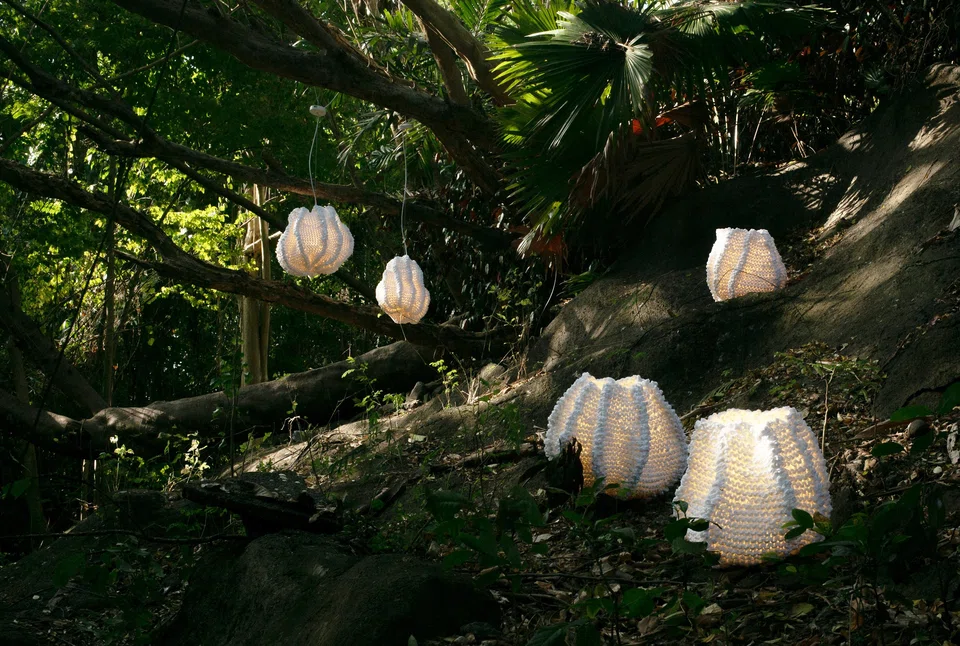
For Find 2024, he’s bringing his Labu lamps made from – of all things – zippers. Labu means “pumpkin” in Bahasa Indonesia. In these lamps, zippers have been manipulated into shapes resembling the fruit, transforming them into not just functional objects, but also sculptural artworks that tell stories through their craftsmanship and origin of their materials.


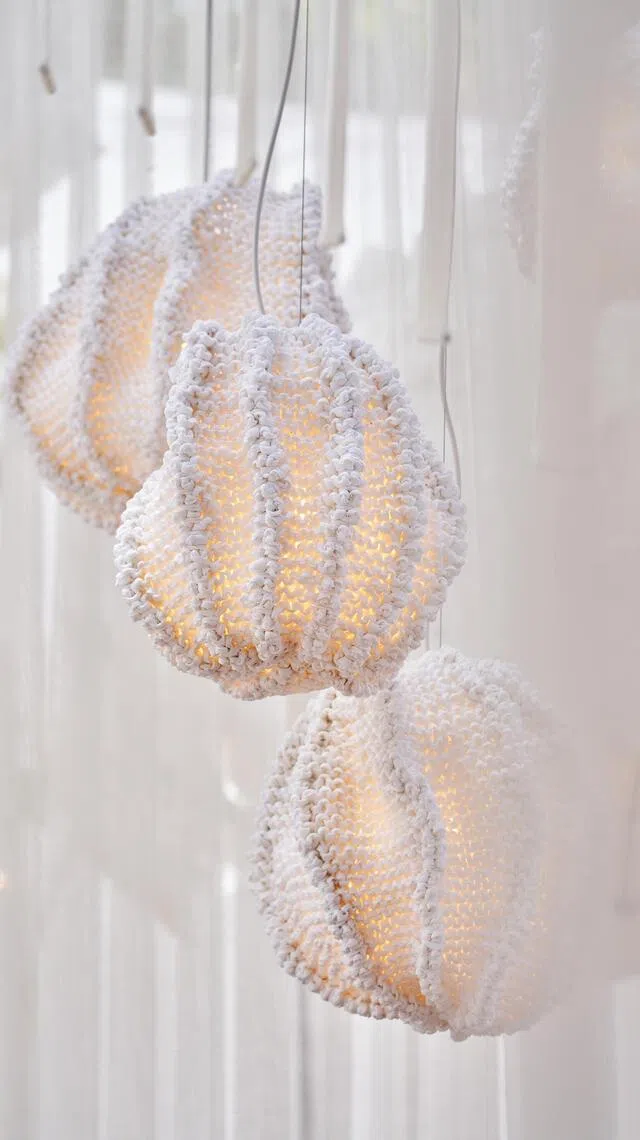
He says: “It has been 16 years since I started building a relationship with zippers, and it has been a wonderful and fruitful journey of discovery and understanding the material’s intrinsic qualities.
“I have learned so much about them, keeping pace with them, listening to what they are telling me, and pairing them with new techniques.”
Unusual lighting is Ong’s fascination. He says: “I grew up in a typical household in a rural town in Indonesia, where decorative lighting was not used. We only had functional fluorescent lamps. My world opened up and became brighter when I was introduced to decorative lamps while studying design in the UK over 20 years ago. From there, my fascination only grew.”
His overseas studies made him appreciate his uniqueness as a South-east Asian individual, and embrace his perspectives on global design. But he says: “It is tough to be a designer from Indonesia or anywhere in South-east Asia. Many designers take on odd jobs to cover their expenses. Additionally, Indonesia is often stigmatised as a country primarily known for manufacturing rather than as a place with a great creative talent pool. This presents a significant hurdle to overcome.”

These challenges notwithstanding, his Bali studio Ong Cen Kuang has become a must-visit for design lovers. His light pendants and lamps are found in homes and hotels across the world, and are distributed in Europe and the US, as well as in Singapore by Craft Axis.
Ivan Ho (Singapore)
Local designer Ho is transforming discarded materials into what he considers to be “objects of desire”. These smooth and polished vessels are partially encased in rough and rocky material, creating a striking contrast between the two surfaces. He uses materials such as pre-loved vessels, plastic granules, broken ceramic aggregates and repurposed polyester fibres to create an interplay between the refined and raw components.
By merging materials of contrasting origins, he explores “the tensions inherent in human behaviour”, and the habit of purchasing certain objects, then discarding them when they lose their novelty or usefulness. “I’m inviting viewers to reflect on their role in embracing more sustainable and mindful practices,” he says.

A former interior designer and furniture design lecturer, he founded in 2012 the design studio Tizumuka – a word adapted from “tisu muka” (meaning “facial tissue” in Malay) – a nod to the simple item that is quickly discarded once used. “It struck me how this ordinary, everyday product plays such an essential role in our daily lives, quietly woven into our rituals. This idea of finding value in the overlooked resonated deeply with my design philosophy.”
The practising designer for two decades says: “The biggest challenges facing a furniture designer in Singapore are primarily due to the lack of a robust manufacturing industry. Many local furniture brands and manufacturers are family-owned businesses, which often take a more conservative approach, and this cautious mindset can make it difficult to introduce innovative designs or fresh perspectives into both the local and regional markets.”

The annual Emerge showcase is thus a shot in the arm for designers like him, as it exposes his bolder designs to a wider public. He says: “What sets this year’s edition apart is the organisers’ initiative to commercialise our products, making them available for sale, which is a valuable step forward. Young emerging designers often don’t realise that, if they intend to launch commercial products, they need to consider the full process – production in larger quantities, quality control, logistics, warehousing and distribution. Many younger designers overlook this holistic approach, and Emerge helps redress that.”
Nazareno/Lichauco (The Philippines)
Lending their names to the collective Nazareno/Lichauco are seasoned designers Rita Nazareno and Gabby Lichauco, who are best known for their work in major design events such as Maison & Objet Paris 2019. Their success lies in their collaborative style, commitment to local brands and craft traditions, and their ability to mix humour, unconventional ideas and deep cultural references.
At a previous Find edition, their hollow, black hand-woven cane furniture pieces were among the most photographed and Instagrammed at the fair. They return this year with a set of unusual pieces to pique visitors’ curiosity – a series of wall objects and lighting made from woven wicker and cane, which reference barter rings – ring-shaped gold ingots used as currency in the Philippines until the 16th century.
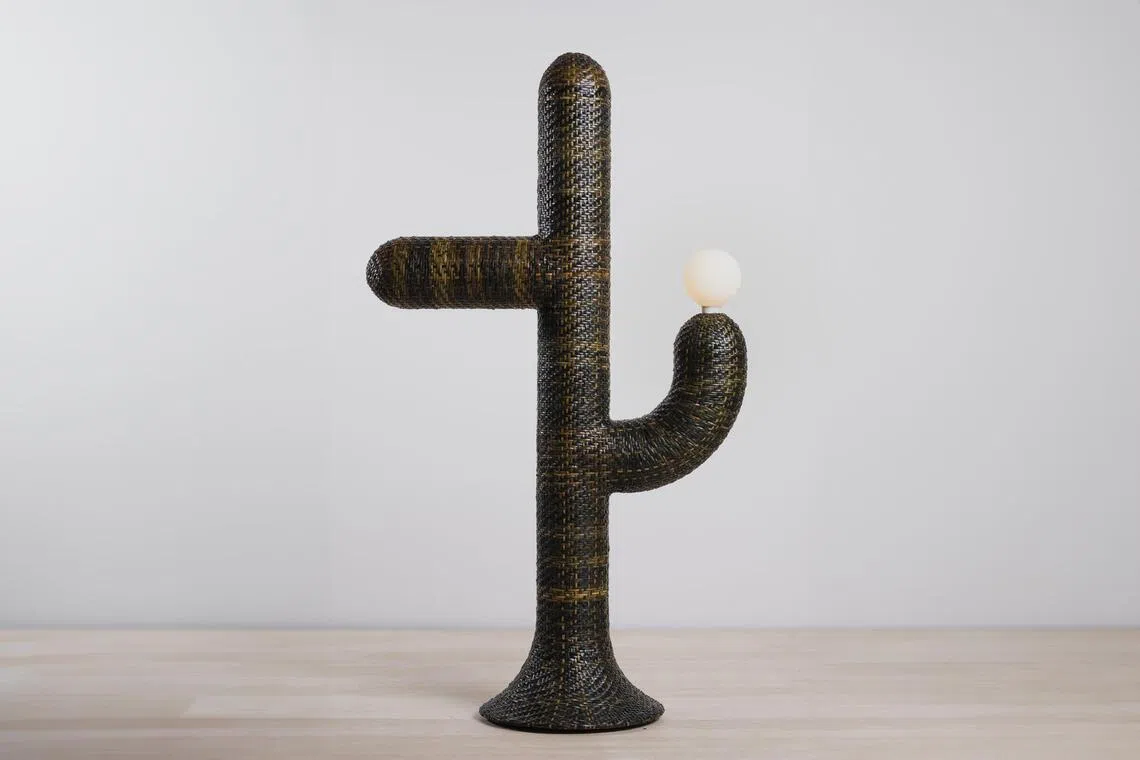
“We want to explore the notion of value in our present world by proposing the remembrance of pre-colonial systems,” they say. “As a duo, we always push for a more contemporary thrust in the use of traditional Philippine materials and crafts.” The new work is thus a unique dialogue between the past and present, a fusion of historical reverence and contemporary design.
As always, there is a wit and irreverence to the work that the duo are famous for: “We share a distinct sense of humour – and that’s the seed (of why we create what we create). The process can be quite random, actually, which makes it interesting. We have different temperaments: one of us is a morning person, the other is a night person; one of us is restrained; the other not so. So that dichotomy is what makes for a rich design partnership.”
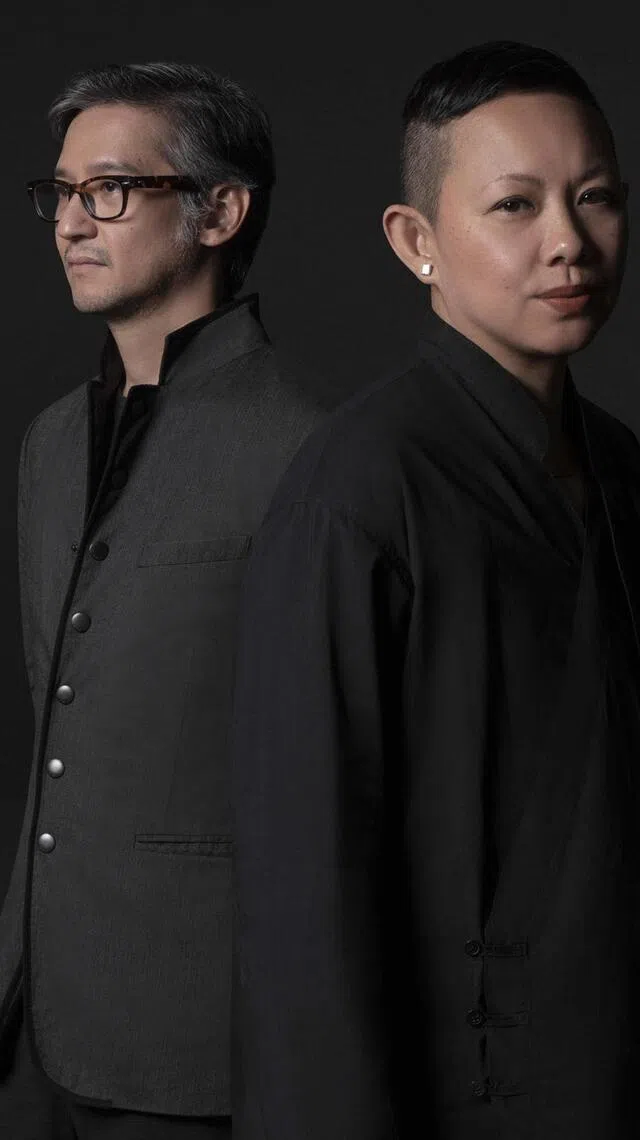
Asked for their thoughts on South-east Asian design, they say: “The regional design and craft communities are thriving, and the collaborations between contemporary designers and regional manufacturers are significant to the growth… Decades ago, western and colonial influences were quite prevalent. But there’s been a resurgence of appreciating our own crafts, and that has endured.
“If we keep doing what we’re doing, we believe the rest of the world will start to notice the creations from this part of the world.”
Huyen Trang Nguyen (Vietnam)
Born and raised in Vietnam, Nguyen is not interested in just making furniture. Rather, she is crafting a narrative that honours her roots while staking a claim in the modern world.
She says: “From my perspective, working with natural materials like wood, rattan and bamboo requires considerable expertise from skilled craftsmen and careful handling of the material.
“Designers in South-east Asia often have the opportunity to work extensively with these materials, and the continuous creative process involving hands-on practice with craftsmen and production environments can be a significant strength.”
For Find 2024, she is showcasing the ForAll easy chair, which she envisions as an accent piece in any room, and is distinguished by its armrests. She says: “These are raised slightly and integrated in a manner resembling a walking stick, providing gentle support for those who need assistance transitioning from sitting to standing, such as the elderly. For other users, the slightly lowered armrests create a sense of openness and comfort, allowing more space to relax.”
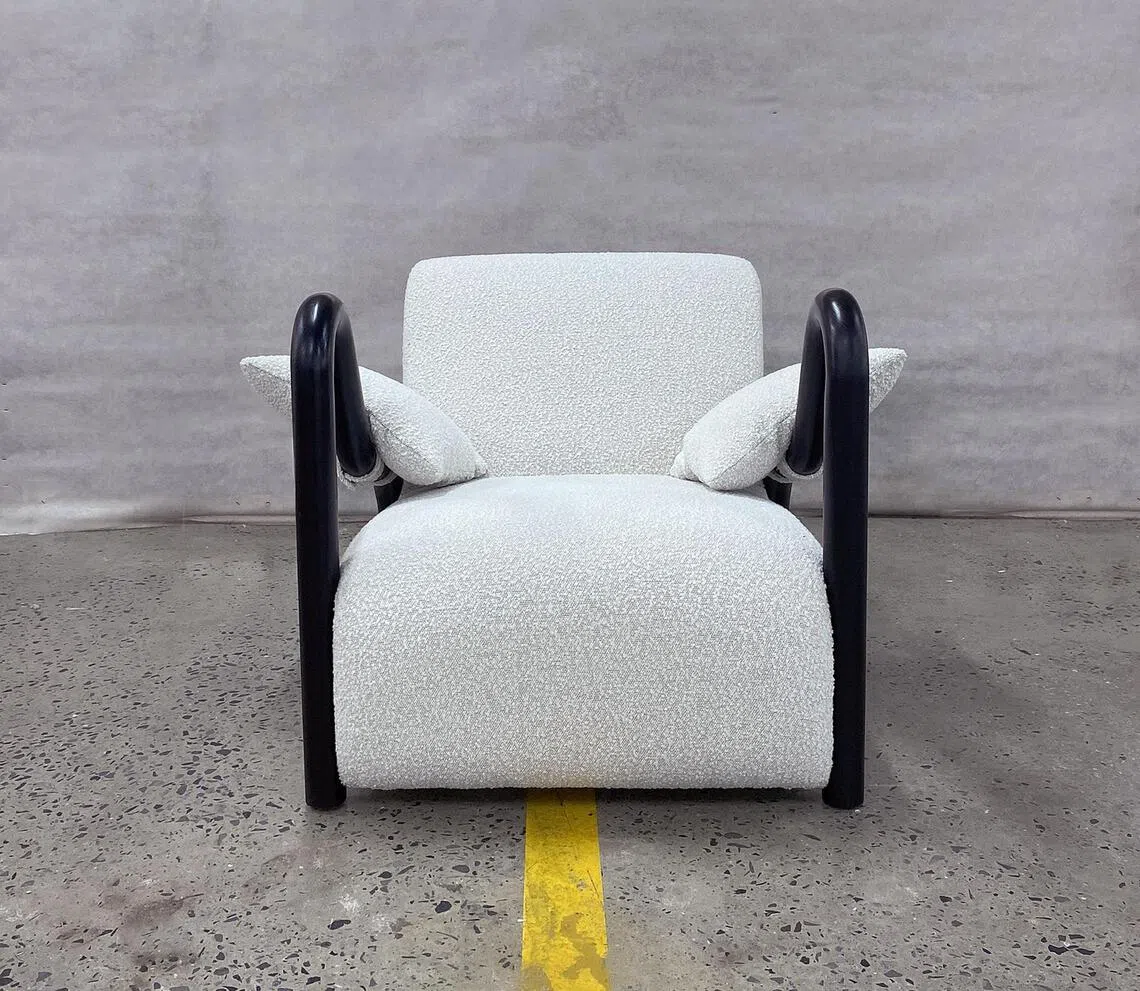
She is insistent on working with only natural materials for their “warmth and familiarity” that also ensure both comfort and functionality: “I have a particular fondness for wood.”
Her path has not been without challenges. The Vietnamese furniture industry is heavily dominated by mass production, which often sidelines innovative, smaller-scale designers. “Manufacturers are often hesitant to embrace new or unrefined ideas,” she says.
This resistance, however, has only fuelled her determination to carve out her own space in the industry.

Looking ahead, she plans to continue working within the mass-production environment, believing it is the best way to understand the mechanics of the industry from the inside out. But she remains committed to her personal projects, which let her experiment and develop her unique design voice: “I’m continuing my journey of experimenting with decorative elements and exploring their potential in modern design.”
Find Design Fair Asia runs from Sep 26 to 28 at Marina Bay Sands, Singapore. Visit designfairasia.com
Decoding Asia newsletter: your guide to navigating Asia in a new global order. Sign up here to get Decoding Asia newsletter. Delivered to your inbox. Free.
Copyright SPH Media. All rights reserved.