Sparse crowds, sweater weather, good food: Greece checks all the boxes
Sparser crowds in the cooler months make it easier to soak in the local culture of the Aegean country – bonus points if you’re a foodie
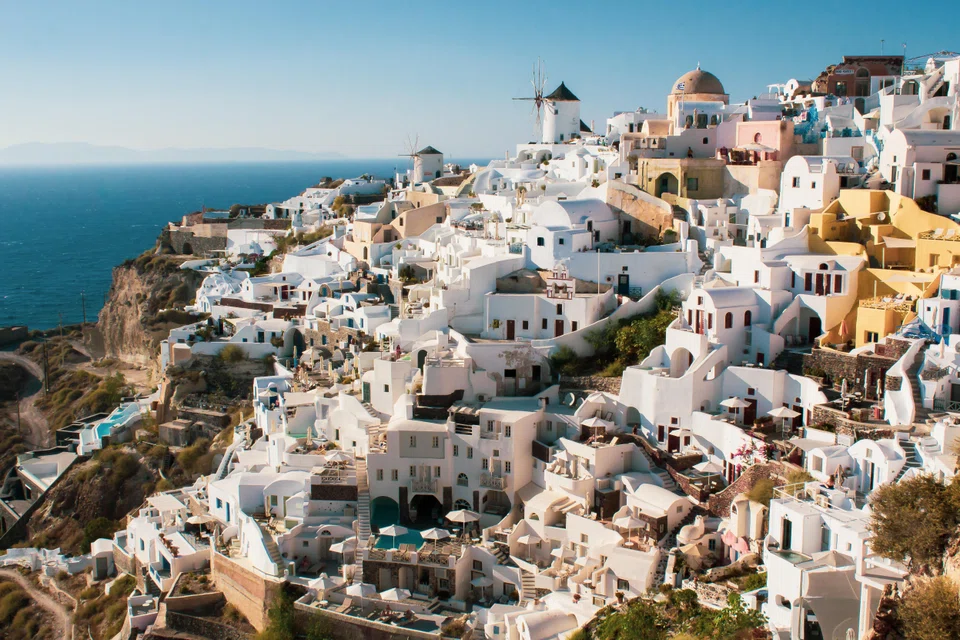
IT’S that time of the year again. You’re trawling tourism websites and flipping through copies of Lonely Planet, figuring out where to go as the holidays approach. If you’re still undecided, perhaps Greece can offer an unexpected solution to your travel conundrum.
While the country has been hailed as the ideal summer getaway location – just the mention of its name conjures up images of sunny beaches and balmy islands – there’s lots to do in the cooler months, especially if you’re into food and drink. Great restaurants and bars are seemingly everywhere in Greece; the foodscape is sophisticated and surprisingly diverse, so cast aside any thoughts you might have about a week’s worth of just moussaka, gyros and ouzo.
For the sweaty Singaporean looking to escape the hustle and bustle – not to mention the heat – of densely populated city life, Greece offers a cool respite in the later months of the year. Don’t get too worried about getting cold, either; temperatures drop to around 10 degrees Celsius at night in the dead of winter, but they go up to a comfortable 20 deg C in the day.
Greece is also great for travellers who are wary of crowds; we are, after all, just coming off the heels of a pandemic. After the peak of summer ends in August, the islands are cooler, the crowds are sparser, and it’s certainly easier to soak in the local culture.
What happens in Athens
Our trip begins in Athens, the capital city. This is undoubtedly the busiest stop on our traverse through the country – most attractions are open year-round, and there’s a steady but manageable stream of locals and tourists alike wherever you turn.
Of course, one can’t visit Greece without diving head first into its rich history. Popularly known as the birthplace of Western civilisation and democracy, its islands are brimming with tales from centuries past. With historic landmarks and excavation sites scattered across the city, Athens is the best place to experience the magic of ancient Greece.
It can be a struggle to navigate the seemingly innumerable sites to visit in the capital. Those seeking a more curated experience without the restrictions of a fixed tour can buy an Athens Pass for 38 euros (S$55), which grants access to the Acropolis and six archaeological sites around the city. If you’re looking for a more immersive trip, a five-day unlimited pass (289 euros) gets you additional bus tours, island tours, and admission to a number of museums.
Either way, the Acropolis Museum is a must-see. Built atop an excavation site that’s open to visitors, the museum houses a plethora of finds from the Acropolis dig site. From the massive, intricately carved blocks of marble to the perfectly shaped pottery, there’s no shortage of things to be amazed by here. Expect a few charged statements in the citations and audio tours accompanying each artefact, too – the name of Britain’s Lord Elgin pops up several times over his controversial acquisitions in the late 18th century.
Between museum tours and treks through ancient sites, be sure to also check out some of Athens’ restaurants and cafes.
Just a stone’s throw away from the Acropolis is Odori Vermuteria, which serves up modern Italian cuisine – a common sight throughout Greece, but done especially well in this establishment. The Kamikaze pizza (15 euros) is topped with spicy spianata, providing a textural foil to the just-right charred crust. For a slightly lighter option, the burrata salad (13 euros) is loaded with cherry tomatoes and a mildly sweet ball of the famed Italian cheese.
There’s also an interesting range of cocktails at Odori Vermuteria, compiled in a menu it calls its “Aesthetics”. This is the fourth iteration of its drink menu, according to co-owner and bar manager Manolis Lykiardopoulos. “I’m fascinated by the world of arts,” he says of the inspiration behind his cocktails, adding that the current menu was inspired by the “philosophical study of beauty and taste”.
“Athens is a historical place where many of classical civilisation’s intellectual and artistic ideas originated, but it is also a vibrant city full of graffiti, murals and very creative young artists,” Lykiardopoulos elaborates.
This juxtaposition is certainly reflected in the menu, which features experimental plays on vermouth; it’s an effortless blend of the old and new that’s likely to convert those who turn up their nose at the botanical-infused wine. (Enthusiasts of ancient Greek history might also be pleased to discover it’s said to have been invented by Hippocrates.)
We’re particularly impressed by the Iced Peach Manhattan (10 euros), a lightly tangy mix of bourbon, red vermouth and peach.
For a relaxing spot to end the night, we head over to Tales of Ales, a hole-in-the-wall bar specialising in craft beer. Don’t be fooled by its rustic aesthetic; the bar has gained quite a reputation since its establishment in 2018 as one of the best places in Athens to grab a pint.
The menu here changes regularly, and with some truly unique brews on tap, you’ll likely sip on a once-in-a-lifetime beer. (We visited two nights in a row, and found one of the taps had changed in less than 24 hours.)
“We didn’t use to have this great beer tradition, as some other countries do,” founders Kostas Frantzeskos and Agis Kontos tell The Business Times. “In the past seven years, give or take, many microbreweries have sprouted from almost out of nowhere, trying to bring into existence good beer.” These new players have transformed the beer scene in Greece, with styles ranging from light fruity ales to dark barrel-aged stouts.
The men behind Tales of Ales express full confidence in the local brewmasters. “Take our word for it, they can concoct some pretty cool and tasteful beers.” With the drinks we had there, we’d be hard-pressed to disagree.
There’s something about Santorini
The next leg of our trip starts with a quick domestic flight to the island of Santorini.
For the year-end traveller, this is likely where the trip will fall short; a majority of the attractions here are closed after October, including our favourite, The Greek Wedding Show (65 euros), an interactive performance that fuses a jukebox musical with dinner theatre. The performers are vivacious, to say the least, and their energy is infectious – by the end, you’ll find yourself jumping out of your seat to shout “Opa!”
Performances of The Greek Wedding Show close for the year on Oct 31, and will restart only in May.
In the meantime, there’s SantoWines Winery, which is open for reservations till Nov 20. The winery specialises in vinsanto, a dessert wine made from dried grapes, and white wines made from locally grown assyrtiko grapes. For just 12 euros, you’ll get a tour of the facility, including a walk-through of its cellar; here you’ll see barrels of everything from decade-old vinsanti to fresh assyrtiko vintages.
You’ll also learn about the way in which the grapes are grown in Santorini. Instead of letting the vines grow vertically so the grapes hang overhead, at SantoWines the vines are moulded into wreath-like shapes known as “kouloura” – Greek for “basket”. This unique method prevents the grapes from the elements, especially winds, which can be strong throughout the year.
After the tour, head out to the deck for a wine tasting with a view of the Aegean Sea. A flight of eight wines made on site goes for 35 euros. The Santo Sparkling White is particularly exciting, with a light bubbliness and surprisingly peach-forward flavour. Though made from the same grapes, the Santorini Assyrtiko is a completely different product. This young wine is saline and mineral, reminiscent of the waters that surround the island.
Besides wine, there’s also good food to be had in Santorini. Try Kokkalo, a restaurant in Fira. If you’re missing Asian food by this point, there’s a crispy pork pancetta served with hoisin sauce (13.90 euros) that might just beat your favourite roast meat stall in Singapore. It’s crackly, salty and moreish; the sweet sauce cuts through the richness of the pork, making it impossible to not finish this decadent dish.
Magic in Mykonos
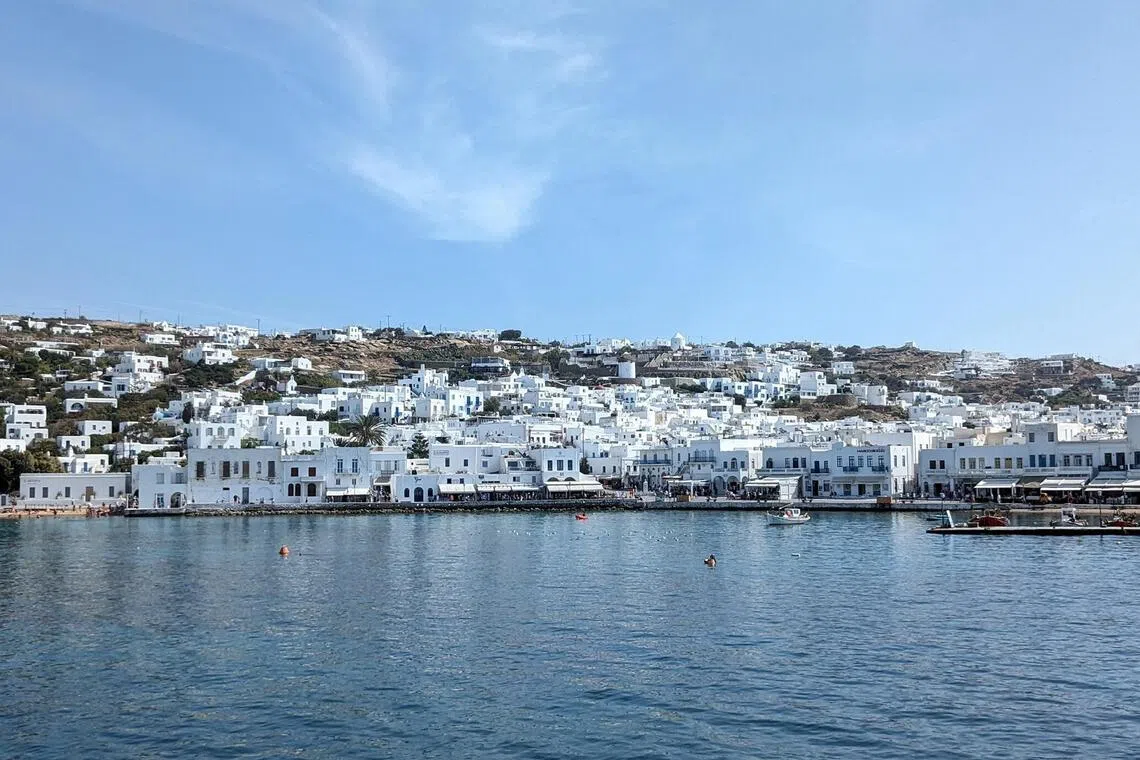
Our journey ends in Mykonos, an island famous for its nightlife and – perhaps more importantly – its seafood.
To start, head over to Captain’s in Little Venice, for a seafood platter (59 euros) that’ll rock your world. Situated right at the water’s edge near Mykonos Old Port, Captain’s is among several restaurants that get their catch of the day from local fishermen. It also stocks Mikonu, a line of local craft beer by the Mykonos Brewing Company.
As we feast on lightly grilled sardines, tender octopus and salty-savoury taramasalata (a dip made from cured fish roe), we’re treated to a serene view of the ocean, peppered with the occasional tourist. If you’re here early enough, you might see men jumping between boats with iceboxes in tow – no doubt full of the seafood now on our plates.
Captain’s closes for the year on Nov 12, but just a few doors down is Raya, which stays open all year. Here we’re served a mean whitefish ceviche (24 euros); it’s sweet, not just from the mouth-watering citrus-laced dressing, but from the delicate slices of fish, laid out in a single layer like a pseudo-carpaccio.
The food at Raya, like many of the restaurants in Mykonos, is unadorned and simple. Steak, for instance, is gently seasoned, grilled to medium-rare and served with a bowl of flaky sea salt; ditto for the mushrooms on the side. It’s clear the people here like their ingredients to shine. That’s perfect, because there’s really no need for frou-frou when you’re on holiday.
If you arrive in Mykonos by mid-November, head out to Delos, the birthplace of Artemis and Apollo in ancient Greek mythology. For 60 euros you’ll get a three-hour tour of the island, ferry ride included. It’s a thought-provoking experience; our guide speaks frankly yet engagingly about the fall of Delos, and how the marble statues that once stood every which way on the island came to be destroyed or taken.
The session ends at the Lions of Delos, what were once a dozen or so giant marble depictions of the big cats. Today, just five replicas remain on site. A sign says one of the originals sits in Venice, Italy; some are tucked away in the Delos Museum, and the rest have been lost to time.
The tour of Delos is a beautiful experience, overall; it’s also one that leaves us pensive, as we head on the ferry back to Mykonos and off to the airport. But that’s not such a bad thing, to be given some food for thought; the relaxed vibe of Greece makes it a perfect place to ponder, even if it’s in our final moments there. Besides, isn’t that the point of travelling – to go beyond our bubble?
An end-of-year holiday in Greece is certainly worth a try for what it offers: good food, an innovative drink culture, and a slower pace of travel – one that leaves you with a greater appreciation for what’s left of the past, and what’s here in the present.
Decoding Asia newsletter: your guide to navigating Asia in a new global order. Sign up here to get Decoding Asia newsletter. Delivered to your inbox. Free.
Copyright SPH Media. All rights reserved.
TRENDING NOW
Grab CEO’s wife Chloe Tong on life with Anthony Tan and finding her purpose
HDB reviewing ‘jumbo’ flat scheme after Telok Blangah unit listed for sale at S$2.18m
He built the Vingroup empire. Now South-east Asia’s richest man is handing some key roles to his sons
Singapore judge raises doubts iron ore trader Radiant World is owed US$1 billion