

A tropical house inspired by Islamic architecture
Vestibules, a common feature in Moroccan homes, bring light and breeze into this semi-detached house
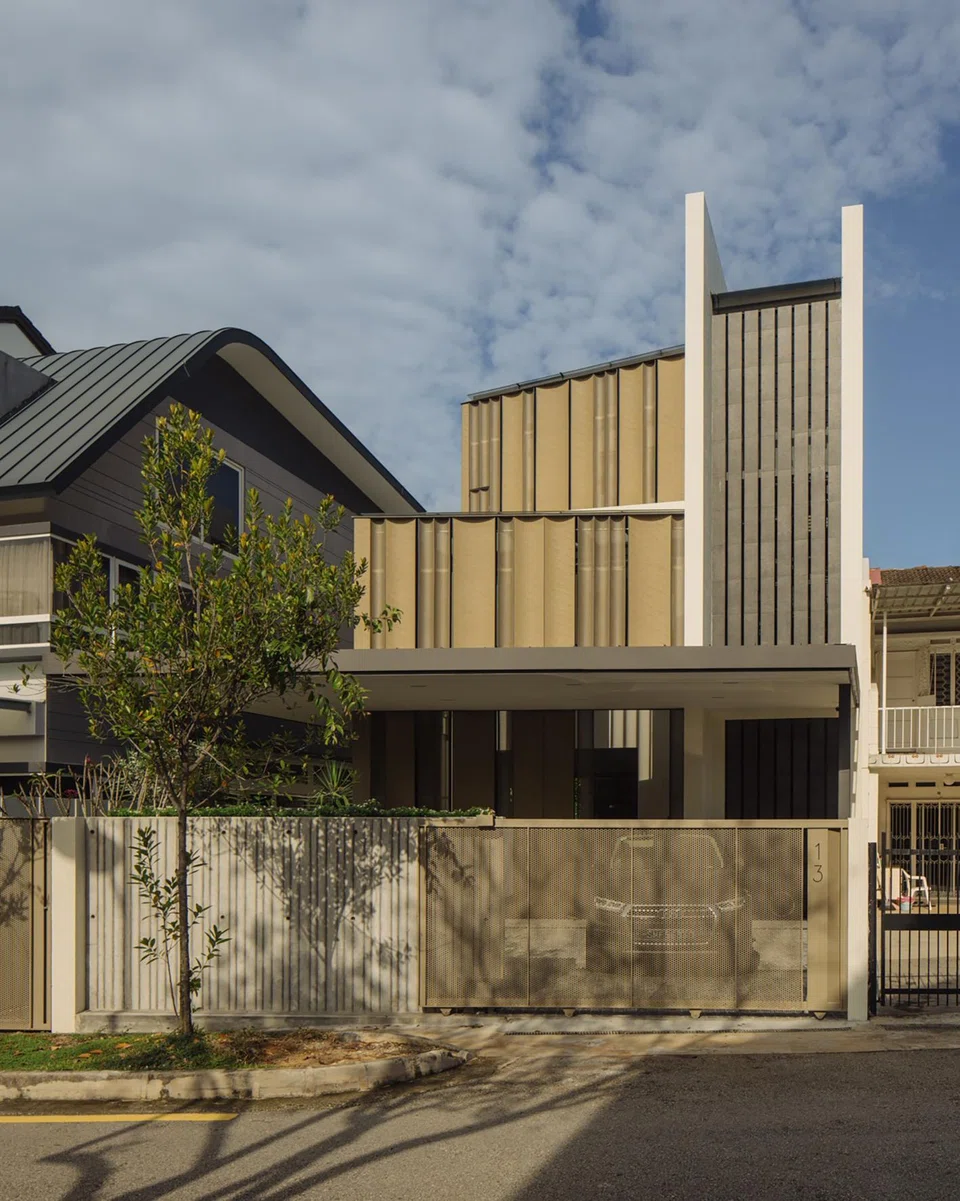
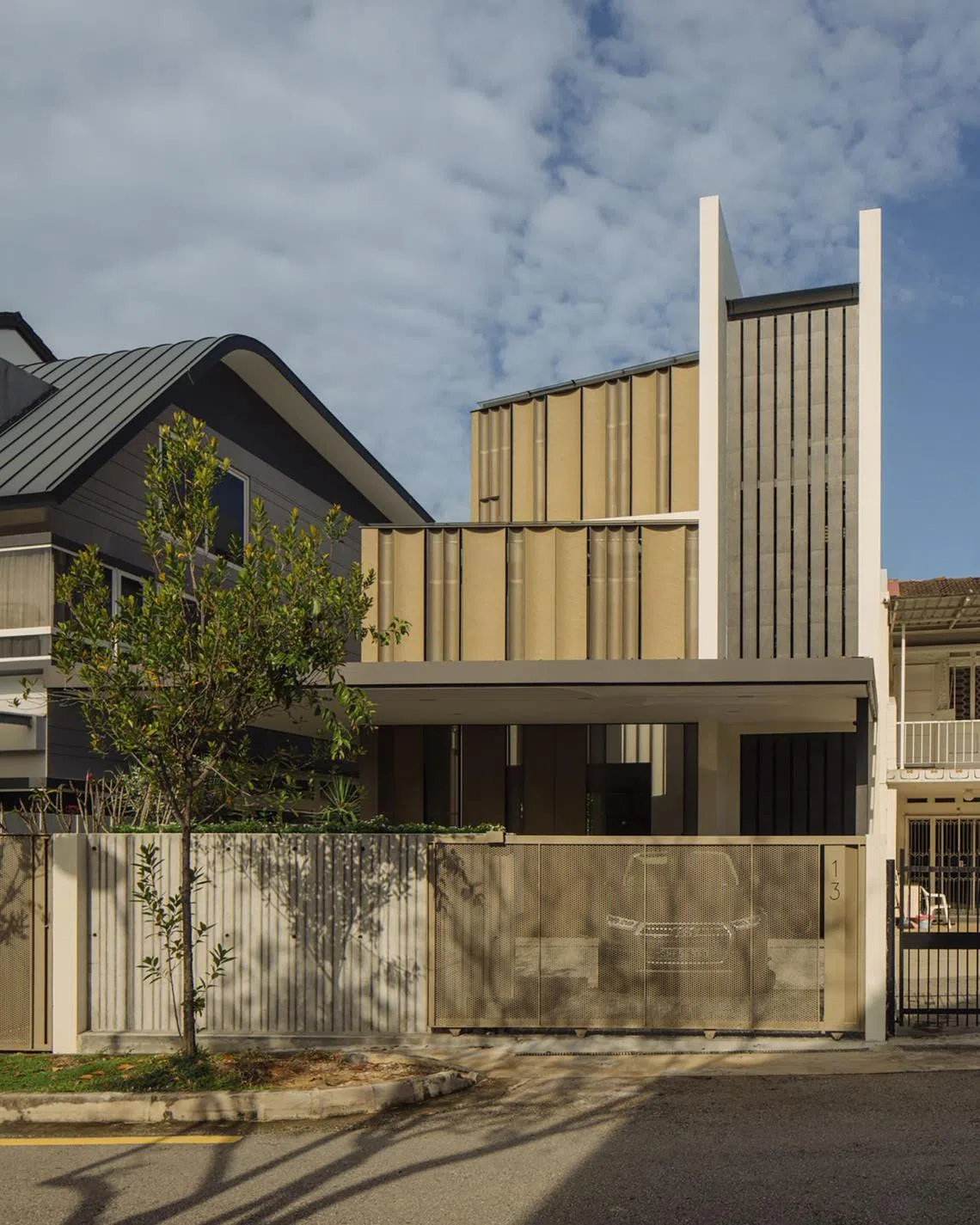
INSTEAD of conventional windows, this semi-detached house has an unusual frontage with a staggered, golden metal profile of scalloped panels and perforated screens. This two-storey “skin” actually wraps a vestibule – a small room between the main door and interior of a building. Designed by Kee Jing Zhi of Freight Architects, this feature was inspired by Islamic architecture.
“The owner and his wife had been living and working abroad in the Middle East for many years,” says Kee. “Their plan was to return to Singapore to retire in this home.” The couple’s three children and the owner’s mother-in-law live together, so the house was designed with their different needs in mind.
“We talked about Islamic architecture, and thought the vestibule or entry courts found in riads could be a good model to adopt for the house,” adds Kee. A riad is a traditional Moroccan house or palace with an indoor garden and courtyard.
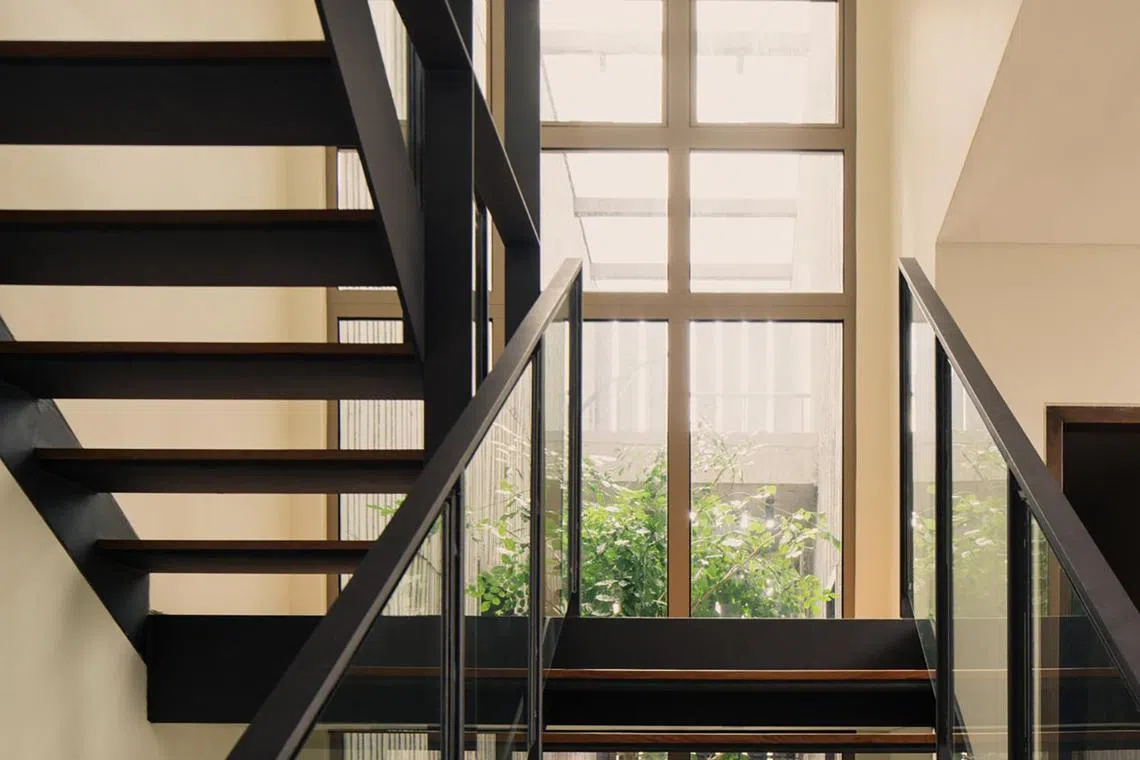
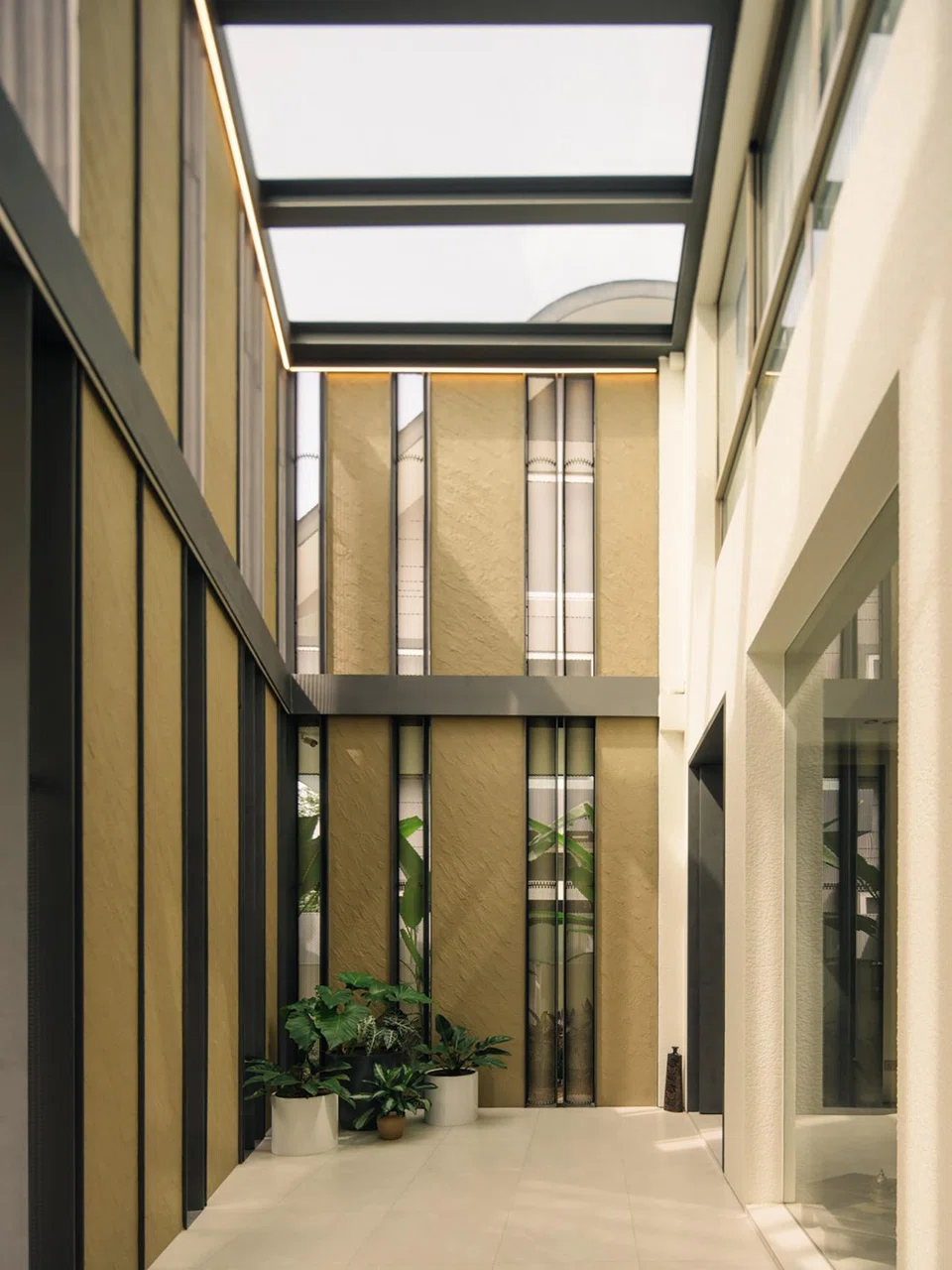
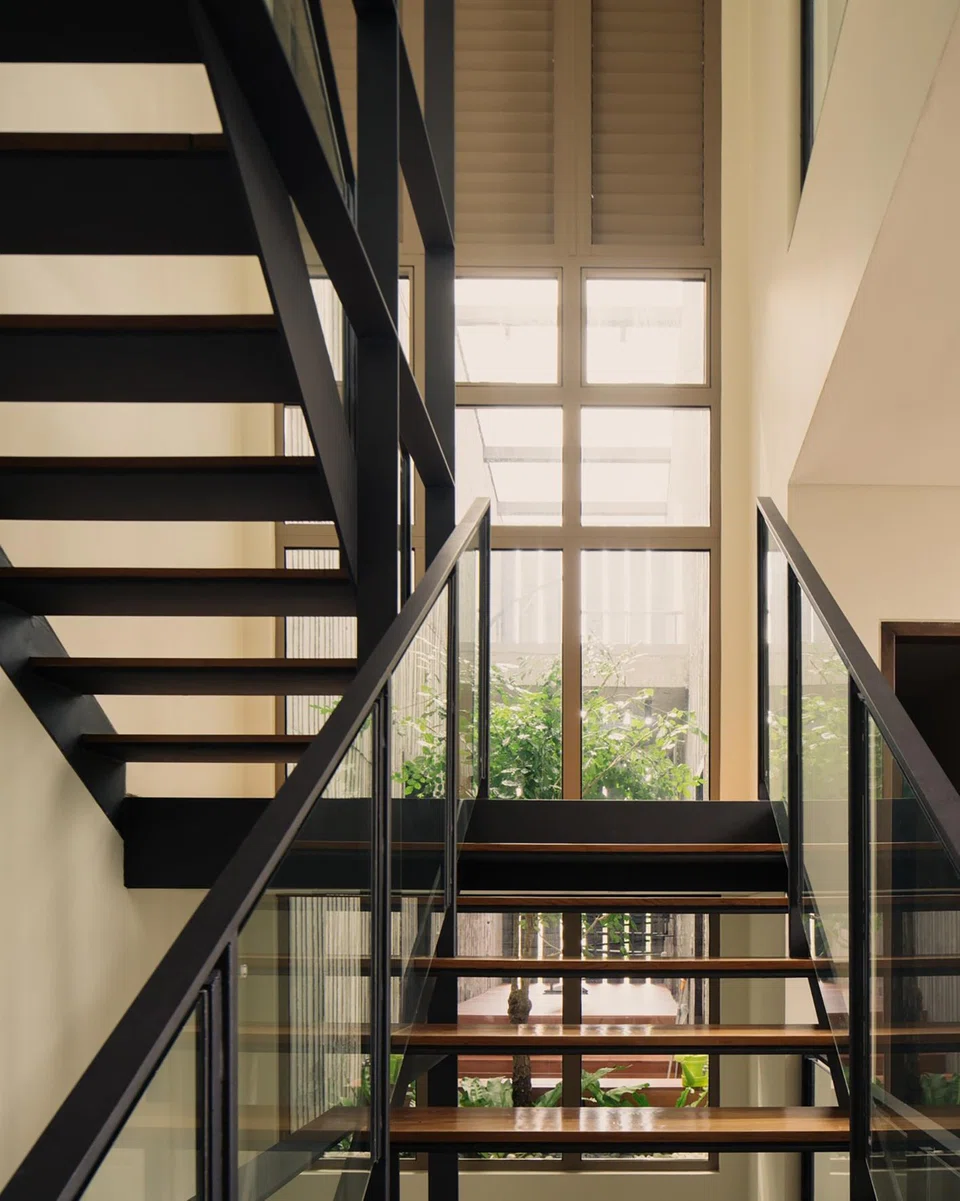
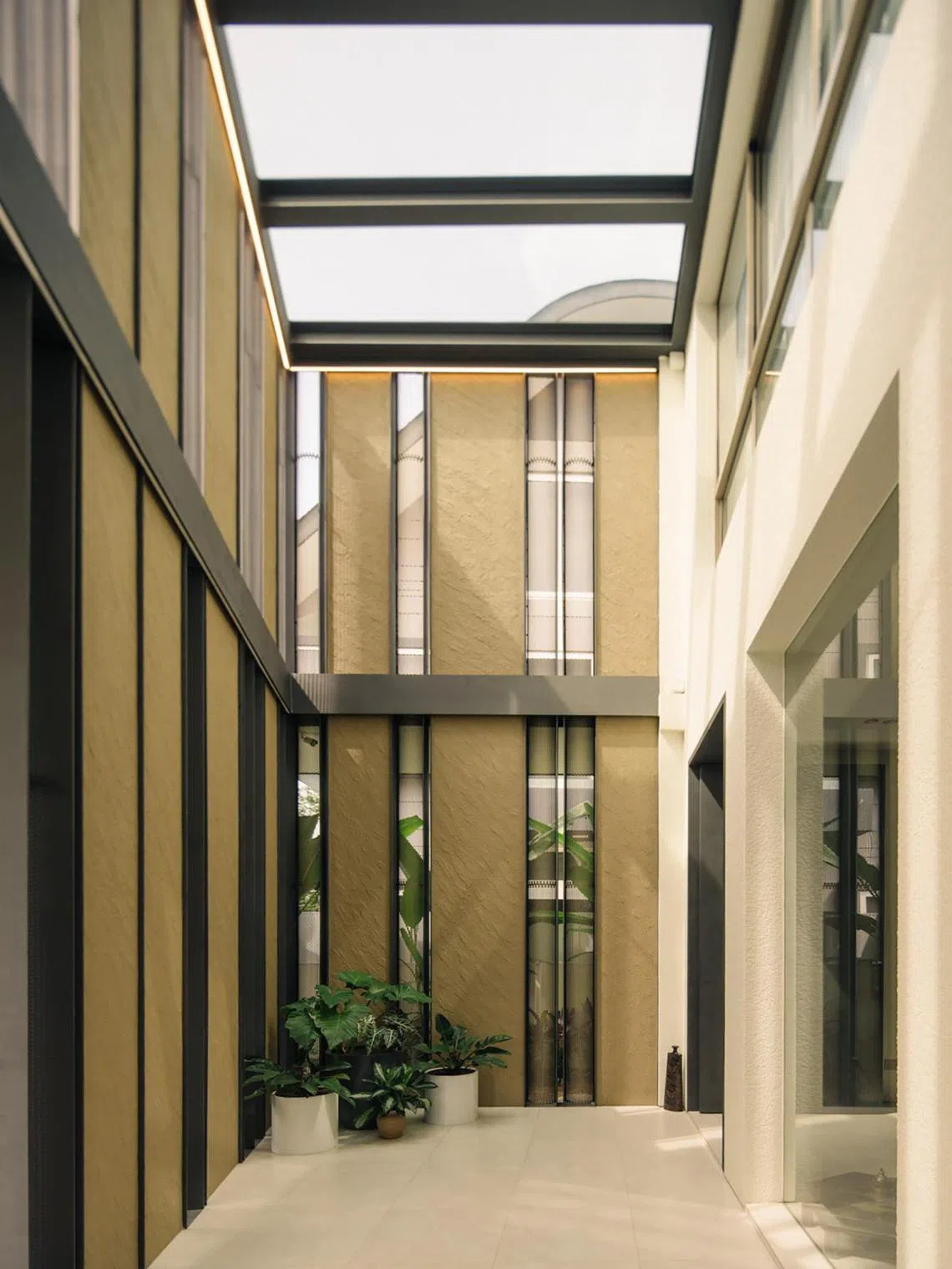
The house’s design features three vestibules. The first is at the entrance, covered by a skylight. The second sits in the centre of the house on the first storey, while the third is on the second floor along the party wall that can be seen from the staircase through glass walls.
They are relevant for tropical living as they bring light and air flow deep into the house.
“We wanted a light-filled, double volume space to mark the arrival,” says Kee on the entrance vestibule. He carefully designed the level of porosity in the screen to prevent rain from coming in. “We also like the play of light and shadow of the alternating panels of opaque and perforated panels,” he adds.
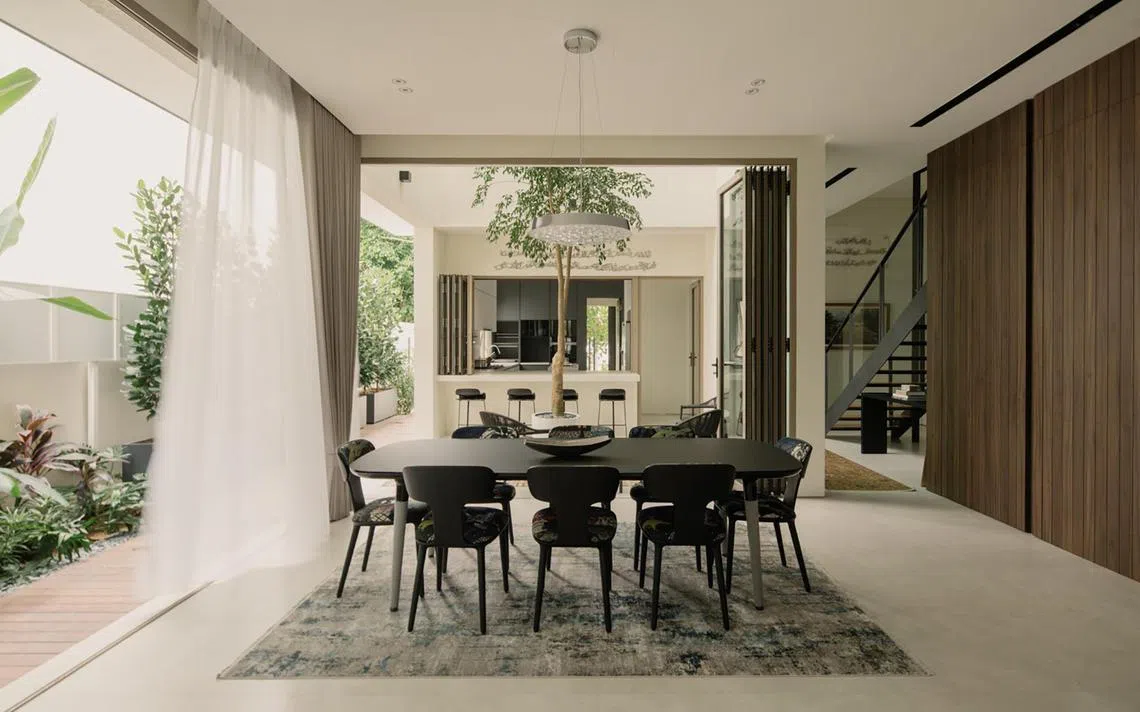
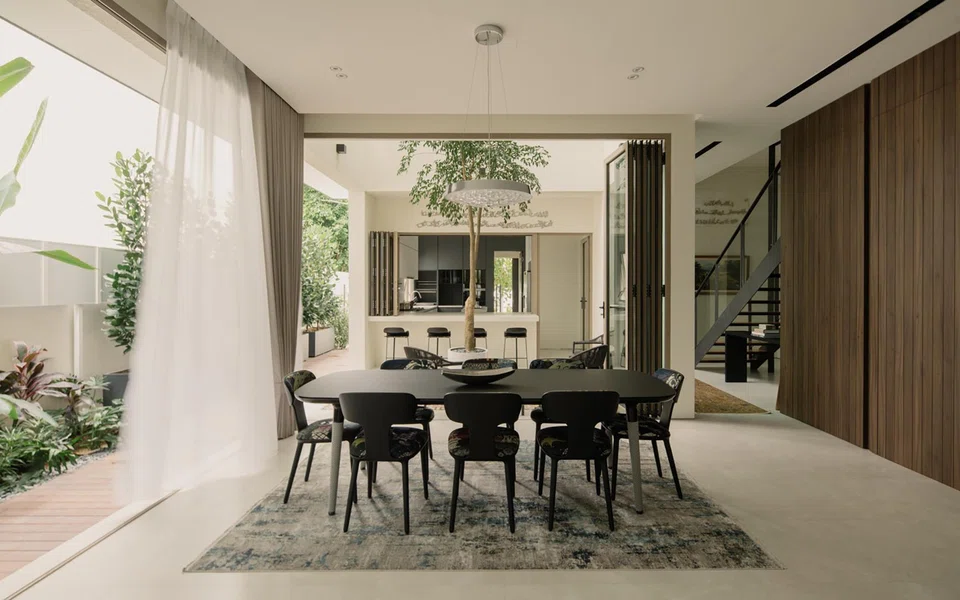
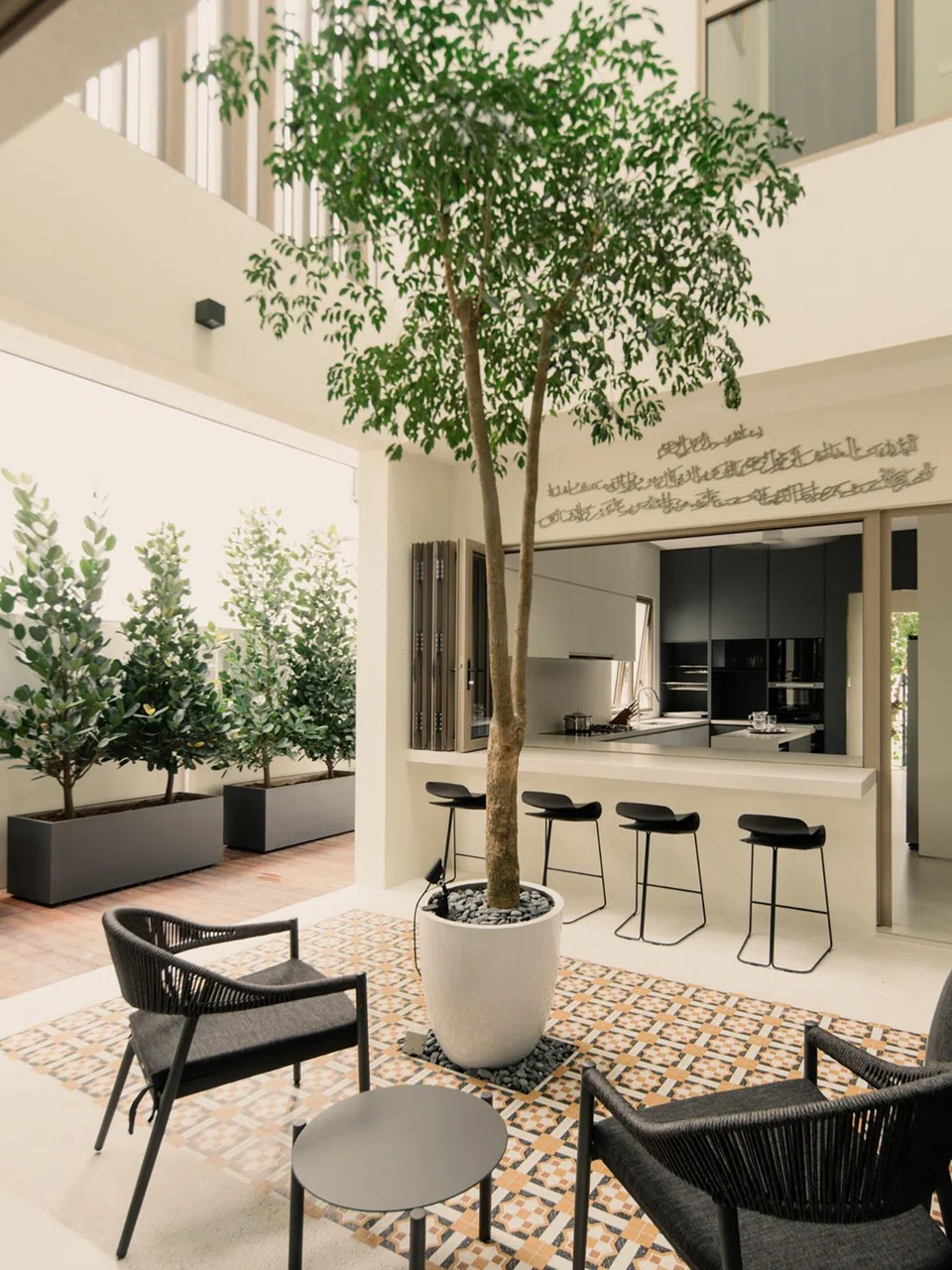
This vestibule leads into the open-plan first storey that was designed to accommodate large gatherings. Dividing the living and dining areas from the kitchen is the second vestibule (although it is more a courtyard than a vestibule in the strict sense).
“It is a very important space for the family to gather,” says Kee. It becomes one with the internal spaces when full-height slide-fold glass doors are opened and pushed to the sides.
“The living, dining and courtyard can be combined into one large entertainment space. We once counted more than 50 people in the house, and each cluster found a corner to chat and eat,” says the owner. “We have no issue with the smell of belacan, salted fish and durian from durian parties that come in through the sliding glass doors. We use the six-seater bar counter by the kitchen for breakfast and lunch. It is also a buffet table at gatherings.”
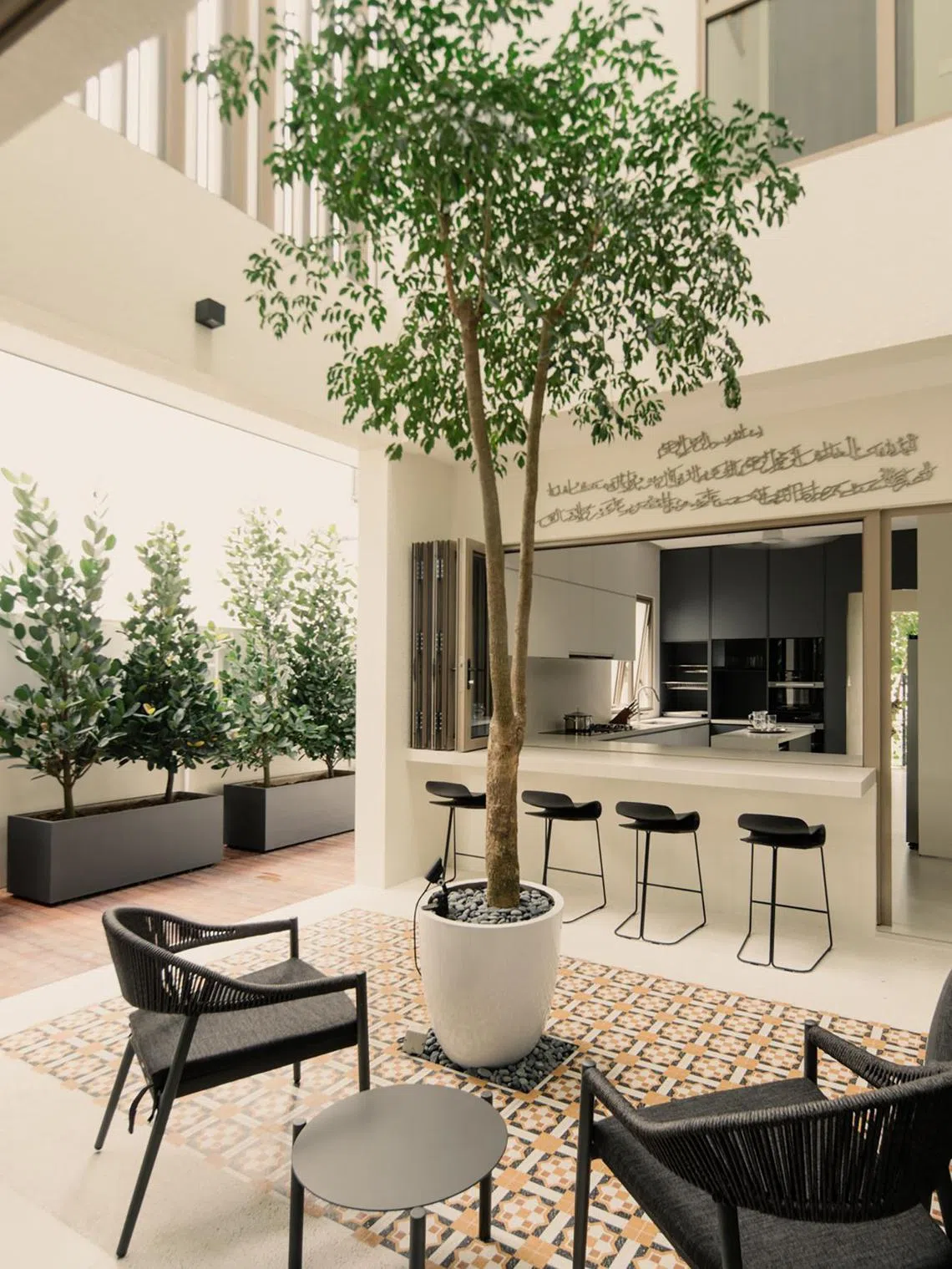
This space is well-used by his mother-in-law, he adds.
“It is extremely heart-warming to see her realising the full potential of the courtyard. This is where she spends most of her time to get fresh air, sunlight and watch the rain without getting wet, as it is not far from her room. She enjoys watching a (resident) bird attending to her chicks in the nest in the tree and squirrels walking along the fence.”
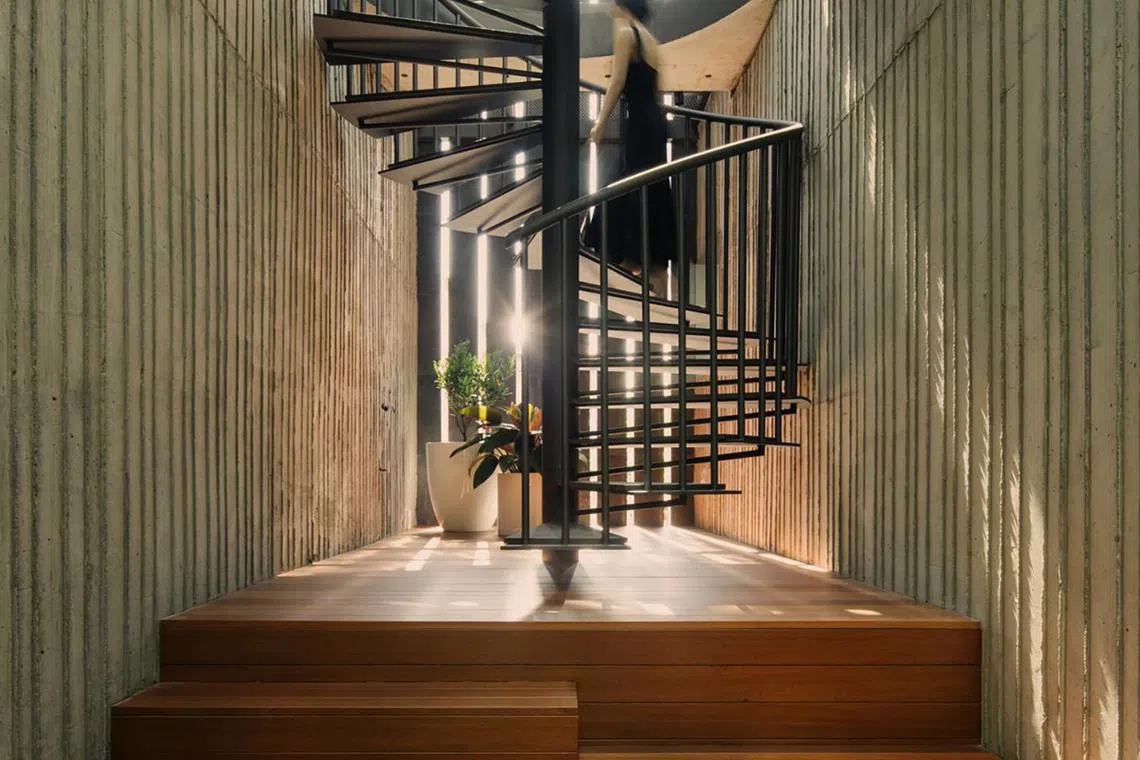
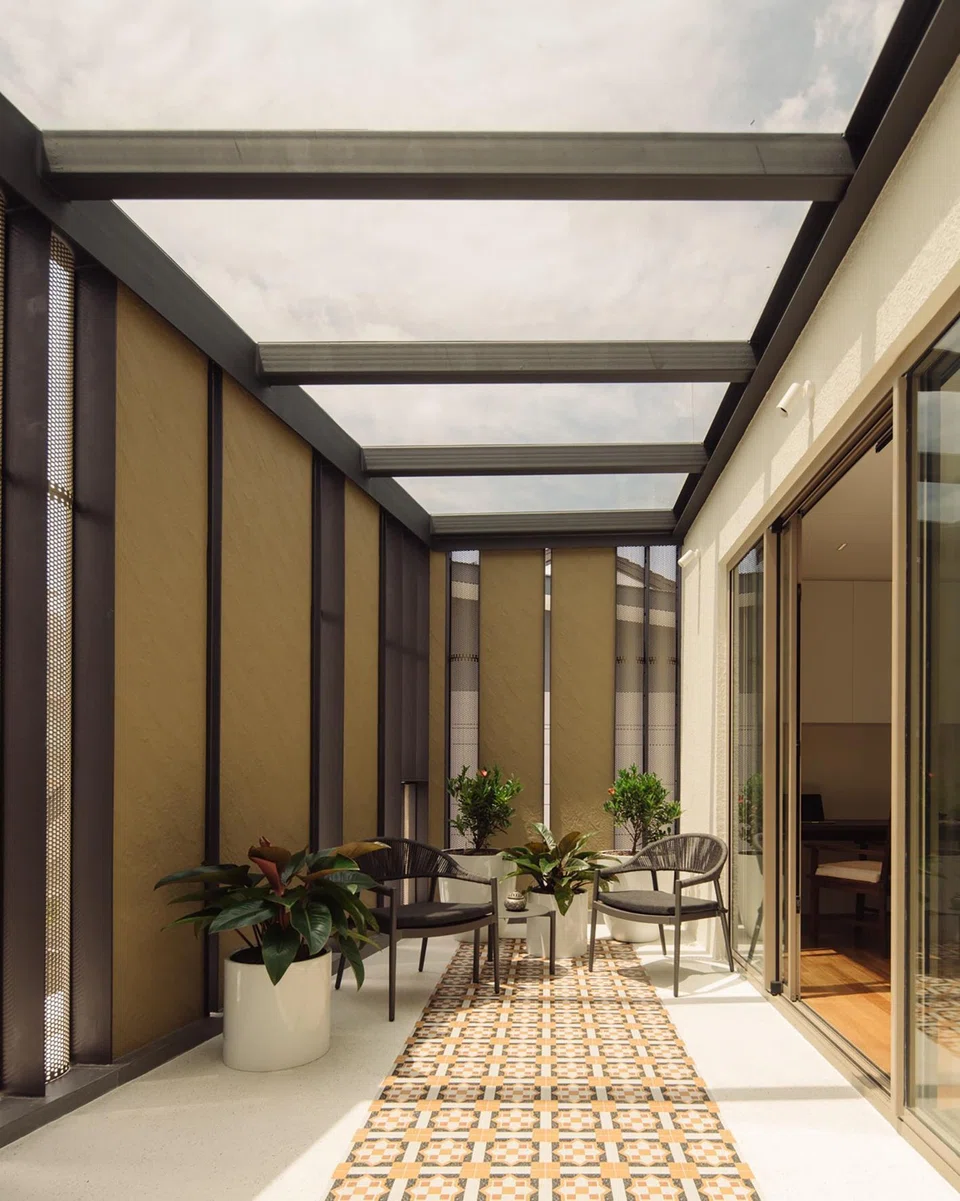
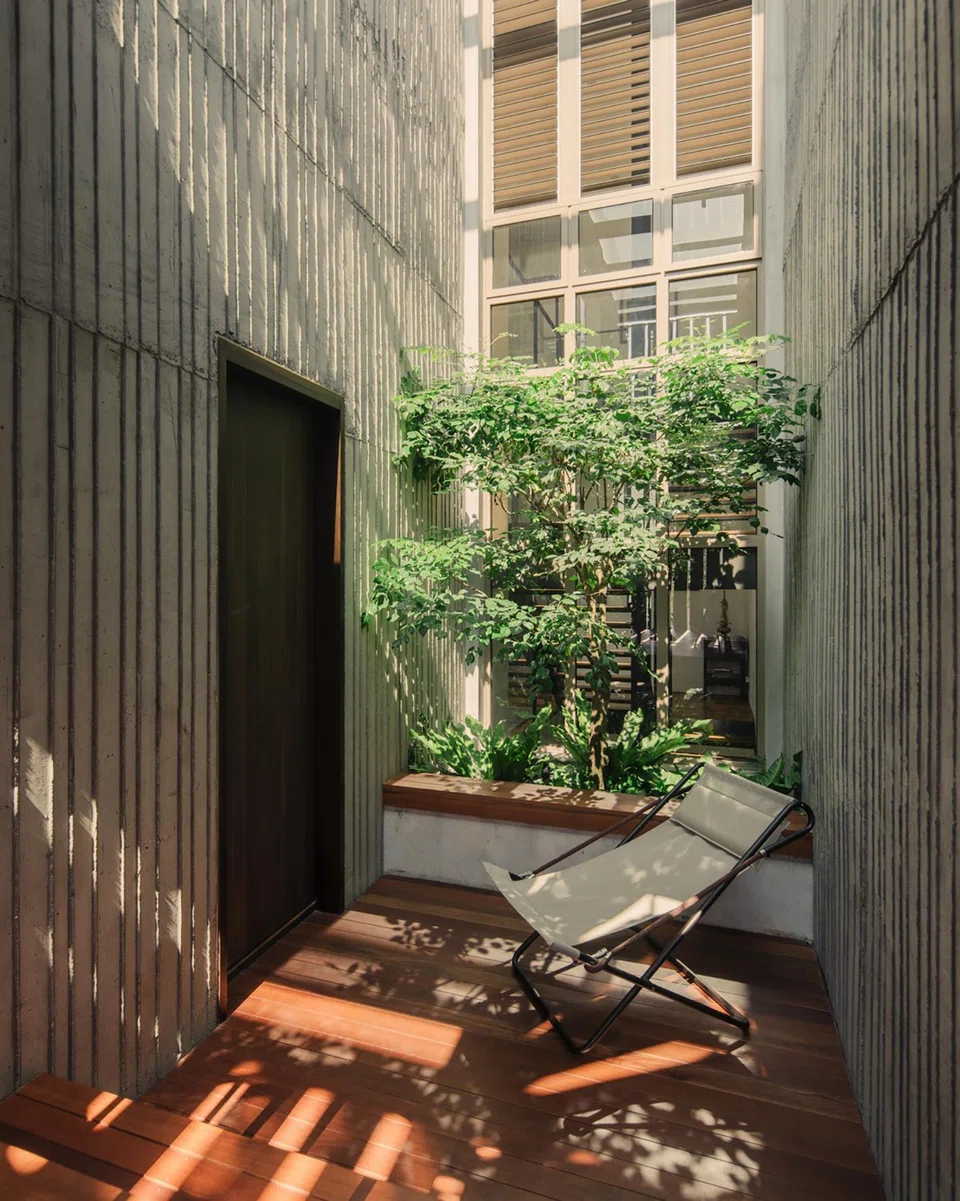
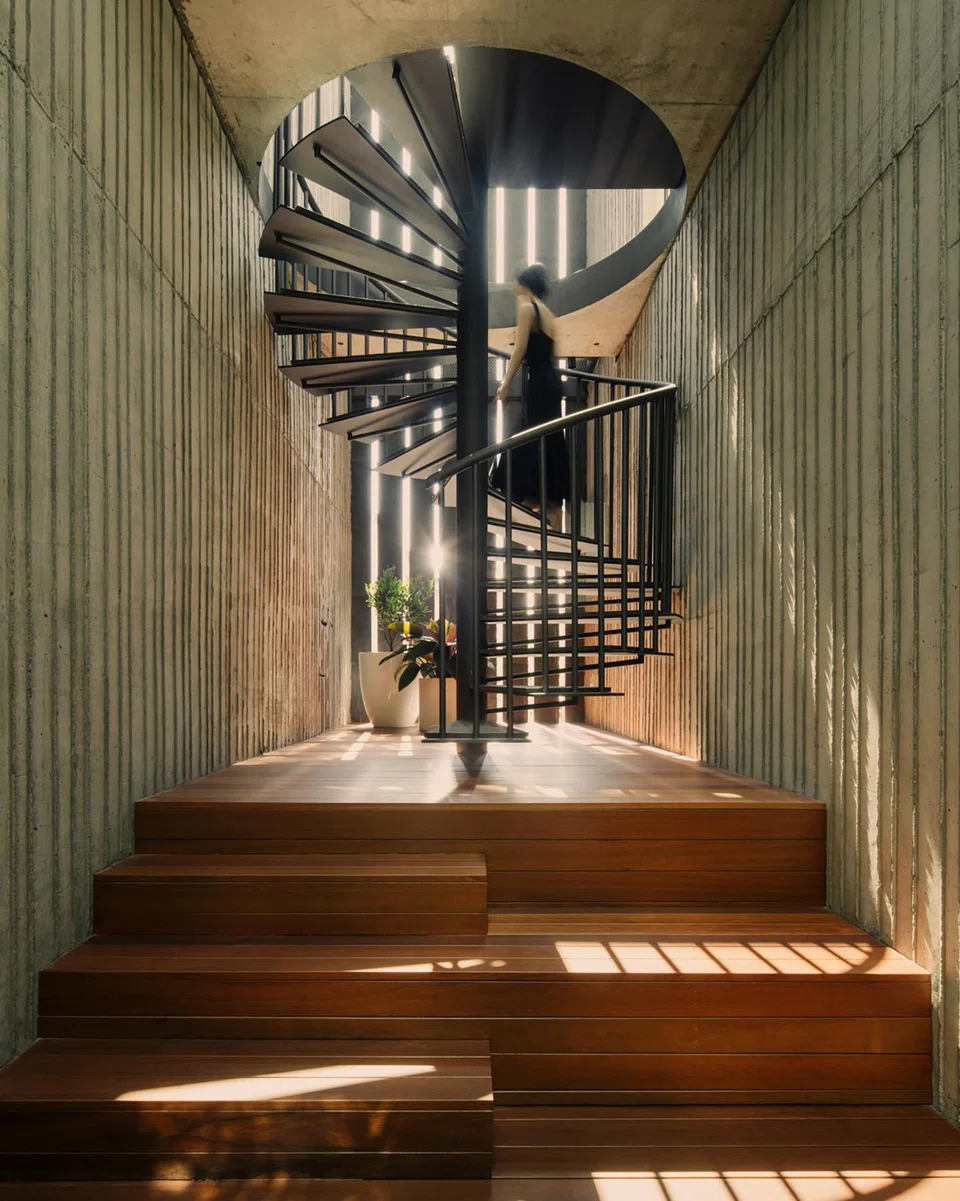
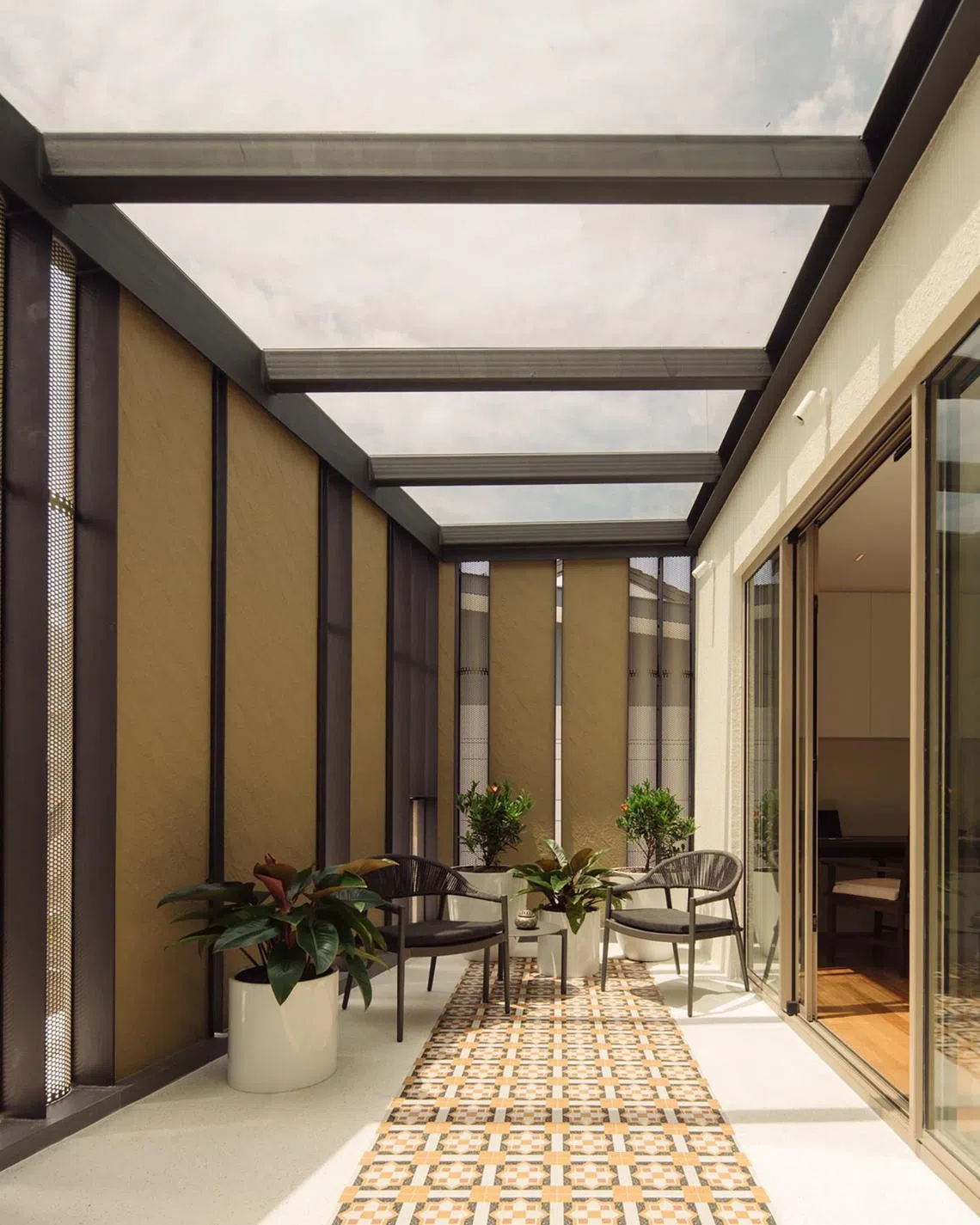
The third vestibule is accessed via the master bedroom from the second storey. A spiral staircase in the open-air space connects it to the study in the attic. “This vestibule was designed to bring light into adjacent spaces, such as the stair core through full-height glass walls,” says Kee.
“You can even put a treadmill in here if you want to,” the owner quips on its multipurpose functionality and good size. It was particularly welcomed during the Covid pandemic, where the pleasantries of an outdoor space aided quarantine and recovery.
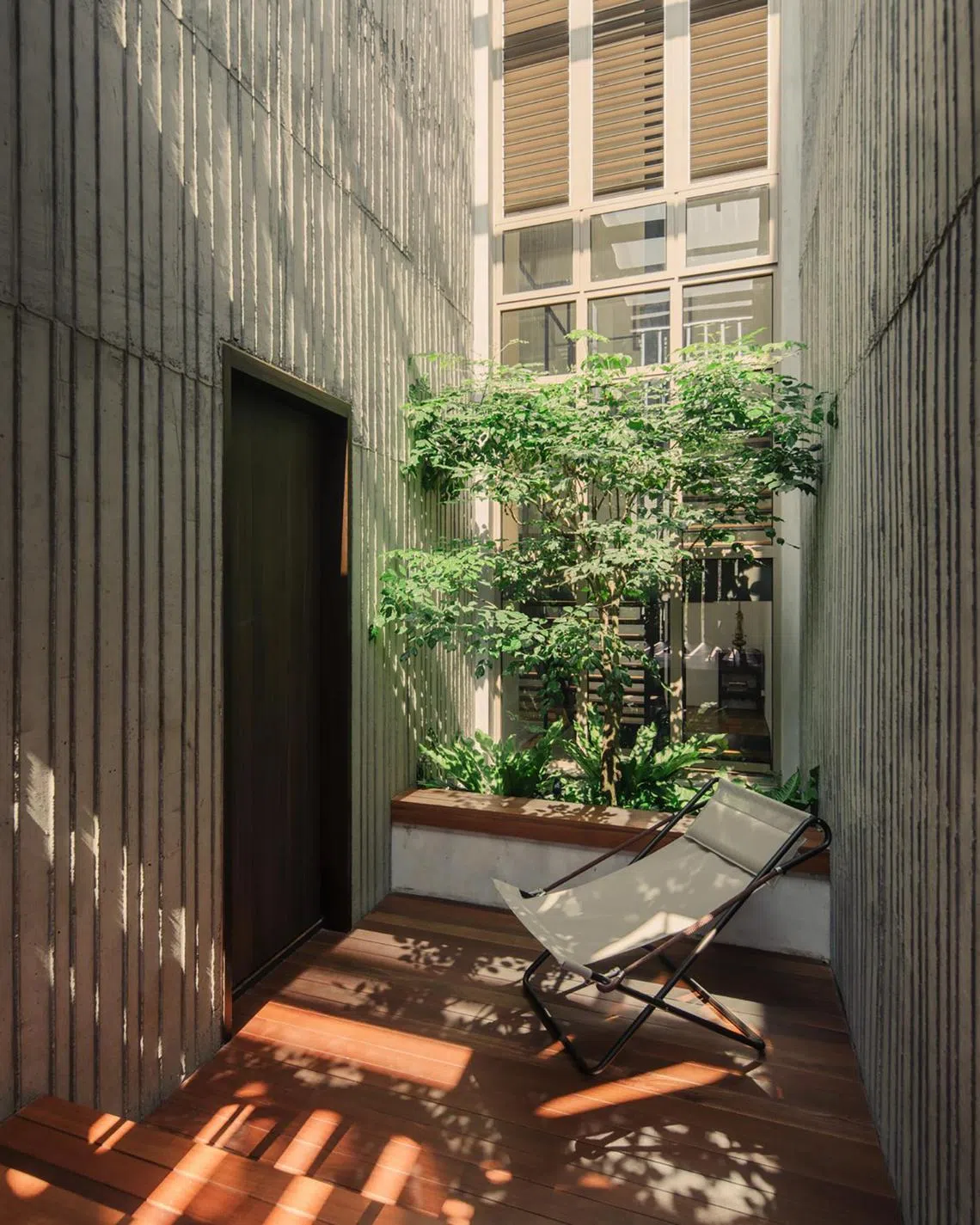
A two-storey screen at the front of the house lets the occupants enjoy being outdoors without worrying about privacy. Off-form concrete walls give the space a rugged feel, while landscaping in a planter functions as a sunscreen for the windows facing the staircase. A series of steps leading to the spiral staircase doubles as casual seating.
The attic, which houses the study, an all-purpose room, a bedroom and a common bathroom, was used as a home office during the pandemic. “It was also a place to entertain guests of our children and a prayer room. Perhaps, it will be a nursery soon,” shares the owner, who is hopeful for grandchildren.
The abundant light that these outdoor spaces provide contribute to the wellbeing of the occupants. “We do not need to turn on many lights at night due to the screens, as well as the glass windows at spaces such as the staircase landings,” shares the owner.
When doors and windows are open, the breeze ventilates the house well. This is another important factor for comfortable living in the tropics, Kee says.
Adds the owner: “The holes and gaps in the facade also help. We turn on the air-conditioning only at night due to the humidity and also on rainy days.”
He is clearly very happy with how the house turned out. “There is greenery outside and inside of the house that makes it look spacious but is not overbuilt. It is a home that brings calm and joy and is refreshing, given the ventilation, light and colours.”
Decoding Asia newsletter: your guide to navigating Asia in a new global order. Sign up here to get Decoding Asia newsletter. Delivered to your inbox. Free.
Share with us your feedback on BT's products and services
TRENDING NOW

Once staunchly pro-China, Malaysian Chinese businesses are now distancing themselves from Beijing

Looking beyond looming CEO succession, should UOB potentially pursue a transformative merger?

Could stablecoins be the future of money?

Grab CEO’s wife Chloe Tong on life with Anthony Tan and finding her purpose

