

Two art world superstars come together for STPI show
Artist Rirkrit Tiravanija and curator Hans Ulrich Obrist tackle animal extinction in We Don’t Recognise What We Don’t See

Helmi Yusof

AT THE centre of STPI’s gallery space, there is a conceptual graveyard with 20 tombstones for 20 extinct animals. They include the dodo bird, golden toad, passenger pigeon, Zanzibar leopard and Javan tiger. The tombstones are shaped in the form of aluminium plates, each with an engraved image of an animal. Visitors are given pieces of paper to place above the tombstone and rub a crayon on it. In doing so, they replicate the image and keep it as a form of commemoration – keeping the animal “alive”, so to speak.
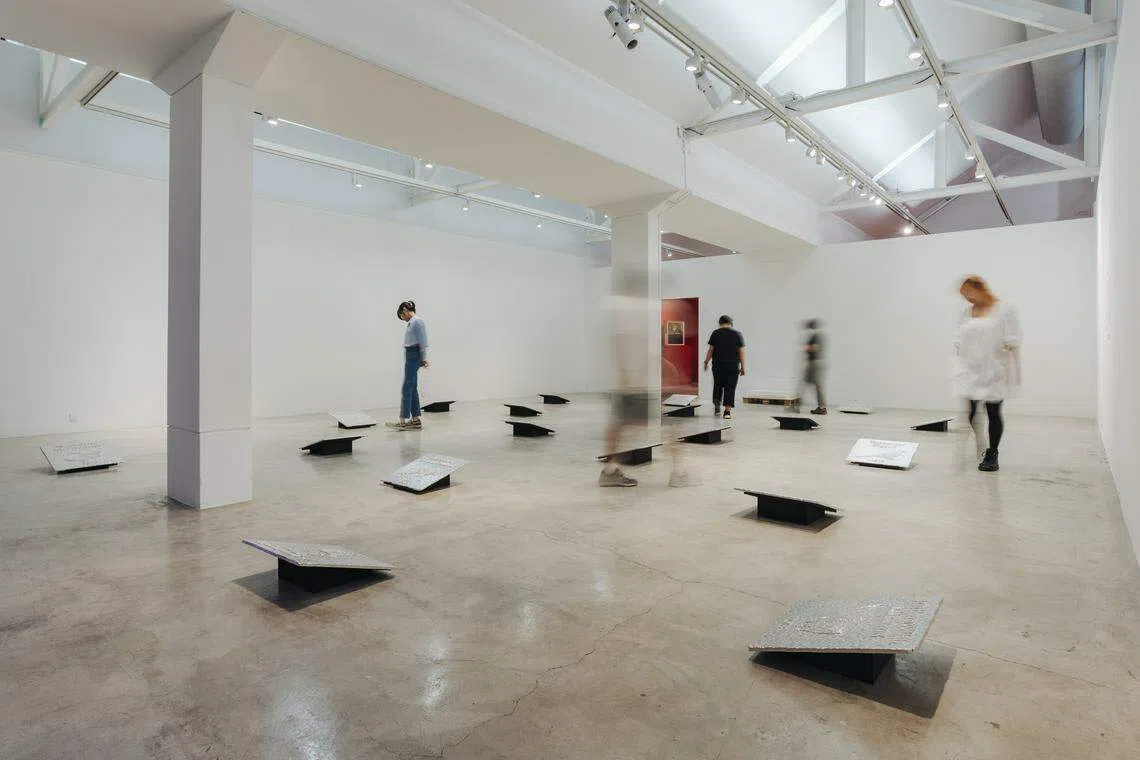
The exhibition is by art world superstar Rirkrit Tiravanija and curated by the eminent Hans Ulrich Obrist. Poignantly titled We Don’t Recognise What We Don’t See, it features 40 artworks that carry the themes of extinction and humanity’s destruction of the natural world. Tiravanija is famous for incorporating the element of human participation in his artworks; he made his breakthrough in 1990s by turning gallery spaces into kitchens where people can cook, eat and interact with each other.
But in this show, there is a more childlike playfulness required of the visitor, as if such playfulness would lift the show from being too gloomy. He says: “I’ve always been interested in creating works that make people more aware of their environment. I wanted this show to make people particularly aware of how we coexist with the natural world, how we treat animals, how we domesticate them, what we put in our mouths, and so on.”
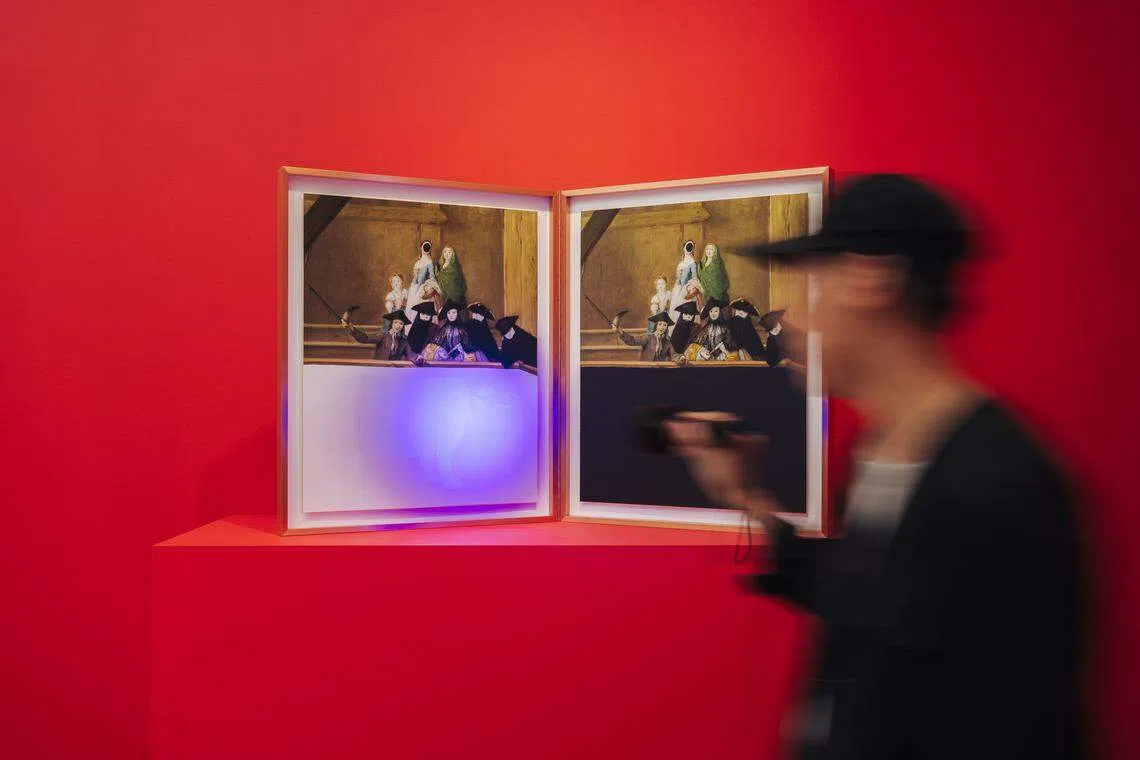
His strategies for generating this awareness include appropriating several Old Masters paintings, but deliberately leaving out certain animals that were in the originals. In their place are screenprints of the animals in solar dusk ink, visible only under ultraviolet (UV) light. Visitors are given UV torchlights to shine on the paintings in order to discern the shapes of the animals.
Tiravanija explains that Europe’s Age of Enlightenment in the 17th and 18th centuries is largely responsible for making humans see animals as a resource, something to be eaten, domesticated, studied or taxidermied. These rapacious attitudes hastened the demise of several animal species.
He says: “As a Thai artist (born in Argentina), I’m positioned at the periphery to ask the question: Why do we always assume that the West is better than us? Why do we think the West has all the answers? The grass is not greener over there. It is the same grass as that which grows everywhere else…
“So I always want to make works that question how the world is, why we think what we think, why we assume what we assume. Hopefully these works raise awareness of the impact the Enlightenment had on the natural world.”
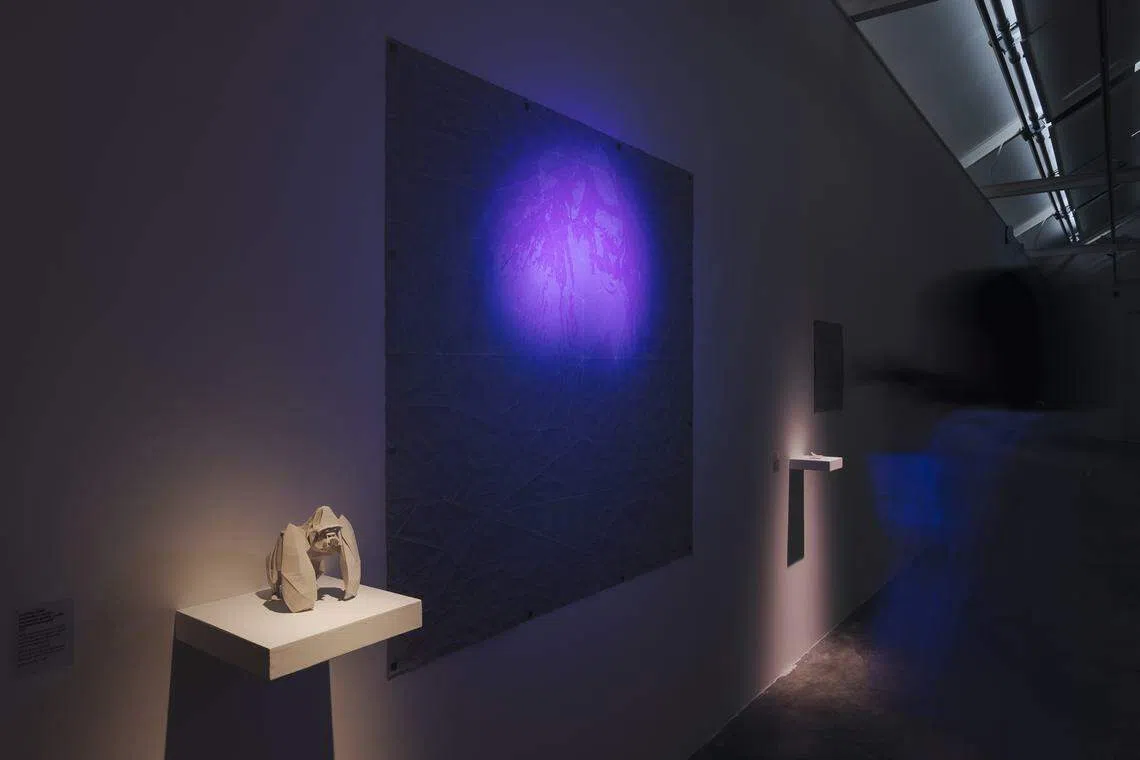
The largest works are pieces of paper that were once folded origami of extinct animals, which were then unfolded and displayed as square pieces proudly bearing their beautiful geometric creases – an “undoing” of the animal forms, so to speak.
Each paper carries the screenprint of said animals, visible only under UV light. Marrying playfulness and poignancy, the works resonate as spectres of a lost world.

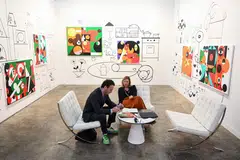
We Don’t Recognise What We Don’t See runs at STPI till Jun 4.
Decoding Asia newsletter: your guide to navigating Asia in a new global order. Sign up here to get Decoding Asia newsletter. Delivered to your inbox. Free.
Copyright SPH Media. All rights reserved.
TRENDING NOW

If Europe goes to war, the fallout will be felt in East Asia
Keppel posts 20% rise in Q3 net profit; New Keppel earnings up 15%

CICT Q3 NPI rises 13.8% to S$334.9 million on contributions from Paragon and other acquisitions
Stocks to watch: Keppel, CICT, MLT, Golden-Agri, Wilmar, CDLHT, FEHT, UltraGreen.ai

