

Two sculptors celebrated in unusual fashion
Artworks of the late Joseph McNally and Shui Tit Sing loom in Art Agenda’s strange postmodern setting

Helmi Yusof
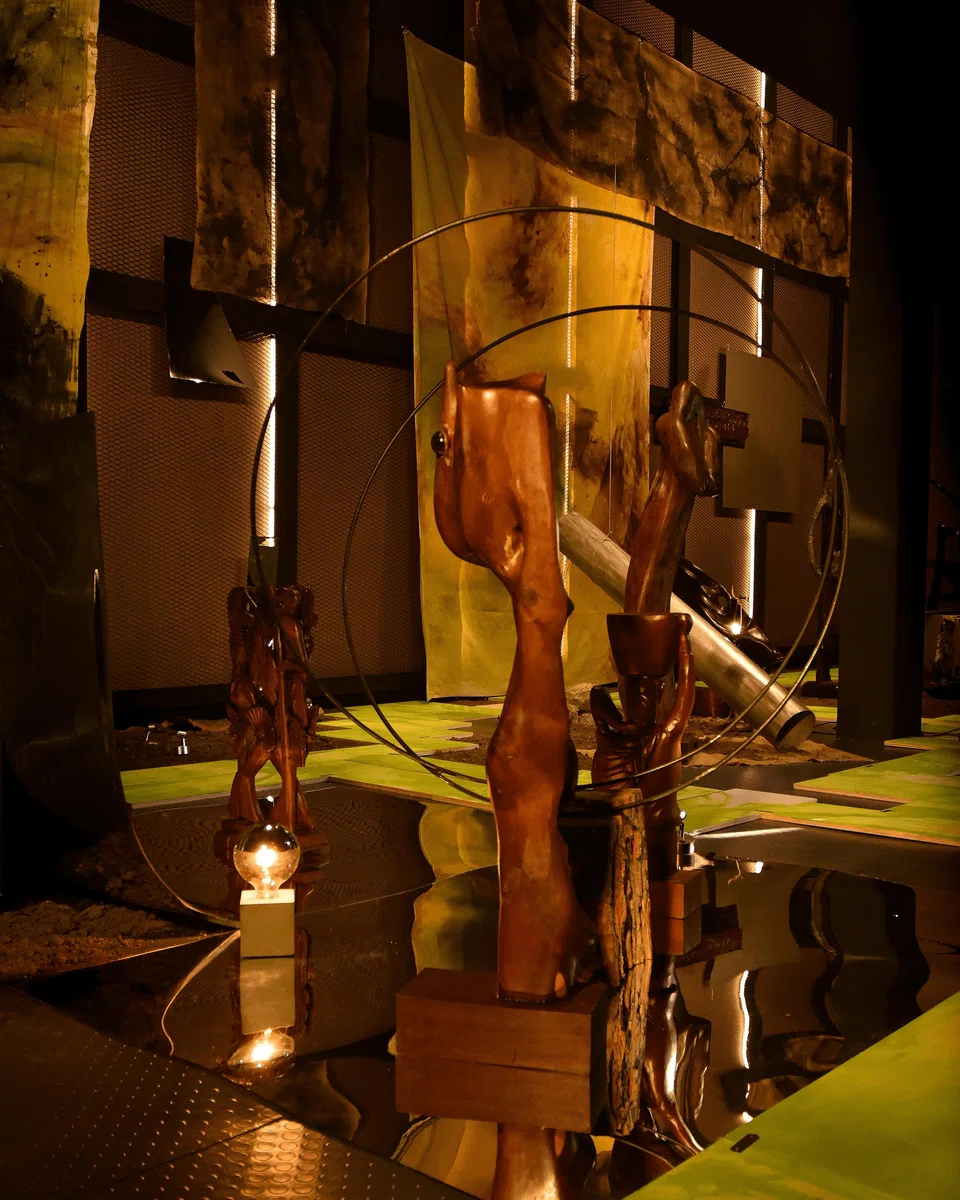
IT IS not every day that a gallery decides to go for a total makeover. But that’s exactly what Art Agenda has done for its two-man exhibition featuring the wood sculptures of Joseph McNally (1923 - 2002) and Shui Tit Sing (1914 - 1997).
The main wall is adorned by coarsely painted fabrics. The floor is covered by a series of planks that lead you towards and around the artworks. The lighting is striking and dramatic, accentuating the angular lines and planes of the sculptures. There are mounds of soil, metal and mirrors lying about, evoking the feel of a weird postmodern industrial garden.
The scenography is the brainchild of young art director Gagandeep Singh Sidhu, who typically designs sets for fashion shows and music videos. (He created the wacky sets for Yung Raja’s music video Mami.) Instead of playing by the rules of showcasing Singapore 20th century art, he opted for an iconoclastic stance instead – which, in a way, pays appropriate tribute to McNally and Shui, who were visionaries of their time.
McNally was an Irishman of the cloth who arrived in South-east Asia in the 1940s to teach art. He was determined to develop arts education in Singapore, and later founded the Lasalle College of the Arts in 1984 to offer affordable arts education to Singaporeans.
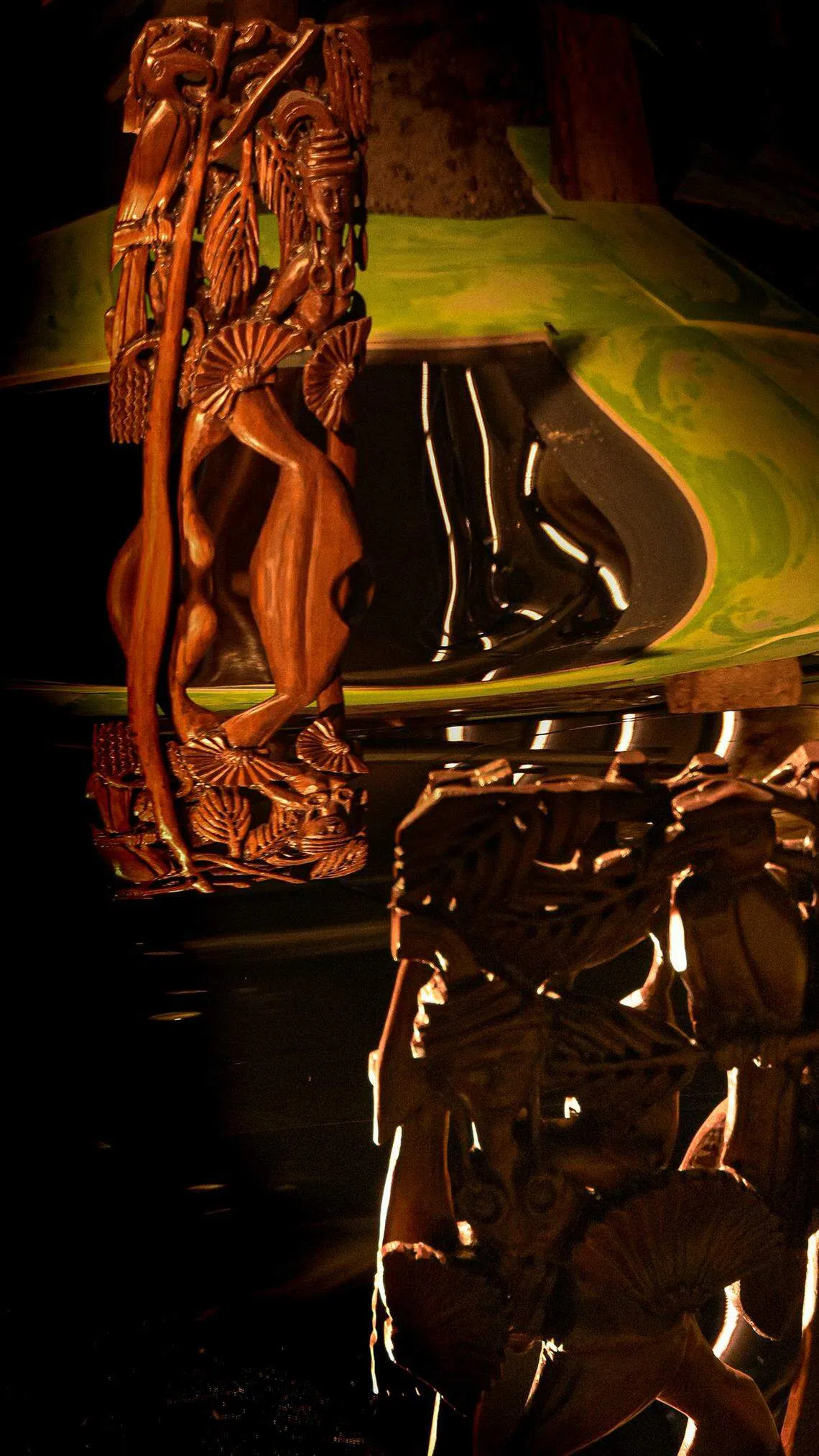
Shui was a Guangdong-born artist who moved to Singapore in 1940. He spent the 1960s and 1970s travelling through South-east Asia to understand the various art forms of Cambodia, Thailand, Borneo and Sumatra. He depicted their peoples’ everyday lives and rituals in his beautiful wood sculptures.
The deconstructed garden look of the gallery is an appropriate foil to the works of both sculptors, which vary between McNally’s meditative abstract style and Shui’s figurative evocations of dailiness. It has an unexpected way of making the art stand out – even if it is entirely possible to sometimes mistake the scenography and its props for the art.

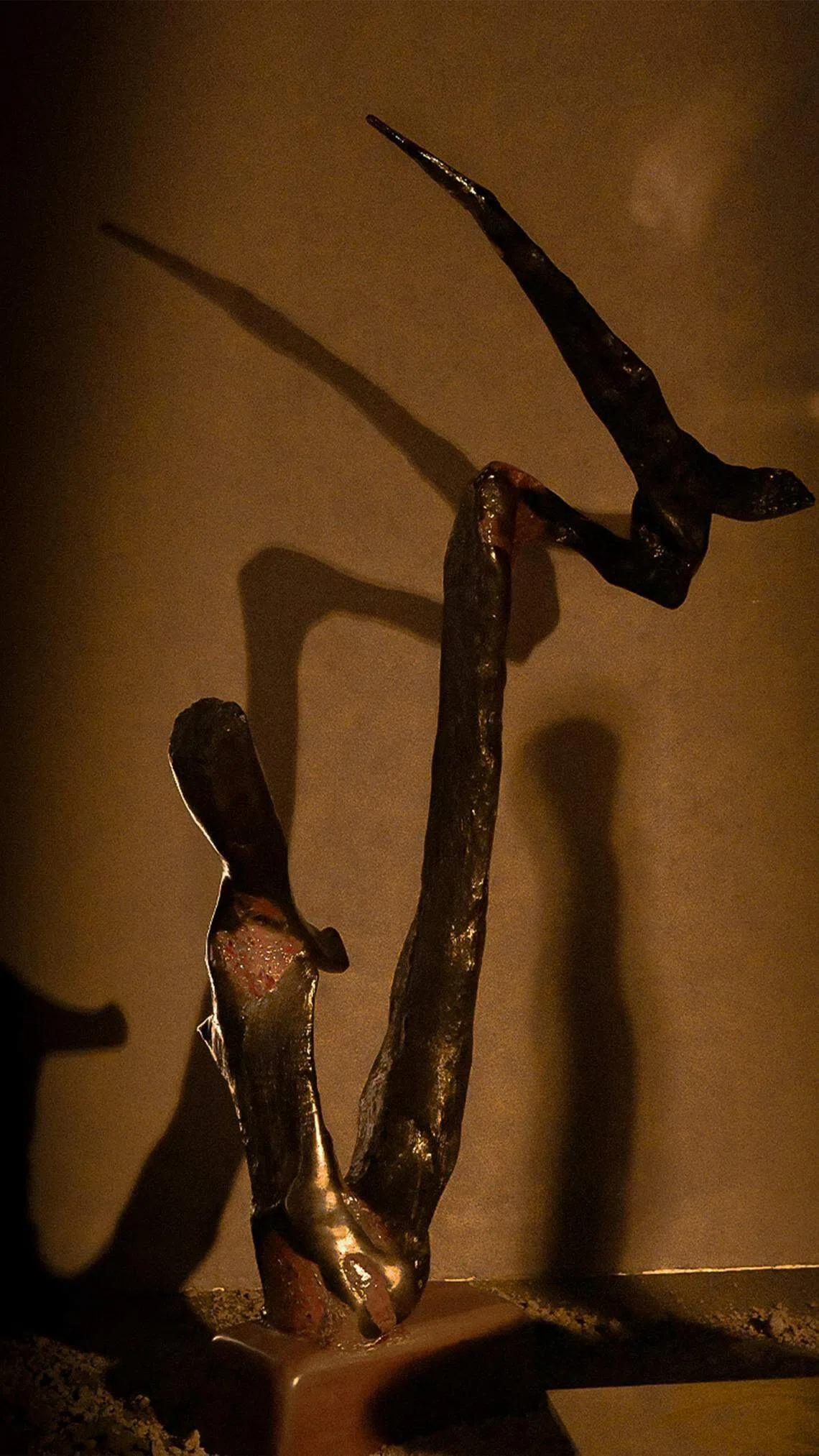
Among the eight McNally works are some striking pieces carved out of bog wood, and some adorned with glass and epoxy. In some cases, the darkened studio lighting prevents one from fully appreciating the intricate grain of the wood, but it also allows one to focus on their haunting silhouettes.
In this case of Shui, his wood carving sculptures take on a more classical and timeless quality, reminding one of the South-east Asian temple bas reliefs which inspired their creations.
Wang Zineng, founder of the Art Agenda gallery, says: “Brother McNally and Shui are less celebrated modern artists today compared to some of their contemporaries in 20th-century Singapore art. As sculptors, they had to overcome greater challenges compared to mainstream painters, and their respective steadfastness to their chosen medium should be admired.”

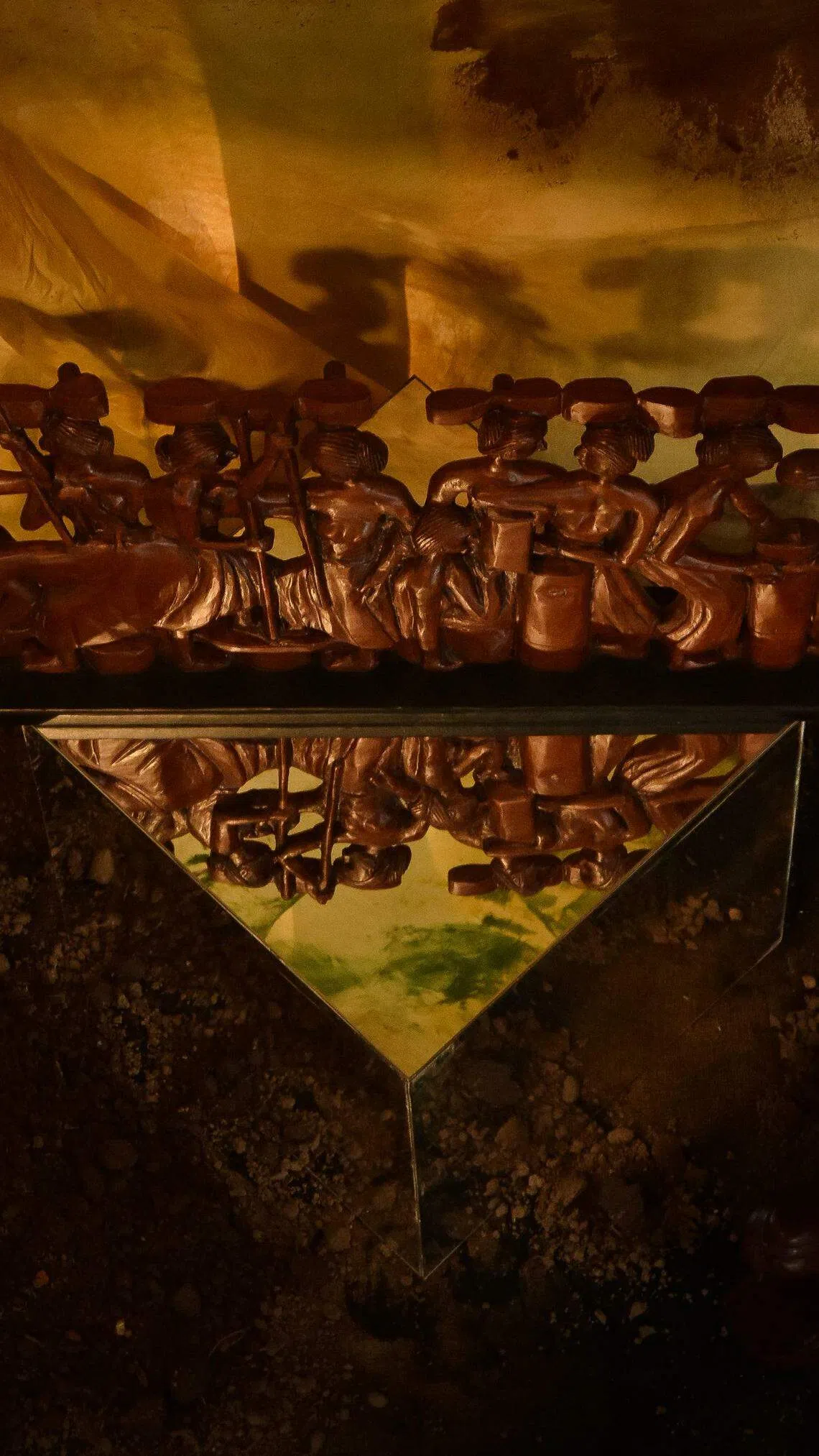
Accompanying the exhibition are archival materials compiled by artist-historian Koh Nguang How and displayed on the gallery’s upper floor. Appointed guardian of the estate by Shui’s family, Koh has assembled pictures, sketches, newspaper clippings and various ephemera belonging or relating to Shui to give the visitor a better understanding of the artist.
All sculptures in the exhibition are for sale, with those by Shui priced between S$8,000 and S$25,000, and McNally’s ranging from S$12,000 to S$36,000.
The exhibition runs from now till Sep 30 at Art Agenda at Tanjong Pagar Distripark
Decoding Asia newsletter: your guide to navigating Asia in a new global order. Sign up here to get Decoding Asia newsletter. Delivered to your inbox. Free.
Copyright SPH Media. All rights reserved.
TRENDING NOW
From legacy to launch: Francis Yeoh and Yeoh Pei Xien on family unity and YTL’s next‑gen ventures

Could Japan trigger the next global financial crisis?

Wealthy Indonesians snap up government bonds as yields near 8%: OCBC
‘You buy more picks and shovels because you keep hitting gold’: Why AI spending needs to see results

