

Udon billionaire bets thick noodles will win over Americans
The challenge is scaling up the business and finding a way to entice consumers unfamiliar with a staple of no-frills Japanese cuisine
TAKAYA Awata went from a college dropout to a billionaire selling bowls of chewy udon noodles across Japan. Now, he’s betting the humble dish can become a global fast-food category alongside burgers, chicken and pizza, with the US at the centre of Toridoll Holdings’s overseas ambitions.
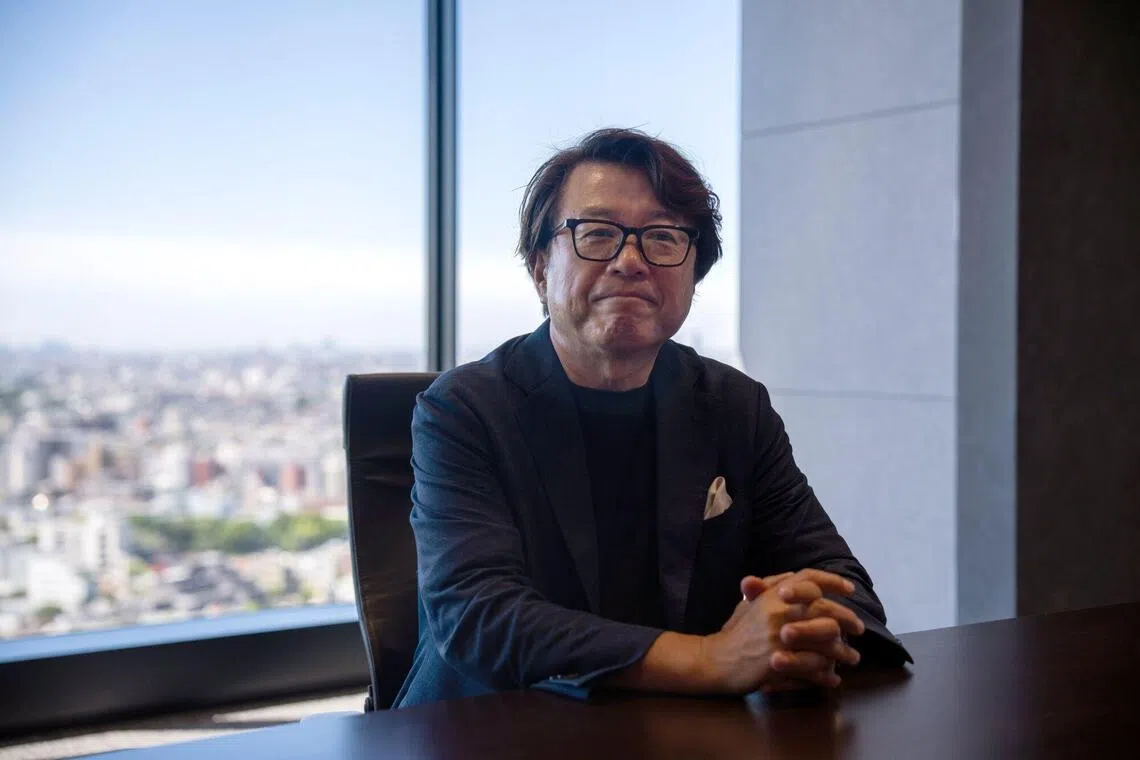
“We want udon to become one of those major global categories,” Awata, 64, said in an interview at Toridoll’s headquarters in Tokyo. The founder and chief executive officer wants Toridoll, with almost 280 billion yen (US$1.8 billion) in annual revenue, to join the trillion-yen ranks of the world’s largest fast-food chains, primarily by growing its flagship Marugame Udon brand.
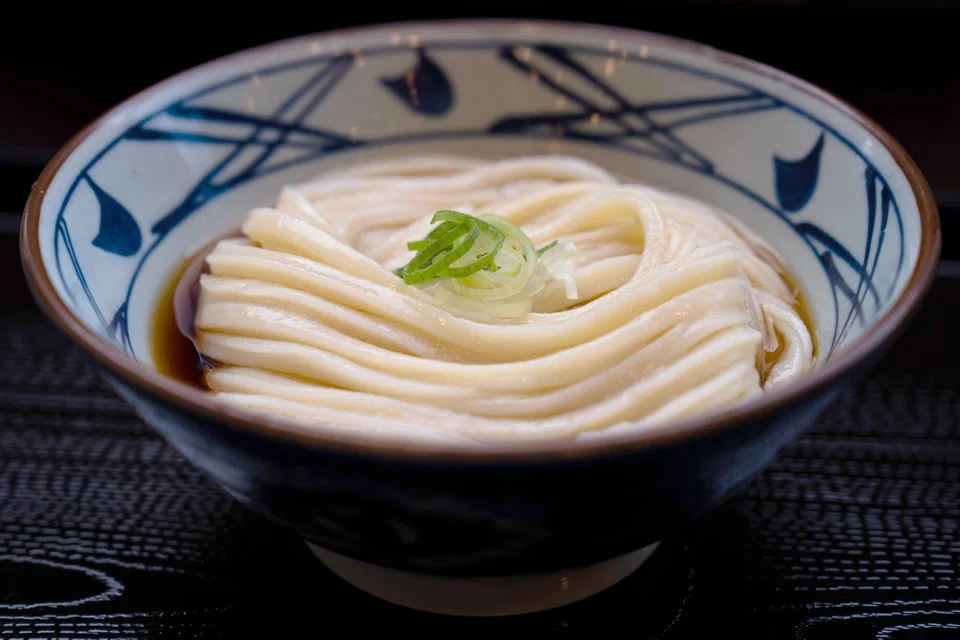
The challenge is scaling up the business and finding a way to win over consumers unfamiliar with a staple of no-frills Japanese cuisine. Unlike the better-known, thinner and yellowish ramen noodles typically served up in a seasoned bouillon, udon are thick, chewy white noodles that swim in a much simpler broth.
Toridoll already has Marugame outlets in several countries, including Canada and the UK, and a beachhead in the US with a couple of dozen locations on the west coast. All told, it operates almost 2,100 restaurants, more than 40 per cent of which are outside Japan. This has given Awata a net worth of around US$1 billion, according to the Bloomberg Billionaires Index.
Other fast-food purveyors based in Japan have tried to crack the lucrative American market, but have faced significant obstacles. Casual chic rice-burger chain MOS Burger tried and failed, as did ramen noodle chain Dosanko. Beef bowl vendor Yoshinoya, which first came to the US in 1975, radically downsized in the early 1980s before rebuilding.
“The US is a very challenging market,” said Kazunori Tsuda, an analyst at Daiwa Securities. “Sales per store can be three or four times those in Japan, but labour costs and rents are also three to four times higher.”
In Japan, Marugame’s formula for success is based on freshly prepared noodles served with fast-food speed and prices. Customers move along a cafeteria-style line, placing orders for just-boiled noodles and then paying when they receive them. A basic bowl costs as little as 390 yen, but the typical customer in Japan spends double that amount on extra toppings such as tempura-battered shrimp or a side order of onigiri rice balls.
Prized ‘koshi’ texture
Even as it expands the gospel of udon overseas, Toridoll is sticking to its hallmark feature of making noodles from scratch inside every restaurant – and in full view of customers – despite the added labour. By using fresh ingredients and made-to-order service, it aims to give Marugame noodles a prized elastic texture, known in Japanese as koshi, reserved for the best udon.
Toridoll did try to sell pre-made noodles at a short-lived venture in China, but it wasn’t able to compete with local rivals offering the same fare for less and eventually withdrew from the market. That taught the company an important lesson.

“From a conventional perspective, there are many aspects of our operations that appear inefficient,” said Ryosuke Matsuura, Toridoll’s strategy and business development manager. “For us, those ‘inefficiencies’ are actually one of our competitive strengths.”
To keep costs down, Toridoll is automating parts of its business customers don’t see by, for example, using artificial intelligence for demand forecasting, staffing and inventory management.
Shares of the company are mostly unchanged this year, but have more than doubled over the past five years. Last week, it reported a worse-than-expected drop in quarterly operating income on higher labour costs, even as profit and sales in the US grew. For the full year, it expects higher income and a 3 per cent increase in revenue to 287 billion yen – well short of its long-term goal of one trillion yen.
In one promising sign for future growth, some of the 21 Marugame outlets operating on the west coast of the continental US regularly rank among Toridoll’s 10 highest-selling locations globally by revenue, with spending per customer approaching 3,000 yen – more than triple the average amount spent in Japan. Now, more than a decade after Toridoll made its first US landing in Honolulu in 2011, the company wants to gradually expand inland and eastward to more US states.
“Given the size of the restaurant market, the US is one of the world’s largest opportunities,” Awata said. “Establishing a solid foothold there will be one of our major priorities going forward.”
Shredded cheese
In the CEO’s view, Marugame’s selling points are a sense of theatre surrounding its hand-tossed noodles – something like the iron griddle showmanship of hibachi chefs – and the general trendiness of Japanese food culture in the US, where words such as umami (savouriness) and snacks like edamame (steamed soya beans) have gone mainstream in recent years.
“America is a country of entertainment,” Awata said. “Restaurants where food is prepared right in front of customers receive overwhelming support.”
To broaden its appeal, Marugame offers some items at its overseas locations that aren’t usually sold in Japan, such as shredded cheese topping and a bite-sized deep-fried omelette.
But Toridoll may bite off more than it can chew in the US as it expands beyond Asian food-friendly hubs like Los Angeles, San Francisco and Seattle.
“It comes down to an issue of consumer awareness,” said Benjamin Bahena, foodservice analyst at Euromonitor, adding that sushi and ramen are clear forerunners when it comes to Japanese cuisine in the US.
Awata said Toridoll is open to acquisitions as a way to obtain market positions that would take years to build organically. But its track record on takeovers has been mixed.
Hong Kong rice-noodle chain Tam Jai International Company has nearly doubled in size since being acquired by Toridoll, though its success remains limited in its home market. In the UK, Toridoll sold an underperforming Greek food chain and cut weaker pizza locations it acquired through taking over Fulham Shore.
Awata expects overseas revenue to surpass domestic sales eventually, arguing that Japan’s shrinking population and workforce limit growth at home. And the lifelong baseball fan is sanguine about minor setbacks Toridoll has suffered as it tries to break out of the minor leagues of the international foodservice business.
When he opened his first restaurant in 1985 – serving grilled chicken kebabs – after dropping out of Kobe City University of Foreign Studies, Awata expected to spend his career sweating behind the counter. He eventually grew beyond chicken and opened the first Marugame Udon shop in 2000.
“We expanded our business and increased our store count while making a lot of mistakes along the way,” he said. “It’s like baseball: If you can hit 30 per cent, you’re doing well.” BLOOMBERG
Decoding Asia newsletter: your guide to navigating Asia in a new global order. Sign up here to get Decoding Asia newsletter. Delivered to your inbox. Free.
Share with us your feedback on BT's products and services
TRENDING NOW

Grab CEO’s wife Chloe Tong on life with Anthony Tan and finding her purpose

Hwa Seng Builder, two China companies win S$1.2 billion Tuas Road Viaduct phase two contracts

Deal between tycoon friends sparks scrutiny of Philippine power sector

Canada is upping oil flows to Asia, but South-east Asia’s refineries aren’t ready to handle them yet

