An ugly building in a beautiful city gets a much-debated makeover
A consortium of French architects, Nouvelle AOM, is reimagining the Tour Montparnasse as a lighter, more transparent structure
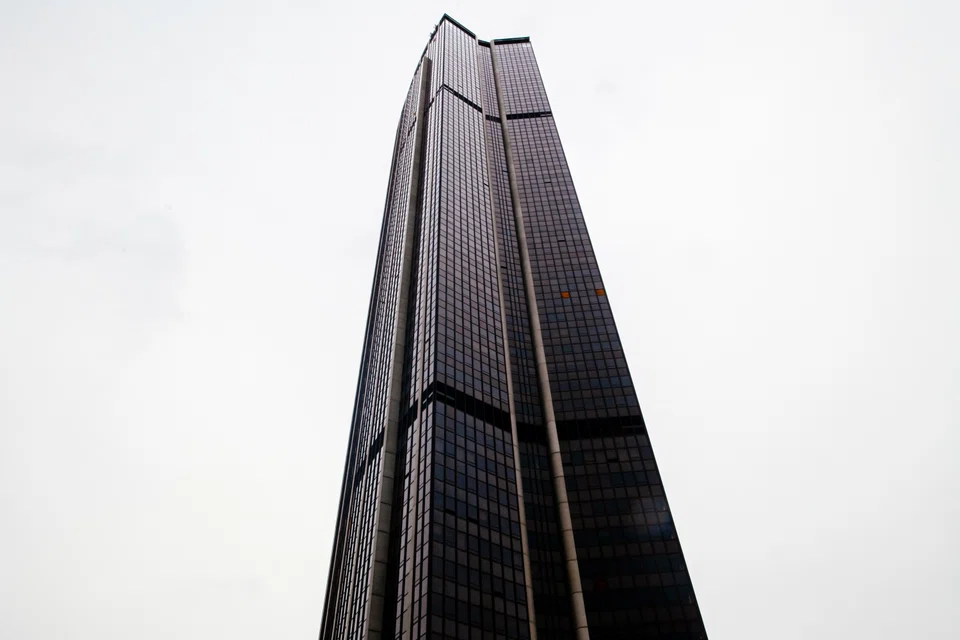
[PARIS] For 53 years, the Tour Montparnasse has smudged the skyline of Paris, a cigar-brown hulk so reviled that some locals dismiss it as the box the Eiffel Tower came in.
Others joke that the best view in the city is from the observation deck on the tower’s 56th floor, because that is the only place where one cannot see it.
Now, though, the ugliest building in the world’s most beautiful city is getting a long-awaited face-lift – both the 689-foot tower, still the lone skyscraper in low-rise Paris, and its surroundings, anchored by a forlorn, mostly deserted shopping mall where homeless Parisians have been known to pitch tents.
A consortium of French architects, Nouvelle AOM, is reimagining the skyscraper as a lighter, more transparent structure – its vertical lines broken up by verandas planted with greenery, and a lush garden on the roof.
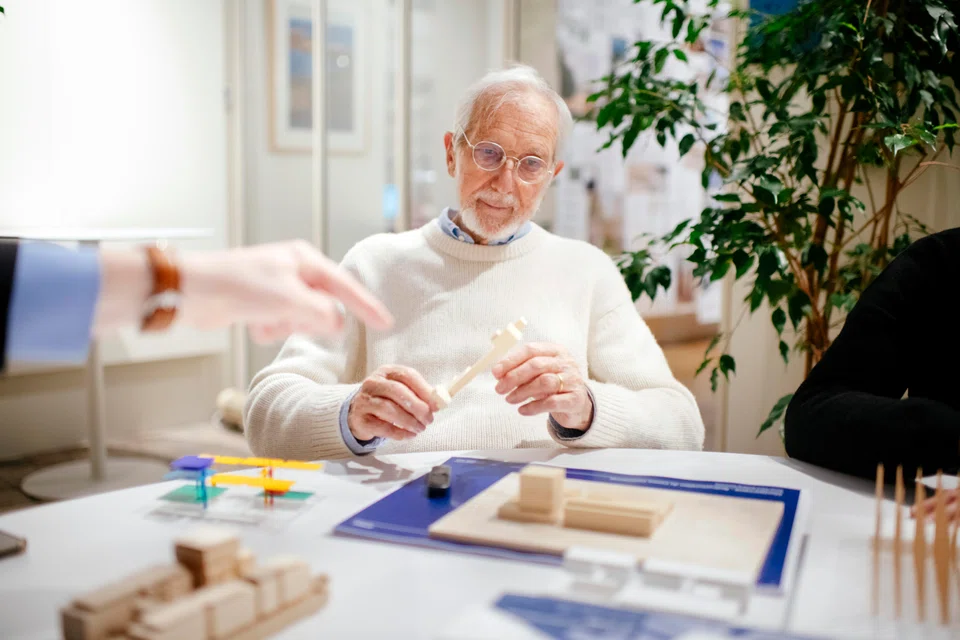
The job of revamping the commercial centre has gone to Renzo Piano, the Italian architect who became famous in the 1970s for the Pompidou Centre, a major cultural hub.
Its postmodernist, inside-out design also scandalised Parisians at the time – though, unlike with the Tour Montparnasse, their views of it softened over the decades.
Having blown up the urban landscape of Paris once before, he insisted that he was merely “mending” this 1970s relic.
He proposes carving up the hulking concrete platform at the tower’s base to create what he envisions as an extension of the neighbourhood, with winding pedestrian promenades and a tree-lined piazza.
“We are not demolishing everything – we’re transforming,” he said in his hive-like studio in central Paris. “It’s not true that you have to demolish everything. Anyway, it’s impossible.”
Revitalising the Tour Montparnasse
Not that the idea of demolishing the tower would not appeal to many Parisians, even some who champion the remodelling project.
“If I could raze the Tour Montparnasse and make it a garden instead, I would be very happy,” said Philippe Goujon, the conservative mayor of the 15th Arrondissement of Paris, which shares the sprawling complex with two other districts, the Sixth and the 14th.
But that would be financially infeasible, he said, adding that he did not want “the best to be the enemy of the good”.
Piano’s proposal, he said, would revitalise the area in authentic Parisian style.
If it did not recreate the Montparnasse of the 1920s, which attracted Pablo Picasso, Ernest Hemingway and James Joyce, then at least it would offer a pleasing collection of cafes, shops and rooftop-playing fields in place of the current dystopian surroundings.
Like many expensive urban renewal projects – this one is likely to exceed US$700 million – the proposed makeover of the Tour Montparnasse has dragged on for years, caught up in politics, money and competing visions.
Now, with the tower scheduled to be emptied of tenants and closed to the public by the end of March, work may soon begin.
Yet, the arguments rage on.
Carine Petit, the mayor of the 14th Arrondissement, opposes the redevelopment on the grounds that it is too commercial, with not enough of the space left free for the public.
A member of the left-wing Ecologists party, she said that “locals and even tourists in Paris don’t need another shopping centre”.
Caroline Morin, 37, a resident of Montparnasse who volunteers for animal-protection groups, said it would drive out a colony of pigeons that nest in the shopping centre’s ceiling. She said the developers had not considered how to move the birds without harming their chicks.
After taking part in a neighbourhood meeting about the project, she added: “OK, they’re not necessarily very popular, but they’re there, they exist. All they want is to start their families, raise their young.”
Paris, she pointed out, is “represented by pigeons – pigeons, baguettes and berets”.
One thing it is not represented by, is skyscrapers.
Public reaction to the tower was so hostile when it opened in 1973 that it all but guaranteed no other tall buildings would be constructed in the city. An exception, the Tour Triangle, is nearing completion in south-west Paris.
The city has exiled most of its skyscrapers to La Defense, a business district just west of the city limits.
And yet over the decades, the tower has improbably become an icon. The French urban climber Alain Robert scaled it multiple times.
In 2001, it had a starring role in La Tour Montparnasse Infernale, a parody of the Die Hard action films, in which two comedians, Eric Judor and Ramzy Bedia, play hapless window washers who find themselves caught in a terrorist attack.
Tourists still flock to the observation deck for the views, while Lego features the tower in its Paris skyline set.
Until it closed in 2025, it boasted the highest restaurant in Europe. And it was a respectable business address – its tenants included the campaign staffs of two presidents, Francois Mitterrand and Emmanuel Macron.
Catching the ‘spirit of the moment’
Among architects, the Tour Montparnasse has always had defenders.
Daniel Libeskind, who oversaw the design of the World Trade Center site in New York City, praised it in T Magazine in 2015, saying: “Maybe Tour Montparnasse is not a work of genius, but it signified a notion of what the city of the future will have to be.”
Speaking recently, he said he favoured remodelling the Tour Montparnasse, though he questioned the ambition of the designs for the tower and the commercial centre.
Planting trees on the roof, he said, might make it more environmentally sustainable – but would scarcely alter the fundamental design.
“The reality is, we’ve moved away from taking a radical approach,” he said. “It’s a much more fearful time civically.”
Piano’s proposal was a fallback after investors baulked at a more extravagant redesign by British-Italian architect Richard Rogers.
Having died in 2021, he had been Piano’s partner on the Pompidou Centre. Piano, now 88, recalled him as his revered “elder brother”, breaking all of the rules as they won the competition to build the new cultural centre in late-1960s Paris.
“You always have to catch the spirit of the moment,” he said.
And what is the spirit of this moment?
For starters, an imperative to be sustainable exists, Piano said.
His design leaves much of the structure intact, reusing concrete, which reduces the carbon dioxide emitted during construction.
Piano, whose buildings include the Shard in London and The New York Times Building in New York, was scrupulous not to criticise the original architecture of the Tour Montparnasse.
But asked whether he would have designed something like it, even in the 1970s, his eyebrows shot up.
“In the same year I was building Beaubourg?” he asked, using the colloquial name for the Pompidou Centre.
That brought him back to the idea of mending. In a world of limited resources, he said, value resides in building on top of existing structures, even those that are not beloved, rather than razing them for something new. It is also less risky.
In the years after the Pompidou Centre opened, he said, he avoided giving Parisian taxi drivers his name to spare himself an earful.
“I hope this is not going to be like that,” he said of the new-look Tour Montparnasse. “I don’t think so.” NYTIMES
Decoding Asia newsletter: your guide to navigating Asia in a new global order. Sign up here to get Decoding Asia newsletter. Delivered to your inbox. Free.
Share with us your feedback on BT's products and services