

UK mega-lab generates weather to test homes of future
 Add BT as a preferred source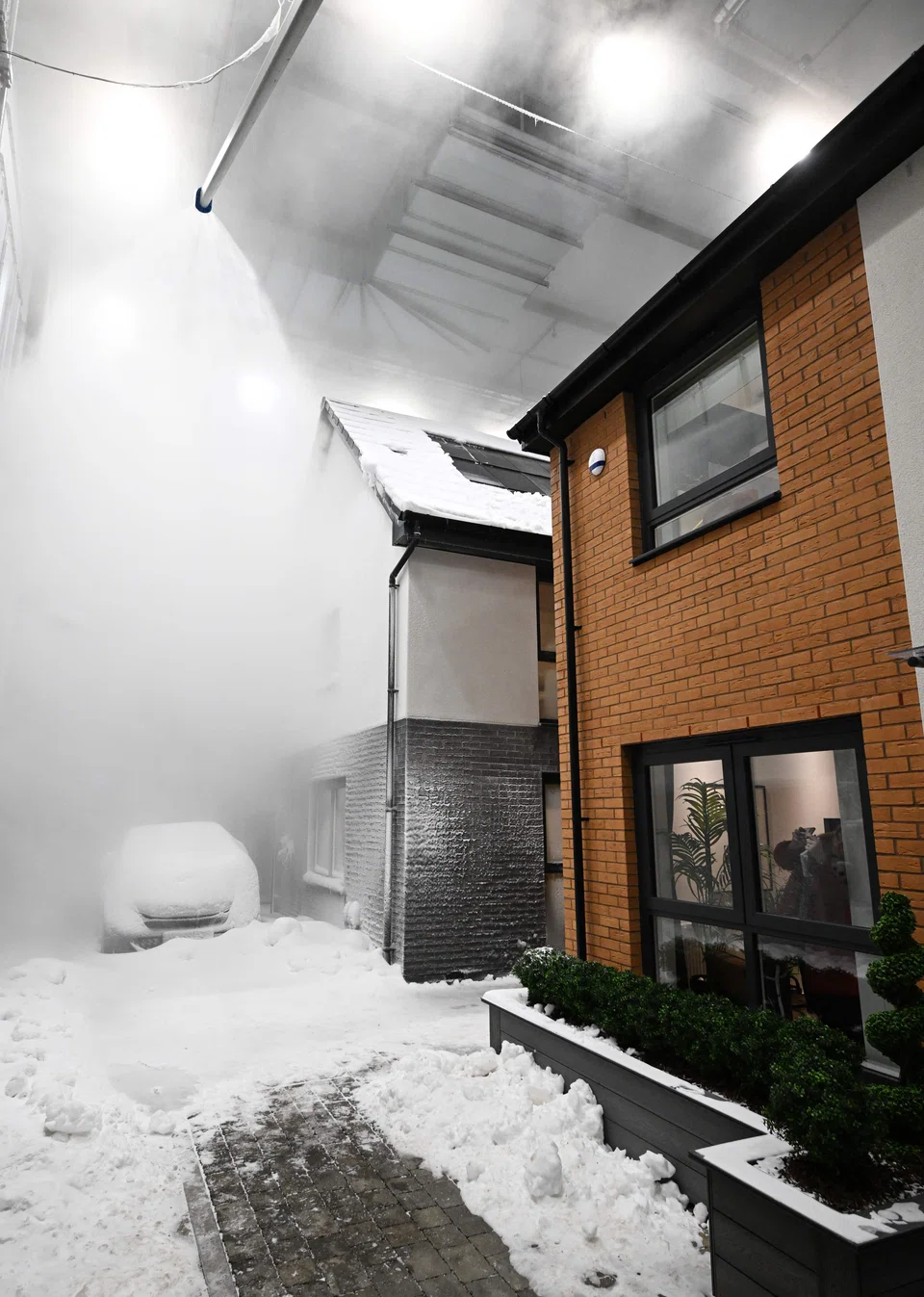
THE thermometer sinks below zero as a blizzard of fine snow descends on two houses freshly built inside a massive laboratory in northern England.
Despite the icy conditions, the two energy-efficient homes remain cosy and warm due to their use of cutting-edge heating and insulation technology.
Welcome to Energy House 2.0 – a science experiment designed to help the world’s housebuilders slash carbon emissions, save energy and tackle climate change.
The project, based in a laboratory resembling a giant warehouse on Salford University campus near the centre of Manchester, opened last month.
Rain, wind, sunshine and snow can be recreated in temperatures ranging from -20 deg C to 40 deg C, operated from a control centre.
“What we’ve tried to achieve here is to be able to replicate the weather conditions that would be experienced around 95 per cent of the populated Earth,” Will Swan, head of energy house laboratories at the university, told AFP.
The facility, comprising two chambers that can experience different weather at the same time, will test types of housing from all over the world “to understand how we deliver their net-zero and energy-efficient homes”, Professor Swan added.
The two houses, which are quintessentially British and constructed by firms with UK operations, will remain in place for a few years.
Other builders will then be able to rent space in the lab to put their own properties under the spotlight.
SEE ALSO

The project’s first house was built by UK property firm Barratt Developments and French materials giant Saint-Gobain.
It is clad with decorative bricks over a frame of wood panels and insulation, with solar panels on the roof.
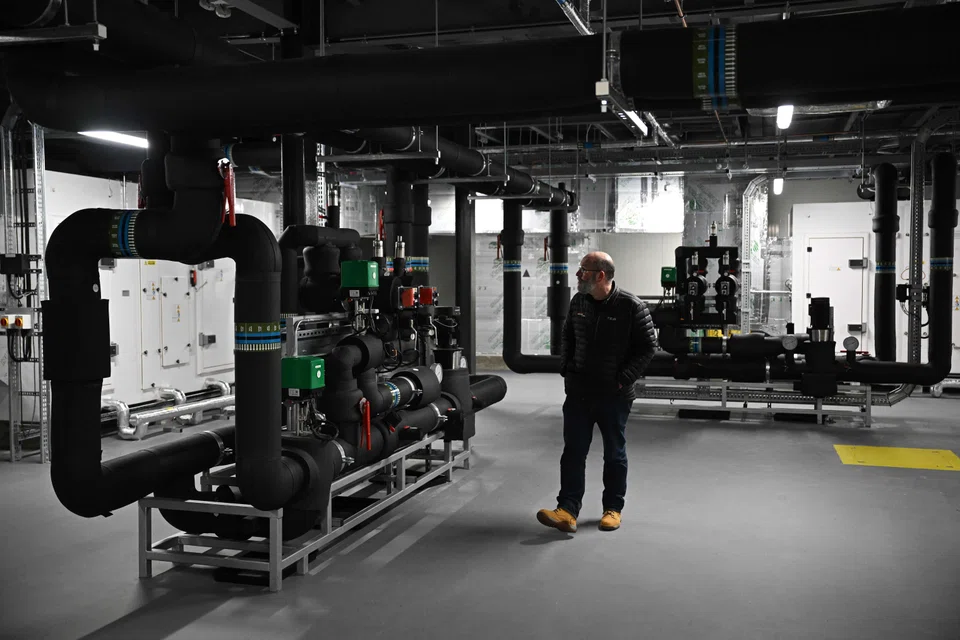
Scientists are examining the efficiency of several different types of heating systems, including air-source heat pumps.
In the living room, a hot-water circuit is located along the bottom of the walls, while further heat is provided via infra-red technology in the moulding and from a wall panel.
Mirrors also act as infra-red radiators while numerous sensors monitor which rooms are in use.
Residents will be able to manage the technology via one single control system similar to Amazon’s voice-activated Alexa interface.
Builders estimate the cutting-edge tech will mean that the energy bill will be just one quarter of what the average UK home currently pays, a boon to customers reeling from sky-high energy prices.
It will also make an important contribution to Britain’s efforts to reach zero carbon emissions by 2050 to combat climate change.
A parliamentary report found that, in 2019, 17 per cent of heating emissions from buildings came from homes – making their contribution similar to all the petrol and diesel cars driving on Britain’s roads.
Environmental campaigners have long called on the UK government to increase energy efficiency and insulation support for existing homes across Britain.
“One of the key technologies that we’re trying on this house is almost like a building management system for residential buildings,” said Tom Cox, UK technical director at Saint-Gobain.
“It’s almost like the Alexa of the home energy system – and that can be automated as much as the occupant wants.”
And now with their mega-laboratory, scientists and companies no longer have to wait for extreme swings in the weather.
“We can test a year’s worth of weather conditions in a week,” added Cox.
The “ultimate goal is to create that environment which is comfortable and cost effective and commercially viable to deliver”, added Cox.
“At the same time, (we are) addressing the sustainability issues that we have in construction.” AFP
Decoding Asia newsletter: your guide to navigating Asia in a new global order. Sign up here to get Decoding Asia newsletter. Delivered to your inbox. Free.
Share with us your feedback on BT's products and services
TRENDING NOW

Shanda co-founder sells Tanglin Hill bungalow for S$76 million

Nearly half of Apac’s wealthy expect market crash or correction, plan to rotate to cash: study

Yeo’s, Tiger Beer and now Gardenia – flight of food manufacturing from Singapore might be just as planned

Jumbo Seafood to close flagship East Coast Seafood Centre outlet on Sep 30

