

UK satire Spitting Image celebrated in new exhibition
 Add BT as a preferred source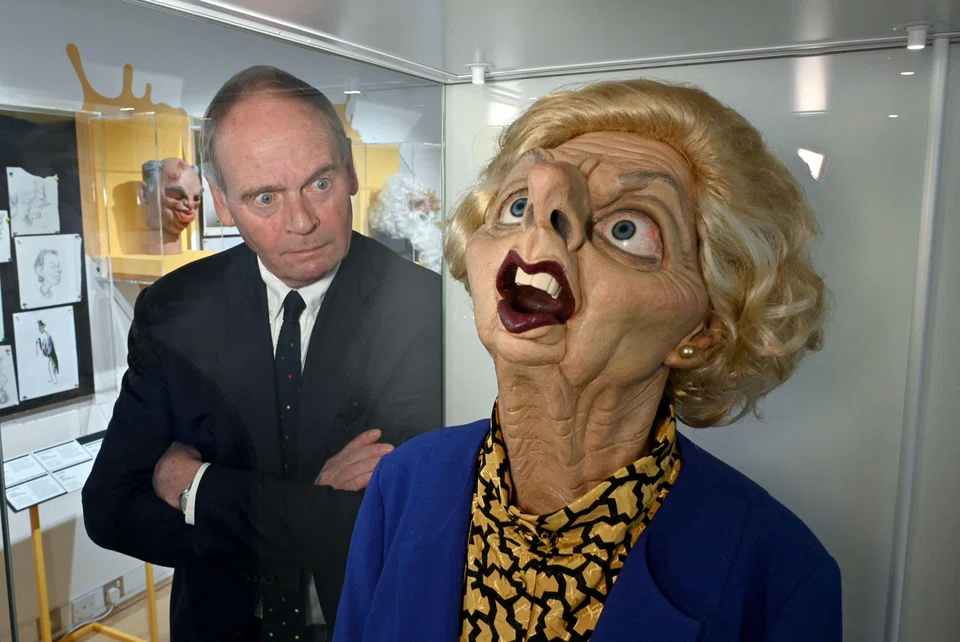
MARGARET Thatcher wore a man’s suit and smoked a cigar, Ronald Reagan was a liability who came close to causing nuclear war while Queen Elizabeth II’s mother slugged from a half-empty gin bottle.
At the height of its 1980s popularity, British satirical television programme Spitting Image pulled in 15 million viewers each week.
Now, nearly 40 years after it first aired, puppets of some of its best-known targets including Thatcher, Soviet leader Mikhail Gorbachev and Princess Diana have gone on display at an exhibition in Cambridge.
Created by British caricaturists Peter Fluck and Roger Law, Spitting Image was merciless in its depiction of the leading public figures of the day.
Producer John Lloyd said he had been determined to work on the show as soon as he heard about it and immediately got in contact.
“They said, ‘we already have two producers we don’t need you, thank you very much’, so I said, ‘I’ll work for nothing’,” he told AFP.
Spitting Image quickly became a roaring success, with people from all walks of life tuning in every Sunday evening.
One of the show’s most famous puppets was of former prime minister John Major, leading a terminally dull life, including one sketch showing him eating peas with his wife, Norma.
Decades later, the makers of the The Crown drew on the joke with a scene in which Major holds a plate of the vegetable.

“I met him once and he was a tall rather good-looking guy but once you see the puppet suddenly he’s short and he’s grey and he’s boring,” recalled Lloyd. “He’s nothing like him in real life but somehow it captures the essence of him.”
Major’s predecessor Thatcher was rumoured not to be particularly interested in her own long-running portrayal.
She was routinely depicted as an all-powerful woman surrounded by weak and bumbling male ministers.
The exhibition, which opened on Saturday (Sep 30) at Cambridge University Library, also includes original scripts, sketches and letters of complaint received during the programme’s 12-year run.
In one letter, politician David Steel objected to the way the show had his puppet “gazing up adoringly” at political ally David Owen and calling him “dear”.
“I would also like to know why my puppet is so small when I am in fact noticeably taller than (then Labour leader) Neil Kinnock,” the irritated Steel wrote.
Norman Tebbit, one of Thatcher’s most loyal and favoured ministers, however, was very happy with his leather-clad, knuckleduster-wielding puppet. “He found it very funny. It made him a working class hero,” Lloyd said.
Exhibition curator Chris Burgess said the show had managed to “combine the political with the every day, the anarchic, the surreal, the ridiculous.
“It is the most popular satire that’s ever been produced,” he said.
For Lloyd much of the programme’s success lay in Fluck and Law’s ability to take someone that everyone else saw as ordinary in appearance and “just to catch the way the nose is or a little look in the eye.
“Suddenly you can never take them seriously again.”
The programme was often accused of going over the top, but Lloyd said this so-called cruelty really boiled down to playground insults and a universal sensitivity about physical appearance.
“There’s an odd thing about politicians, you can say, you cheated on your tax returns, you had affairs with 15 people... but say you have big ears and it’s ‘that’s really unfair’,” he said.
There was controversy when the show satirised the royal family including Queen Elizabeth II who despite the outraged headlines was portrayed as “sensible and liberal minded”.
“No-one had directly in three dimensions caricatured the royal family, particularly not the queen,” said Lloyd.
“The director, Peter Harris, had done The Muppets before and he used to say, ‘the queen, darlings, is our Miss Piggy’, the heroine of the show’.”
Then as now, Lloyd said, Britain was a divided society with families at odds with one another over the policies of Thatcher’s Conservative government – just as they have been more recently over Brexit.
“Now people are so quick to take sides. I think that’s partly because there isn’t enough satire on British television.”
But he said he was happy that Spitting Image had been able to wade into the middle of it all and make people laugh.
One man even wrote to the programme to say he had been planning to kill himself but laughed so much at that week’s programme he decided he “could carry on”.
“It was fun. I don’t think we made any difference but we at least got people to listen,” he said. AFP
Decoding Asia newsletter: your guide to navigating Asia in a new global order. Sign up here to get Decoding Asia newsletter. Delivered to your inbox. Free.
Share with us your feedback on BT's products and services
TRENDING NOW

When every phone becomes a satellite phone, what happens to Asia’s telcos?

Jardine C&C selling Singapore, Malaysia dealerships to Indonesia’s Chandra Asri for US$221 million gain

Digital Realty, STT GDC among data centre operators awarded 50 MW of new capacity in Singapore

Upbeat outlook for CDL, UOL after strong H1 earnings

