

UWS helps girls overcome lack of confidence in Stem sector
With Citi’s support, United Women Singapore is spurring more girls to work in science and technology

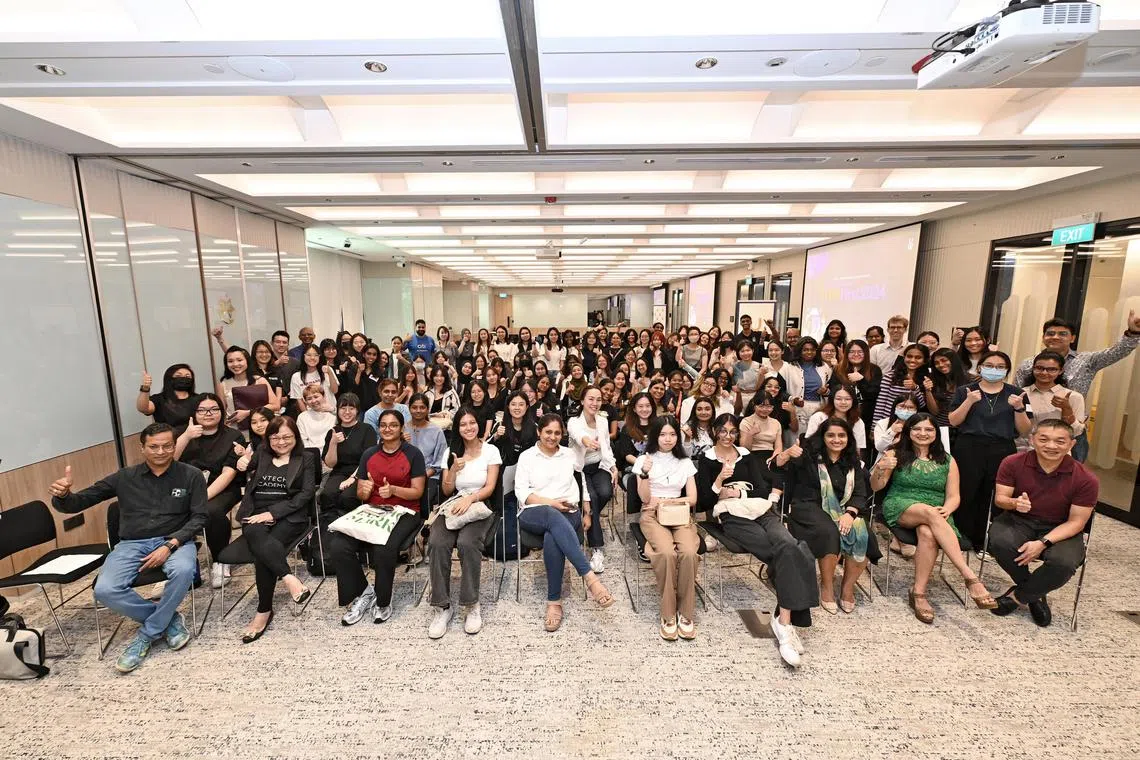
FOR the women advocates of United Women Singapore (UWS), the most rewarding moments come during the graduation ceremony for a six-month long, weekends-only programme that batches of young girls attend to expose them to careers in science, technology, engineering and mathematics (or Stem, for short).
In the audience are these girls’ parents, many of whom started out sceptical about their daughters’ participation in the Stem Festival. They insist – even in this day and age – that careers in Stem fields are “men’s work”.
Parental support vital
Georgette Tan, UWS’ board member and immediate past president, said: “But after seeing their daughters at our graduation ceremony, holding their certificates, knowing how enthusiastic their daughters are about these subjects, they change their minds – and that parental support changes everything.
“Our research shows that the one thing that hinders girls from taking up Stem subjects is the lack of parental support. Even though girls fare just as well as boys in mathematics and science in school, they’re significantly less likely to enter the Stem workforce.”
This is why UWS has taken up this cause in its work. The local non-profit organisation advances women’s empowerment and gender equality by working at narrowing the gender equality gap through education, raising awareness and advocacy work.
The UWS Stem Festival, one of its key events, exposes girls and young women from under-served communities to Stem subjects. UWS defines underserved communities as families with limited access to resources and opportunities, which often closes off these girls’ path to a future in science and technology.
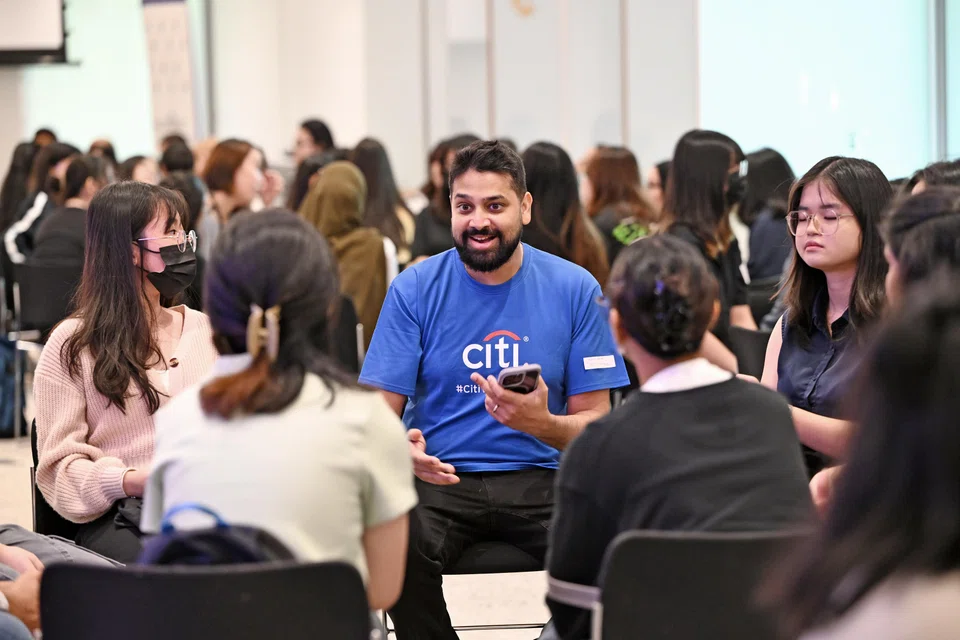
Participants in the festival go through hands-on workshops, are mentored by professionals in Stem careers, and gain practical exposure to real-world applications of science and technology. For many of the girls, this is their first direct experience with what Stem can offer, and it often changes the track they take in their education.
Tan said: “By providing them with the exposure and mentorship through the Stem Festival, we’re helping to bridge that gap. We focus on sparking curiosity and showing these girls that Stem is not just a ‘men’s field’, but one where they can thrive and contribute significantly.
“And, really, we need more women in Stem, to bring a diversity of perspectives, experiences and problem-solving approaches that can benefit us all.”


Help from mentors, role models
The Stem Festival is underwritten by Citi, but the global bank’s support goes beyond the monetary: It mobilises its employees to volunteer as mentors and role models to the girls by sharing their experiences in the Stem fields and offering guidance on potential career paths.
These volunteers – a fairly equal mix of women and men who give up one full Saturday a month for six months – help break down stereotypes and give the girls real-world insights into what it means to work in Stem.
Tan said: “Citi’s involvement is crucial. It identified fintech as an area where more women are needed, to bring diversity and help design solutions that are representative of all users. It takes a long-term view of helping to create a pipeline of female Stem workers, and then reinforcing that through mentoring and coaching, so these girls can see themselves heading a Stem department someday.”
A 2024 report published by the Ministry of Social and Family Development noted that women made up just over a third (34.3 per cent) of the Stem workforce. In leadership roles, women account for an even smaller proportion, said Tan.
And this is despite the fact that Singapore is the top-ranked Asian country when it comes to gender equality: It has 46.7 per cent of women in professional, managerial, executive, and technician (PMET) jobs.
The UWS Stem Festival kicked off a few years ago with 300 participants. But it has since grown, with the 2024 edition hosting over 700 participants. Many of the girls are from polytechnics and institutes of technical education, but UWS is increasingly opening up spaces for less-privileged girls from junior colleges and universities “because we’re seeing a demand from these girls too”, said Tan.
Aishwarya Elango, 21, is one such graduate from the programme. Now a data-management executive at National Youth Council, the Singapore Polytechnic graduate said: “I was afraid to carve out a career in Stem because there are so few women here.
“But the programme gave me a foundational understanding of a variety of subjects, from artificial intelligence to blockchain and cybersecurity. That strengthened my interest and gave me the confidence to become a data-management executive.”
Decoding Asia newsletter: your guide to navigating Asia in a new global order. Sign up here to get Decoding Asia newsletter. Delivered to your inbox. Free.
Copyright SPH Media. All rights reserved.






