

Vanishing ice on highest mountains threatens quarter of humanity
 Add BT as a preferred source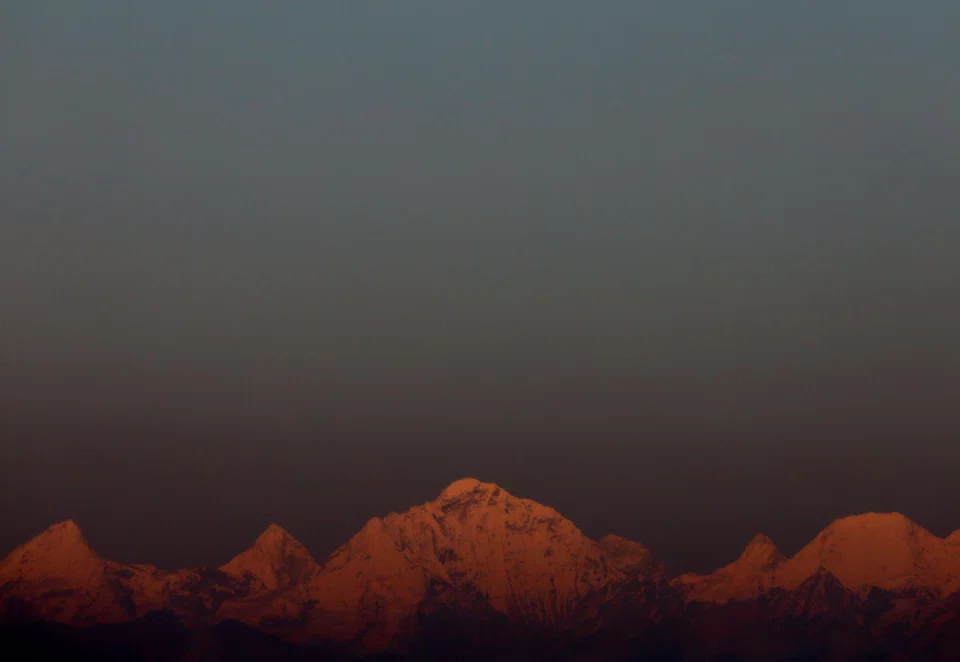
DeeperDive is a beta AI feature. Refer to full articles for the facts.
RAPIDLY melting glaciers in Asia’s Hindu Kush Himalayan region – home to the world’s highest mountains – are threatening the lives and livelihoods of as many as two billion people downstream, according to a new study.
The glaciers thawed 65 per cent faster in the 2011 to 2020 period compared with the preceding decade and may lose 80 per cent of their current volume by the end of this century on current emissions trajectories, the International Centre for Integrated Mountain Development, or ICIMOD, found in its latest study. This may over time drastically reduce freshwater supplies in 12 rivers that flow across 16 nations in the region, it said.
These mountain ranges, which stretch over 3,500 kilometres in length from Afghanistan in the west to Myanmar in the east, are also seeing a shrinking permafrost that can trigger more landslides, the study said. The Nepal-based ICIMOD has eight member nations across Asia including China and India.
“There is still time to save this critical region, but only if fast and deep emissions cuts start now,” said Izabella Koziell, ICIMOD’s deputy director general, adding that glaciers are very sensitive to even slight temperature increases. “Snowmelt, glacier melt and permafrost thawing will mean that disasters are projected to happen more frequently, and will be deadlier and costlier.”
The planet is already 1.2C hotter than during pre-industrial times, melting Arctic and Antarctic ice at a record pace. As heat waves bake more and more countries from the UK to China, wildfires scorch Canadian forests and a very severe cyclone lashes into the coastlines of India and Pakistan, there’s a growing acknowledgement that climate emergencies are no longer just freak weather events and need careful policy action. While severe flooding and landslides left 2,000 tourists stranded in India’s Northeastern hilly state of Sikkim in the past few days, nearly 100 people reportedly died in eastern Indian as a result of higher-than-normal temperatures. Local authorities disputed the fatalities are linked to the heat.
Besides the risk of flash floods and landslides, the region is at a high risk of glacial lake outburst floods with 200 glacier lakes across Hindu Kush Himalaya “deemed dangerous”, the report said. The cascading effects threaten to upend agriculture, food security, freshwater availability and energy sources. It can also endanger some plant and animal species in the biodiversity hotspots to the point of extinction.
Navigate Asia in
a new global order
Get the insights delivered to your inbox.
“As ice retreats, land where ice used to be becomes unstable and starts to move – the extra meltwater then has the potential to easily wash that away, resulting in destructive mass flows,” said Jakob Steiner, a research fellow at ICIMOD.
The changing cryosphere is also expected to put infrastructure in these mountainous regions at risk or economically unviable. “After the peak glacier melt is reached and meltwater recedes, future hydropower stations may find themselves oversized, lacking the necessary water they were originally designed to harness,” Steiner said.
The report also spoke about the need to urgently scale up the adaptation of the affected local communities to climate change.

“It is beyond time that governments, donors and agencies step up: to exit fossil fuels and honour their commitments to limit warming, to help communities adapt to those temperature rises already locked in and to compensate them for property and ways of life that have already been lost,” said Saleemul Huq, a climate change expert who’s also on the advisory committee to COP28. BLOOMBERG
Decoding Asia newsletter: your guide to navigating Asia in a new global order. Sign up here to get Decoding Asia newsletter. Delivered to your inbox. Free.
Share with us your feedback on BT's products and services
TRENDING NOW

Vietnam formalises new state leadership, redefining ‘four pillars’ power balance

‘Largest Singapore commercial S-Reit proxy’: analysts say buy CICT shares after Paragon acquisition

From 1MDB to ‘corporate mafia’: Is Malaysia facing a new governance test?

Why where you park your joint venture matters: Lessons from a US$689 million shareholder dispute

