

Venice dreams of fewer visitors, staying longer and spending more
Next year, local authorities plan to roll out fee-based reservation system for day trippers
 Add BT as a preferred source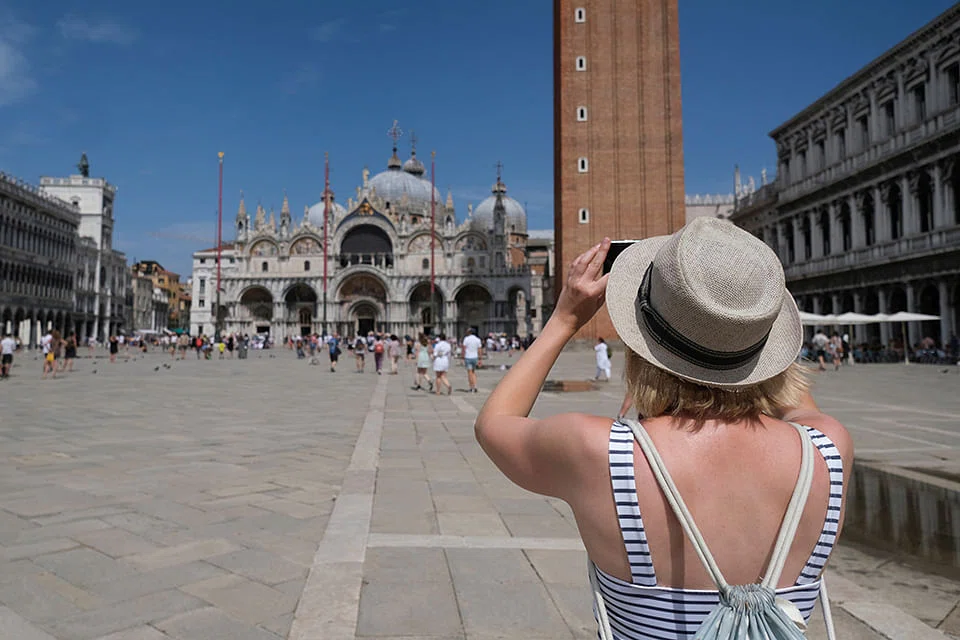
DeeperDive is a beta AI feature. Refer to full articles for the facts.
Venice
AS Venice closes the books on a second summer with fewer visitors and reduced revenue, the city spanning 118 small islands is looking ahead to a time when it can reclaim its place as one of the world's top tourist destinations. But if local officials get their way, the eventual post-pandemic return to normal will not include the usual throngs of day trippers.
Venetians have long complained about one-day visitors who spend little, crowd the city's lagoon and canals, and add to its mounting environmental problems.
Now, after two pandemic-hit tourist seasons, local officials are hoping that residents are ready to support a radical shift in approach.
Next year, the local government plans to roll out a fee-based reservation system for visitors who do not stay overnight.
Backers of the plan say data collected will allow the city to be better prepared for high-flow periods such as the annual Carnival celebration, improving everything from transportation to police presence.
Navigate Asia in
a new global order
Get the insights delivered to your inbox.
Venice, which is celebrating its 1,600th anniversary this year, already gathers information from cellular traffic and surveillance cameras, using a new "control room" partially funded by the European Union.
The city is thus able to track the speed of boats - even gondolas - along its 150 canals, break down daily visitors by nationality, and follow their movements from one tourist site to another.
"Adding a booking system will give us complete knowledge of arrivals in advance and help organise accordingly," said Simone Venturini, a Venice city councillor responsible for helping to manage tourism.
He acknowledges that the result will be a more upscale, and therefore less democratic tourist experience, though he argues that "Venice has to be savoured, it's important to take a few days to stay and live it".
But new measures to make visitors pay to enter the city could face challenges from the European Commission, warns Marco Gasparinetti, a lawmaker who opposes the administration led by conservative Mayor Luigi Brugnaro.
"It's discriminatory to charge visitors based on where they come from," Mr Gasparinetti said.
Many foreign travellers include a one-day, no stay-over visit to Venice on their itineraries, he said, while locals from the Veneto region regularly come in on day trips.
"It's a police-like method to charge tourists who sleep outside the city," he said. Still, backers of the plan say the fees will be nominal, with possible low-season discounts.
"The aim isn't to raise cash," said Mr Venturini.
While some Venetians who rely on revenue from visitors are worried about the change, everyone acknowledges that something needs to be done to protect the delicate city from over-tourism.
"It seems like a paradox to talk about reducing tourism after these difficult years," said Daniele Minotto, vice-chairman of the city's hotel operators association. "But Venice isn't Disneyland, we need some limits on access and some contribution from 'hit-and-run tourism'."
In 2019, Venice generated tourism revenue of 1.5 billion euros (S$2.38 billion), with 30 per cent from day trippers. Yet that category made up
70 per cent of the overall visitors.
Seeking to redress that imbalance "is not a class issue", said Mr Minotto, but a way to help entrepreneurs and improve Venice's tourist offering.
Previous attempts to charge fees to enter the city have faced legal hurdles. A 2019 plan has been challenged in court by Belgian parking lot manager Interparking, which claims the proposed charges amount to double taxation.
In the end, it may be the day trippers themselves who have the final word on the success of the new plan. Many of them - particularly younger visitors who are used to booking online - seem unconcerned.
Stephanie, a 22-year-old from nearby Verona, said an added fee "wouldn't be bad as long as booking is fast and easy".
Max, a 29-year-old German camping outside the city and visiting for the day, said an entrance charge "wouldn't be a problem if the price isn't too high".
But Mario D'Elia, a 73-year-old Venetian lawyer, argues that new charges are just another step toward "transforming Venice into a museum".
Like many long-time residents, he worries that the city has become overly dependent on tourism: "Apartments are all being used for tourists, everything is a hotel."
"Venice needs places that companies and international organisations can work from and bring the city back to life," he said over espresso and pastries at the historic Rosa Salva cafe.
Tourism in Venice has become an "extractive industry", argues activist Jane Da Mosto, who heads an organisation called We Are Here Venice.
"I'm hoping Venice can go back to its heritage of welcoming visitors and helping them discover local culture," said the South African environmental scientist, who has lived in the city for over 25 years.
Without a change in approach the city will be drained of actual residents, she warned.
"Venice needs more productive activities for the people who live here, and that will make it a more interesting place to visit," she said. "Tourists and residents should be able to coexist." BLOOMBERG
Decoding Asia newsletter: your guide to navigating Asia in a new global order. Sign up here to get Decoding Asia newsletter. Delivered to your inbox. Free.
Share with us your feedback on BT's products and services
TRENDING NOW

From 1MDB to ‘corporate mafia’: Is Malaysia facing a new governance test?

Middle East-linked energy supply shocks put Asean Power Grid back in focus

Beijing’s calculated silence on the Iran war

DPM Gan warns of 3 structural shifts to the global system that will bring greater challenges – and opportunities

