

A vintage bash for all things Burgundy
New York
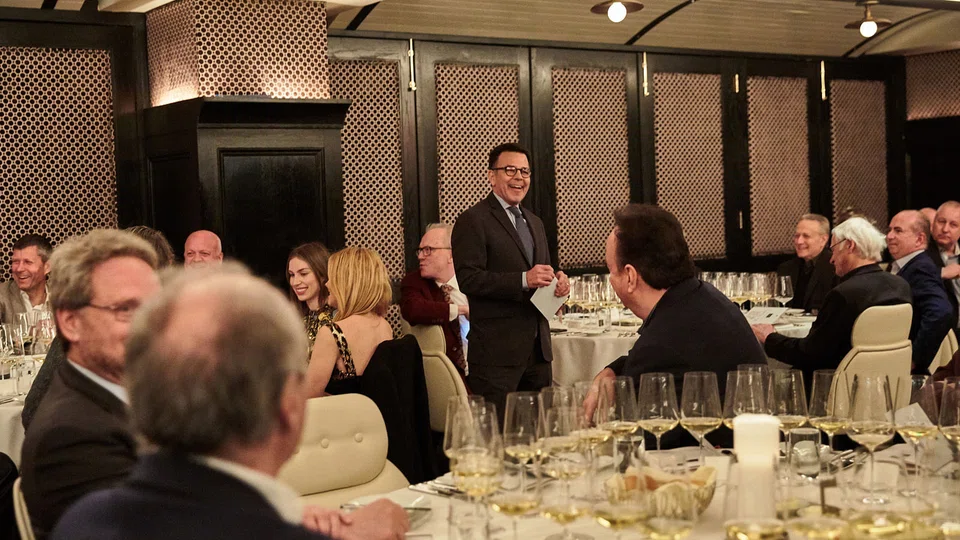
THE finale of La Paulée de New York last Saturday saw a gathering of 400 or so wine lovers, including groups from as far as Mexico, Brazil and Scandinavia, who had paid US$1,500 apiece for the seven-course meal and a chance to mingle with more than 40 of Burgundy's finest vignerons, the people who grow the grapes and make the wine.
For the price, which included courses of a gala dinner prepared by all-star chefs, a modest amount of wine was included. More important were the hundreds of bottles brought by the guests and the vignerons themselves, to share around the room. Even at a moment of global fear of contagion, a spirit of generosity and communal love of Burgundy overcame inhibitions.
The dinner culminated La Paulée's 20th anniversary, a four-day celebration of all things Burgundian that included small dinners with top producers and rare wines, tastings over many vintages, a seminar on geology and a grand vintage tasting.
The New York festival, which began as a small gathering of Burgundy lovers, has become one of the most influential wine events in the world. Its 20-year history has been paralleled by the rise of Burgundy itself. At the turn of the 21st century, it was still overshadowed by Bordeaux among the world's historic wine regions.
Now, Burgundy produces the most coveted wines in the world and has become the most influential region as well, defining how winemakers and consumers globally now think of fine wine and its abilities to express the character and culture of the place that produced it.
Burgundy was not nearly all that in 2000, when Daniel Johnnes, then the sommelier at Montrachet, Drew Nieporent's Burgundy-focused restaurant in Tribeca, organised the first La Paulée de New York.
Since then, the demand for Burgundy has accelerated around the world, prices have skyrocketed and La Paulée has grown and spawned dozens of imitations. Mr Johnnes, now the corporate wine director of Daniel Boulud's Dinex restaurant group, has become arguably the foremost ambassador of Burgundy anywhere.
La Paulée de New York - Mr Johnnes has also taken the event to San Francisco and Hong Kong - has had a lot to do with that growth, bringing groups of Burgundy lovers together and introducing them to like-minded wine fans, to the vignerons themselves and, perhaps most important of all, enveloping them in the spirit of sharing that is legendarily Burgundian.
Conversely, La Paulée has also been instrumental in exposing the vignerons to Burgundy lovers from around the world and, in the process, has transformed a number of respected but little-known winemakers into global superstars.
"In our current world of selfishness and intolerance of those who are different, here we share and celebrate Burgundy," said Aubert de Villaine, co-director of Domaine de la Romanée-Conti, perhaps the most renowned Burgundy producer, who offered remarks before the dinner.
La Paulée originated in an ancient Burgundian tradition of proclaiming the grape harvest with a community party. Its modern incarnation was shepherded into existence by Jules Lafon, a Meursault vigneron who invited his neighbours to celebrate with a banquet lunch at his estate in 1923.
The party caught on, and soon it had become an annual event held by Meursault's vignerons and their invited friends, an afternoon-long bacchanal of food, music and songs, fuelled by wines provided by the vignerons themselves.
La Paulée de Meursault continued annually through the decades into the 1980s and '90s, when Mr Johnnes and Mr Nieporent initiated a series of wine dinners at Montrachet.
Mr Johnnes focused on a group of young Burgundy producers who, in some cases, had recently taken over family estates and were instrumental in improving the viticulture and winemaking, transforming a somewhat stagnant region into a vibrant source of exquisite, exciting wines.
They included people like Christophe Roumier of Domaine Georges Roumier, Jean-Marc Roulot of Domaine Roulot, Jacques Seysses of Domaine Dujac, Patrick Bize of Domaine Simon Bize, Jean-Pierre de Smet of Domaine de l'Arlot and Dominique Lafon, a great-grandson of Jules Lafon, of Domaine des Comtes Lafon.
As Mr Johnnes remembers it, after one of the Montrachet dinners, Mr Lafon invited him to attend the Meursault Paulée. There, he saw firsthand the Burgundian spirit of community and camaraderie - the vignerons walking amid the tables, pouring their wines from bottles new and old, the local singers bursting into traditional drinking songs, punctuated by rhythmic hand claps.
"I was so inspired by the culture of Burgundy, the community, I wanted to try something similar," he said. "I was seduced by the generosity and the power of bringing people together that wine created. Emulating the Paulée was something I wanted to do." Mr Johnnes and Mr Nieporent invited a handful of winemakers to recreate the event in New York, along with a group of folk singers, Les Chanteurs de Bourgogne, and an interloper, Alain Graillot of Crozes-Hermitage in the Rhône Valley.
"He was friends with them, and he fitted in with the spirit," Mr Johnnes said. "In my mind, that's what it was all about."
The success of La Paulée has certainly contributed to the worldwide obsession with Burgundy, and the escalating prices. The arrival of big money in Burgundy has raised what Mr de Villaine called "the risk of the destruction of the tissue of family domaines, which is Burgundy."
"There are people who say it's our fault," Mr Johnnes said. "I suppose La Paulée has contributed to exposing Burgundy to the world, so I would say we have played a role for better or worse. It's made it more challenging to keep the commercial element at arm's length and to try to redirect the focus onto the simplicity of the wine: It's just chardonnay and pinot noir."
While the most exalted estates receive the most attention, Mr Johnnes has taken pains to highlight the less expensive side of Burgundy, with events focusing on lesser known, more accessible appellations.
Certainly, the vignerons have no complaints about La Paulée de New York. Mr Lafon remembered that Burgundy had been through hard times in the 20th century, when prices were low and demand minuscule. Below the top level, he said, Burgundy still offers many wines that are good value. "The gala evening very well represents the spirit of Burgundy with its friendly atmosphere, the desire to share and the slightly surreal side of such events," he said. "Customers come to party, and it shows." NYTIMES
Decoding Asia newsletter: your guide to navigating Asia in a new global order. Sign up here to get Decoding Asia newsletter. Delivered to your inbox. Free.
Share with us your feedback on BT's products and services
TRENDING NOW

He built the Vingroup empire. Now South-east Asia’s richest man is handing some key roles to his sons
China’s Pinglu Canal likely to benefit Singapore, other South-east Asia ports in the long term
Suntec Reit to increase Singapore focus, sell three Australia properties
Despite the de-dollarisation debate, demand for dollar liquidity in Asia is growing

