Bvlgari notches stellar year in tough luxury market: High jewellery and proactive selling key, says CEO
Ahead of parent company LVMH’s full-year results release on Jan 28, he reveals optimism for 2025
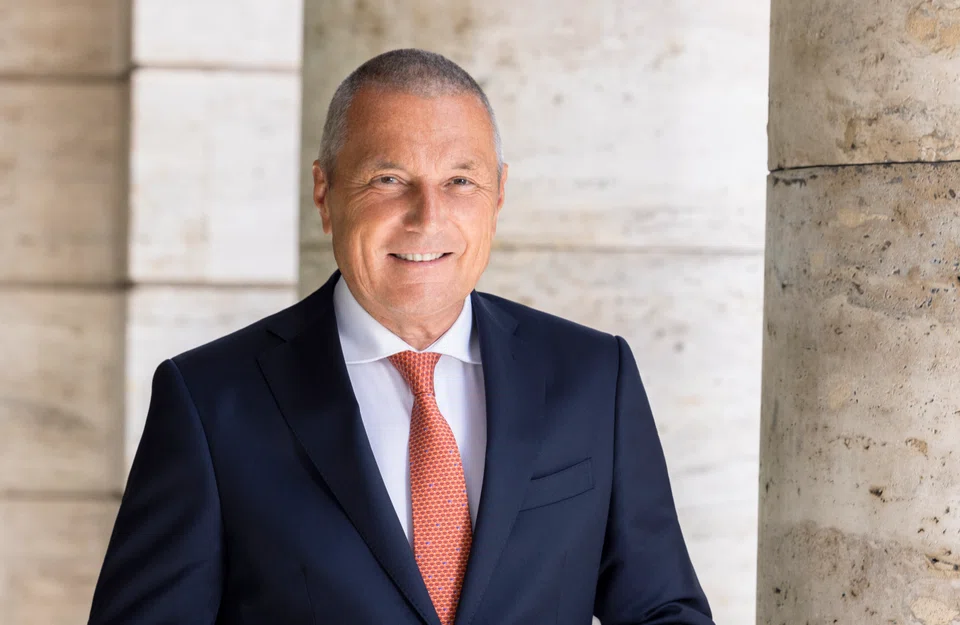
[SHANGHAI] It’s a winter’s day in Shanghai but the sun is shining and there’s a distinctly positive vibe coming from Jean-Christophe Babin. The chief executive officer of LVMH-owned Bvlgari has reason to be happy.
The Italian luxury jewellery brand is the first to launch a major event this year, perfectly timed with the approaching Year of the Snake. The Serpenti Infinito Exhibition which opened on Jan 8 in Shanghai celebrates the snake in various art forms, and showcases Bvlgari’s archival as well as latest high jewellery collection from its most successful icon, the Serpenti.
But beyond that, Babin, the brand’s CEO since 2013, has other reasons for a spring in his step.
Ahead of French luxury conglomerate LVMH’s full-year results release on Jan 28, he reveals that Bvlgari has notched up another “record year” in 2024, “very similar to 2023”. This, he says, is “a miracle”, given that 2023 was an “over-the-top” year when post-pandemic spending peaked.
“Believe it or not, except for China, we grew everywhere last year, much more than what we expected,” Babin tells The Business Times in an exclusive interview in the Chinese city.
An even more rewarding year
In the US, where many brands struggled, Bvlgari had a “fantastic year”, while the business expanded in Europe, had “incredible growth” in the Middle East, Japan and South Korea and is doing “very fine” in Latin America.
“So we equalised with 2023 despite a worsening conflict between Russia and Ukraine, more political tensions building between the US and China, the (real estate) crisis in China and high interest rates all across the world.”
This is indeed a surprise, given that much has been written about everything that has gone wrong with the luxury market last year – from stratospheric price hikes to a lack of consumer confidence amid lingering inflation and economic headwinds. Plus, weak consumer demand in China, one of luxury’s top markets.
“Managing to score such a good year for me was even more rewarding than the year before. In 2023, the number we reached was astonishing, but it was not so difficult. Last year was much more difficult, because the hurdles were so many. Frankly, it was a tough year for all brands,” Babin says.
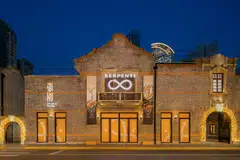

He adds that Bvlgari’s high jewellery collection, where pieces can carry price tags upwards of seven figures, enjoyed its best year ever in 2024. That was also when the brand celebrated its 140th anniversary with a massive and lavish high jewellery launch.
The results mark another successful year for Babin, under whose leadership the brand has more than doubled revenues to 3.5 billion euros (S$4.9 billion) in 10 years, according to Morgan Stanley estimates.
But a change of guard may be in the offing as Bvlgari appointed Laura Burdese, formerly the brand’s vice-president of marketing and communication, to a new deputy CEO role last year.
Plans for 2025
After the negative impact in 2024, Babin does not expect further erosion to the same proportion in the Chinese market this year. Besides, there’s a lot of money from Chinese consumers’ high savings rate just waiting to be spent once confidence returns, he says.
Plus, Bvlgari has “very strong plans” for 2025. Among others, it will celebrate the 50th anniversary of its Bvlgari Bvlgari collection, push its Diva and Tubogas lines and introduce more options in yellow gold.
More importantly, Babin says his staff have learnt from last year’s adversity to fight harder, be more daring and creative, and stay closer to their clients.
“We’ve totally redesigned our interface with clients from a one-to-many to a one-to-one approach,” he explains.
“We used to send emails to 100,000 people when a new product came in. Now, we are no longer waiting for clients behind the counter, but calling them, taking appointments, going to them to present pieces or if they’ve booked a visit, staying open an hour later so they can come in after work.”
Bvlgari has also repositioned all its clients to be as important as its high jewellery customers, treating them individually and creating an emotional bond with them.
“I always tell my people that on the 1st of January, we are sure of about 20 to 30 per cent of our turnover, which is made up of returning clients. This means every year, we have to create 70 per cent of our turnover from out of the blue. Because unlike fashion, where 80 per cent are returning customers, in our kind of luxury, most are new clients.”
Buying into a club
As for complaints about exorbitant price hikes in the luxury market, Babin says Bvlgari can justify its “each and every single penny of increase” because they have been strictly driven by the cost of raw materials – namely, gold.
“Ten years ago, gold cost 25,000 euros per kg. Today, it’s three times more,” he says, noting that gold prices have also risen due to its safe haven status. “So there’s no way I can absorb that crazy inflation.”
The price of most coloured gems, he adds, has also trebled in the last decade.
What is within Bvlgari’s control however, is to work towards being more creative and relevant than ever, as clients want to spend on meaningful experiences.
“You have to create desirability and really care for the client as a member of a community, a tribe. The need for this has never been greater because they buy much more than an object. They buy into a ‘club’ which is aspirational and meaningful to them and to which they like to belong.”
Decoding Asia newsletter: your guide to navigating Asia in a new global order. Sign up here to get Decoding Asia newsletter. Delivered to your inbox. Free.
Copyright SPH Media. All rights reserved.