The MB&F universe expands to reach more collectors
The Legacy Machine Perpetual now has a steel edition and a robust version made for those who lead an active lifestyle
 Add BT as a preferred source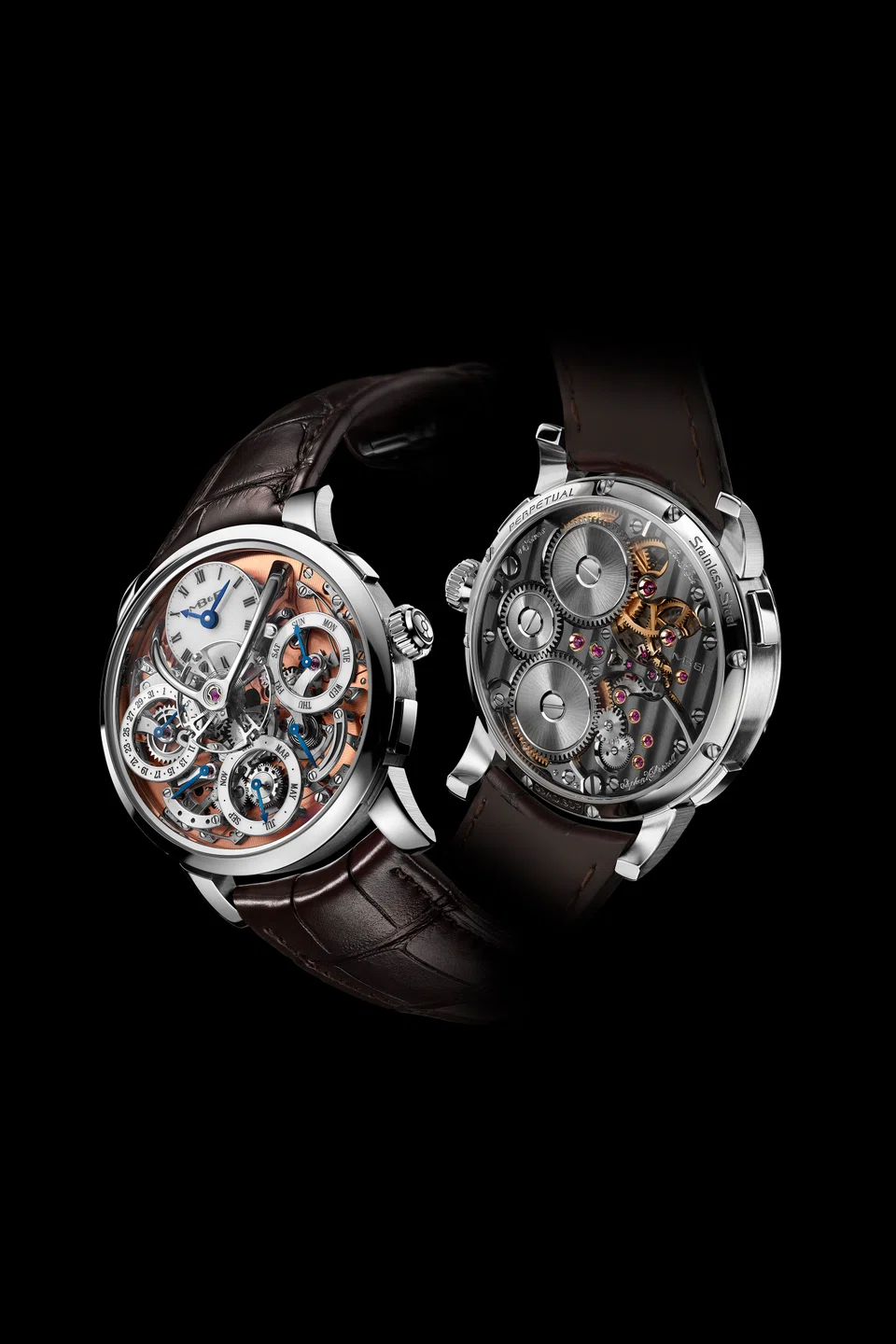
DeeperDive is a beta AI feature. Refer to full articles for the facts.
SINCE its debut in 2015, MB&F’s Legacy Machine (LM) Perpetual has appeared in precious gold, platinum and even rare palladium as well as high-tech titanium. Now, the award-winning perpetual calendar (it won the 2016 Grand Prix d’Horlogerie de Geneve’s Best Calendar Watch Prize) comes wrapped in humble stainless steel.
Rolled out earlier this year, the LM Perpetual’s latest appearance might have been regarded by some as a big come-down for what is the most complicated creation in MB&F’s Legacy Machine line. But serious collectors – the independent watchmaker’s cult following in particular – rejoiced to see the hot model in this common material. Besides vintage value, steel watches are also more affordable and durable than gold timepieces.
Also, while steel models are plentiful in the market, they have been rare in MB&F’s relatively small productions ever since it started business 18 years ago. And, combined with a rich salmon-coloured dial-plate (it doesn’t have a dial) – a very collectible combo – the new LM Perpetual is even rarer, and definitely a first for MB&F.
What’s more, the steel model will make more fans happy because, unlike the earlier versions, it’s not a limited edition. This may undermine the new LM Perpetual’s rarity value as more people will own it. But collectors would know that MB&F’s limited production capacity will preserve the watch’s long-term value.
The LM Perpetual is like no other perpetual calendar in the market, even though it’s said to be steeped in traditional watchmaking and has a round case – an oddity in MB&F’s science fiction-inspired world, where watches resemble futuristic 3D time machines in shapes other than round.
The LM Perpetual project kicked off when brand founder Maximilian Büsser hooked up with Northern Irish watchmaker Stephen McDonnel, a long-time friend who played a key role in realising MB&F’s very first creation, the Horological Machine No 1. As Büsser was thinking of developing a perpetual calendar for the fourth watch in the LM collection, McDonnell disclosed he already had in mind a perpetual calendar that won’t repeat the flaws in the conventional model. Three years and many sleepless nights after, the LM Perpetual was born.
Navigate Asia in
a new global order
Get the insights delivered to your inbox.
One of the great traditional complications, the perpetual calendar navigates the complexity of the varying number of days in each month, including the 29 days in February during the leap years, to always display the correct date. Yet, in a conventional model, dates can skip, gears jam and the adjuster pushers automatically deactivate when the calendar changes.
“I call (these) perpetual calendars boomerang watches because they come back for repair so often,” says Büsser. “The mechanisms jam, block, break or jump days when they shouldn’t.”
Built from scratch, MB&F’s LM Perpetual is installed with a hand-winding fully integrated perpetual calendar movement – no module, no base – that’s trouble-free. It turns the conventional perpetual calendar system on its head. Instead of the latter’s space-consuming big-lever architecture, which delete superfluous dates for months with fewer days, the LM Perpetual is fitted with a “mechanical processor” that uses a default 28-day month, adding extra days as required with the aid of superimposed discs.
SEE ALSO

“This means that each month always has the exact number of days required; there is no fast-forwarding or skipping redundant days,” MB&F explains.
And while the leap year is set on the conventional perpetual calendar by scrolling through up to 47 months to arrive at the right month and year, the LM Perpetual has a planetary cam pusher for the mechanical processor to quickly adjust the four-year leap year cycle to be correctly displayed.
The mechanical processor also enables an inbuilt safety feature to disconnect the quick-set pushers when the date changes, removing any risk of damage in the change-over.
Doing away with the calendar’s big lever has given the LM Perpetual room to make the most of its fully integrated movement to create a new look that’s not possible in the conventional system. Thanks to MB&F’s mechanical processor, which makes a full dial unnecessary, the centre of the complication is freed for the perpetual calendar mechanism to be put on top of the movement main plate, so that it can be viewed from above.
Using skeletonised sub-dials (except for the time indication) that appear to float above the complication, with no apparent support from below, the LM Perpetual deals with the legibility issue that often plagues perpetual calendars due to the sheer number of indications.
A long (14 mm) balance wheel pinion, probably the longest used in watchmaking, connects an elegantly suspended balance – hovering above the top of the movement – to the escapement on the back of the movement, offering a spectacular sight.
While the view through the back display is animated by the escapement, it’s the impeccable hand-finishing of the bridges and plates that really captivates the eye.
The new edition of the LM Perpetual in steel also inherits the ergonomic corrector pushers first seen on the LM Perpetual EVO.
The EVO, unveiled in 2020 when MB&F turned 15, is a sporty take on the sophisticated LM Perpetual, which is designed to look like a classical watch. In the EVO, which MB&F says is its most robust creation, the LM Perpetual is beefed up for an active lifestyle.
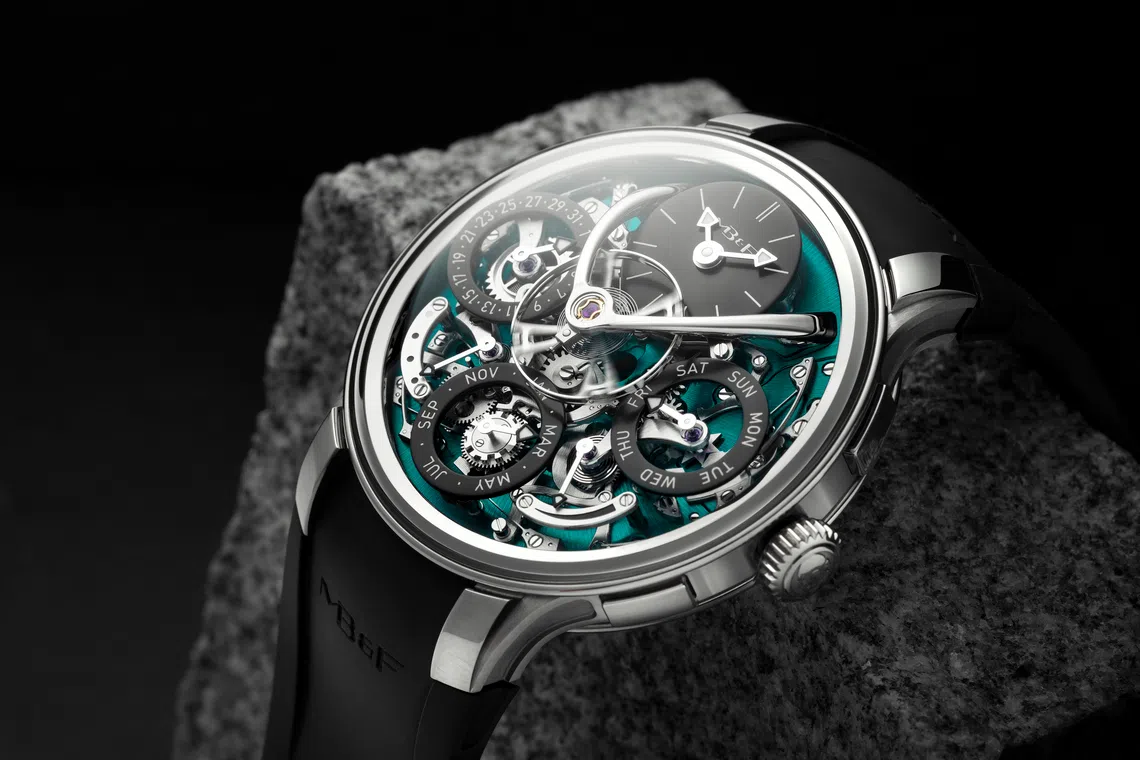
Wrapped in a more robust yet lightweight material, the EVO first came in a zirconium case which is lighter than steel and more durable than titanium, with lugs slightly hollowed for a sportier profile.
Paired with a sleek rubber strap, the limited-edition watch comes in three dial-plate colours: black, blue and orange. Just 15 pieces of each have been made. A Grade 5 titanium version of the model with a green dial-plate was released in 2021.
Both variations feature a screw-down crown that ensures the watch is water-resistant to 80 m – another first for MB&F watches (the Aquapod is water-resistant to 50 m) and a considerable offering given its complexity in a case with multiple correctors for the perpetual calendar. The complicated 581-component movement is protected by shock absorbers in the form of a “FlexRing” from the rigours of a more active lifestyle.
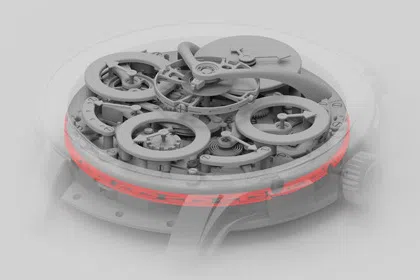
While the case stays at 44 mm, the EVOs are bezel-free so the crystal goes directly into the case edge, admitting more light into the edges of the 3D movement for a more engaging view.

The circular pushers for adjusting the perpetual calendar on the original models are swapped for more ergonomic double-spring oblong actuators in the EVOs. These are larger and do not protrude from the case which make them, besides sportier-looking, easier to activate and less likely to get knocked around accidentally.
Decoding Asia newsletter: your guide to navigating Asia in a new global order. Sign up here to get Decoding Asia newsletter. Delivered to your inbox. Free.
Copyright SPH Media. All rights reserved.