

The multi-faceted journey of a ruby
Follow the precious red stone from rough specimen to final product at a new exhibition
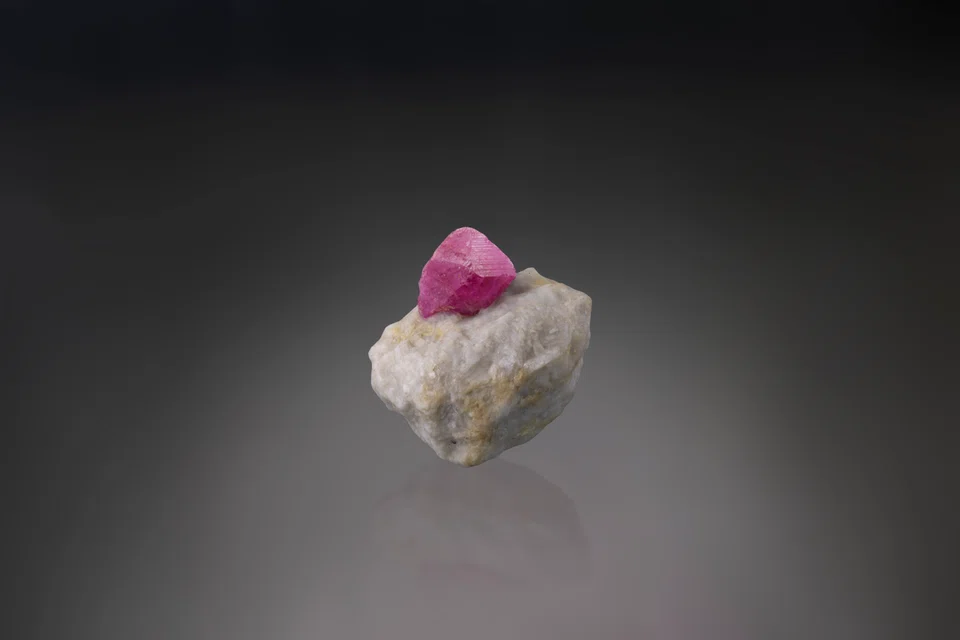
DID you know that rubies are the second-hardest natural gemstones after diamonds?
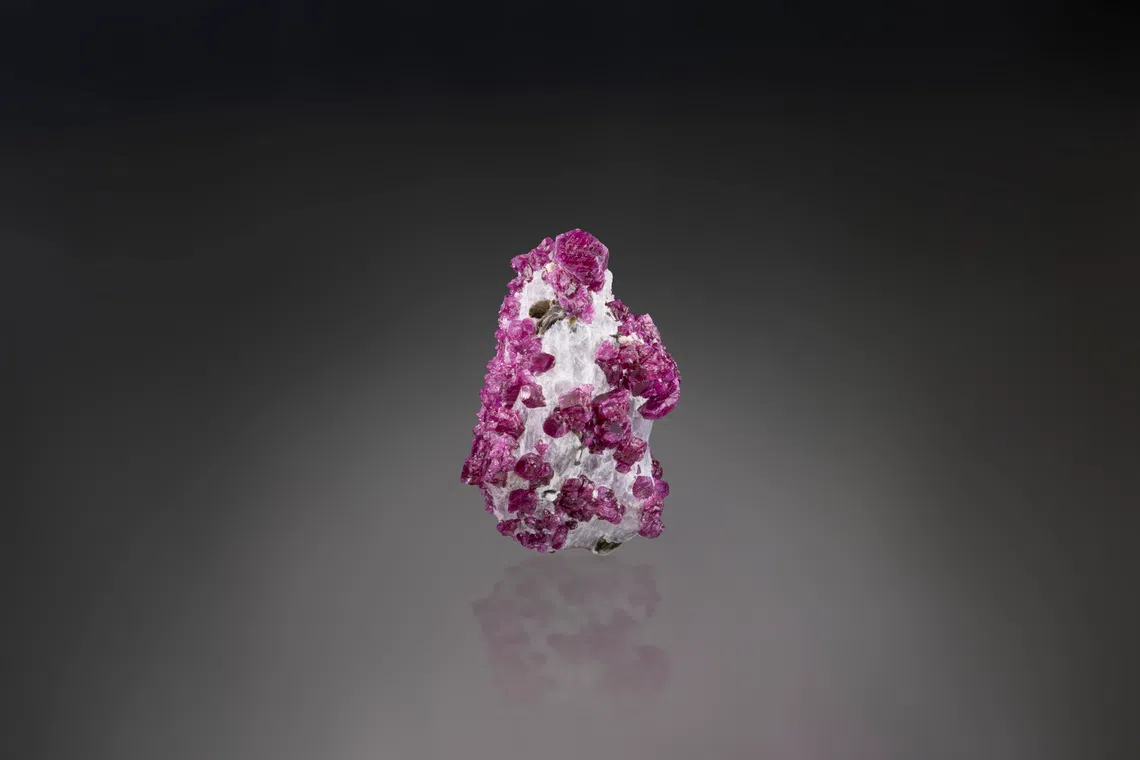
Or that – unlike diamonds – they often have inclusions? This is why their colour is more important than their clarity, given that even the best rubies are typically not inclusion-free under 10x magnification.
If you love rubies, or are just curious about what the precious stone undergoes from rough to final product, then pay a visit to Van Cleef & Arpels’ Les Jardins Secrets exhibition space in Raffles Arcade.
Paris-based L’Ecole Asia Pacific, School of Jewelry Arts – which is supported by the French jeweller and offers gemology courses – is presenting Ruby, its first show with Van Cleef & Arpels in Singapore.
Part of its Discover the Gemstones series, the presentation of more than 20 exhibits will showcase rubies from their natural state to their use in fabulous jewellery in the skilled hands of lapidaries.
Thanks to their red colour, rubies – the birthstone for July – are one of the most popular precious stones since time immemorial. The gem is a variety of the mineral corundum, and gets its red colour from chromium impurities. Still, a purely red ruby is very rare, as most carry orange, pink or purple hues.
And while the precious stone is tough, chromium can unfortunately also cause cracks and fissures. Hence, few rubies are big enough to become fine quality gems. For each carat of ruby, at least one tonne of its veinstone (parent rock) has to be processed, making any good quality ruby above one carat very rare.
At the exhibition, you will see rough mineral specimens, together with their distinctive characteristics, from countries including Myanmar, Pakistan, Macedonia, Nepal, Vietnam, Tanzania and Greenland.
Also on display are exquisite Van Cleef & Arpels ruby jewellery loaned from private collectors, showcasing why the stones are so sought after.

These include pieces from the jeweller’s Treasure of Rubies high jewellery collection launched in 2019, whose 3,000-plus rubies took the maison a decade to source.
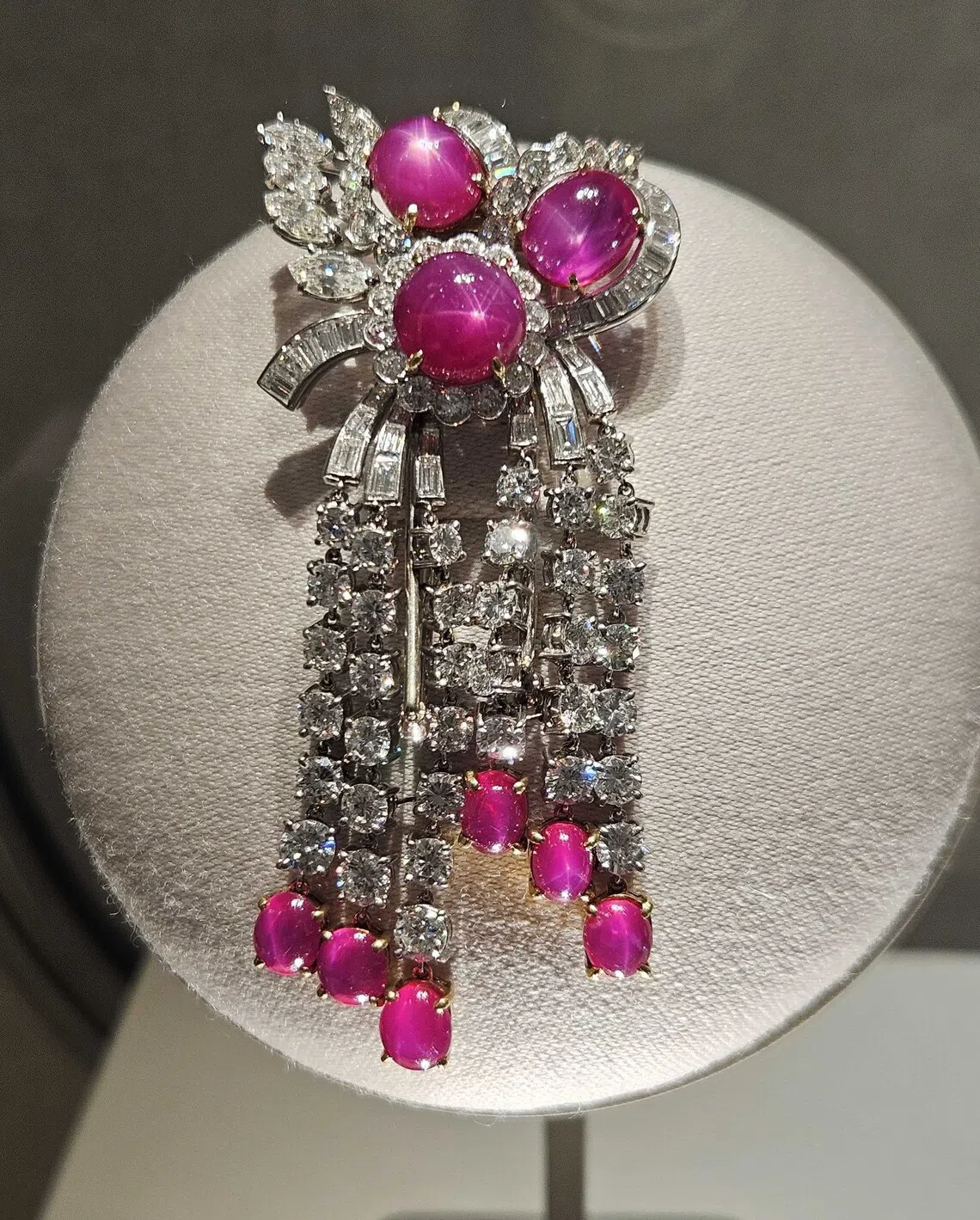
A particularly interesting item on show is a couture clip from 1956, which is special due to its star ruby cabochons. This particular type of ruby contains inclusions called rutile needles – a variety of thin and fine crystal formation – which cause reflections forming a six-ray star. Such stones are extremely rare, with only 1 to 2 per cent of the world’s rubies considered good quality star rubies.
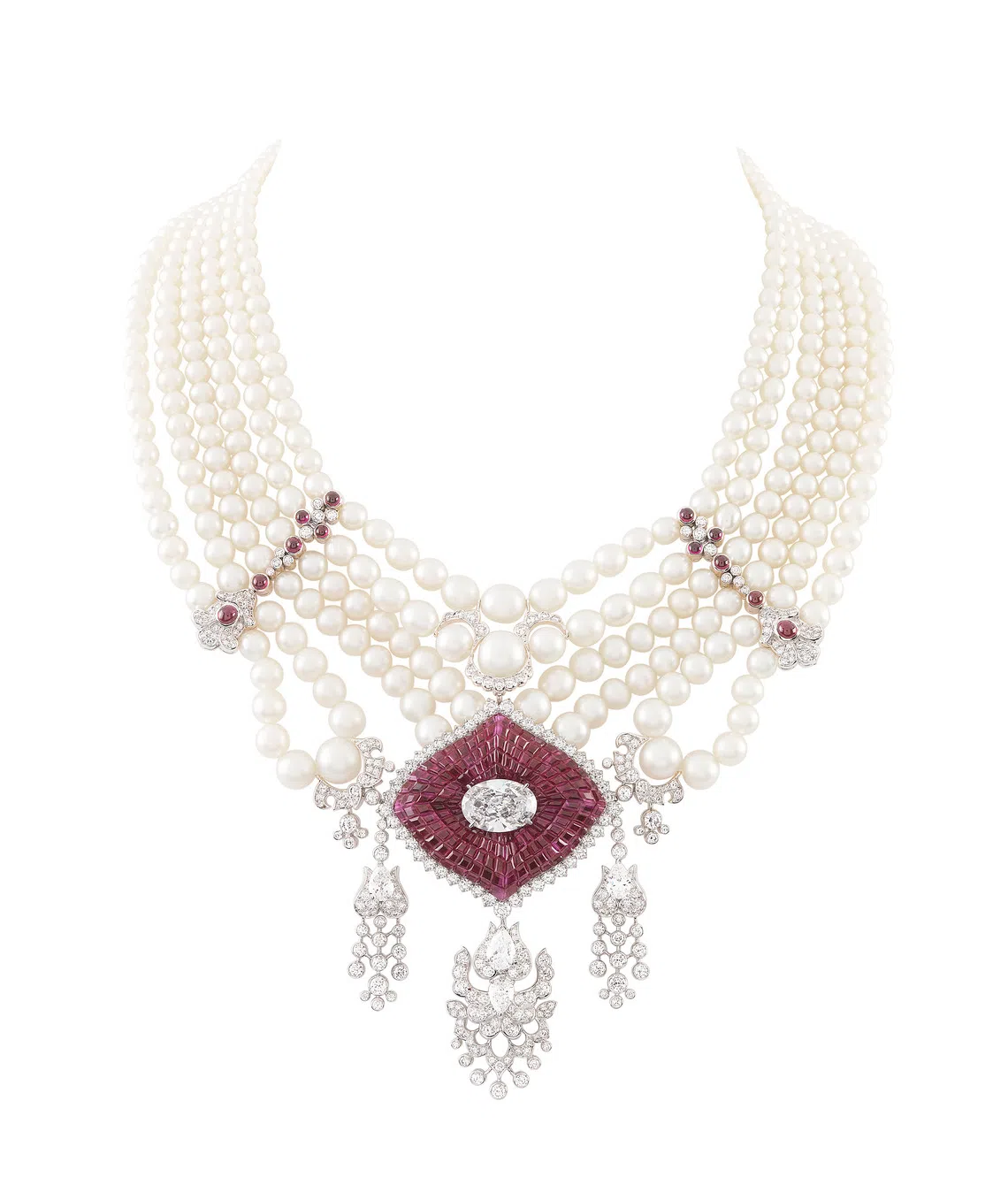
Another piece to look out for is the luscious Cadeau Imperial necklace, which is fleshed out in diamonds, white natural pearls and Mystery Set rubies. The latter is an invisible setting created by the maison where the prongs holding the stones are unseen.
One of the most fascinating parts of the exhibition, however, are blown-up photomicrographs of rubies taken by Billie Hughes, an award-winning photomicrographer and gemologist. These pictures, taken by coupling the camera to the microscope, show the gems’ inclusions up close and are spellbinding works of art.
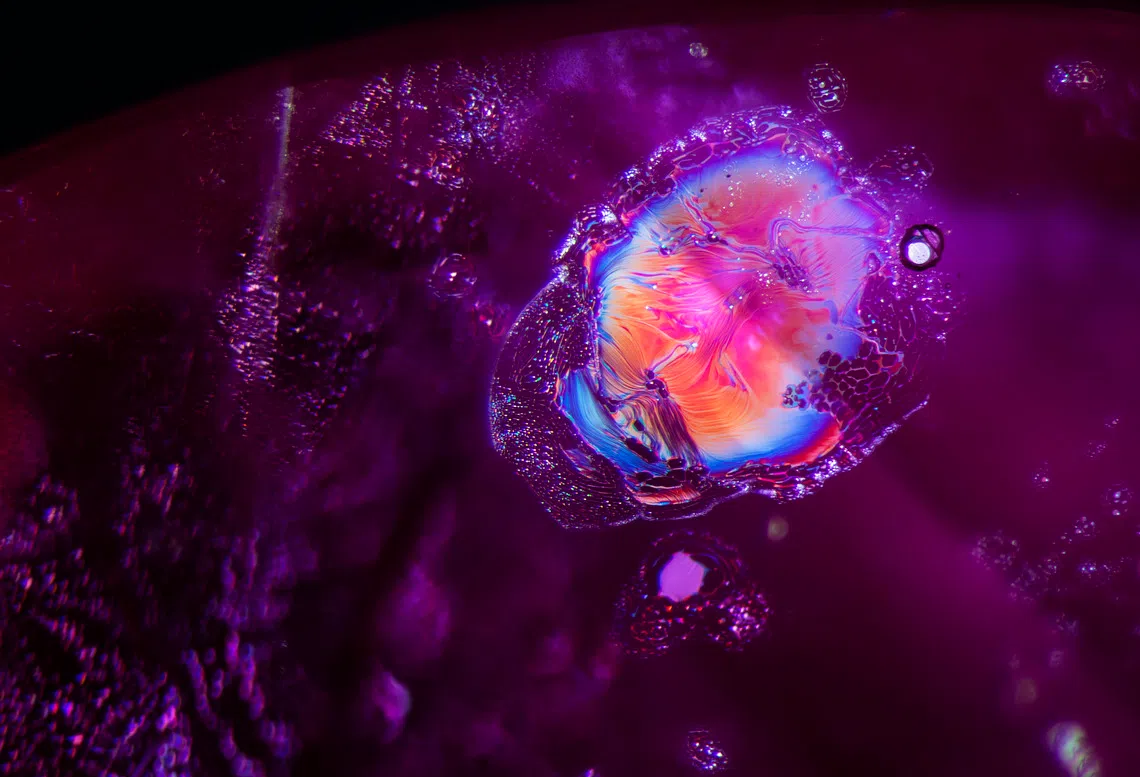
Inclusions are presented in awe-inspiring perspectives, as if the rubies have magically captured time in physical form. And while what they reveal may look like something from outer space, they also provide precious information about how the gems were formed geologically and even the earth’s history.
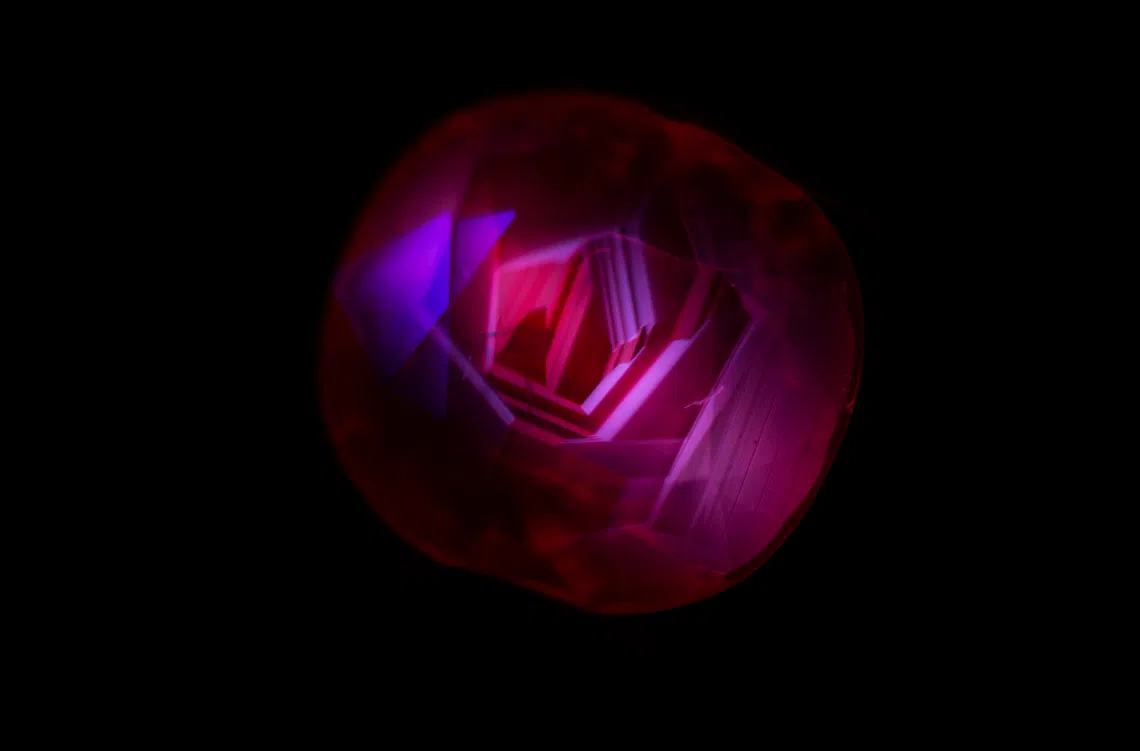
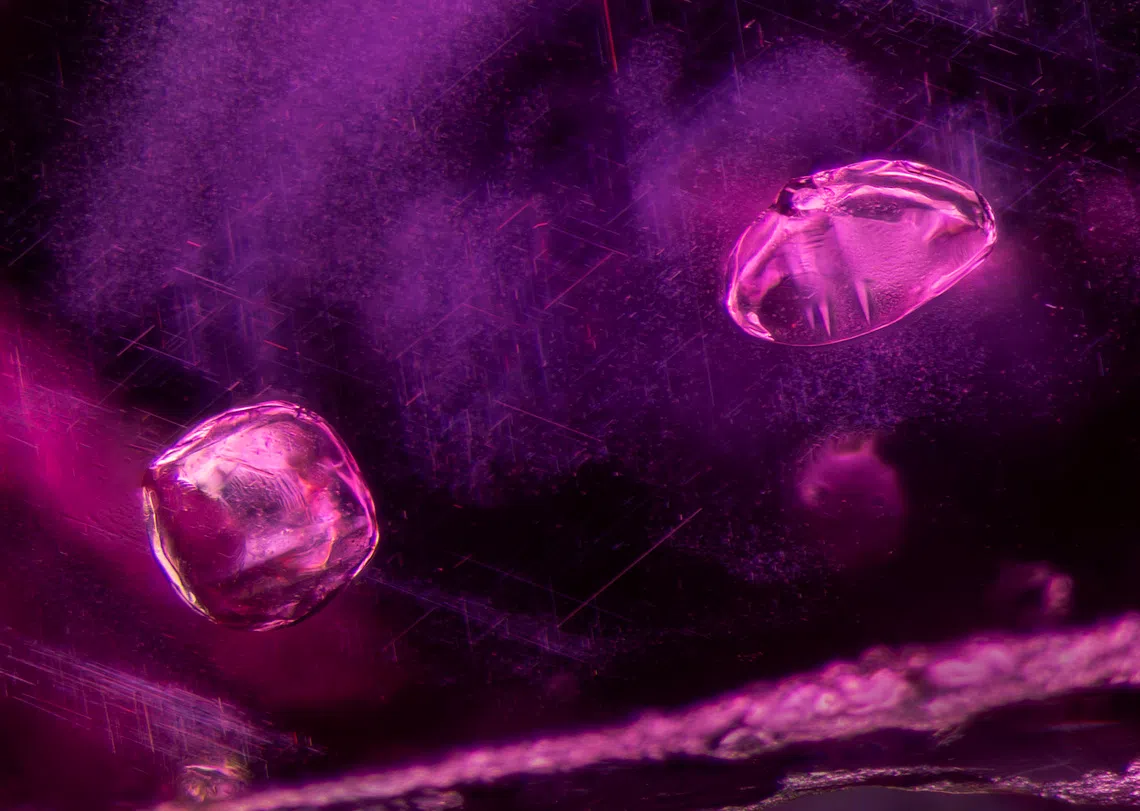
Visitors will be able to personally observe a ruby’s inclusions themselves via a microscope at the exhibition and take a picture which they can save into their mobile phones.
Finally, you should try your hand at “setting” stones using the maison’s Mystery Set technique. We struggled for quite a while just to slide a 1 cm square plastic “ruby” onto the rails in its metal mounting. Imagine doing that over and over again with rubies a fraction of this size.
No wonder it takes about four hours just to cut a single stone to fit this type of setting.
If nothing else, you walk away with newfound respect for the work that lapidaries do, along with a greater understanding of the precious rubies they work with.
Register for the exhibition at https://live.eventtia.com/en/ruby-discover-the-gemstones
Decoding Asia newsletter: your guide to navigating Asia in a new global order. Sign up here to get Decoding Asia newsletter. Delivered to your inbox. Free.
Copyright SPH Media. All rights reserved.
TRENDING NOW

The only common thing in S-E Asia is that we all eat rice: Cisco’s Asean president
‘How many will survive?’: Bubble fears arise as China’s humanoid robotics face reality check

Green fuels, autonomous ships: How Singapore is future-proofing its shipping industry

Could stablecoins be the future of money?

