

Quartz watches are having a movement
Long scorned despite being cheaper and more accurate than their mechanical counterparts, they are finally getting some love
WRISTWATCH enthusiasts can be persnickety. They often have strong opinions about whether bezels should be bidirectional. They can cite the differences between ETA and Sellita movements. They will happily preach the gospel of microadjust clasps and guilloche dials.
And for years – decades, really – they formed a fairly unified front when it came to their contempt for quartz watches. Unlike mechanical timepieces, which are like Rube Goldberg machines in miniature, quartz watches are essentially powered by an electronic circuit. To purists, this felt like cheating.
“There was this idea that quartz was somehow diametrically opposed to the nobility of mechanical Swiss watchmaking,” said Andrew McUtchen, founder of Time & Tide Watches, an online publication based in Australia. “But time has healed some of those wounds – pardon the pun.”
No longer carrying as much of a stigma, quartz has found an audience among collectors who, until recently, never could have fathomed slapping anything other than mechanical watches onto their wrists. But thanks to a growing emphasis on design and technological advancement, many brands – big and small — are pushing quartz forward.
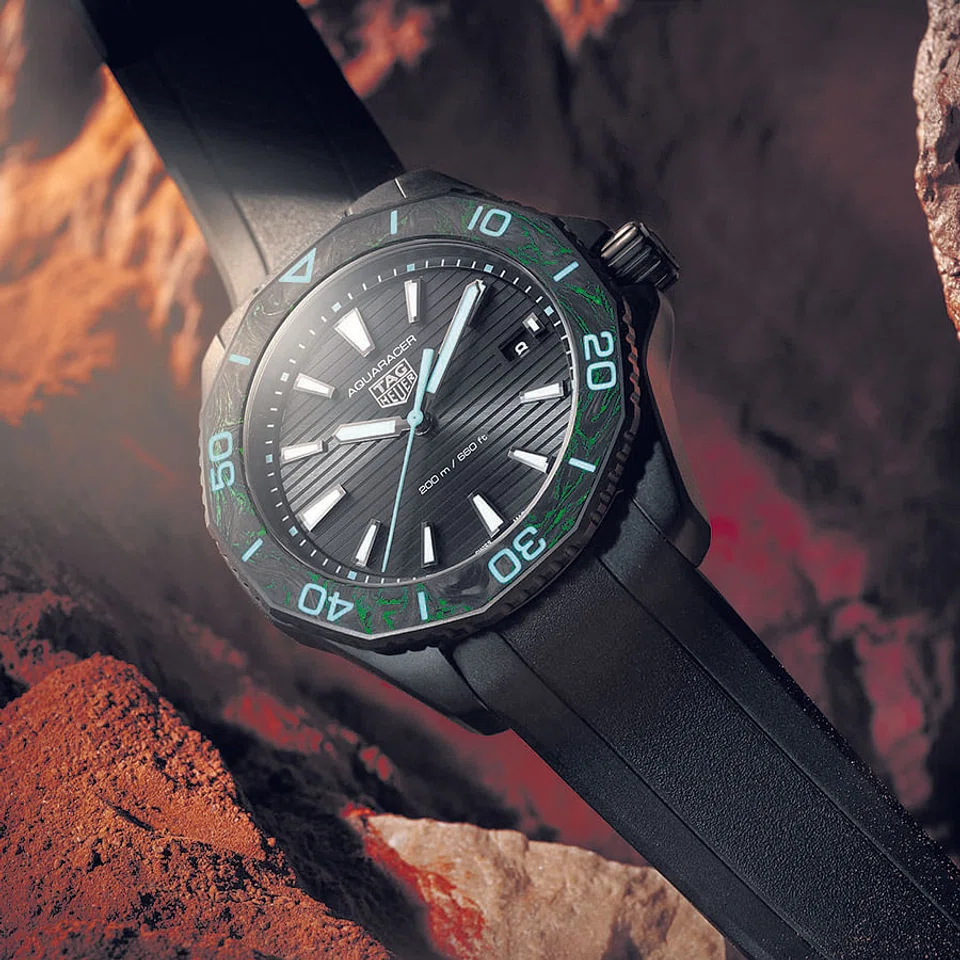
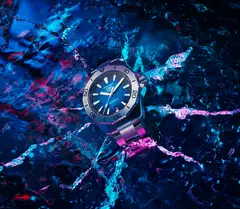
Grand Seiko, for example, has an exceptional quartz movement known as the Caliber 9F. Citizen has the light-powered Caliber 0100, which the company says is accurate to within one second a year. And Tag Heuer has the Aquaracer Solargraph, a popular model that was first released in 2022. The brand recently released a limited-edition iteration in collaboration with Time & Tide. Priced at more than US$3,000 each, all 250 pieces sold out within 24 hours.
Despite the collaboration, McUtchen described himself as a longtime quartz sceptic. He still appreciates the craftsmanship of mechanical watches, which are powered by a labyrinth of snug-fitting gears and springs. He also loves the smooth sweep of the seconds hand. Quartz watches typically tick only once per second – a visual cue that can produce a Pavlovian response among aficionados.
“The tick still gives me the ick,” McUtchen said.
But after spending several months with the Solargraph – Time & Tide’s version is called the Sundowner – McUtchen acknowledged that he might be coming around. He still wears automatic watches about “90 per cent of the time”, he said, but quartz has its advantages.
“You can reel them off,” McUtchen said. “The price, the accuracy, the convenience and, in our case, the technical wizardry of a watch that’s powered by sunlight.”

Unlike mechanical watches, which will stop running unless they are wound or worn (automatic watches have a rotor that will wind the movement with wrist motion), quartz watches will run for months or even years. Quartz watches also tend to be robust: All of those delicate mechanical parts have essentially been replaced by a battery, a circuit board and a sliver of quartz, which oscillates with an electric charge.
Only now, perhaps, is the watch industry moving beyond the psychological trauma of the so-called quartz crisis of the 1970s and early ’80s, when Swiss watchmaking cratered after the introduction of battery-powered watches that were both less expensive and more accurate than mechanical watches.
McUtchen went so far as to describe the feeling toward quartz as outright “hostility”. But the warming reception was recently reinforced in a modest way by Matthew Zillmann, 25, founder of the Australian microbrand Hz Watches, which has been a surprise hit among wristwatch reviewers.
Hz is the abbreviation for hertz, a unit of frequency. Quartz, for example, vibrates at a frequency of 32,768 hertz. And if you purchase one of Zillmann’s watches, you will always know that because the number is printed on the bottom of the dial. The caseback also features the brand logo in the shape of a circuit board.
“With quartz being our DNA and our brand identity, we didn’t want to shy away from it,” Zillmann said.
Andrea Furlan, lead designer and co-founder of Furlan Marri, an independent brand based in Geneva, recalled preparing for the brand’s first release via a Kickstarter campaign about three years ago. Furlan mentioned to some watch enthusiasts that he and his co-founder, Hamad Al Marri, were planning on using a meca-quartz movement, which uses a quartz base to drive a mechanical chronograph.
“They all said, ‘Oh, no, I would never wear a quartz on my wrist’,” Furlan said.
But once Furlan began telling them about the meca-quartz movement’s history — high-end Swiss brand Jaeger-LeCoultre developed its own version in the 1980s — he sensed that he was converting some sceptics. It helped that Furlan Marri’s first chronograph was elegant, with a refined case and sophisticated details on the dial. In other words, it did not look like a typical quartz watch. It looked expensive.
Sure enough, the Kickstarter campaign was a major success. In 30 days, Furlan said, the brand sold about 4,000 watches at US$350 each. A few months later, Furlan Marri won an award from the Grand Prix d’Horlogerie de Genève, the watch industry’s most prestigious prize committee.
Of the 15,000 watches that Furlan Marri now produces each year, about two-thirds of them use a meca-quartz movement, Furlan said. He cited advantages like the movement’s reliability – less than 1 per cent of Furlan Marri’s watches are returned, he said — and its thin profile, which allows for a slimmer case design. Furlan added that the brand was hoping to develop its own high-end quartz movement.
“But the price needs to be accessible,” he said. “Otherwise, it doesn’t really make sense.”
David Campo, founder and creative director of Nezumi Studios, a small watch brand based in Stockholm, also uses a meca-quartz movement in many of his chronographs. Using quartz keeps the costs down for both the manufacturer and the consumer, Campo said. Nezumi’s latest release sells for US$358.
“That was part of the plan,” he said. “We wanted to produce an affordable watch that still does what it should, and it fits in a collection with the more expensive watches you may own.”
At Hz, Zillmann has heard from customers who are buying their first watches but also from enthusiasts who are in the third and final phase of a journey that resonates with him.
“You start in quartz,” Zillmann said, “and then you get drawn toward your mechanicals and automatics, and then you kind of realise that quartz is a bit more accurate and often more affordable.” NYTIMES
This is an abridged version of the NYT piece
Decoding Asia newsletter: your guide to navigating Asia in a new global order. Sign up here to get Decoding Asia newsletter. Delivered to your inbox. Free.
Share with us your feedback on BT's products and services
TRENDING NOW

Once staunchly pro-China, Malaysian Chinese businesses are now distancing themselves from Beijing

The middle power moment arrives in South-east Asia – but not for Asean

DBS, OCBC, UOB face rate hike reality check

Vietnam’s northern provinces, not Hanoi or Ho Chi Minh City, are powering near 10% GDP growth

