

Watch retailers could continue to enjoy boom time

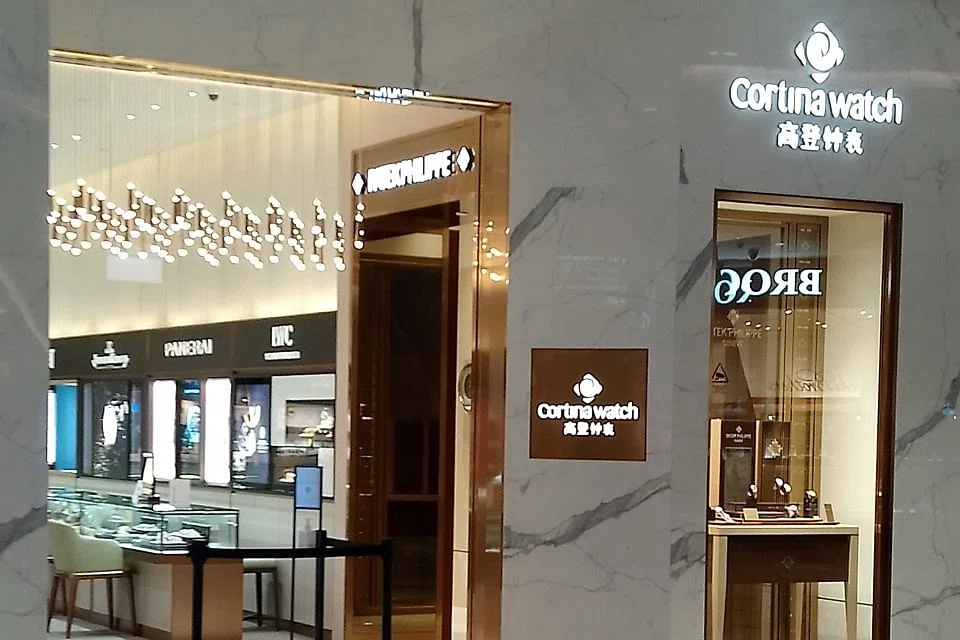
WATCH retailers Cortina Holdings and The Hour Glass both clocked substantial improvements in revenue and net profit in their latest financial results.
The Hour Glass's revenue rose by 63 per cent to S$472.4 million and earnings surged 110 per cent to S$62.6 million in the half year to September.
Its rival Cortina Holdings reported an 86.7 per cent jump in revenue to S$324.6 million, while net profit improved by 74 per cent to S$25.4 million.
Higher revenue and gross margins of about 30 per cent were factors that contributed to the better performance of the retailers.
Notably, it was stated in the financial reports that the businesses of the two retailers were "not affected significantly by seasonal or cyclical factors during the financial period".
In its financial statement, The Hour Glass added that consumer sentiment within the watch industry remains favourable despite pandemic-induced periodic disruptions to social and business activities.
In fact, over at Cortina, other liabilities increased by S$15.3 million as a result of an increase in advance deposits from customers.
Such was the resilience of the industry, which has been bolstered by demand that diverted from services to goods amid the pandemic-induced restricted movements, low interest rates and bullish stock markets.
Drawn by the resilience and strength of the luxury watch industry, Incredible Holdings is joining hands with Ntegrator International to acquire a watch business in Hong Kong, taking stakes of 42 per cent and 55 per cent, respectively, with the remainder to be owned by Christian Kwok-Leun Yau Heilesen, the executive director of both Catalist-listed companies.
Would such bullishness last? International and local numbers show that the going is good.
The Federation of the Swiss Watch Industry reported on Dec 21 that exports reached 2.2 billion Swiss francs (S$3.2 billion) in November, making it the best monthly result since October 2014.
Also, it noted watches made from precious metals reported "very high demand" as export value of such timepieces rose 18.4 per cent compared to pre-pandemic levels and generated more than half of the overall increase for November.
Total export value for watches priced at over 3,000 Swiss francs increased in November by 16 per cent. Export value for those priced between 500 and 3,000 Swiss francs declined by 2.3 per cent and those below 500 Swiss francs saw a significantly more marked decline - as in previous months.
Singapore slid a notch to seventh position in the ranking of markets by export value last month, at 120.3 million Swiss francs. This value was 21.7 per cent higher than last year's, but was 16.8 per cent lower than pre-pandemic levels.
On a year-to-date-basis, however, it took sixth position at over 1.1 billion Swiss francs, up 39 per cent year on year, or flat compared to pre-pandemic.
Meanwhile, statistics from the Department of Statistics Singapore show retail sales for watches and jewellery rose 27 per cent in October on a year-on-year basis and 4 per cent on a seasonally adjusted month-on-month basis - due mainly to greater demand for watches.
At current levels, the chief worry of investors is if shares of Cortina and The Hour Glass are overbought.
Cortina has more than doubled in price this year, closing on Wednesday (Dec 22) at S$4.15. That gives the counter a market capitalisation of S$687.2 million and a price-to-earnings multiple of 13.6 times.
The Hour Glass, meanwhile, is up 150 per cent year to date. Based on its close on Wednesday at S$2, it has a market value of over S$1.3 billion and trades at about 12.1 times its historical earnings.
There are some potential earnings drivers for both stocks next year.
For one, continued closures of borders and movement curbs due to the Omicron variant may help support demand for goods. While there were initial concerns that a dearth of tourism would hurt sales, the reverse has proved true.
Also, the Singapore government's recent moves to tame the property market may well benefit the luxury timepieces industry. In the Chinese market, property cooling measures have already caused some to spend more on luxury watches as investments instead.
TRENDING NOW

Two Singapore-listed palm oil firms named in Greenpeace report on Indonesian plantation fires

Singapore Airlines flight returns to San Francisco after ‘unruly’ passenger incident

Singapore looking into which companies responsible for haze-causing fires: PM Wong

Deluge IPO 3.86 times subscribed ahead of SGX debut

