

What are the World Cup’s options if Iran backs out?
If the country fails to show up, Fifa would need to quickly find a replacement
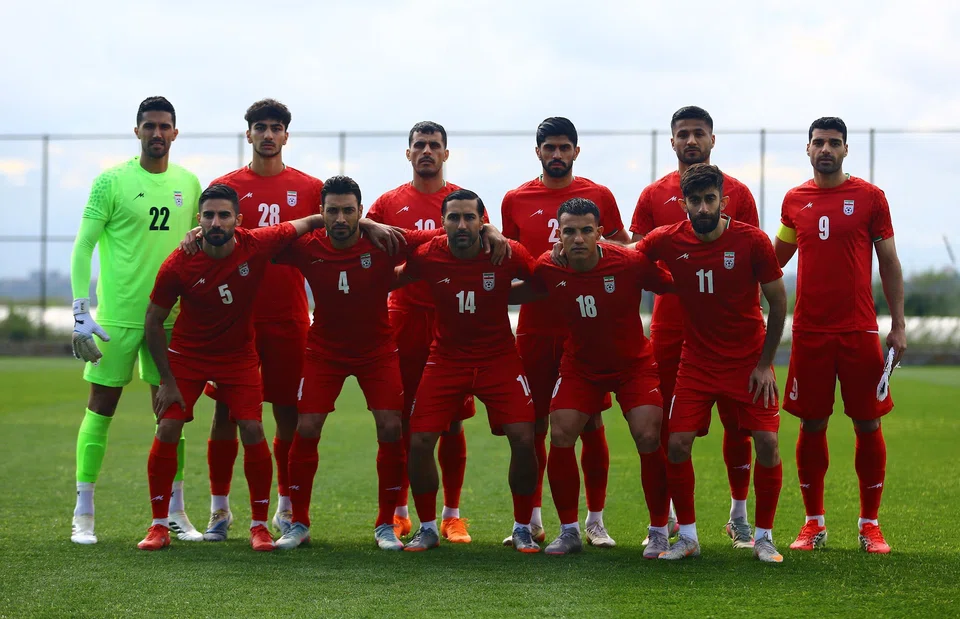
[NEW YORK] Iran’s request to play its World Cup matches outside the United States has left teams, organisers and fans in limbo.
Never before has a World Cup host been in a state of armed conflict with the nation of a participating team, and Iran’s demand has created a thorny problem for tournament organiser Fifa.
Iran has asked to play its games in co-host Mexico instead of in the US. But that presents logistical challenges that would be difficult to overcome so soon before the competition, and Fifa has so far refused to contemplate a last-minute scheduling reshuffle.
Matches have in the past been relocated or cancelled because of wars, sanctions or boycotts. But the football governing body has a strict remit to steer clear of politics, and Fifa president Gianni Infantino has said that all qualifying teams, including Iran, are expected to turn up for their games.
Why did Iran ask to have its games moved?
After signalling that the Iranians would be welcome at the World Cup despite the war, US President Donald Trump reversed course in March, saying he did not believe it was appropriate for them to attend, “for their own life and safety”.
In response, Iranian Football Federation President Mehdi Taj said that the Iran team would not travel to the US. Ahmad Donyamali, the country’s sports minister, noted that taking part would be impossible due to the US and Israeli air strikes on his country.
Iran’s ambassador to Mexico requested that Iran’s initial matches be moved from Los Angeles and Seattle to Mexico, and Mexican President Claudia Sheinbaum said that her country was prepared to host those games.
So can Fifa just move Iran’s games out of the US?

Technically it can, but on Mar 17, Fifa officially rejected the request, saying it was looking forward to all teams competing according to the match schedule announced in December.
Tickets have already been sold for Iran’s matches in Los Angeles and Seattle and the games were awarded to these host cities years ago, so it would be seen as unfair to take the events away from markets that have been preparing for them.
“The team hotels are in place, the training sites in place, the stadiums in place. It doesn’t matter who’s playing there,” Los Angeles Host Committee president and chief executive officer Kathryn Schloessman said on the Bloomberg Business of Sports podcast.
Even if Iran’s group games were moved, it would be almost impossible to avoid playing in the US during the knockout rounds.
What are Fifa’s other options?
It could maintain the current schedule, forcing the Iranian team to decide whether to travel to the US or forfeit its place at the tournament. Or Fifa could intervene directly to suspend or exclude Iran. It would only be allowed to do so for safety reasons, since Fifa statutes require the organisation to maintain strict political neutrality in all its decisions.
The body’s annual congress is scheduled for Apr 30 in Vancouver, where it could meet member nation federations, including that of Iran, to consider the situation.
Infantino met the Iranian national football team ahead of a friendly match between Iran and Costa Rica in Antalya, Turkey, on Mar 31, and said that Fifa would continue to support the team “to ensure the best possible conditions as they prepare for the Fifa World Cup”.
Fifa’s refusal to contemplate shifting Iran’s games to Mexico underscores its wariness of making last-minute changes that might draw accusations of political bias. Infantino already stoked controversy at the World Cup draw in December when he awarded Trump a “Fifa Peace Prize”.
Fifa would likely not take any definitive action on Iran unless it formally declares that it will not attend the World Cup – which it has not done. The situation leaves several national teams in limbo.
New Zealand and Belgium, who share Group G with Iran, said that they are continuing to prepare for their scheduled games in Los Angeles until they hear otherwise.
How realistic is it for Iran to take part in the World Cup?
Even before the war, Iranian citizens faced tight US travel restrictions. The conflict makes it even harder for the team to secure safe, authorised flights out of the Middle East. Iran’s ambassador to Mexico has complained of a lack of cooperation from the US government on issuing visas and providing logistical support.
If Iran failed to attend, Fifa would need to quickly find a replacement. Because Iran qualified via the Asian Football Confederation, the spot would probably go to another team from that region.
What if Iran does show up for its US games?
Iran’s matches in the US would require heavy security for both players and supporters. While Iranian nationals have been banned from travelling to the US for the tournament, there is a large diaspora of US Iranians, many of whom will want to attend Iran’s games.
As of 2024, there were 750,000 Iranian Americans in the US; an estimated 375,000 of them live in California, according to data from Pew Research Centre.
How have politics affected international football tournaments in the past?
The 1942 and 1946 World Cups were scrapped entirely due to World War II. Yugoslavia was excluded from the 1992 European Championship just weeks before the tournament began due to sanctions related to the Balkan War. In 1974, the Soviet team refused to play a qualifier in Chile following a right-wing coup there, leading to its disqualification.
The closest parallel to the current situation is the 1982 World Cup, which took place during the Falklands War between the UK and Argentina. Spain was host on that occasion, and the two teams did not play one another in the tournament.
What penalties would Iran’s football federation face if it withdrew?
When a team qualifies for the World Cup and then withdraws, Fifa’s rulebook is quite strict. According to Article 6 of the Fifa World Cup 2026 regulations, member associations are technically not permitted to unilaterally withdraw once they have committed to the competition.
The penalties that the Iranian Football Federation would face if it did so would depend on how close to the start of the tournament this happened. If it withdrew more than 30 days before the competition, the FIFA Disciplinary Committee could impose a fine of at least 250,000 Swiss francs (S$405,000). If it happened within the 30-day window before kickoff, the fine would double to a minimum of 500,000 Swiss francs.
On top of that, the Iranian team would be required to reimburse all tournament-related funding it received from Fifa. This includes the substantial preparation money – US$1.5 million per team – and any portion of the base US$10.5 million participation fee it may have already been allocated.
Fifa’s disciplinary committee can also expel the withdrawing federation from future Fifa competitions, meaning Iran could theoretically be banned from the 2030 World Cup qualifiers.
The only technical loophole is a force majeure clause that allows Fifa to absolve a nation of liability in the event of war or natural disaster. Applying this clause is entirely at Fifa’s discretion, and invoking it would require the governing body to officially weigh in on the conflict, something that is strongly discouraged under its mandate of political neutrality.
Who could take Iran’s place?
There is no rule that a replacement must come from the same regional confederation. However, historical precedent and a preference for geographical balance at the tournament suggest the spot would stay within the Asian confederation.
Iraq was previously viewed as first in line to replace Iran as it was the highest-ranked country in the Asian Football Confederation region that had not yet qualified for the World Cup at the outset of the Iran war. However, Iraq officially qualified for the tournament on Mar 31 by defeating Bolivia 2-1 in Mexico.
This now makes the United Arab Emirates (UAE) team the front-runner to replace Iran’s if it drops out. The UAE made it to the last round of qualifiers for the region, falling to Iraq in the fifth round. BLOOMBERG
Decoding Asia newsletter: your guide to navigating Asia in a new global order. Sign up here to get Decoding Asia newsletter. Delivered to your inbox. Free.
Share with us your feedback on BT's products and services
TRENDING NOW
Malaysian king buys stake in Singapore-listed mining firm expanding into rare earths

Grab CEO’s wife Chloe Tong on life with Anthony Tan and finding her purpose

Once staunchly pro-China, Malaysian Chinese businesses are now distancing themselves from Beijing

Longer wait times expected as S’pore healthcare institutions report system disruptions

