What to expect at the 2022 World Cup in Qatar
 Add BT as a preferred source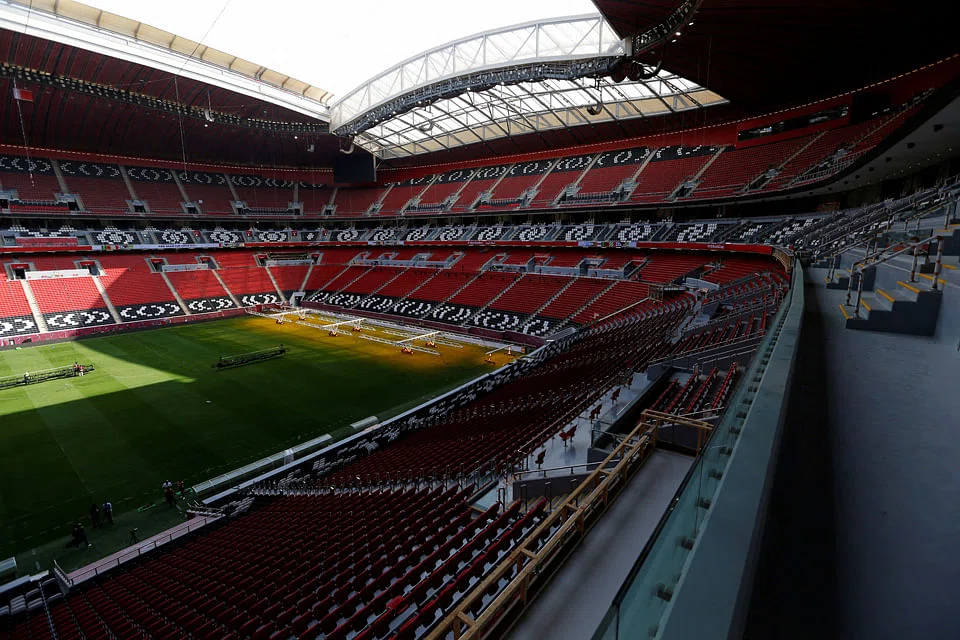
DeeperDive is a beta AI feature. Refer to full articles for the facts.
Doha
ONE thing is for certain as the countdown starts in earnest for the 2022 World Cup in Qatar: This year's global soccer spectacle will be unlike any other.
For the first time in the quadrennial tournament's 92-year history, it will be staged in November and December instead of the mid-year months. It will also be the biggest sporting event ever held in the Middle East - and in a conservative, majority-Muslim country to boot. All that before factoring in Covid-19.
How much are FIFA World Cup tickets, and how can you buy them?
A seat for a group-stage match starts at 250 riyals (S$90) for international visitors, but Qatari residents will get special discounts and can pay as little as 40 riyals. A prime seat for the Dec 18 final will set you back 5,850 Qatari riyals.
The first stage of ticket sales runs from Jan 19 to Feb 8. Fans can apply for individual matches or a series of matches in various price categories. If applications exceed the tickets available for any game and category, applicants will be selected by a random draw. That will be followed by a first-come-first-served stage.
Navigate Asia in
a new global order
Get the insights delivered to your inbox.
Once schedules are determined in April, there will be a similar 2-part application process. Once that's done, remaining tickets will be available in a last-minute sales phase and through a ticket-resale platform until the final.
What's Qatar like?
Qatar is tiny - 11,751 square kilometres - and most of its 2.7 million population lives in the capital, Doha, or its suburbs. None of the matches will be played more than 50 km from the city, a fact touted by organisers as likely to make the tournament environmentally friendly and even allow fans to attend more than 1 match on any given day.
Most of Qatar's attractions are located on the Persian Gulf coast, north along Doha's Corniche seafront, through an artificial island called The Pearl, to a new urban development named Lusail. Outside the Doha metropolitan area, much of the country is desert - characterised by rolling sand dunes in the south, and a flat, rocky landscape elsewhere.
Will stadiums be air-conditioned?
Qatar has refurbished 1 existing stadium and built 7 new ones for the tournament, a US$10 billion programme that has attracted controversy for its treatment of construction workers. All the stadiums will employ cooling technology or design, though not every one will be fully air-conditioned. That said, it will be relatively cool during the weeks of the tournament. Unlike the summer months, when temperatures can average 42 deg C during daytime, the mid-November average high in Qatar is 29 deg C. It's cooler still in December.
Hotels and accommodation - where will people stay?
Local organisers have had to come up with some creative ways to accommodate the 1.2 million visitors expected to descend on Qatar over the course of the tournament, a number equivalent to almost half the country's population. In addition to hotels and apartment rentals, authorities have chartered 2 cruise ships from MSC Cruises, which will provide a total of 3,898 cabins during the event. Organisers also say desert camping in designated villages will be made available for more adventurous fans, though they haven't offered details.
Can you drink alcohol during the World Cup?
Qatar isn't a dry country, but the government curtails alcohol sales. Liquor is served at select restaurants, typically those attached to hotels. A single depot run by Qatar Airways sells wine, beer and spirits (as well as pork) to foreign residents, provided they have permission from their employers. Organisers have yet to confirm whether alcohol will be on sale inside stadiums, but it will be available in designated fan zones.
Both men and women are expected to cover their knees and shoulders in public places. Malls, parks and official buildings routinely deny entry to people who flout the dress code. However, looser standards apply in places that cater to white-collar expats, including many luxury hotels and The Pearl. Some women wear shorts and tank tops at such places, and bikinis around swimming pools won't raise eyebrows.
Is Qatar safe for the World Cup?
Very safe. The country ranks 29th out of 163 countries on the World Peace Index, ahead of Spain, Italy and the UK.
Qatar is nowhere near the conflict zones of Yemen, Syria and Iraq. It also maintains cordial ties with Iran, meaning it's somewhat insulated from flare-ups with Tehran. Host to the largest American military base in the Middle East, the country has been increasing its cooperation with the US on combating regional terrorism, including paying for a counter-terrorism programme to provide training ahead of the World Cup.
What about for women, the LGBTQ+ community and people of colour?
Practically, women in Qatar have fewer freedoms than men, but female tourists aren't likely to encounter much overt discrimination. Women are generally treated with respect in public places.
Organisers have preached openness to people of all sexual orientations ahead of the event, and have even said they'll allow rainbow flags to be flown in the stadiums. Still, same-sex conduct is criminalised under Qatari law and punishable by prison, though gay people within the expatriate community do date and live together discreetly.
How much of a party will the World Cup be?
A key organiser said last year the government is exploring options on how to manage violations of modesty and decorum, such as public drunkenness and indecency. It remains to be seen whether authorities will relax their approach in order to avoid international criticism. BLOOMBERG
Decoding Asia newsletter: your guide to navigating Asia in a new global order. Sign up here to get Decoding Asia newsletter. Delivered to your inbox. Free.
Share with us your feedback on BT's products and services