

Where are NFTs now? Singapore’s creatives reclaim space after market wipe-out
While the market has slumped, the technology is rapidly evolving and top artists are still making a killing

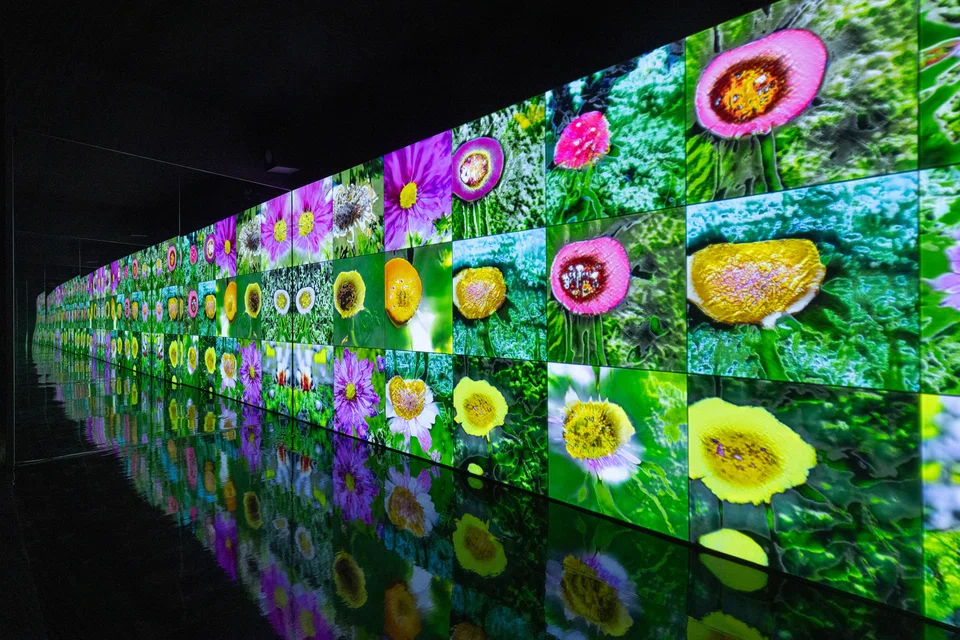
TWO years ago, non-fungible tokens (NFTs) were all the rage. You couldn’t step into a bar or a party without overhearing someone breathlessly talk about NFTs.
Today, the NFT market is all but wiped out. Sales volumes are down by as much as 90 per cent from their record highs. This decline stands in stark contrast to the upward trajectory of Bitcoin’s value since the beginning of 2023.
The recent spate of headlines has not been kind. Buyers of Bored Apes NFTs are suing auction house Sotheby’s, and celebrities including Paris Hilton and Justin Bieber, for “creating the impression that the market for (Bored Ape Yacht Club) NFTs had crossed over to a mainstream audience”, the plaintiffs’ lawyers say.
Popular NFT marketplace OpenSea has ignited a storm of protest over plans to drop mandatory royalty fees for NFT creators, while another NFT platform Recur has announced that it’s closing shop after a successful run of hosting the IPs of Hello Kitty, Nickelodeon and other brand names.
Meanwhile, major Hollywood talent agency William Morris Endeavor has signed up some 50 Web3 and artificial intelligence (AI) artists, in the belief that these artists are on the forefront of cultural innovation.
And one still hears now and then of an NFT project launched this year, that captured the imagination of collectors and made millions in sales volumes for their creators. Artist Roope Rainisto, for one, sold his Life In West America NFT series for US$3.5 million in February 2023.
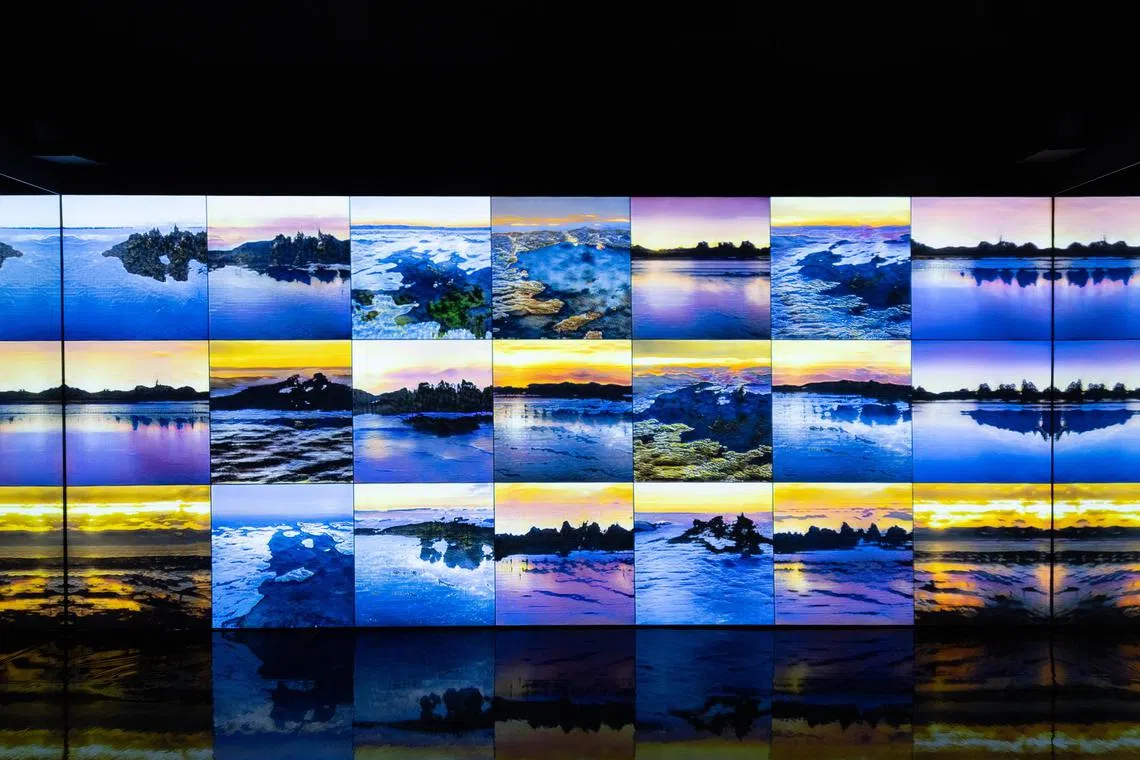
Here in Singapore, the NFT community is at a crossroads. NFT artist Ernest Wu says: “The scene is generally quiet, but, in a way, that’s good. The artists and collectors who had entered the market to speculate and make a quick buck – these bad actors have all left. Meanwhile, the artists who were already experimenting with digital technology before the NFT boom and bust are still here, still passionate, still doing their thing.”
Wu, together with fellow artist Jake Tan, created the successful BIOS: Living NFT project last year, which attracted hundreds of collectors to adopt and care for 256 mysterious digital plants that grew and changed dynamically on the blockchain.
Wu says: “There are not many new players entering the space these days. But those of us who genuinely believe in the technology remain a supportive and tight-knit community. We’re still watching the space carefully to see how it’s evolving, we’re still committed to long-term practice… Sure, finding ways to make money is not easy against the backdrop of a weak market. But, realistically speaking, it has always been hard to be an artist. Nothing’s changed in that sense.”
Adapt or die
On the flip side, some adaptive owners of once highly-coveted NFTs such as CryptoPunks and Bored Apes Yacht Club (BAYC) are finding ways to monetise their expensive purchases – which today have plummeted to about one-seventh of their value in April 2022.
According to data analytics platform CoinGecko, BAYC’s floor price fell to a low of 27.4 ETH or US$53,000 recently. During the NFT boom, its floor price reached a high of 153.7 ETH or US$430,000 in April 2022. Floor price refers to the minimum asking price for an NFT.
Creative entrepreneur Jaye Foo, for instance, leveraged his NFTs to launch several commercial and creative ventures. They include a beer line based on his Mutant Ape NFTs called Bored & Boozy, a virtual band made up of avatars from his CryptoPunks collection, and Singapore’s first NFT bar and lounge The Parlour Singapore, a favourite watering hole for Web3 enthusiasts.
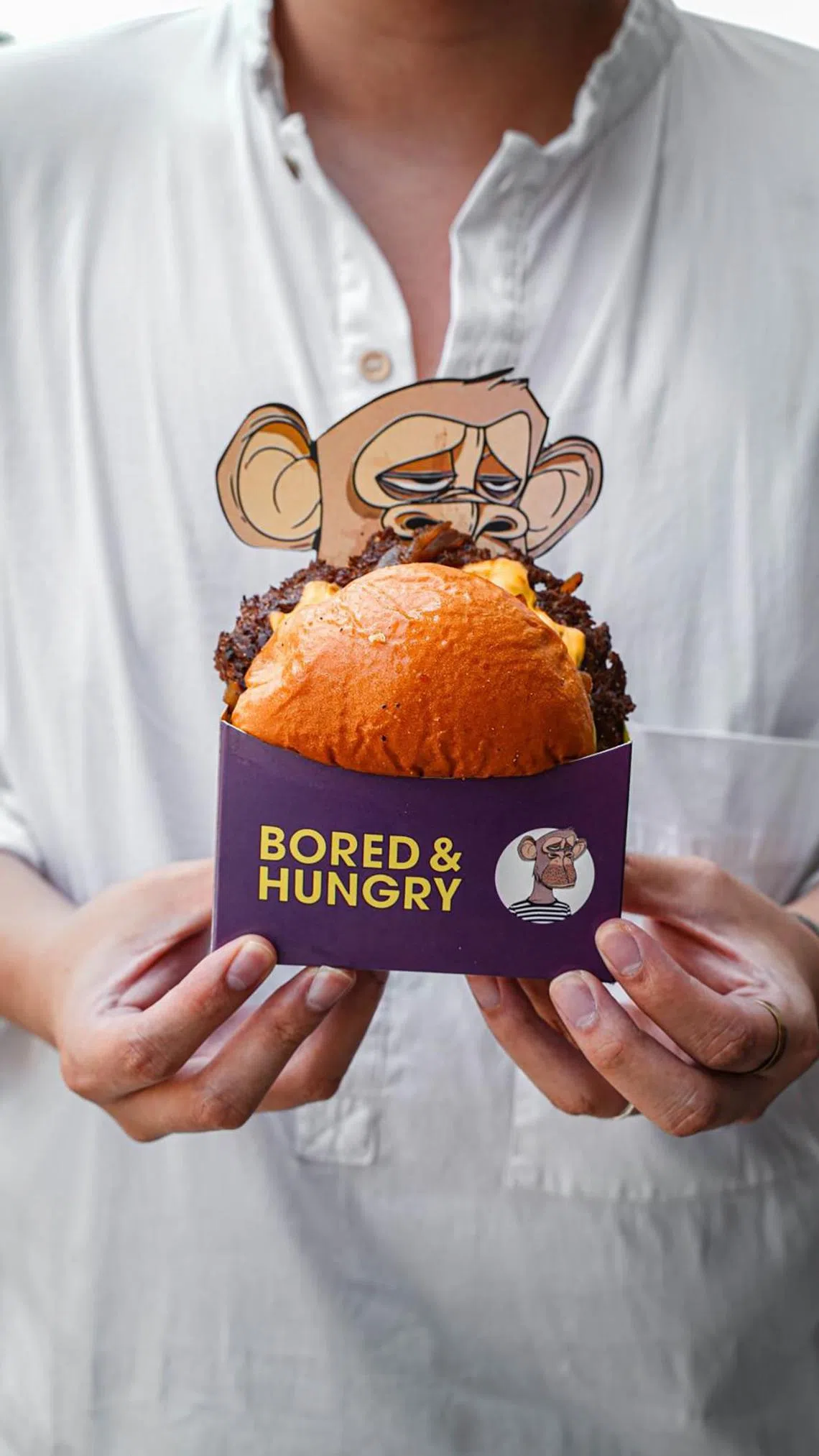
Earlier this month, The Parlour hosted a week-long pop-up selling the popular burgers from the NFT-themed Bored & Hungry restaurant based in California. Select NFT holders were given priority entry to the pop-up; it was open to the public only on its last day. But the lounge was packed throughout the run, selling over 1,000 burgers, and generating interest in NFTs among newcomers.
“The NFT community will always be a niche one,” observes Foo, “but it’s also an especially strong one. There is a community event almost every week, and we thrive on building friendships, projects and collaborations instead of focusing on the price fluctuations of our NFTs.”
He and his collaborators are waiting for the market to recover. In the pipeline is a project called Wush, which he describes as the “Yellow Pages of Web3”, scheduled to be launched in the second quarter of 2024.
“It’ll be a listing of the trustworthy places and organisations promoting Web3, so that people who are new to the space can use it as a kind of Google or resource to explore Web3 safely. Those of us who’ve been here long enough know there are a lot of dodgy organisations out there; many of us have been scammed one way or another.”
At the upcoming Token 2049 crypto conference in Singapore, held during the F1 period, he is also organising an Ape House party on a yacht and pier for 300 people. The event is supported by Yuga Labs, the creators of BAYC, and is expected to draw some luminaries of the NFT world who are in town for the conference.
The dust has not settled
Everyone agrees the dust of NFT has not quite settled. At the ArtScience Museum, an attempt to capture the rapidly changing developments in the NFT and AI landscape has proven elusive and challenging – but possible.
The exhibition titled Notes From The Ether: From NFTs To AI displays works by 20 artists on the forefront of digital art, beginning with artists who use code to build generative art, and moving into more complex experiments with AI. Curators Deborah Lim and Clara Che Wei Peh cherry-picked artists who are digital trailblazers responding inventively to contemporary issues, from genetics and evolution to intellectual property rights and environmental sustainability. (Peh is best known for curating Singapore’s groundbreaking NFT showcase Right Click + Save at Le Freeport in 2021.)
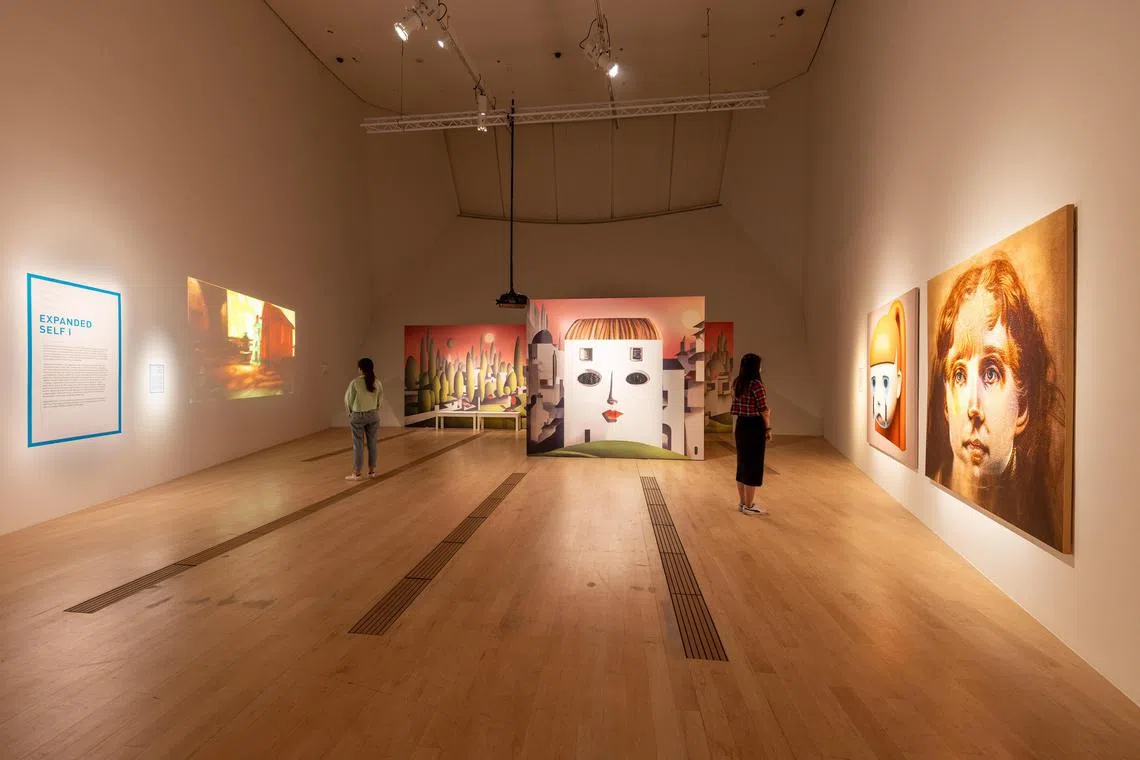
The artists here include Botto, an AI engine which automatically generates thousands of artworks and lets a community of humans select the best ones to mint as NFTs. There’s Tyler Hobbs and Dandelion Wist, whose AI-powered art tool QQL empowers anyone, anywhere to formulate exquisite abstract art by merely choosing their preferred parameters. There are also works by the duo Holly Herndon and Mat Dryhurst, one of which involves an AI-driven voice tool that allows anyone to speak and sing in Herndon’s own voice – an obvious commentary on AI’s lenient stance towards artistic appropriation.
Asked if AI has made it “too easy” to create art, the museum’s executive director Honor Harger says: “I would fundamentally disagree with that. Speaking from the position of the museum director, I think that when every new technical or technological tool comes along, art goes through a very similar debate. When photography arrived, people thought painting was dead. When video arrived, people thought photography was dead. When the Internet arrived, people thought art galleries were dead.
“There’s always a brief hysteria around the disappearance of one art form or another. But when the technology settles, the community starts to see the tools for what they are – simply tools – and to not mistake the tools for the purpose. So what we see with the works in this exhibition is that there is an enormous amount of artistic thoughtfulness, conceptual consideration and technical innovation that helps distinguish these works as fine art.”
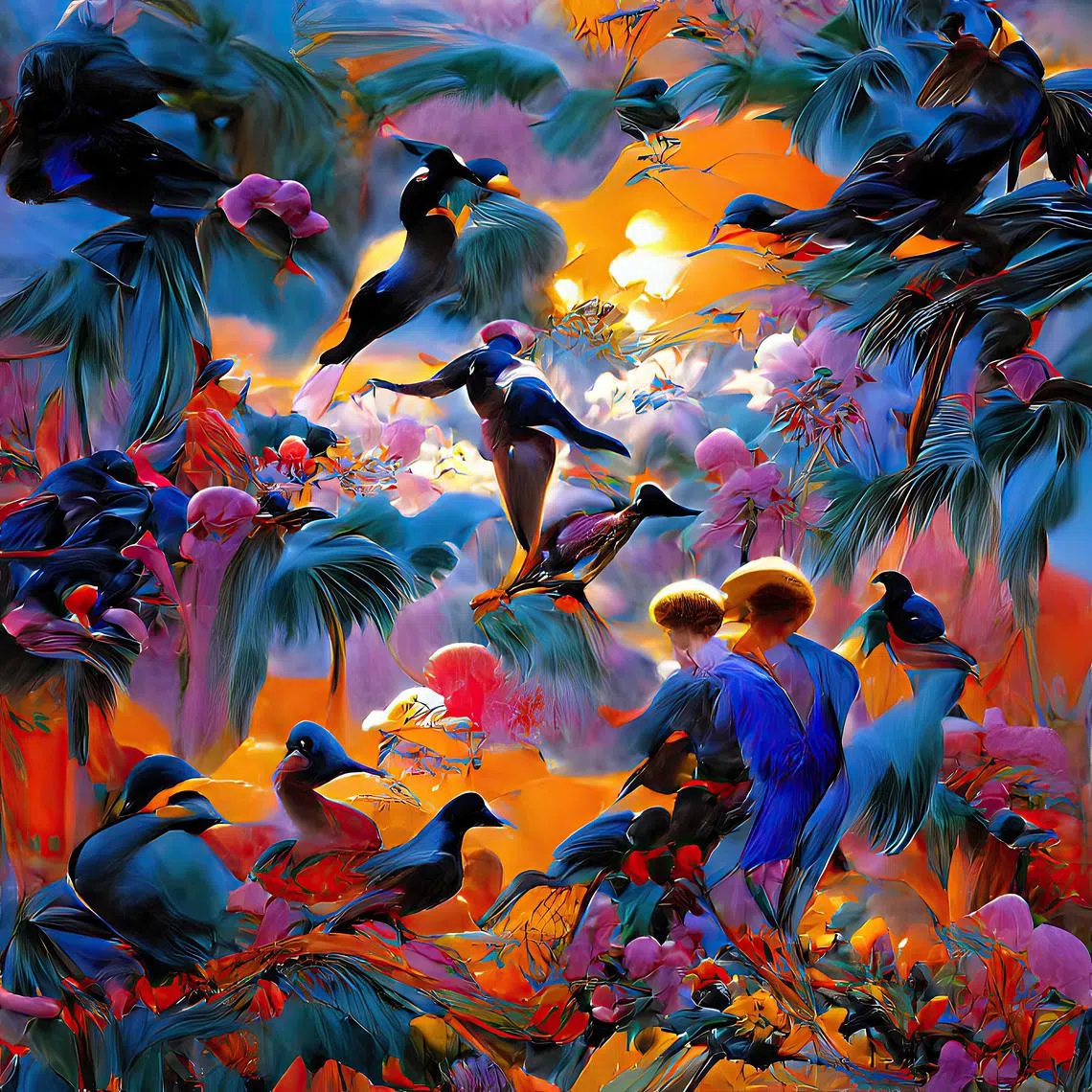
Interestingly, the exhibition shies away from showing any instance of “profile picture” NFTs, such as Bored Apes or CryptoPunks. Lim says: “We are steering away from the topic of market volatility and speculation because we don’t want to choose works based on market value. We are more interested in looking at how the art is conceptualised and created, and picking artists who are innovative and responsive to this moment – these are what matter to museums in the long term.”
Indeed, mass market popularity versus high-brow museum recognition is an old debate. It feels as if NFT and AI art are already on their way to full acceptance in the traditional art world.
The exhibition “Notes From The Ether: From NFTs to AI” runs from now till Sep 24 at the ArtScience Museum.
Decoding Asia newsletter: your guide to navigating Asia in a new global order. Sign up here to get Decoding Asia newsletter. Delivered to your inbox. Free.
Copyright SPH Media. All rights reserved.






