

The whisky world is reeling, but this company has bigger troubles
A group of about 20 investors say they are preparing to sue Uncle Nearest, the CEO and the company’s investment bank
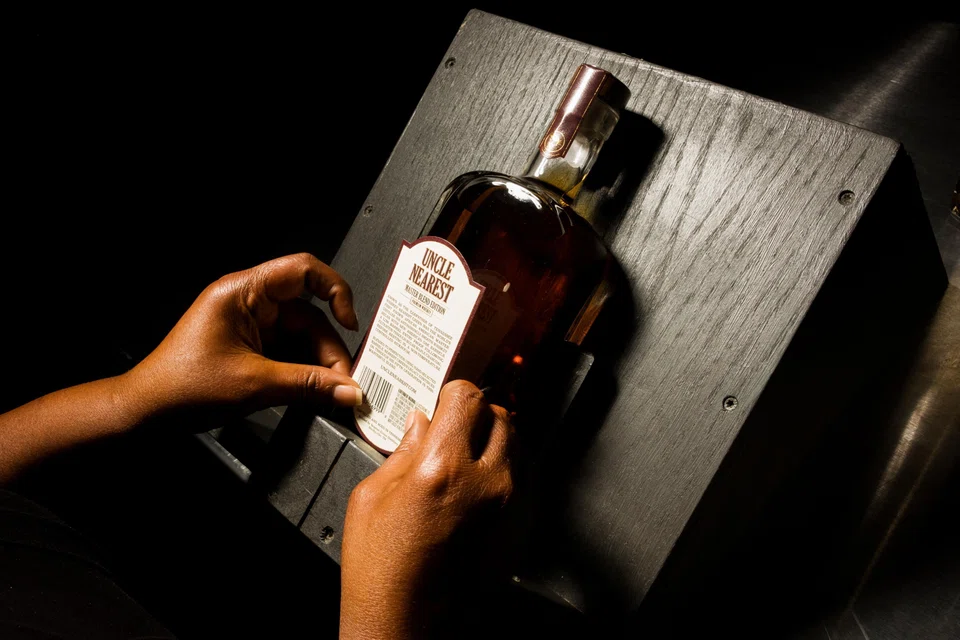
IN AUGUST, a federal judge in Tennessee placed Uncle Nearest, a whisky company that was once among America’s fastest-growing liquor brands, into receivership after it defaulted on a series of loans totalling US$108 million.
At the time, the company, named in honour of a formerly enslaved man who distilled whisky for Jack Daniel, was seen as just the latest casualty in an industry facing stiff headwinds, a perfect storm of overproduction, tariffs and changing consumer behaviour.
But in a report with the court filed last week, the receiver appointed to manage the company, Phillip Young, contended that Uncle Nearest was far more than just a victim of bad timing.
Among other things, he found that all the company’s records before 2024 had been deleted, that it owed an additional US$50 million to vendors and other creditors, that it was struggling to make payroll and that it had not filed federal tax returns since 2018.
Young painted a dire picture of the company’s future, even under his control: He said that the only viable options were refinancing or a sale, but that he had been unable to find a bank or a purchaser willing to take on the company’s estimated US$158 million in debt. If he does not, he said Uncle Nearest may be foreclosed on within months.
It is a striking turn of events for a nine-year-old company that has been held up as an emblem for the rapid changes coursing through the American whisky industry, once the bastion of white Southern men.

Its founder and CEO, Fawn Weaver, was an entrepreneur from California who within a year of starting the company was selling bottles in all 50 states. As a Black woman with a compelling story, she was able to attract a younger and more diverse audience than other whisky brands, as well as hundreds of millions of US dollars in investment capital.
In 2023, she declared that the company was worth US$1.1 billion, which would make it by far the most successful startup whisky company in a field crowded with competitors. That success story won Weaver interviews on NPR and CNBC, as well as a guest spot on the latest season of Shark Tank.
Then, last August, a Kentucky-based lending cooperative, Farm Credit Mid-America, sued Uncle Nearest for repeatedly defaulting on a total of US$108 million in loans, and asked the judge to place the company into receivership.
The receiver’s report, filed Feb 3, tells a story of meteoric growth fuelled by irresponsible debt accumulation and gross financial mismanagement.
“When the receiver assumed control of the company, it was in financial shambles,” Young wrote, asserting that it had been losing about US$1 million a month. There had never been an independent audit, and Young said that he could find no justification for Weaver’s 10-figure valuation.
He also said he could not assemble a reliable list of investors, the amounts they had invested and when.
He estimated the value of the company at about US$100 million, roughly one-tenth of Weaver’s valuation from two years before, and significantly less than its estimated US$158 million in debt.
And Young said that he had begun a forensic investigation of the company’s finances, including “a number of very questionable transactions in 2024 and 2025 involving officers and directors of the company”.
Several investors, some of whom had backed Uncle Nearest since its founding, have filed complaints with the Financial Industry Regulatory Authority, a private organisation that oversees brokerages. No action has been taken by the organisation.
A group of about 20 investors say they are preparing to sue Uncle Nearest, Weaver and the company’s investment bank, First Dominion Capital, but have held back from legal action during the receivership for fear of further harming the company’s value.
Weaver has not been shy in defending herself, both in court filings and on social media.
In a legal filing last week in response to Young’s report, she blamed the company’s past problems wholly on its former chief financial officer, Mike Senzaki, but added that Young was driving Uncle Nearest further into the ground.
She said that the company was still worth about US$500 million. Senzaki did not respond to messages seeking comment.
“Allowing the receivership to continue in the face of the massive decline in sales under the receiver’s watch to date is simply a death sentence for the Uncle Nearest brand,” Weaver wrote in her response.
She also complained that Young had stopped sharing confidential biweekly updates with her, which she said he is required to do.
Young told the court he had stopped providing the reports because he suspected that Weaver was improperly sharing them with the executive team at Uncle Nearest, then encouraging them to tweak their sales and budget numbers to make the company look healthier than it is.
Young said that he “has become uncomfortable speaking directly” with Weaver and that he now communicates with her only through his lawyer.
Although the judge in the case, Charles Atchley, has admonished Weaver for commenting on the case on social media, she has continued to do so, positioning herself as a pioneer under attack by the establishment.
“I also said I would be the first person to build, lead and own a spirit conglomerate that had not been founded by, led by, owned by a white male,” she told her 305,000 followers on Instagram on Friday (Feb 13). “The moment I did that, I put a target on my back.”
At a hearing on Monday at a federal courthouse in Knoxville, Tennessee, Weaver asked the judge to end the receivership and give her back control of the company, a move that Young has warned would bring the swift end of Uncle Nearest.
“The company is insolvent,” he wrote in his report, adding that without a new infusion of cash, “the company would be forced to cease operations within sixty days”. NYTIMES
Decoding Asia newsletter: your guide to navigating Asia in a new global order. Sign up here to get Decoding Asia newsletter. Delivered to your inbox. Free.
Share with us your feedback on BT's products and services
TRENDING NOW

Once staunchly pro-China, Malaysian Chinese businesses are now distancing themselves from Beijing

Britain’s mansion tax shows the difficulty of targeting wealth

Three hats, one goal: How Ng Kian Swan runs sustainability at NUHS

COE review: The gap between luxury and mass-market cars isn’t the only one worth bridging

