Who owns the Benin Bronzes? The answer just got more complicated
 Add BT as a preferred source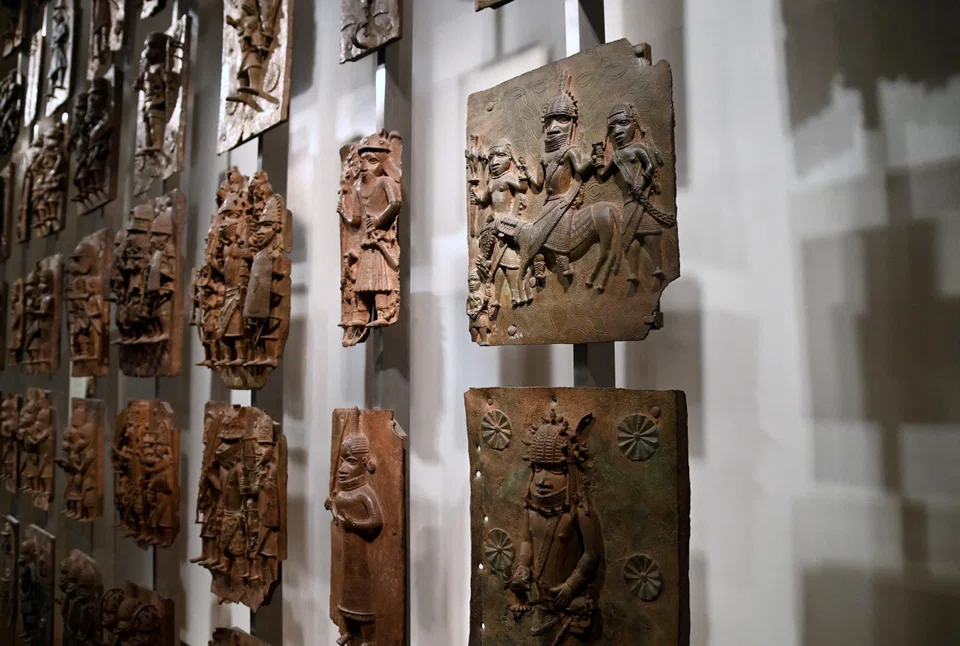
AFTER years of ignored pleas and stonewalled requests, deals were finally coming together to return some of Africa’s most prized treasures to the continent.
The Smithsonian Institution, the Metropolitan Museum of Art and the German government announced they were returning scores of sculptures, plaques and ornaments, known as the Benin Bronzes, that British soldiers had plundered in 1897 from Benin City, in what is now Nigeria but was once the centre of a kingdom. Plans were underway for a glittering new museum designed by British Ghanaian architect David Adjaye to showcase and protect the returned treasures.
But that plan has run aground since Nigeria’s outgoing president announced he had transferred ownership of the looted items to a direct descendant of the ruler they had been stolen from. At a moment when museums worldwide are trying to come to grips with contested artifacts in their collections, this development underscores how complex restitution efforts can be.
The confusion began in March, when President Muhammadu Buhari of Nigeria, who left office May 29, issued a declaration handing over the artifacts – which include decorated brass plaques, carved ivory statues and ceremonial masks – to Ewuare II, the current oba, or ceremonial king, of Benin. It decreed that any returned artifacts “may be kept within the palace of the oba,” or in any location that he considers secure.
The announcement, which only recently came to light outside Nigeria, is widely seen as a move to end a long-running dispute over who is the rightful owner of the bronzes: Nigeria’s government, its National Commission of Museums and Monuments, or the oba himself.
The oba wants the bronzes displayed in museums in Nigeria and around the world, a representative of the royal family said, but the passing of the treasures into private hands spread anxiety among some museums that are negotiating returns of looted items to Nigeria.
Navigate Asia in
a new global order
Get the insights delivered to your inbox.
Last month, Cambridge University postponed a ceremony to hand back ownership of 116 bronzes. A spokesperson said the university was still “in talks with all parties.”
But others in the museum sector said that Western institutions should not interfere in the discussion. It was “none of the Smithsonian’s business” what happened to the bronzes now, said Linda St Thomas, a spokesperson for the museum, which last year handed ownership of 29 bronzes to Nigeria’s museum commission. Nigeria could “give them away, sell them, display them,” she said. “In other words, they can do whatever they want.”
Hermann Parzinger, the president of the body that oversees Berlin’s major publicly funded museums – where hundreds of bronzes are held – said in a news release there was “an urgent need for clarification” over who owns the items and whether they will still be displayed in Nigeria.
Last year, the German government signed an agreement with its Nigerian counterpart to transfer ownership of more than 1,000 looted bronzes to Nigeria. In a symbolic gesture, Germany’s foreign minister flew to Nigeria in December, and handed back the first 20 items, with more scheduled to follow. Buhari’s announcement caused consternation outside the museum world, too, with lawmakers and newspaper columnists in Germany questioning whether the country had acted hastily in transferring back the bronze collections.
Christiane Schenderlein, the cultural spokesperson for the center-right Christian Democratic Union party, said the bronzes were world treasures that should be on public display. The decision to hand them to an individual, without assurances that they would be exhibited, was “a disaster,” Schenderlein said.
Most of the treasures were initially expected to be returned on loan to a trust that brought together representatives of the oba and regional and national governments. That organisation planned to develop a new institution, called the Edo Museum of West African Art, as a home for many of the bronzes. In November 2020, Adjaye, the architect, revealed a design for the museum, saying he hoped to build it within five years. A few months later, in May 2021, Nigeria’s museums commission authorised the trust to negotiate with Western museums and store any returned items.
But that plan quickly began to unravel. That same month, the oba, in a written statement to the news media, said that he should be the sole recipient of the treasures and that anyone working with the trust was “an enemy.”
To overcome the oba’s opposition, Nigerian officials developed other options. This March, Abba Tijani, the director general of the museum commission, told a meeting of Western museum officials that Nigeria would build a royal museum in Benin City, on behalf of the oba and his court, to display many of the returned items. Tijani presented a vision for the museum, but no firm plans, according to two people who attended the meeting.
Just a few weeks afterward, Buhari issued his surprise announcement.
In a phone interview, Tijani said he would challenge the president’s declaration. He declined to explain the legal grounds for the dispute, but said a three-page document authorising the transfer contained errors.
Nigerian legal experts said in interviews that Tijani would either need to go to court to force a change, or hope that Bola Tinubu, Nigeria’s new president, who took office May 29, issues a declaration to override his predecessor’s.
In Benin City, there is certainly annoyance with the tenor of the discussion. Prince Aghatise Erediauwa, the oba’s younger brother and a representative for the royal court on matters concerning the bronzes, said in a telephone interview that any Western or Nigerian official criticising the oba’s ownership was “making mischief.”
The oba had always been clear of his plans for the returned bronzes, Erediauwa said: They would be displayed in museums in Nigeria and around the world, where they could act “as ambassadors” for his kingdom and culture. But the oba had also been clear that he wanted his ownership respected, the prince said.
Victor Ehikhamenor, an artist who sits on the board of the trust developing the Edo Museum, said the institution would probably change tack to include more contemporary art if the bronzes are mainly displayed elsewhere.
Factions in Nigeria may be arguing over where that might be, Ehikhamenor added, but the West should not try to meddle in those affairs. “Deal with your problems,” he said, “and we’ll deal with ours.” NYTIMES
Decoding Asia newsletter: your guide to navigating Asia in a new global order. Sign up here to get Decoding Asia newsletter. Delivered to your inbox. Free.
Share with us your feedback on BT's products and services