Why are New Zealanders moving to Australia? More money, better vibes
Those relocating seen to have practical motives including higher salaries and better career advancement opportunities

[SYDNEY] Three months ago, Tory Whanau was the mayor of New Zealand’s capital, Wellington. Now she is packing up her life and preparing to move to Melbourne, Australia, as part of a record wave of outbound migration.
“There seems to be a brighter light overseas,” Whanau, 42, said.
In some ways, Whanau’s situation is unique. She wanted to leave the political spotlight after her mayoral term ended in October, she shared, and her reputation as a high-profile critic of the conservative government made finding a government job challenging.
But she is also joining a surge of New Zealanders who, disenchanted with a weak labour market and a sluggish post-pandemic economy, are seeking better opportunities abroad.
More than 71,000 New Zealand citizens left the country over the 12 months ending in October, far more than the roughly 26,000 who returned, according to official estimates.
The outbound number – equivalent to more than 1 per cent of the population of 5.1 million – is now the highest it has been since the aftermath of the 2008 global financial crisis.
More than half of New Zealanders who leave end up in neighbouring Australia, a shortish flight away, where they can live and work indefinitely under a reciprocal visa arrangement.
It has become enough of a problem for New Zealand that the national police made a tongue-in-cheek advertisement to lure back officers that highlights the drawbacks of various Australian regions: The north has “big things that bite”, the east coast “too many people”, and the desert centre is “a very long way away from anything”.
New Zealanders who move to Australia usually have practical motives, like higher salaries, better career advancement opportunities and a lower cost of living that allows them to save more, said Mark Berger, who runs the relocation company NZ Relo.
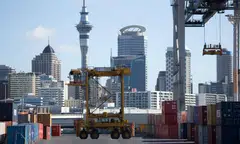
But he and some recent emigrants also describe something more intangible: a sense that life across the “ditch”, as both countries call the Tasman Sea that separates them, could be sunnier at a time when New Zealand feels gloomy. “People are really just chasing hope,” Berger added.
New Zealand has been feeling the effects of a soft economy since the pandemic, when aggressive monetary and fiscal stimulus policies drove strong economic growth but also helped fuel inflation, said Shamubeel Eaqub, the chief economist at Simplicity, a New Zealand fund management company. After that stimulus was reversed, the economy tipped into a recession.
By one HSBC estimate, New Zealand’s economy had the largest contraction in gross domestic product of any developed country in 2024.
The current unemployment rate of 5.3 per cent is the highest in nearly a decade. Even those who have work are contending with reduced hours, wages that are growing more slowly than inflation and soaring costs of staples like bread and milk. Consumer confidence has not returned to pre-pandemic levels.
For Naz Madden-Frandi, 28, all of that translated into a sense of barely making ends meet.
Madden-Frandi, a mental health service delivery manager from Hamilton, a city south of Auckland on New Zealand’s North Island, was earning about NZ$85,000 (S$63,095) when he moved to Brisbane, Australia, last year. “I was on what was considered above average income, which kind of blows my mind because we were still struggling,” he noted.
A major motivating factor was knowing that he and his husband could earn more and save for a home more easily, he said, adding that his new salary is over six figures.
The data on New Zealand’s outbound migration surge comes with caveats. One is that there are still more non-citizens arriving in New Zealand – nearly 110,000 in the year ending in October – than there are citizens leaving.
New Zealand’s centre-right government has begun what its finance minister, Nicola Willis, described in a statement in December as an “ambitious reform programme to make New Zealand a place that talented Kiwis want to stay in”. It has announced tax incentives for local businesses and introduced legislation to relax restrictions on overseas investment.
Whether that will be enough to stem the exodus, or inspire expatriated New Zealanders to return, remains to be seen.
Thomas Lamb, 40, who moved from Christchurch, New Zealand’s second-biggest city, to Perth, Australia, in March, initially thought his move might be temporary. But he is now thinking more long term.
There are things he is still getting used to. Australia seems to lag behind New Zealand in grappling with its colonial history and its treatment of Indigenous people, he pointed out, and its desert landscapes are a world away from New Zealand’s lush nature.
But he earns about US$20,000 more as a social worker than he did in New Zealand, he said, and he prefers Australia’s centre-left government to New Zealand’s conservative leadership. Plus the vibes are just better.
“It feels more positive here,” he added. “People seem happier.” NYTIMES
Decoding Asia newsletter: your guide to navigating Asia in a new global order. Sign up here to get Decoding Asia newsletter. Delivered to your inbox. Free.
Share with us your feedback on BT's products and services