

Why is Chartreuse hard to find right now? Ask the monks who make it
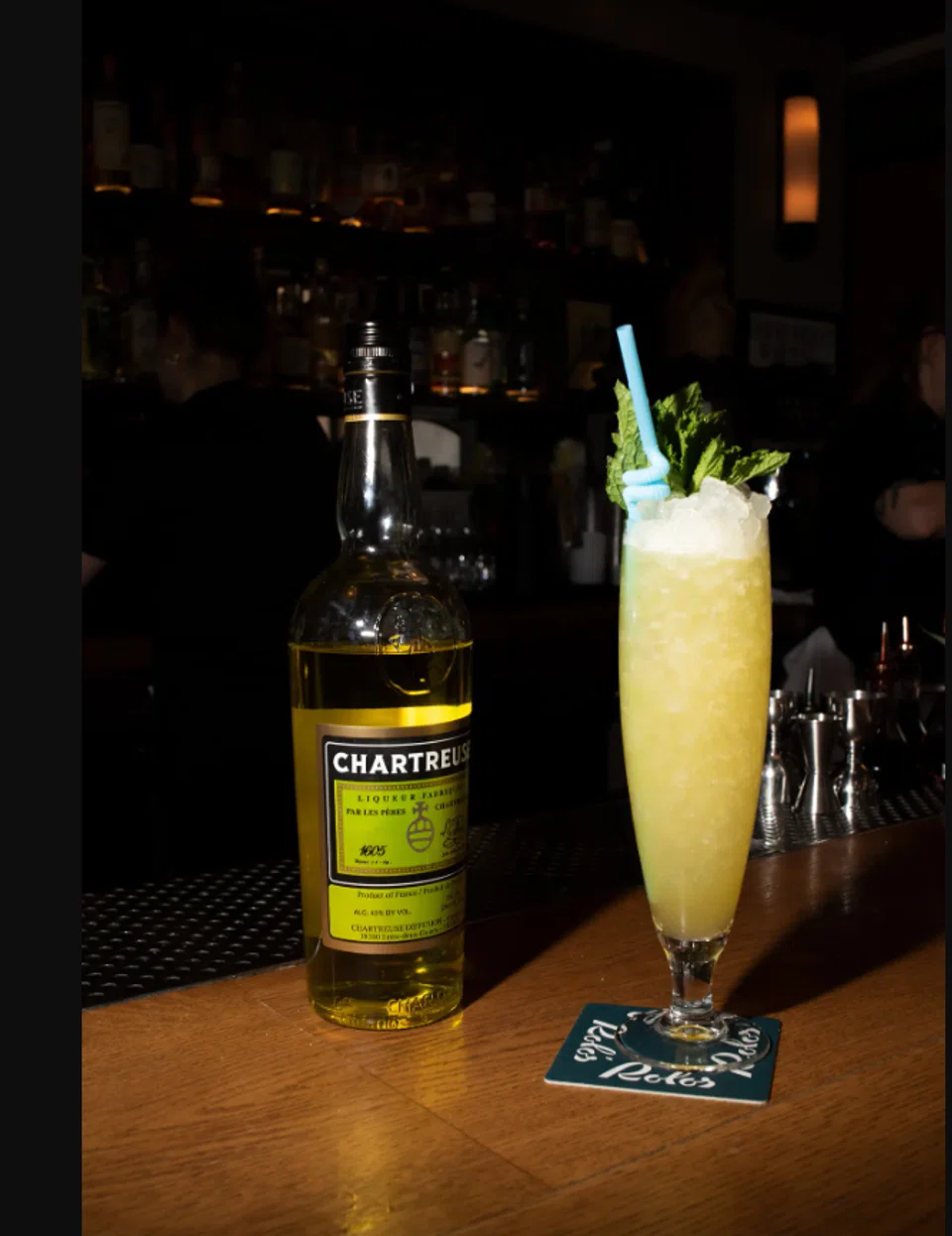
FOUR months ago, Joshua Lutz started scouring the country for Chartreuse, the bright-green herbal liqueur based on a secret recipe of 130 botanicals and produced in the French Alps by the Carthusian order of monks for more than two centuries. Lutz, a healthcare technology professional based in Huntington Woods, Michigan, has loved the liqueur for more than 20 years – long before it became a stalwart on cocktail lists across the country.
“It used to be something you could rely on being available, so I never really paid much attention to it,” he said. But Lutz’s local liquor store has been sold out for the past year, so he has taken matters into his own hands. Now, when he travels for work, he takes a shipping box with him. “Recent times have forced me into hoarding a little bit,” he said.
The shortage isn’t limited to Lutz’s liquor store.
While supplies of some wines and other spirits have dwindled because of a glass shortage and shipping delays, Chartreuse – both the green variety and its mellower yellow sibling – has become scarce because the Carthusians have declined to increase production to match rising demand.
“I stand with the monks,” said Tony Milici, the bar director at Rolo’s, a New York City restaurant in Ridgewood, Queens. “But I am also responsible for running a sick beverage programme.” With a bit of cajoling, Milici persuaded his local distributor to double the restaurant’s Chartreuse allocation.
Long regarded as the liquor of choice for an older generation, Chartreuse became a favourite of bartenders in the know during the craft cocktail movement of the early 2000s, favoured as much for the romance of its origin story – the recipe, entrusted to the monks in 1605, comes from an ancient manuscript on the Elixir of Long Life – as for its bittersweet profile and notes of anise, tarragon and fennel. According to Chartreuse Diffusion, the business arm of the monks’ operation, it took more than 150 years for the Carthusians to “unravel the secret of the manuscript.”
Chartreuse became “a mixologist’s ace in the hole,” said Joe Kakos, an owner of Kakos Market, a liquor store in Birmingham, Michigan. Many credit Murray Stenson, a bartender at the Zig Zag Café in Seattle, with repopularizing the liqueur in 2003 when he resurrected the century-old Last Word cocktail, a mixture of gin, Chartreuse, lime juice and maraschino liqueur.
“I almost feel a little bit guilty,” said Ben Dougherty, the cafe’s owner.
In 2020, as the pandemic turned many people into at-home mixologists, sales of Chartreuse in the United States doubled, a pattern that held true worldwide, according to Chartreuse Diffusion. Global sales topped US$30 million in 2022.
This rise in popularity directly conflicted with a collective decision that the monks quietly made in 2019 to cap production of their ingredient-intensive spirit in order to limit the environmental impact and to focus on their “primary goal” of solitude and prayer, as explained in a letter released in January.
“There’s only so much Chartreuse you can make without ruining the balance of monastic life,” said the Rev Michael K Holleran, a former monk who oversaw Chartreuse production from 1986 to 1990.
Production is currently set at 1.6 million bottles per year – the highest level since the late 1800s, when the Vatican pointedly reminded the Carthusians that they were monks, not businessmen. But the United States is limited to 90 per cent of its 2021 volume. Retailers and hospitality professionals say they are feeling the pinch.
“I literally cannot get it,” said Kakos, who has carried Chartreuse for 40 years but has recently had trouble keeping it in stock. He said that at least three customers ask for it every day.
Frederick Wildman and Sons, the only Chartreuse importer in the United States, is working to meet demand from retailers, bars, restaurants and consumers.
“It’s a big ship to steer,” said Tim Master, the company’s senior director of spirits. Master expects that the acute shortage will ease by the end of the year as more batches of the 2023 allocation are released. In the meantime, he is hopeful that Chartreuse fans will honour the monks’ commitment to do “less but better for longer” by consuming the liqueur more mindfully.
And yet, there are no signs that Chartreuse’s popularity is waning. In March, Baghera Wines, an auction house based in Geneva, hosted the largest Chartreuse auction in history. All lots, including Chartreuse-branded socks, sold.
Lutz, the Chartreuse enthusiast in Michigan, is concerned that the liqueur will become the new bourbon, with secondary markets inflating the liqueur’s price many times above its current retail baseline of US$64.99 for a 750-millilitre bottle. When a desirable product is scarce, he said, “it’s all tulips and bitcoin.” NYTIMES
Decoding Asia newsletter: your guide to navigating Asia in a new global order. Sign up here to get Decoding Asia newsletter. Delivered to your inbox. Free.
Share with us your feedback on BT's products and services
TRENDING NOW

He built the Vingroup empire. Now South-east Asia’s richest man is handing some key roles to his sons

Chagee, Mixue and Luckin won the market. Sustaining their edge is the harder part

From Haidilao to Oriental Kopi: How some of Asia’s favourite F&B players are faring in 2026

CPIB hauls Multi-Chem CEO, COO in for questioning; stock hits ‘circuit breaker’

