Why Manchester United won’t find a saviour so easily
The era of the omnipotent football manager has faded into history, but not everyone has gotten the memo
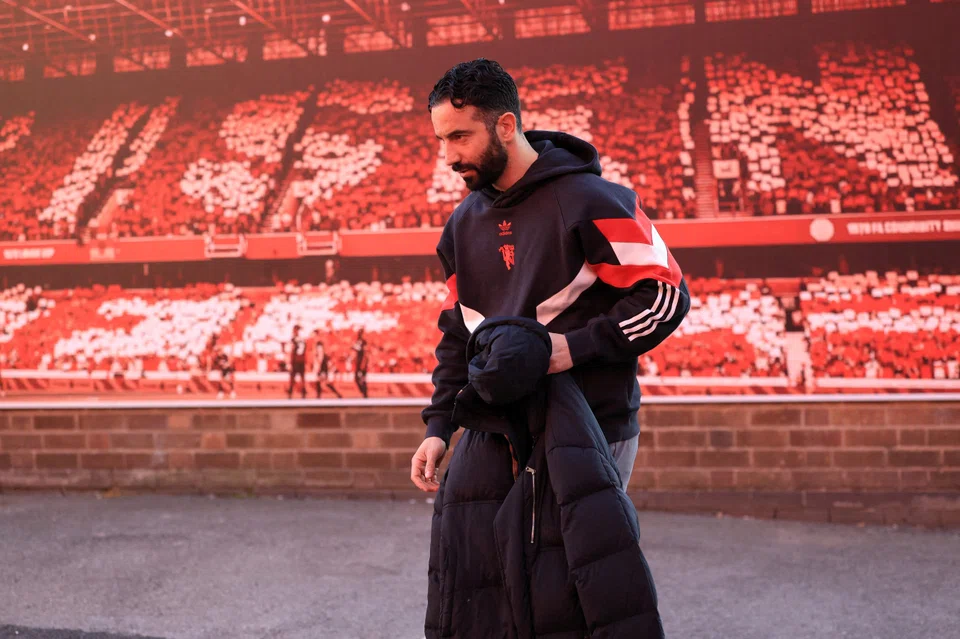
[LONDON] The world’s richest football league has begun the year with a bout of managerial turmoil. Manchester United, currently standing seventh in the English Premier League (EPL), fired its head coach Ruben Amorim on Monday (Jan 5), a few days after Chelsea, one place lower in eighth, parted company with Enzo Maresca. Both exited midway through their contracts after clashing with club hierarchies.
The parallels between the two teams, which are both struggling to recapture past dominance, are instructive: The era of the omnipotent football manager has faded into history – but not everyone got the memo.
Successful managers once bestrode their clubs like colossuses, with a say over virtually every aspect of how the operation was run.
The most celebrated example in recent history is Alex Ferguson, who won a record 13 EPL titles in 26 years with Manchester United before retiring in 2013.
His shadow hangs over the club in the same way that Jack Welch’s legacy once dogged future chief executive officers of General Electric – a leader who presided over a period of such consistent outperformance that successors were condemned to suffer by comparison.
Unlike Welch’s, Ferguson’s tenure still stands up to scrutiny. But the search for a genuine successor to the Manchester United supremo is futile because the modern game’s evolution has rendered that role obsolete.
The entrance of private equity and other institutional investors, the growing importance of data and analytics and the spread of multi-club ownership structures have created organisations that are too complex for any single sporting individual to command.
Managers are now cogs in the corporate machine, more akin to chief operating officers tasked with output quality and product delivery (read: wins on the field) under pre-set constraints, rather than the feudal overlords they once resembled.
Old attitudes die hard, though. EPL clubs have increasingly started to use “head coach” to refer to the role, but “manager” survives in colloquial use – and the semantics still matter to those in the job.


“I came here to be the manager of Manchester United, not to be the coach of Manchester United,” Amorim, whose formal title was in fact head coach, said at a press conference following a 1-1 draw with Leeds United on Jan 4 that precipitated his dismissal the very next day.
He also threw barbs at the club’s sporting director and scouting department – part of the expanding hierarchy that at many clubs has taken on functions once seen as the domain of the manager.
Tactical inflexibility
In some respects, Amorim’s firing is the oldest story in football. Managers have always served under boards and been liable to dismissal when results deteriorate.
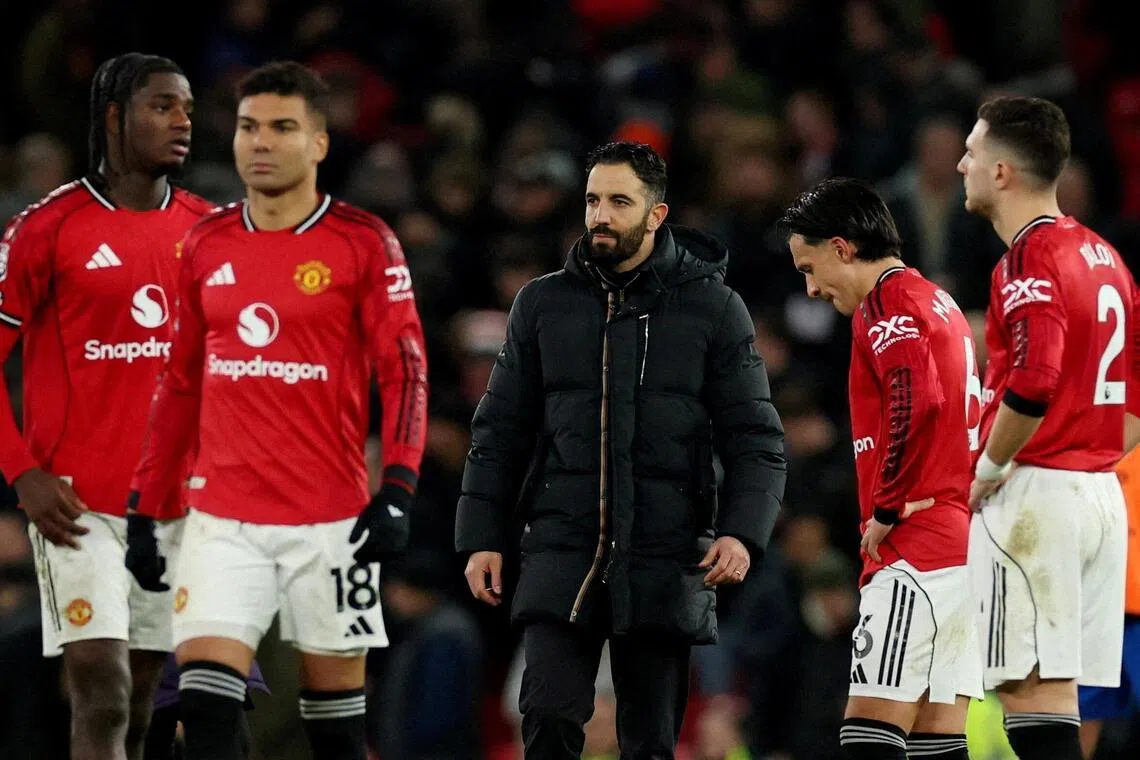
The Portuguese has looked like a square peg in a round hole almost since he was hired from Sporting Lisbon in November 2024, steering the club to its worst EPL finish of 15th last season and displaying a tactical inflexibility that has baffled supporters and commentators.
Meanwhile, in any corporate context, when a senior management member goes public with criticism of his employer, the likely outcome is predictable.
If anything, the surprise may be that Amorim lasted so long. But strategic incoherence has been a feature of Manchester United since British chemicals billionaire Jim Ratcliffe bought a minority stake in the club in late 2023 and took control of sporting decisions.
Clubs generally try to avoid changing managers in mid-season because of the disruption it causes; Manchester United has now done this two years in a row. In October, Ratcliffe said that Amorim would be given three years to prove himself. Three months later, he is gone.
For all this, Amorim’s chafing at the parameters of his position shows up the governance challenges of football’s incomplete transformation.
A similar frustration over lack of autonomy looks to have featured in the departure of Maresca from Chelsea.
The Italian has been more guarded in his public comments but complained of a lack of support after Chelsea beat Everton 2-0 in mid-December. Reports have suggested he had disagreements with medical staff over squad rotation and in-match playing decisions. Maresca was less than a third of the way through a five-year contract with Chelsea, which is owned by a consortium led by US investor Todd Boehly and private-equity firm Clearlake Capital.
Figureheads and celebrities
The paradox of how the game has changed is that while the power and authority of managers has been eroded within clubs, they are still perceived on the outside as the all-powerful Big Boss. Media outlets treat them as figureheads and celebrities, poring over their personality traits and tactical decisions.
Managers are obliged to give pre- and post-match press conferences to broadcasters. If you took a popular player off the field to the boos of the crowd because the medical department told you to, and then had to defend that decision to an interviewer as if it was yours and yours alone, it is easy to see how that would grate – no matter how handsomely you are paid.
But this is the life of a senior corporate executive, whose job is to represent an organisation. The era of the feudal manager is not coming back, however talented the candidate.
Institutional investors prefer systems to individuals because they are more likely to produce predictable returns. Like it or not, it is the system that matters now. And if your system is not very good, then you have got a problem. BLOOMBERG
Decoding Asia newsletter: your guide to navigating Asia in a new global order. Sign up here to get Decoding Asia newsletter. Delivered to your inbox. Free.
Share with us your feedback on BT's products and services