

Why painting still matters
Singapore’s leading painters celebrate the enduring vitality of the medium

Helmi Yusof
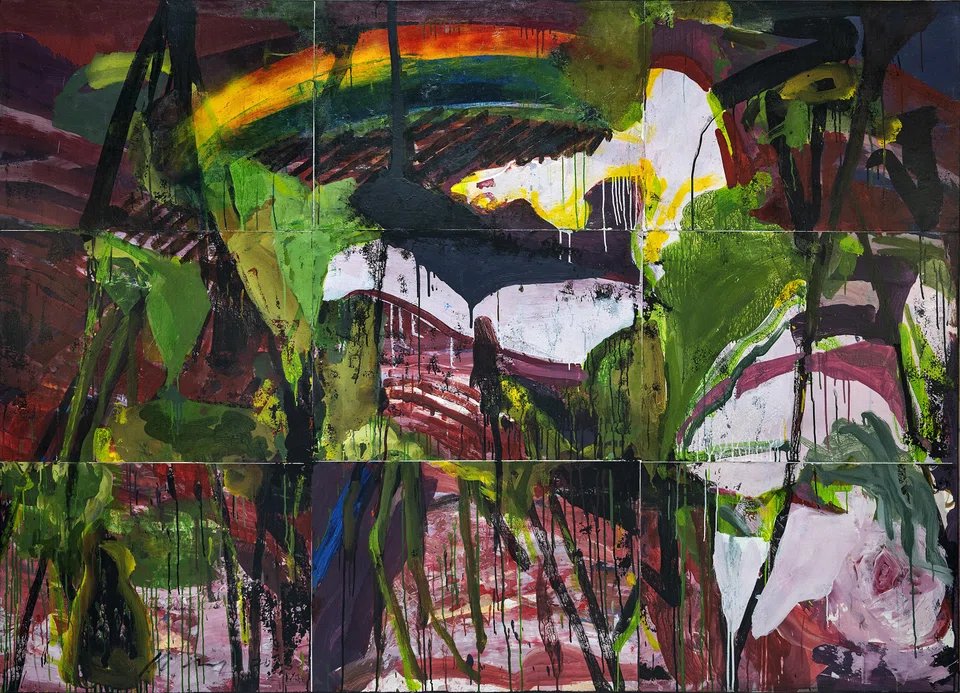
THREE of Singapore’s most respected veteran painters have come together for an exhibition to prove why paintings still matter. They are Boo Sze Yang, 58; Milenko Prvacki, 72; and Wong Keen, 80.
Between the three, they have about a century-and-a-half’s worth of professional experience. Their works are collected by art institutions in various cities, from Sydney to Belgrade to Minnesota, and they have garnered multiple awards and honours.
The show titled The Spatial, The Ephemeral, And The Possibility Of It All will feature over 30 of the artists’ latest works, with smaller canvases priced over S$8,000 and much larger canvases (up to 6 metres long) tagged at upwards of S$100,000.
The three know or have known of each other for years. But this upcoming exhibition by Artcommune Gallery at Artspace@Helutrans marks their first time exhibiting together.
All three have been steadfast in their painting practices, very rarely veering from canvas, paper and paint to venture into other mediums. But it’s not so much a disinclination to try new things as an abiding faith in the power of transforming a blank white surface into a glorious picture, stroke by stroke, colour over colour.
Precious method
Boo says: “At the heart of it, everybody knows that paintings are slow to create. That’s why when people see one, they’re more likely to slow down, look carefully at the details, see how the colours are combined, and how the image is composed. It’s more likely too that they’ll wonder what the image is trying to say, because they know that the artist took several days or weeks, if not months and years, to create it.
“We live in a world where images can be instantly generated by feeding a few words into a computer. So this slow and traditional method of painting, of image creation, has become more precious.”
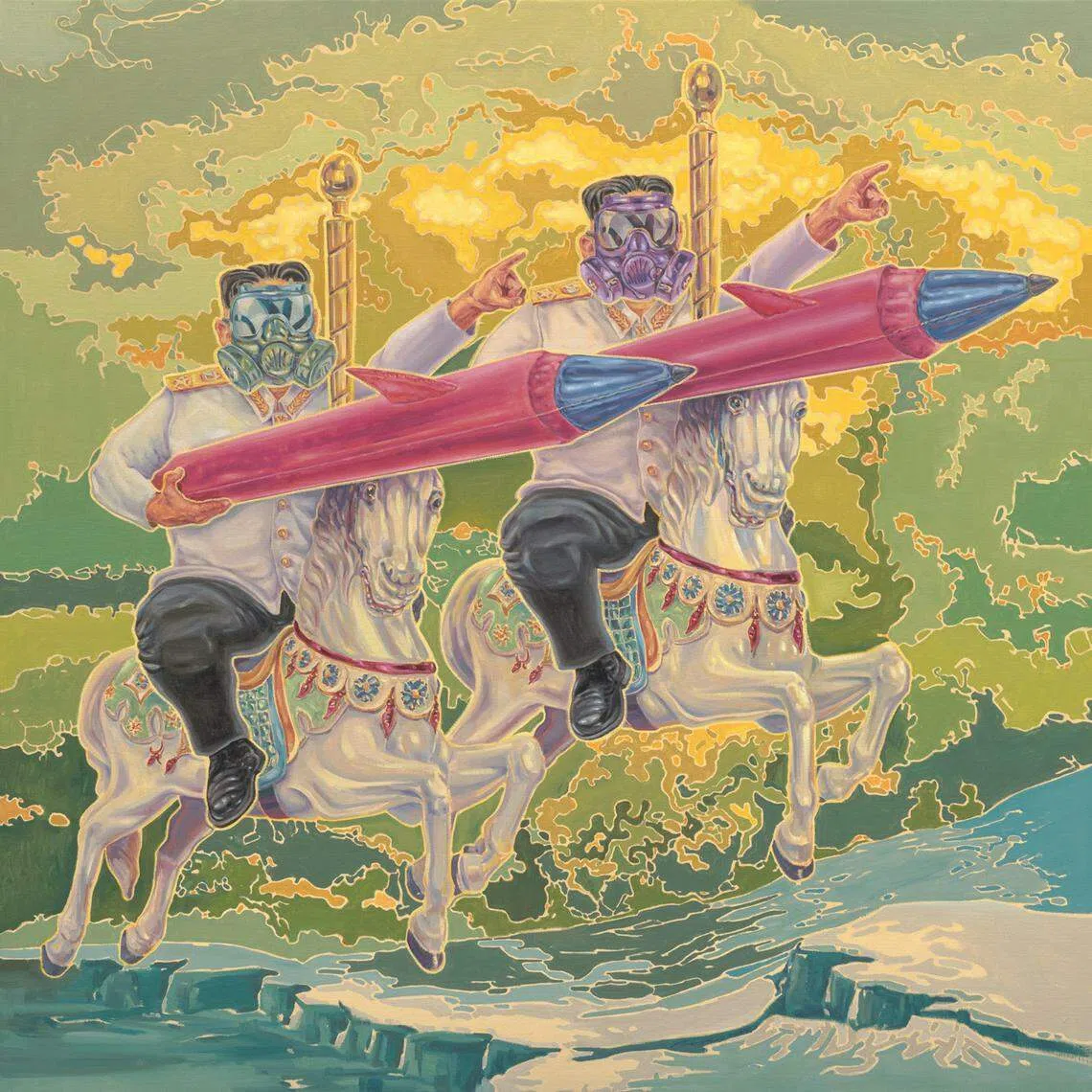
Boo’s series of political paintings examine abuse of power and the human tendency to exploit opportunities for personal gain. One work titled Romance on Hobby Horses – The Dreamers shows two men in similar gas masks and attires straddling carousel horses and carrying missiles.
“Across the world, power belongs to a privileged few, and it is always rotated among the few. I tried to suggest that with the carousel horses that go round and round ad infinitum… At the same time, I didn’t want the image to be too grim and cynical. So I opted for bright colours to sugarcoat the message. This mirrors the visual techniques in propaganda messages.”
Visual protest
Meanwhile, Wong’s paintings also brim with bright colours while delivering a harsh critique on pressing global issues. He frequently combines the human body with images of hamburgers or meat in butcher shops, in order to highlight the problems of human trafficking, forced labour and modern-day slavery.
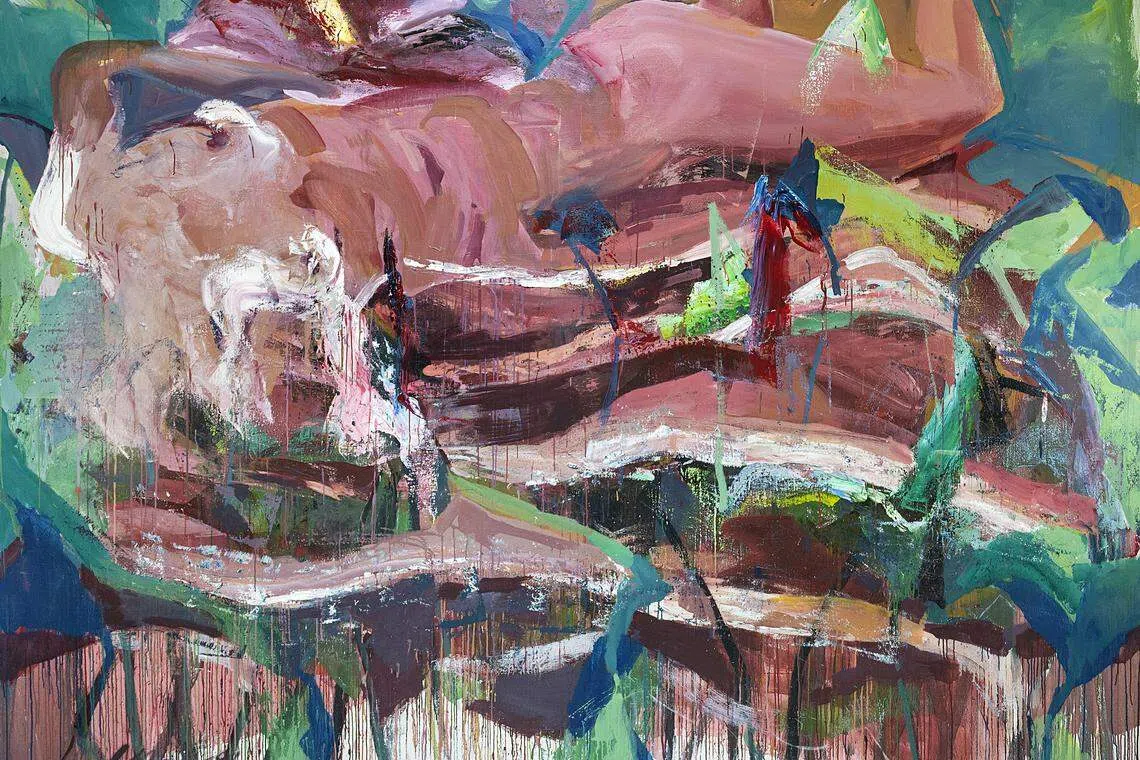
He explains: “We live in a world where humans are still being exploited, abused and stripped of their dignity. People are being treated like meat hanging in a butcher’s shop, waiting to be commodified and consumed – or the meat of a hamburger, waiting to be eaten.”
Wong has several standalone paintings of hamburgers. He says: “It’s a form of visual protest against fast food restaurants, which I see as a kind of modern-day imperialism. Not only is the hamburger unhealthy, it also overshadows the local cuisine of the respective countries.”
Wong’s “visual protests” are expressed in bold strokes and colours, and a dynamic blending of the abstract and figurative. At 80, he is the oldest of the three painters – but he declares he’s “far from retirement”.
He says: “I’m an artist. Making art is what I do. Why would I even think of retiring, since that would mean stopping doing what I love doing every day?”
Complex process
Finally there’s Prvacki, Singapore’s leading abstractionist. Having left narrative painting long ago because “it’s too limiting”, his visual lexicon is perhaps the most complex of all three. He trades in recognisable structures, but transposes them fluidly into abstract forms. His painting Dictionary of Abstraction combines a wide range of figurative and abstract elements that seem to be in the process of transforming and shifting places.
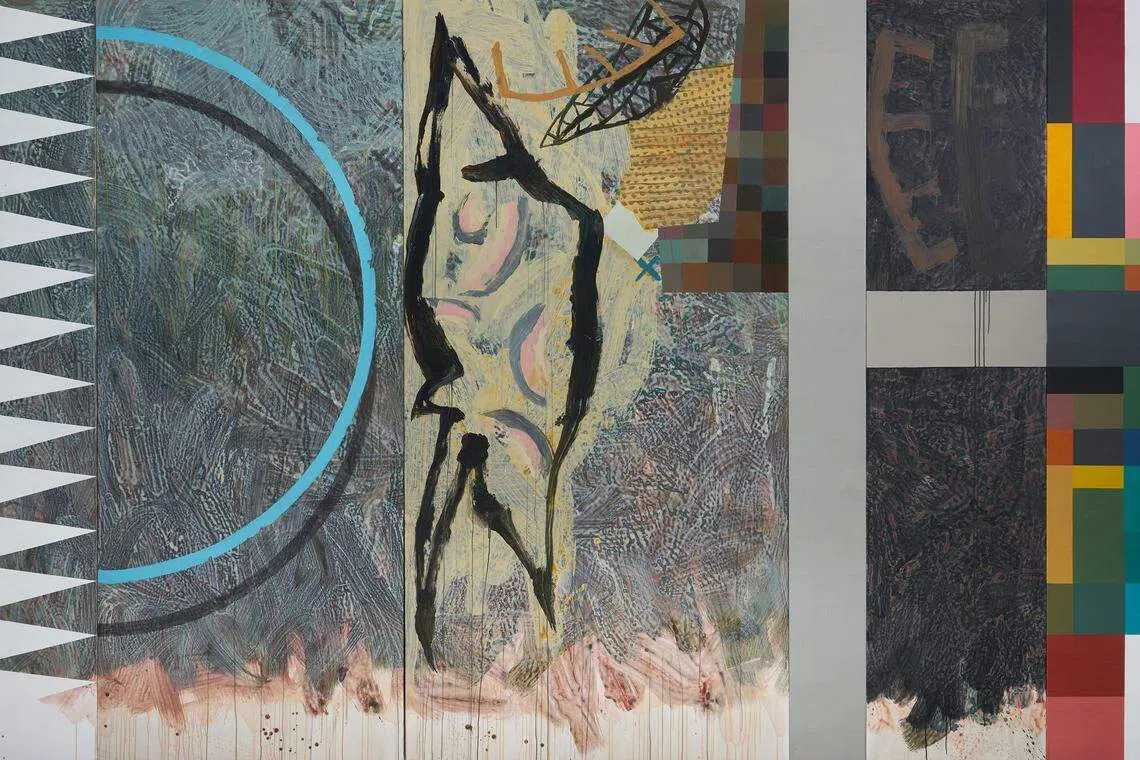
Prvacki says he was inspired by dictionaries: “I was born in Serbia in 1951 but moved to Romania when I was young for my studies. I did not speak Romanian, so I carried around a dictionary to learn it. Subsequently I moved to Singapore for work – without knowing a word of English. The dictionary once again became my best friend.”
Prvacki is fascinated by languages: “Dictionaries have the best and most logical structures. They contain concepts. But they have no story. This is very important to my work, since I want to avoid telling straightforward stories, they limit how the work can be read. With the dictionary as the inspiration, I can import its structures and concepts into my work and combine it with my own visual language and voice – and make the image work.”
He resists saying further: “The thing about art is that it must retain some mystery… These days, everyone wants everything to be dissected and explained in detail, even in art. But that’s not how art – or even life or love – works. There’s always some mystery, something we’re intrigued by but cannot explain. It must remain partly metaphysical.”
The Spatial, The Ephemeral, And The Possibility Of It All opens at Artspace@Helutrans at Tanjong Pagar Distripark on Jul 1 and runs until Jul 16, from noon to 7 pm daily. There is an opening reception with the artists in attendance on Jul 1 at 2 pm
Decoding Asia newsletter: your guide to navigating Asia in a new global order. Sign up here to get Decoding Asia newsletter. Delivered to your inbox. Free.
Copyright SPH Media. All rights reserved.






