

Why these are sobering times for alcohol companies
Producers have been forced to cut costs, replace executives and roll out new offerings amid declines in demand
[BOSTON] For years, alcohol companies counted on steady global demand as drinking remained deeply woven into social life and consumer culture. But today, health concerns and tighter household budgets are prompting people to drink less.
The shift is rippling through the drinks industry, wiping hundreds of billions of dollars from the market value of major beer, wine and spirits companies and forcing producers to cut costs, replace executives and roll out new offerings.
Here’s what’s driving the decline in alcohol consumption, where it’s most pronounced, and how the industry is adapting to what may be a new norm.
How much is drinking down?
From 2019 to 2025, consumption of alcohol, as measured by servings, fell at a compound annual rate of 2 per cent, an analysis of preliminary industry data from IWSR, a drinks market research firm, showed. That means servings declined on average 2 per cent per year for the period.
Measuring by servings takes into account that a single beer has greater volume than, say, the shot of gin that goes into a cocktail. The IWSR data covered 21 countries and global duty-free retail, which collectively represent about 75 per cent of the worldwide market.
All alcohol categories – beer, wine, spirits, hard cider, and “ready-to-drink” (RTD) cocktails – were included.
The decline is in keeping with a global trend of falling alcohol demand, as measured by per capita consumption by volume, that started a decade ago, according to the World Health Organization (WHO).
IWSR, measuring overall consumption by servings, has registered the same pattern, with a blip during the Covid-19 pandemic when bored drinkers indulged at home.
Consumption rose 2.3 per cent from 2020 to 2021 but began to fall again as of 2022, IWSR data showed, dropping 2.8 per cent in 2025 as compared with 2024.
SEE ALSO




People are drinking less in part because they’re drinking less often. In a global Euromonitor survey, 23 per cent of respondents said they drank weekly in 2025, down from 25 per cent in 2020. An increasing share of consumers is saving drinking for special occasions.
Trends vary by drink type. Beer, historically a dominant seller among alcoholic beverages, is now one of the worst performers.
Its position has been eroded by the rise of alternatives such as RTDs, such as those marketed under the brands White Claw and BuzzBallz. These beverages answer the demands of drinkers for convenience, driving consumption, as measured by volume, up 2 per cent in 2025, IWSR said.
Scope Ratings analysts said in a note that even with favorable weather or major sporting events, beer sales by volume remain below historical baselines, pointing to long-term stagnation.
Where is drinking falling?
The compound annual drop-off in alcohol servings from 2019 to 2025 measured by IWSR was especially sharp in China, at 6 per cent.
There, the government is cracking down on extravagance among public officials, banning alcohol at official events and disincentivising luxury gifting.
That has hurt makers of baijiu, a traditional Chinese distilled spirit. Producer Sichuan Swellfun reported a 42 per cent decline in revenue in 2025 to about 3.04 billion yuan (S$571 million).
France had the second highest drop-off rate, at 3 per cent. Apart from China, the most significant declines are in high-income markets such as the US and Europe.
While emerging markets are often not nearly as profitable as developed ones for alcohol companies, sales are still growing in some of them. South Africa and parts of Latin America are seen as industry bright spots, as a growing number of people move to cities, where mainstream alcohol brands are more readily available.
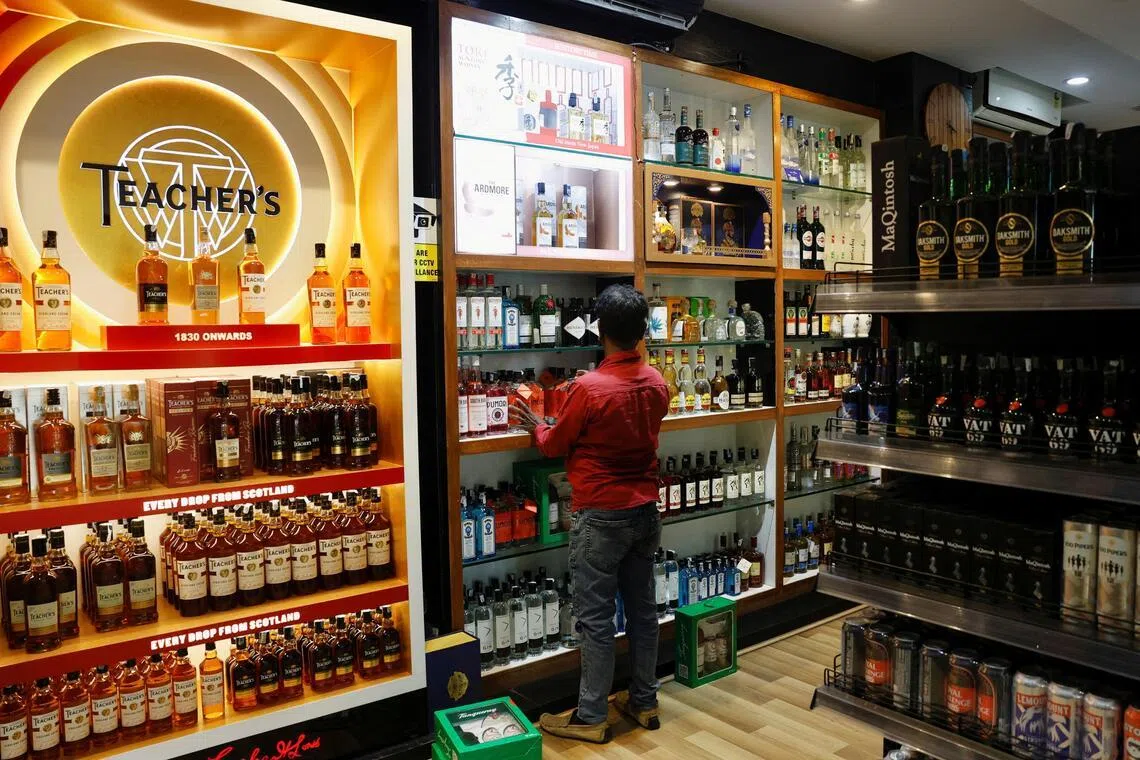
India is a promising market as well, given rising disposable incomes and a cohort of almost one billion people who are approaching the legal drinking age, which varies by state.
Who is drinking less?
The common narrative that members of Gen Z (aged between 14 and 27) are teetotalers is an exaggeration. But there is evidence of a generational difference in drinking habits.
Only about 32 per cent of Gen Z drinkers said they imbibe every week versus 45 per cent of those in older cohorts in a UBS Evidence Lab survey conducted across the largest alcohol markets, including China, the US and Brazil.
About 53 per cent of Gen Z drinkers reported engaging in intermittent abstinence, the practice of forgoing alcohol for a period of time, in a poll IWSR conducted in 15 large markets in the second half of 2025. The figure was 39 per cent among all adult drinkers.
The “sober curious” movement of recent years is often associated with younger adults. It refers to a commitment to mindfulness around drinking, to rethinking one’s relationship with alcohol and often choosing to drink less or not at all, without necessarily identifying as fully abstinent.
Why are people drinking less?
Public awareness of the health risks of drinking is a major factor.
For years, medical advice focused on the idea that moderate drinking was relatively safe, if not beneficial in that it potentially lowered the risk of heart disease.
But in 2023, the WHO declared “no level of alcohol consumption is safe”, given that the substance is known to cause multiple types of cancer. The agency said there were “no studies” demonstrating that the potential beneficial effects of alcohol were outweighed by the cancer risk.
Financial pressures are another driver, as inflation and economic uncertainty propel some consumers to reduce spending on discretionary items such as alcohol.
Yet another contributor is the increasing use of GLP-1 weight-loss drugs, which suppress appetite, including for alcohol.
In the UBS survey, 47 per cent of respondents taking a GLP-1 drug said they drank less alcohol while using it, versus 17 per cent who said they drank the same amount. In polling, some 12 per cent of Americans say they are on a GLP-1 drug.
In countries where marijuana is legal, such as the US and Canada, its popularity is also an element. Roughly two-thirds of Americans aged 18 to 34 reported using cannabis instead of alcohol at least once a week in a Bloomberg Intelligence survey at the end of 2024.
What are the signs of stress in the alcohol industry?
After shooting to record highs during the pandemic, share prices have retreated dramatically for companies such as Boston Beer, the maker of Samuel Adams beer; Constellation Brands, the US-based producer and marketer of beer, wines and spirits; and Diageo, the UK-based spirits giant that makes Guinness stout.
The combined market capitalisation of top listed beer, wine and spirit brands has fallen 48 per cent from a peak in June 2021, shedding US$850 billion in value, a Bloomberg tracker of 54 companies in the sector showed.
A number of drinks companies have run aground amid the downturn. Among the US distilleries that filed for bankruptcy last year are Ohio-based AM Scott Distillery and Kentucky-based Luca Mariano Distillery. California wine conglomerate Vintage Wine Estates filed in 2024 and its assets were put up for auction.
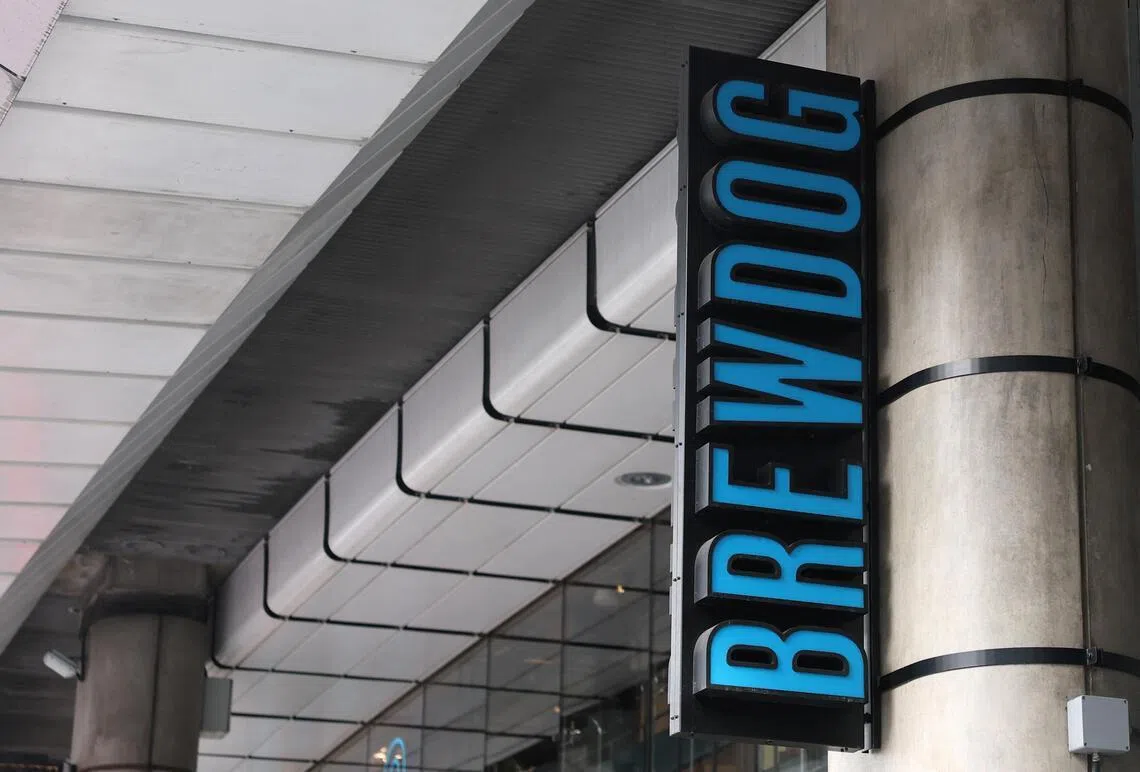
Brewdog, once one of the UK’s biggest independent beer companies, went bust after demand crashed and its debt ballooned. US firm Tilray Brands acquired its assets in March during UK insolvency proceedings for £33 million (S$56.7 million), a fraction of its once £1 billion valuation.
Other companies are struggling. In Scotland, where whisky must age for a minimum of three years and one day, almost one in five distilleries were facing financial distress as of the final quarter of last year, data analysed by restructuring firm BTG showed.
Thomas McKay, managing partner of BTG in Scotland, said in a statement that distilleries in the country, where the majority of the UK’s whisky production is based, are “facing a perfect storm of lowering demand, rising production costs and increased tariffs in key markets, factors that have already cost numerous brands their businesses over recent months”.
How are alcohol companies cutting costs?
Heineken, which makes its eponymous beer, plans to cut 7 per cent of its global workforce of 87,000 over two years, mostly in Europe. Total consolidated volume, which combines drinks produced and sold by the Dutch brewer and licensed third parties, fell 2.1 per cent in 2025.
In Kentucky, Brown-Forman, the maker of Jack Daniels whiskey, announced a plan to reduce its headcount worldwide by 12 per cent. It also shut its last in-house cooperage, a facility where casks are made and repaired, as part of its cost-cutting drive.
After supply outstripped demand, bourbon maker Jim Beam, owned by Japanese alcohol giant Suntory, announced a one-year production pause at its main distillery in Clermont, Kentucky, that began at the start of 2026.
What company bosses have fallen?
Heineken’s chief executive officer, Dolf Van den Brink, is scheduled to step down in June after the company underperformed rivals Carlsberg and Anheuser-Busch InBev in recent years.
In April, Bill Newlands resigned as president and CEO of Constellation Brands, following weak demand for wine, beer and spirits.
Last year, Diageo called time on CEO Debra Crew’s efforts to arrest the distiller’s sales slide, worsened by a slowdown in tequila demand in the US.
During her tenure, the company scrapped a long-held sales target, issued a profit warning, and struggled to cope with tariffs on US imports imposed by US President Donald Trump.
Remy Cointreau and Davide Campari-Milano made changes at the top, too.
In place of these fallen chiefs, companies have installed tested leaders. Diageo appointed Dave Lewis, who was credited with turning around UK supermarket Tesco after a damaging accounting scandal. Remy, similarly, installed Franck Marilly, a luxury industry veteran, as CEO.
How are drinks companies diversifying?
Low-alcohol and no-alcohol alternatives are an increasingly popular way for drinkers to moderate their intake while still taking part in social occasions. Drinks makers are adding these products to their portfolios in an effort to preserve market share.
Carlsberg entered the soft drinks space with its acquisition last year of Britvic, the maker of Robinsons fruit squash and J2O juice. Heineken and AB InBev are adopting “beyond beer” strategies, focusing on the development of non-beer products such as cider, hard seltzers and non-alcoholic beer.
Consumption by servings of non-alcoholic beer, wine, spirits, cider and RTDs grew by a compound annual rate of 8 per cent from 2019 to 2024, IWSR said. BLOOMBERG
Decoding Asia newsletter: your guide to navigating Asia in a new global order. Sign up here to get Decoding Asia newsletter. Delivered to your inbox. Free.
Share with us your feedback on BT's products and services
TRENDING NOW

Once staunchly pro-China, Malaysian Chinese businesses are now distancing themselves from Beijing

Looking beyond looming CEO succession, should UOB potentially pursue a transformative merger?

Could stablecoins be the future of money?

Grab CEO’s wife Chloe Tong on life with Anthony Tan and finding her purpose

