

Widespread tree die-offs feared
Helena, Montana
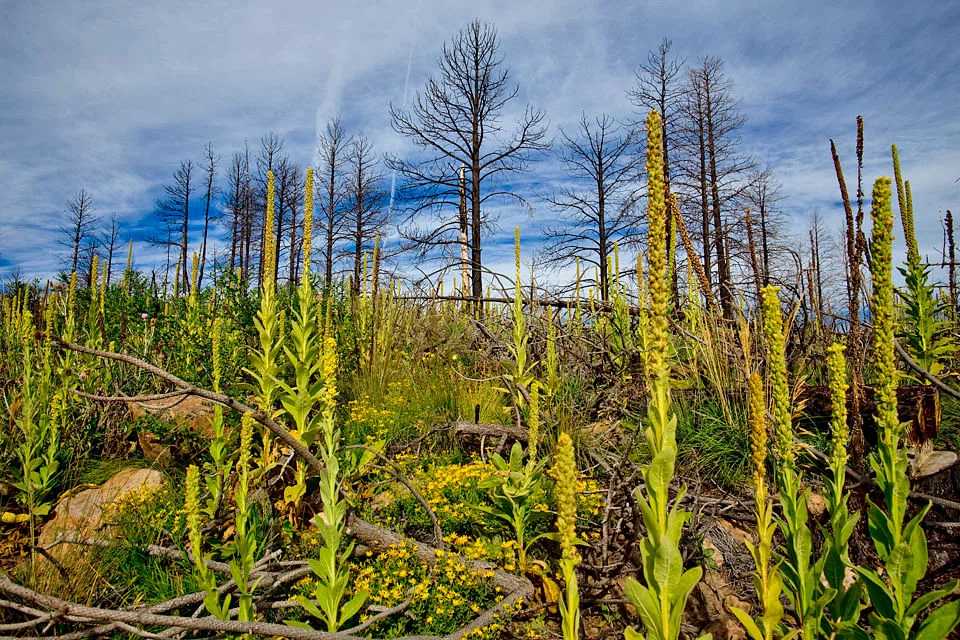
PONDEROSA pine and pinyon forests in the US West will die at an increasing rate as the world grows warmer, becoming less and less resilient when they are weakened by higher temperatures, according to new projections.
Although these forests now withstand short droughts, warming temperatures increasingly stress the forests, which means they will no longer survive the shorter droughts they once endured.
And future droughts will be hotter as the planet warms.
"We're saying that if the climate warms a little more, things don't get a little different, they get very different," said Henry Adams, a plant biologist at Oklahoma State University and lead author of a new paper published in Environmental Research Letters in a special edition of the journal titled "Focus on Tree Mortality in a Warming World". "You get an acceleration in the rate of mortality."
Mr Adams added: "Long droughts are what it takes to kill trees. As you crank up the heat though, the time it takes to kill trees is less and less."
This study is significant because rather than looking at the effects of a single temperature increase, it examines the effects of multiple increases that provide a more realistic forecast.
"The confidence we've developed about our forests being at great risk is really high now," said David D Breshears, a professor of natural resources at the University of Arizona and a co-author on the paper. "Warming makes droughts more lethal".
Prof Breshears said that the research shows that warming temperatures and drought alone could cause nine or 10 additional forest die-offs per century during this century by killing seedlings. "It's not sustainable if you knock out a forest every 10 or 12 years," Prof Breshears noted. "We are at a big risk of losing lots and lots of forest."
The researchers also say that they believe the results of this study apply to many other types of forests around the world.
Such die-offs can lead to a state change, a radical shift in which the forest disappears and becomes a different type of ecosystem, perhaps a grassland or shrub land.
In recent years, Western forests in North America have been especially hard hit by die-offs. California's most recent drought, from 2012 to this year, killed more than 100 million trees. In Arizona, Colorado, Utah and New Mexico, more than 350 million pinyon pines over 4,600 square miles died in one year, from 2002-03, showing how a changing climate can rapidly wipe out broad swathes of forest.
A recent study found that the sequoias, the largest trees in the world by volume and thousands of years old, are no longer as resilient as was once thought. As droughts occur, other species of trees growing nearby suck up stored water in the ground and render the sequoias susceptible to dying. There is increasing talk of irrigating the giants.
Because of the complexity of these systems, many scientists think forest mortality has been underestimated. Even this study only looks at mortality caused by temperature and not the added death toll from pathogens, wildfires or pests, which are expected to expand as temperatures warm. In fact, an unparalleled forest die-off caused by bark beetles has taken place in the Rocky Mountains, where below-zero bug killing temperatures, once common, have become rarer.
During the 2000s, more than 150,000 square miles of lodgepole and ponderosa pine forest in the United States and Canadian Rockies died in just a few years from a surge in beetle infestations, which experts said was unprecedented.
Europe, too, is experiencing an increase in drought in its forests. Switzerland, for example, expects to lose its iconic spruce forests because of hotter and drier weather.
Trees that are weakened by drought can no longer muster enough sap to protect themselves from beetle attacks. Adding to drought problems is air pollution such as ozone, which weakens trees. NYTIMES
Share with us your feedback on BT's products and services
TRENDING NOW

Can a first-time homebuyer couple earning S$18,000 a month afford a new EC unit?

He built the Vingroup empire. Now South-east Asia’s richest man is handing some key roles to his sons

Asia needs new energy security architecture

Chagee, Mixue and Luckin won the market. Sustaining their edge is the harder part

