
Wigmore Hall grows bold as it turns 120
Smart choices in the pandemic mean the beloved London concert hall is reopening in a more confident position than many other British venues
 Add BT as a preferred source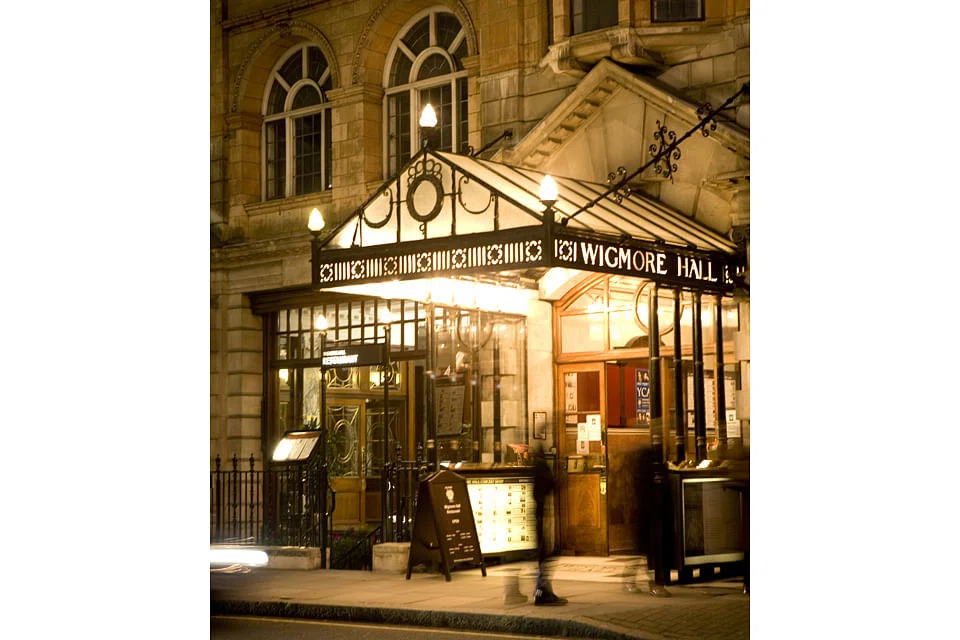
London
STANDING in front of the auditorium's small circular stage. John Gilhooly, general director of Wigmore Hall, said: "Welcome!" The audience applauded wildly - for a crowd of chamber music fans.
It was May 23, and the first Sunday morning concert since the pandemic had closed down the hall last March.
"I like to choose something special for each performance," Mr Gilhooly, 47, said. "The Elgar Quintet you will hear today was premiered in this hall on the 21st of May, 1919, when the country was coming out of another major crisis."
The Wigmore is emerging from its most recent crisis with aplomb. As an early adopter of livestreamed concerts at the beginning of the pandemic, it won large dividends of goodwill and public donations. Whereas many small performing venues in Britain are reopening nervously after six months of forced closure, Wigmore Hall is confidently poised to celebrate its 120th anniversary with an ambitious programme that started on June 6.
The hall has occupied a special place in music lovers' hearts since 1901, when it was opened as a recital hall by German piano manufacturer Bechstein, which had a showroom next door. The discreet wooden doors under an art nouveau canopy that lead into the 540-seat hall, with its red plush seats, marble, gilt and dark wood panels, are a portal to another era.
Navigate Asia in
a new global order
Get the insights delivered to your inbox.
Probably the most important chamber-music venue in Britain, the Wigmore has an intensely loyal London audience that filled the hall for most of the 500-plus concerts a year it was staging before last March.
But even the best-loved British concert halls and theatres have been in peril since the onset of the pandemic, with revenues reduced to zero, costs still to be met and anxieties about the future running high. Live shows for reduced audiences opened briefly in the fall, only to close again in early December. Venues then remained shut until May 17, when they were allowed to open with limited capacity.
If all goes according to plan - and given concern about new coronavirus variants circulating in Britain, it might not - full houses will be possible after June 21, according to Prime Minister Boris Johnson. Even then, most halls won't open at full capacity.
"It has been a much longer and more intense struggle than any of us had feared," said Gillian Moore, director of music at the Southbank Centre, a London performing arts complex. "The economics are really challenging, but we can't immediately go to full audiences because we need to see how everything will work logistically."
Mr Gilhooly, who was born in Limerick, Ireland, and trained there as a singer, became the executive director of Wigmore Hall at 27 and its general director five years later. And while he might not give the impression of a risk-taker, throughout the pandemic he has been decisive about getting musicians into the hall - many of them famous, but some lesser-known - and daring in his programming.
Free daily concerts, livestreamed by BBC
Beginning last June, the Wigmore presented free daily concerts from the empty hall, livestreamed by the BBC. Over the past year, through opening up and locking down, the Wigmore has streamed 250 programmes by 400 artists, including major London-based artists such as Mitsuko Uchida, Iestyn Davies and Stephen Hough. The concerts were acclaimed by classical music enthusiasts as a beacon of light in a sombre time.
"People wrote to me from all over the world," said Mr Hough, whose opening recital on June 1 garnered about 800,000 live views. "The return of live music was a symbol, like Myra Hess giving concerts at the National Gallery during World War II."
The Wigmore was able to get off the starting blocks quicker than most because Mr Gilhooly and his board had invested in sophisticated cameras and recording equipment in 2015, when they began to broadcast a concert every month. It was a quietly progressive step for an organisation that exudes an air of staid tradition, and last year's decision to broadcast free concerts even more so.
The Wigmore receives a subsidy of £300,000 (S$560,000) from the British state but raises most of its own £8 million. It gets just over half of its income from the box office (when there isn't a pandemic), and most of the rest from fundraising.
"The Wigmore have been fantastic leaders in terms of online activity," said Kevin Appleby, concert hall manager at the 350-seat Turner Sims in Southhampton, England. "But there is the inevitable question of how you monetise it: Do you keep the online model? A hybrid model? Will part of the audience, especially older people, not come back if they can watch at home?"
Money and contributions from livestreamed concerts
Mr Gilhooly said that even though the livestreamed concerts were free to watch, they had brought money and attention to the hall. The recitals have had about seven million views online from around the world, and contributions have poured in: "a million pounds in 20-pound increments, and quite a few bigger amounts from individuals and foundations," he said. The Wigmore's paying membership has increased from 10,000 to 15,000 and it now has 400,000 people on its mailing list. To mark the hall's upcoming anniversary, Mr Gilhooly recently announced the appointment of nine new associate artists, including viola players, saxophonists and a performer of the sarod, an Indian stringed instrument. He also outlined plans for a series of concerts focusing on music from Africa. "He is introducing the audience to new musical worlds, which takes knowledge, courage and vision," said Gweneth Ann Rand, a soprano who is one of the new associates.
Yet none of these innovations and successes will necessarily shield Wigmore Hall from the uncertainty around the future of the performing arts in post-pandemic Britain.
Mr Gilhooly said his core audience was mostly vaccinated and returning to in-person concerts. (Because of social distancing, demand now outstrips availability, and tickets are being allocated by ballot). But he concurred that if the June 21 opening up is pushed out much further, classical music in Britain will be in trouble.
"There has been so much suffering in the industry already," he said, "particularly for freelancers who fell between the cracks." For the start of the Wigmore Hall's 2021-22 season in September, Mr Gilhooly said he had "A, B, C and D scenarios." "The best case going forward," he said, "is that we open on Sept 1 with full houses and a really ambitious eclectic season. Our stage is a tiny space but a place I can dream up huge ideas." NYTIMES
Decoding Asia newsletter: your guide to navigating Asia in a new global order. Sign up here to get Decoding Asia newsletter. Delivered to your inbox. Free.
Share with us your feedback on BT's products and services

