

World's longest race? Nearly 5,000 km around a New York block
Organisers say just 49 have completed the Sri Chinmoy Self-Transcendence 3,100 Mile Race, which is run on an 800m loop on a concrete sidewalk
 Add BT as a preferred source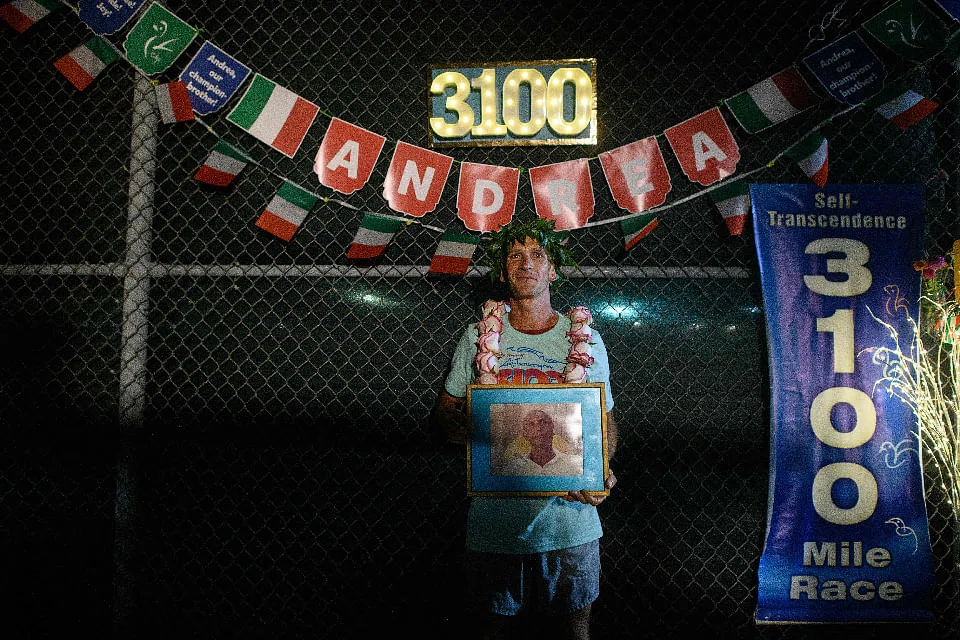
DeeperDive is a beta AI feature. Refer to full articles for the facts.
New York
IT is the world's longest certified foot race: a nearly 5,000 km run that takes participants around the same New York block a whopping 5,649 times.
Thousands of people have climbed Mount Everest over the decades, but organisers of the race say just 49 have completed the Sri Chinmoy Self-Transcendence 3,100 Mile Race.
Runners finish more than two marathons a day for almost two months, on less than five hours of sleep a night.
They cannot rely on changing scenery to keep them motivated as the route is a 800m loop on a concrete sidewalk around a high school in Jamaica, a neighbourhood in the borough of Queens.
To mix things up a bit, they alternate daily between running clockwise one day and anti-clockwise the next.
Navigate Asia in
a new global order
Get the insights delivered to your inbox.
"Definitely monotony," said this year's winner, Andrea Marcato, describing the biggest test of the race.
"The first week is quite challenging, especially for the mind. But after a while you get used to it. You have to accept that every day is going to be the same."
Participants have 52 days to run 3,100 miles (4,989 km), meaning they must average around 96 km every day.
They run, walk and hobble between 6 am and midnight, eating as they go to make up for the estimated 10,000 calories they burn during every session.
For the day's other six hours they sleep, wash and care for their blistered feet in nearby accommodation.
Only ultra-marathon veterans who have completed six-day races are allowed to enter.
"It's a test of stamina, strength, inner determination, and talent," said race director Sahishnu Szczesiul.
Harita Davies, the sole woman of this year's seven competitors, said the race takes a physical toll but "the kind of unbelievable thing is that as the days and weeks go by your body actually does adapt, you do get stronger".
Indian spiritual leader Sri Chinmoy, who lived in New York before his death in 2007, founded the run in 1997.
He advocated "self-transcendence" - using spirituality to go beyond the limits of what an individual thinks they can achieve.
Runners in the 25th edition, which began on Sep 5, said that achieving a meditative state was key to completing the race.
"If the mind is focused, you don't have other thoughts or fears or worries or doubts," said Marcato, 39.
Meditating while navigating the 883m loop around Thomas A Edison Career and Technical Education High School is not as easy as it sounds.
Runners go past a busy highway and basketball and handball courts. The route is not cordoned off from everyday life, and twice a day some 2,000 school children flood the sidewalk.
New Zealander Davies, 47, listens to music, audiobooks and recordings of inspiring quotes.
"When you first come here you think 'oh my God, it's a concrete jungle'," she said. "But you can find beauty everywhere. You can look at the sky, the trees, the birds, the people," she said.
The runners, who are also from Japan, Taiwan, Slovakia, Ukraine and Russia, have a small aid station at their disposal where a doctor is on hand to tend to blisters and shin splints.
Volunteers hand participants copious helpings of food - from healthy vegan meals and juices to doughnut holes, ice cream, and sometimes Chinese takeout.
A recreational vehicle with a bed provides for quick power naps, while a rickety scoreboard displays the number of miles completed by each runner.
Supporters come by to clap while residents shout words of encouragement, although not everyone is sure what is going on.
"I grew up here and had no idea that it was a race. I just figured they were really into jogging," said 34-year-old Julio Quezada.
The race returned to New York after occurring in Austria last year due to the coronavirus pandemic.
Marcato, from Italy, clocked his 3,100th mile late Sunday, completing the race in less than 43 days with an average of more than 115 km per day.
He tore through 16 pairs of shoes in the process and will receive a trophy but no prize money.
"This is the ultimate. It was my dream and here I am," said the passionate ultra-marathoner who works for a plant-based food company.
"The last two laps, I was completely disconnected from my body. I didn't feel any pain. It was a really special sensation."
For New Zealander Harris, on track to complete the distance before the Oct 26 deadline, the race is an opportunity to "explore the frontiers of my capacity and potential" and "to make myself a better person".
When it ends, the healing process begins, which means lots of rest, sleep, food and patience.
But one element of the recovery is perhaps the hardest.
"Getting used to being back to regular life," said Davies. "This race really simplifies your life because you don't have to think about anything else except running." AFP
Decoding Asia newsletter: your guide to navigating Asia in a new global order. Sign up here to get Decoding Asia newsletter. Delivered to your inbox. Free.
Share with us your feedback on BT's products and services
TRENDING NOW
Air India asks Tata, Singapore Airlines for funds after US$2.4 billion loss

‘Boring’ is the new black: The stars are aligning for a Singapore stock market revival

From 1MDB to ‘corporate mafia’: Is Malaysia facing a new governance test?
South-east Asian markets account for 8.8% of global capital inflows from 2021 to 2024: report

