

Manoeuvre with greater agility
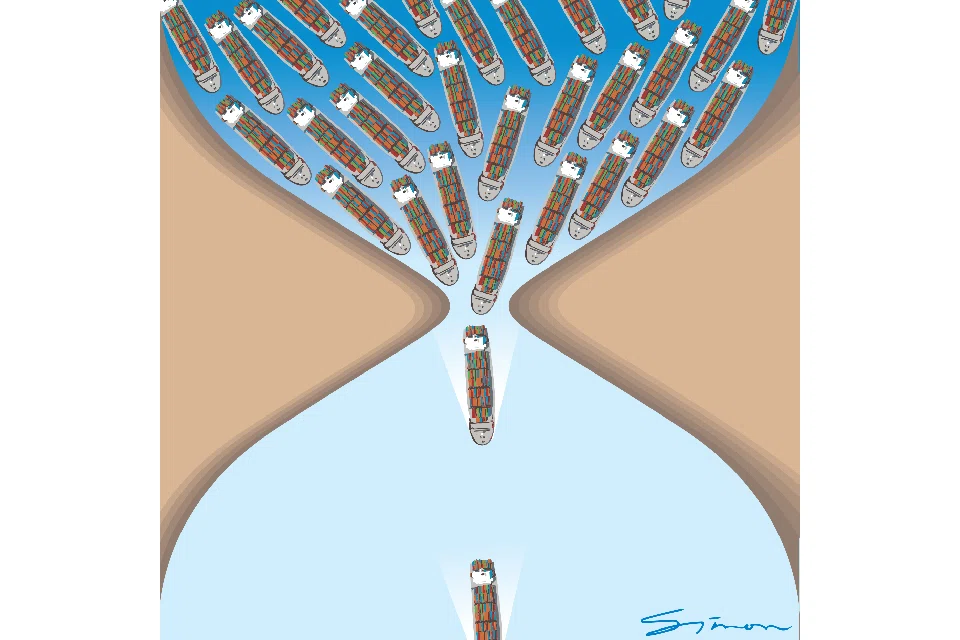
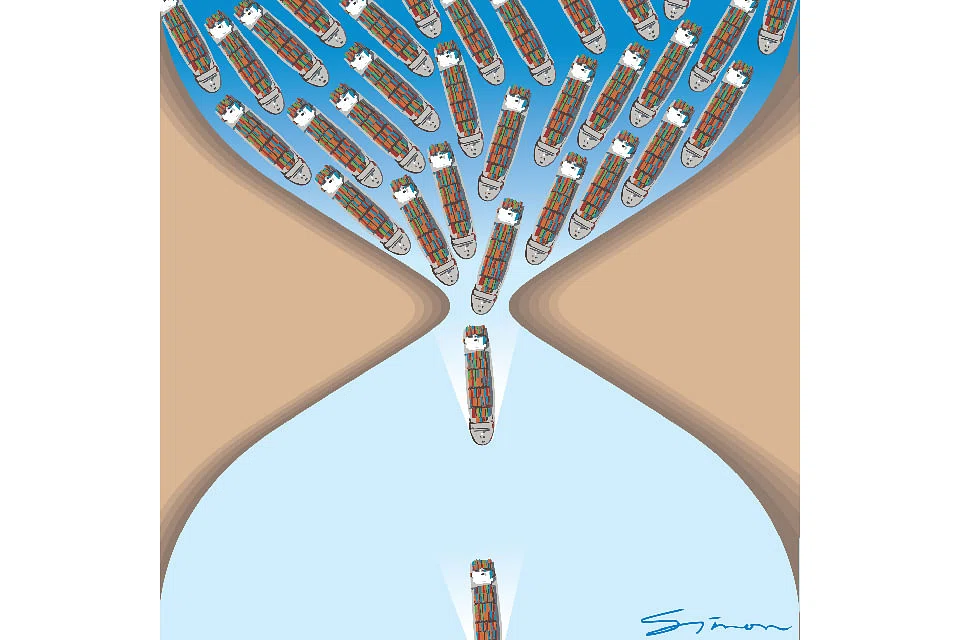
THIS WEEK'S TOPIC: What lessons can be drawn from the ongoing supply chain problems around the world?


THIS WEEK'S TOPIC: What lessons can be drawn from the ongoing supply chain problems around the world?
Karen Clarke Managing Director, Asia-Pacific Anaplan
BETWEEN port disruptions, skilled labour shortage and increasing freight rates, organisations cannot afford to operate as they always have. Relying on historical data will no longer suffice. Now, building a more nimble and resilient supply chain is an imperative that requires looking to a future where market demand changes by the minute.
Today's volatile landscape requires organisations to have cross-functional teams leverage data to identify the financial impact of changing demand, the state of their supply chain, and other potential bottlenecks. Aside from using technology to drive predictive intelligence and resilience planning, organisations need to normalise shorter planning horizons and blend supply chain thinking with operational performance to help them respond effectively when the tide turns.
Lawrence Loh Director, Centre for Governance and Sustainability NUS Business School
THE supply chain debacle reveals a critical business function that is usually in the backstage compared to sales which is often in the limelight. Logistics is often the best-kept secret. It is only when the movement stops and when the goods do not show up that we realise the existence of the supply chains. In any business, the process is as important as the contents - the flow is as vital as the materials. An organisation goes beyond its traditional boundary - nothing happens until suppliers connect with customers. Adapting a quote from Karl Marx and Friedrich Engels - Businesses of the world, unite! You have nothing to lose but your chains!
Svend Janssen Head of Asia Pacific & Japan Nuix
IT IS likely that the current global supply chain disruptions will get worse before things gets better. Hardly any industry seems to be immune to the effects, but some businesses cope better than others. In my view, the key differentiator is control over the supply chain. Highly verticalised companies, owning or tightly controlling the elements of the chain, are being rewarded these days for earlier investment. This is not a call for a general insourcing of services. It is rather about maintaining close, fair and sustainable long-term relationships with suppliers.
Willson Deng Chairman, Singapore Manufacturing Consortium (SIMCO) CEO, Arcstone Pte Ltd
SUPPLY chain problems are merciless to every industry. The recent global supply interruptions have further highlighted the urgency for real-time supplier redundancy, transparency, and coordination. This boils down to digitalisation and real-time data being the key champions to mitigating supply chain disruptions and risks. Data will allow industry to react faster, mitigate delays and enable backup plans to be executed before it's too late. It might not be able to solve all problems along the supply chain, but data makes it better.
John Bittleston Founder and Chair Terrific Mentors International Pte Ltd
THE lessons that can be drawn from the supply chain problems are:
1) JIT (just-in-time) can so easily become JTL (just-too-late).
2) The cost of additional inventory is seldom as high as the cost of lost sales.
3) Lost sales are not just revenue losses, they are workforce disruptors and losses.
4) Once the supply chain is disrupted, the ripple effect can extend a long way and for a long time.
5) Cash cows are especially vulnerable to disruption. Once a regular consumer's pattern is disturbed it may never return.
6) Launches are also very vulnerable to disruption. The promotional buildup to a new product is a finely tuned exercise.
Jeffery Tan Group General Counsel Chief Sustainability Officer Jardine Cycle & Carriage
SOME of the core fundamentals that were taken for granted pre-Covid will need to be re-examined and refreshed to meet the challenges of the next normal.
Three critical ones come to mind: First, there is a need to build redundancy into supply chain processes and move away from the concept of ''just in time'' to ''just in case'', as many of the scenarios that were thought to have been remote possibilities have become realities.
Secondly, there will be a need to invest in technology platforms that enable real-time tracking of product movements - up and down the supply chain - that provide valuable data which prompts timely action to help mitigate or possibly avoid delays.
Finally, to ensure that supply chain links - from suppliers to shippers to service providers - are politically neutral, even as the world trading system appears to be headed towards greater polarisation along political and nationalistic lines.
Oliver Stein Director - South East Asia JAGGAER
THE supply chain ecosystem has been impacted hardest by the disruptions brought about by the pandemic. One thing is certain - global shipping chaos will only continue, this is the reality that businesses must accept. Learning how to manoeuvre with greater agility is mandatory. To mitigate unpredictable circumstances, businesses should start reviewing their supplier networks and ensuring they have efficient and flexible processes and a diverse portfolio of suppliers. Supplier diversity is a high or medium priority for most organisations, yet many are still only in their early stages of implementation. By leveraging technology to expand their strategic supplier base, businesses can gain greater agility and resilience.
Jonathan Rake CEO Asia Pacific Swiss Re Corporate Solutions
PANDEMIC-related disruption has highlighted supply chain risk management and resilience as a priority for most of our clients. Many organisations have shared that the key challenge remains not enough transparency of the risks embedded in the structure of their supply chains. A lack of data is a big contributing factor.
To correct this and reduce risk for the future, the first step is to address the lack of real-time supply chain data being gathered and analysed to create a more complete risk picture. This would enable companies to better identify, assess and mitigate risks while expanding insurability. Movements in this direction could benefit the industry as a whole.
Damien Wong Vice President, APAC Confluent
MANy global supply chains have been drastically affected by the Covid-19 pandemic, and business survival lies in switching to a digital-first approach. This is imperative to enabling fast decisions and maintaining great customer experience despite supply and demand fluctuations.
A digital-first approach requires organisations to reimagine new ways of working and set their data in motion throughout their supply chain. The modern customer experience relies on data, particularly in real time, by triggering a cycle of live insights that guide prompt decision making, much like a central nervous system.
Retailers facing a cargo crunch can provide customers with up-to-date information on when they are likely to receive the products before ordering, so long as their supply chain puts their data in motion and enables seeing these real time analytics.
Victor Mills Chief Executive Singapore International Chamber of Commerce
FIRST, our interconnected and interdependent world made possible by supply chains and the easy availability of goods have all been taken for granted. Not anymore. The effects of the pandemic disrupt the flow of goods and increase costs for importers, exporters, shippers and their customers. Inflation rises.
Second, the current supply chain disruption will take time to sort out. For one, the supply of shipping containers has been severely disrupted.
Third, businesses are reassessing the length of their supply chains and looking to simplify them to increase resiliency and enable business continuity. Finally, the era of cheap supply chains is over.
Kaushik Ghatak Chairperson, Supply Chain Leaders Group EGN Singapore
KEY lessons for us from this pandemic are really around the need to better manage risks and resilience. Having ''visibility'' across our multi-tiered supply chains is critical. With increased visibility comes better ''insights''; knowing exactly what is happening on the ground, being able to get the early warnings, and taking corrective actions.
The need to think of building buffers in the right places (in terms of manufacturing and distribution capacities) and maybe even to think of restructuring our supply chain networks, are key areas for consideration. The third factor for consideration is the hybrid working modes that people have got used to.. The third factor for consideration is the hybrid working modes that people have got used to. Getting the working from home and from office mix right would be critical to ensure sustained productive operations for all businesses.
Jonathan E Savoir CEO and Co-Founder Quincus
COUNTLESS supply chains around the world have been crippled due to obsolete systems. As supply chain complications - from rising freight charges to material shortages - continue to disrupt industries worldwide, there are three factors that companies can consider for a more sustainable supply chain : digitalisation, visibility, and optimisation. Innovative technologies such as artificial intelligence and big data provide end-to-end transparency and optimisation across the supply chain. Access to real-time insights of on-the-ground activities allows companies to execute better remedial actions while making strategic decisions to optimise operational efficiency.
Charles Reed Chairman and CEO Royal Greyhound Pte Ltd
ROYAL Greyhound is at the frontline of this challenge. We manage over 3 million shipping containers a year. What we have seen is an unprecedented disruption and congestion in the ports and it is not easing up. From a frontline perspective, our greatest challenge is to improve our working environment and to change our attitude towards labour-intensive frontline work.
The work the frontline workers perform is paramount to the sustainability of Singapore and they should be shown the respect they deserve. Seafarers have been cooped up in ships for months, stevedores and prime-mover drivers have had to work under extremely difficult conditions for prolonged periods.
As we move towards a dawn of automation and digitalisation we must bring our workers with us. Let us show all frontline workers respect and gratitude for helping us overcome. SG United.
Seah Kian Peng Group CEO FairPrice Group
SUPPLY chain resiliency is essential to all businesses, more so at FairPrice Group. By driving optimisation and investing in data analytics, we are able to better forecast and plan our supply chain management thus generating greater efficiency and productivity. Our Supply Chain Operations Centre provides end-to-end visibility and real-time insights to pre-empt potential disruptions and to facilitate critical decision-making. This approach mitigates volatility in demand and uncertainty. We also practise diversification in sourcing to minimise risks to supply interruption. These efforts help us deliver our business objectives to provide customers with accessible and affordable daily necessities.
Shaun Hon General Partner Motion Ventures
THE past two years have shown the supply chain industry what's truly at stake if we only optimise for short-term economic gains instead of considering what those underlying trade-offs would cost us. One of the most pressing issues across the industry's chain of command is the long communication gap between supply side (exporters) and demand side (importers). This results in subpar planning across the supply chain. Technology solutions that can arbitrage end-to-end supply - such as demand information to ensure better planning, resourcing and resilience - should be introduced if industry players want to seriously address pain points.
Kent Nash GM Middle East, Asia Pacific & Japan Solace
ORGANISATIONS across the entire supply chain need greater situational awareness, real-time responsiveness, and informed decision-making to better navigate the uncertainties of the current climate. Having access to real-time insights will enable businesses to swiftly identify and reduce the impact of any disruptions, whether anticipated or not. This can be achieved by ensuring continuous, real-time data flow between IT and OT systems, which are the backbone of all supply chain management processes.
Bottlenecks in any part of the supply chain can cause a serious ripple effect in the wider economy. A fully integrated and digitised supply chain that can adapt to changes in real time will be able to unlock new efficiencies, mitigate gaps and prevent costly delays.
Christanto Suryadarma SE Asia Sales Vice President Zebra Technologies Asia Pacific
THE ongoing supply chain problems have undoubtedly exposed the vulnerabilities of the global supply chain ecosystem. The challenges further underline the need for enterprises to adopt digital transformation, which would allow them to better respond to the shifts in consumer demand and supply chain disruptions, driven by the rise of the on-demand economy.
With the right analytics and solutions, companies can gain unparalleled visibility into their inventory, assets and people to make informed business-critical decisions quicker and more accurately. This is crucial in ensuring their business success, especially in view of today's volatile market conditions.
David Kuo Co-founder The Smart Investor
THE current supply-chain disruptions highlight one of the key risks of a just-in-time inventory management system. The benefits of cutting inventory costs by reducing the need to carry large quantities of stock are undeniable.
It has been used quite effectively in the past. But it is, nevertheless, predicated on a near-perfect relationship between supply and demand. Covid-19 has shown that the relationship can break down. Consequently, businesses can be susceptible to shocks in both demand and supply of goods and services. It doesn't mean that just-in-time is flawed. But it does mean that companies need to carefully consider the parts of the business that are mission-critical.
Hrishi Olickel Co-Founder and CTO Greywing
WHAT Covid-19 revealed is that the over-optimisation of supply chains has positioned maritime stakeholders for greater vulnerability, as opposed to gains. Efficiency has always been a trade-off against resiliency in shipping - changing conditions can lead to shortages, pile-ups and mismatched inflows and outflows. The only way for us to safeguard this increasingly connected sector is by introducing technology solutions, which can augment human decisions with software. Doing so could help decision-makers handle sharp changes in operating conditions while maintaining predictions for future plans.
Maren Schweizer Chief Executive Officer Schweizer World Group
JUST-in-case has replaced just-in-time as disruption has become a persistent condition. The pandemic also exposed the lack of resilience of some operations, which were heavier on their feet than many had expected.
As businesses compete to deliver superior customer experiences while handling supply shortages, increasing price levels, and working capital requirements, they'll become more and more reliant on data. Today's resilience highly depends on the speed and responsiveness of digitised supply chains.
The core areas to address are modelling frictionless customer experience, micro-demand planning, understanding the cost of complexity, OEE (overall equipment efficiency), managing new partner networks, and enhancing supply chain autonomy. We have already identified ''Software as a Service'' providers with proven Enterprise AI solutions such as Lexatexer to join forces.
I believe organisations that drive change, and not only adapt, are more likely to thrive.
Eileen Chua Managing Director SAP Singapore
AS ECONOMIES in the region rebound and plan for recovery in the never-normal, leadership teams are zooming in on supply chain resiliency, agility and adaptability. The supply chain ecosystem, marred by significant disruptions this year, is primed for a digital-led refresh, one that will enable leaders to safeguard their operations and mitigate risks.
To be truly future-ready, businesses must break down departmental silos within and work with a network of intelligent enterprise partners to build a fully integrated and resilient supply chain. SAP believes that intelligent enterprises establish strong business networks and place a sharp focus on sustainability because no business does business alone as we are living in a hyper-connected world.
Vivek Nath MD, South & South-east Asia Willis Towers Watson
THE ongoing global shipping disruption emphasises supply chain vulnerability. Downstream disruptions cause inventory backups, putting pressure on credit management and necessitating companies to review their trade credit insurance. Financial stress also increases the likelihood of investors' suits against directors and officers. Hence, it is critical that boards are kept apprised of changing exposures so that they can make informed, rational and defensible decisions. Furthermore, increased disruption risks arising from cyberattack vulnerabilities can lead to additional supply chain exposure. These complexities mean companies need to work closely with their risk advisers for guidance and, with the use of risk modelling, to better understand potential implications. This will help businesses to be more prepared, resilient and future-ready.
Michelle Ho President UPS Asia Pacific
THE pandemic has undoubtedly been a wake-up call for businesses around the world, and we have been advising our customers to build more flexibility into supply chains to safeguard against future shocks. This could mean developing a strong list of backup suppliers, bringing more production, or adding more storage closer to the point of consumption, or optimising the current regulatory landscape to explore new customer growth opportunities. The importance of having a Plan B for every link in the chain cannot be overstated.
We've also seen an acceleration in the growth of online shopping so, if they haven't already, businesses - especially SMBs, for whom resources are often more stretched - should be looking to digitalise and grow their online presence to capitalise on opportunities in e-commerce.
Wong Siew Loong President Kuehne+Nagel Asia Pacific
THE Covid-19 pandemic has exposed many vulnerabilities in supply chains and highlighted the importance of a resilient, diversified supply chain. As we grapple with repeated incidents of cargo backlogs and transportation bottlenecks, we are reminded that supply chain planning is not only about managing demand and supply, but having the agility and contingency plans to react to unforeseen circumstances.
It is critical for us to pay close attention to every part of our supply chain network, understand their vulnerabilities, and take actions to improve robustness. With continued investment, infrastructure development, and deep industry expertise, we can build a dynamic and resilient supply chain, reduce the risks from future disruptions, and keep goods moving.
Loi Pok Yen Group CEO CWT Limited
LABOUR and inflation are inversely correlated. Deflation over the past few decades can be attributed to globalisation, the rise of China as the world's factory, shortening of supply chains via JIT (just-in-time) and JIS (just-in-sequence) initiatives and, the widespread adoption of technology. E-commerce and cheap capital created giants such as Amazon and Alibaba resulting in more deflationary pressure as firms fought for market share.
Unlike the spike in freight rates in 2006 which was due to high oil prices and mismatch between demand and supply of ships, Covid-19 is more worrying as it affects labour, a key component of supply chains. Inflation may be persistent without a corresponding decline in Covid-19 infections and further acceleration in technology adoption.
Tan Hian Hong VP, Division Underwriting Manager, Asia operations FM Global Asia
THE cargo crunch caused by shipping delays is a reminder that many businesses have yet to diversify supply chains to mitigate the impact of just-in-time business models. The best way to manage these risks is to go back to fundamentals: build knowledge around your supply chains, assess what you know and identify gaps. Businesses need a contingency plan that can ramp up other manufacturing plants or consider alternative transportation modes or routes. This minimises delays and enhances competitive edge over peers who are scrambling to put together contingencies in real time. Building business resilience will add value as economies recover and transform in response to new supply chains and new risks.
Kelvin Lim Founder and Group MD Pacific Logistics Group
THE recent challenges have exposed the vulnerability of our supply chains and caused a global dominoes effect. As a result, there have been unprecedented disruptions across the board, affecting businesses and consumers alike.
The situation remains fluid and fraught with challenges. To this end, it is critical to remain flexible to react quickly to the uncertainty on hand. The importance of long-standing relationships with partners has also come to the fore in such volatile times. Our established network has enabled us to expedite shipping processes and secure competitive shipment slots and rates for our customers while offering valuable insights for us to manage unpredictable freight frequency.
Dharmesh Arora Regional CEO (APAC) Schaeffler
THE collapse and subsequent surge in consumer demand, combined with other factors, has caused huge stress in the supply chain. Restoring order in the system will take time but will eventually be accomplished. This episode has shown the critical importance of agility and flexibility. Investments in data and analytics will take centrestage as real-time supply chain visibility, supply chain analytics, and access to customer planning data become some of the necessary capabilities to optimise business continuity plans and minimise disruptions. Our regional presence allows us to localise supply chains, thus being more responsive in tackling disruptions and overcoming challenges.
Dileep Nair Independent Director Thakral Corporation Limited
SUPPLY chain risks have always lurked in the background. The US-China trade war and the pandemic have brought these to the fore. Neglecting to audit supply chains for blind spots will cost companies dearly since ''you can't fix what you don't know''. Companies must appreciate that customer service is at the heart of supply chain management.
More resilient supply chains can only be built through strong supplier/buyer relationships, partnering with freight forwarders, real-time visibility from procurement to last-mile delivery, and strategies for diversifying the supply ecosystem. Periodic simulation to stress-test the system is also essential. Ultimately, though, there's only so much that a business can do while accepting that supply chain disruptions are part of the new normal.
Thomas Knudsen Managing Director Toll Group
TODAY'S geopolitical events have an outsized impact on global supply networks, elevating supply chain resilience as the key to global trade success. Single source supply chains have become less viable, with diversified supply links, innovative technology, and hybrid freight models essential for supply chain resilience.
With South-east Asia becoming an attractive location for offshoring due to its manufacturing capabilities and proximity to China, engaging supply chain partners capable of navigating the unique nuances of business in Asia will be vital for long-term growth, something which Toll Group successfully delivers for global businesses throughout Asia.
Keith Budge EVP, Asia Pacific and Japan Teradata
EVEN as retailers re-pivot to omnichannel strategies in the wake of the pandemic to create more holistic touchpoints with consumers, they have yet to fully leverage the rich sources of data available across all channels. They thus stumble to glean integrated insights and better predict demand and supply, resulting in sub-optimal inventory management.
Conversely, those that invested in integrated supply chain data analytics during the pandemic are positioned to respond better to demand and supply fluctuations and the challenges following the ongoing power crisis. It is clear that retailers must re-evaluate how they can systematically utilise the wealth of data in their hands to build supply chain resilience.
Josephine Ong MD, Asia Pacific South Dassault Systèmes
THE ongoing disruptions indicate that today's supply chains lack resiliency and this can be improved through digitisation. Digitisation will enable supply chain flexibility, resiliency and sustainability, through improved end-to-end visibility, better problem-solving and decision-making.
Businesses must aggregate and digitise all sources of data across their stakeholders and invest in a collaborative digital platform for digital continuity of processes and ecosystem collaboration. Integrated logistics planning and route optimisation on this platform means that stakeholders can collaborate for win-win outcomes.
Chia Ngiang Hong President Real Estate Developers' Association of Singapore (REDAS)
CURRENT widespread supply chain problems hasten the need for businesses to build in resilience to mitigate the impact of unexpected external changes on their operations. It underscores the importance of diversification of manufacturing locations and suppliers' networks across different geographical regions and utilising different transportation modes and routes so as to avoid risks of excessive reliance on select few sources.
Businesses should deepen relationships with suppliers to strengthen reliability. The current problems have also demonstrated the need for enhanced demand forecasting on the part of businesses so that they can strike a more optimal balance between inventory levels, warehousing costs and consumer demand and thereby avoid sudden extreme fluctuations.
Predictive data analytics to model trends can provide greater visibility and adapting to other online modes or channels both B2B and B2C may also help companies thrive in uncertain and volatile environments and outperform their peers.
Chris Humphrey Executive Director EU-ASEAN Business Council
DIVERSIFIED supply chains have been critical since the start of the pandemic, but only 13 per cent of European businesses in Asean are looking at supply chain relocation in a recent survey that we did. This is not surprising given how costly and complex the change process is: 81 per cent of respondents cited too many barriers to efficient use of supply chains in the region. But if those barriers were removed, 87 per cent said they would use Asean supply chains more. The lesson here is that companies need to act faster on diversification, and Asean governments need to do more to remove barriers to the efficient use of supply chains.
Shawn Louis Executive GM, Cainiao and Chief LazGlobal Logistics Officer
THE pandemic has accelerated pre-existing digitisation trends and cast a spotlight on operations resilience in the logistics and supply chain industry.
This has signalled the need for a stronger digital infrastructure that fosters greater agility and transparency to best mitigate cargo crunch, disruption in schedules and growing demands of consumers and merchants. Here, leading logistics companies have begun to incorporate new technologies, such as cloud-based systems, data analytics and AI, to streamline their logistics and supply chain management which facilitates greater real-time visibility and control.
This includes real-time optimisation of operations, tracking and tracing of goods and resources, and the use of robots in smart warehouses and last-mile logistics to enhance productivity and delivery accuracy.
Smart logistics and supply chain management will continue to play an instrumental and fundamental role in facilitating global trade and e-commerce. To remain competitive in today's fast-changing market, companies need to recognise the value of digitisation and make it a business imperative.
Mark Billington Managing Director International ICAEW
ACCORDING to ICAEW's latest Economic Forecast for Q3 2021, regional trade flows have indeed been hindered by disruptions to supply chain, global freight and logistics sectors arising from the pandemic. Shortages in inventory and congestions in the world's key ports have hit globally and contributed to a plateau in manufactured goods, and in turn, an increase in consumer prices.
While we expect that these issues will resolve over the next few quarters, they have also served to highlight the importance of building business agility. Businesses need to have an agile approach to strengthen their operational resilience against disruptions and adapt their systems and processes in view of business continuity.
This will enable them to quickly adjust their operations to meet changing market conditions and embrace changes that can improve their supply chain efficiencies in the long run.
Mario Singh Chief Executive Officer Fullerton Markets
THERE are three main lessons and corresponding solutions that can be drawn from the ongoing supply chain challenges worldwide. Firstly, shifting from a ''just-in-time'' strategy to a ''just-in-case'' one.
Many enterprises are starting to embrace the wisdom of planning ahead so that delays like these can be averted.
Secondly, alternatives like air freight should be considered.
Admittedly, air freight might not be as cheap as sea freight but suggestions include shifting only urgent inventory to air freight, cutting costs from other operational areas in the business, and possibly raise prices slightly to balance out the financial equation.
Finally, the importance of having backups.
Businesses have to start expanding their base of suppliers and pivot towards those that are geographically nearer. This way, much of the risks will be mitigated. Many of these changes are uncomfortable and costly, but businesses have to also consider that failure to implement some of these measures could end up being more costly in the end.
Murli Ravi Co-founder Tin Men Capital
UNFORTUNATELY, the lessons are not new: many of the current issues are a direct result of constraints that have been known for some time yet have not been addressed due to a lack of adoption of digitisation and/or change in historical business processes that are now redundant for managing the complexity of today's global trade network.
While generally, key industry stakeholders have attempted to drive investment in technology and innovation to solve for major issues around connectivity, data-sharing and real-time information capture, mostly this has been orientated towards individual agendas rather than core long-term problem-solving across the entire network of global participants at all levels who play a part.
Perhaps record profitability, after years of financial volatility and industry uncertainty, can be the catalyst to drive deep change through the adoption and implementation of enterprise technology solutions that can solve for issues such as excess detention and demurrage costs, inefficient land-side logistics transportation, and global container fleet imbalances.
Nidhi Gupta Co-founder & CEO Portcast Pte Ltd
DELAYS will be the new normal in global supply chains. External risks and disruptions are only going to increase due to the inherent global nature of supply chains. While Covid-19 created an initial demand shrinkage followed by a shipping boom, there have been other disruptions related to weather, policy changes, congestion, port closures and strikes. Such unforeseen and unplanned disruptions are only going to continue.
Logistics companies and manufacturers need to have more proactive responses to external risks and disruptions.
This requires the ability to predict the impact of such events on their trade flows and cargo. Technologies like artificial intelligence and predictive analytics, combined with geospatial data, shipping and ports data, enable companies to get predictive alerts if there's risk to their cargo.
They would also be told the reasons behind the risks, and the recommended actions - ie update inventory plans, expedite freight from other locations, manage customer expectations, and reduce port detention and demurrage fees.
Onat Bayraktar Vice President Sealed Air Asia
WE NEED to start thinking about the supply chain in new ways. Our ability to manage business disruptions depend on it. Through the lens of Covid-19, we have seen just how interconnected and interdependent the global supply chain is.
Better ways are needed to track, measure, manage and prevent disruptions. In short, greater risk mitigation and not just management. For Sealed Air, we're investing in our future through automated, digital and sustainable packaging solutions to better address labour scarcity, peak demands, supply chain visibility and waste reduction.
Our customers are counting on us to protect their perishable and essential products from factory to store, and from store to doorstep.
Morgan Terigi CEO and Co-founder Incomlend
WE SEE supply chain disruptions triggering significant repercussions across industries, with manufacturers and exporters facing greater credit risks, restricted cash flows and cancelled orders due to disruptions. Businesses are also facing greater market volatility and ambiguity in supply-and-demand trends, making future planning harder. These challenges impede small and medium enterprises (SMEs) from financing their next production or purchasing cycle, leading to more revenue losses.
SMEs must find alternative options to insulate themselves from credit risks and safeguard their financial health to stay financially viable. The world needs time to make the global supply chain more efficient and resilient.
To remain buoyant, SMEs must diversify their access to funding and leverage alternative financing solutions. Furthermore, they should consider non-recourse financing options, such as the off-balance-sheet invoice finance solutions, to improve their cash flow while keeping their debt-to-equity ratio low.
Lim Soon Hock Managing Director PLAN-B ICAG
THE supply crunch was unprecedented, so many businesses were caught off guard. There are many useful and insightful lessons to be learnt.
All will influence critical decisions that need to be taken urgently to overcome the consequential problems of logistics. There is no perfect solution. Companies will have to live with the constraints for now, while trying to find ways to solve or minimise the logistical problems. For example, switching to achieve self-sufficiency in the home base may not work for all businesses.
The other solution, which many companies are rushing to put in place, is to expand the sources of supplies. Even this has limitations in terms of delivery times, costs and competition.
Businesses often want to achieve more with less, but the ongoing supply chain problems would force companies to deviate away from this principle. Companies now must have more to achieve the same. This may require businesses not just to compete but to complement each other more, for the larger benefit of the industry.
Danny Wong Executive Officer and GM LHN Group
WITH the ongoing supply chain problems, our Work+Store brand has noted that our users - particularly e-commerce business owners - are facing a rise in shipping costs. Many of them are also stocking up ahead for the festive demand, to ensure there are enough goods for end-of-year sales events.
Storage and warehousing play a crucial role in today's supply chain. To ease end-to-end costs for businesses in light of higher freight expenses and volatile shipping timelines, storage spaces need to provide flexible leasing terms and flexible sizes for their users, allowing them to customise their storage spaces when needed. This leads to greater cost-efficiency and prevents additional fixed costs from being passed on to consumers.
Zaheer Merchant Director - Corporate Affairs QI Group of Companies
BUSINESSES are optionless but to plan ahead on a constant (even daily) basis, set up risk mitigation, adopt diverse manufacturing or supply strategies and processes to deal with man-made, natural causes or ''acts of God'' events. Whether localised or offshore, every event upstream and downstream is an issue which must have a contingency plan in place. The over-reliance on every facet of technology has made businesses semi-conductor- and data-dependent.
All business risks will culminate here, so relationships between all levels of suppliers must be enhanced towards this need. Any business that fails to pivot in the new normal arising from these supply chain issues is not merely going to lag behind, but may fare worse.
Henry Tan Group CEO Nexia TS Group
THE ongoing global supply chain challenges teach us a few lessons. Firstly, the world is highly connected; whatever happens in one country can quickly affect another. Secondly, supply chains facilitating free movement of goods are crucial for world order. We cannot take these free flows for granted. Thirdly, most products still move across countries on ships and trains, the traditional means. Efficient shipping and rail networks are key to functioning supply chains. Lastly and most importantly, the supply chain is important to human survival; without it people can't work, move and earn a living. Meanwhile let's earn all we can, save all we can, and give all we can.
David Leong Managing Director PeopleWorldwide Consulting Pte Ltd
THESE are abnormal times where the global economy is undergoing unprecedented Covid-induced stress with fractured and disrupted supply chains. When movements of people are constrained, work can get disrupted over prolonged period. Piles of containers stacked at ports, idling vessels waiting outside the harbour, disrupted shipping timing are now common. Supply chains are in disarray and transport routings are not optimised. To restore order, the global system must re-align for businesses. The first order of business is to open up the economy to unblock choke points.
The lesson here is that closed borders affects lives globally. The instability, disorderliness and disequilibrium of supply-demand chains need recovery. It's like the global economy has had a stroke and is suffering a bad seizure.
TRENDING NOW

‘My grandfather’s legacy’: Sherman Kwek lays out three-year plan for CDL to drive returns

‘How many will survive?’: Bubble fears arise as China’s humanoid robotics face reality check

CDL to hire dedicated CEO for fund management as it steps up push into private funds

Stock to watch: Mapletree Industrial Trust

