Issue 124: Redefining carbon credits; motivating small caps on sustainability reporting

This week in ESG: Rating agencies drive fundamental shift in treatment of carbon credits; small listed companies confront looming reporting deadline
Carbon credits
Commodity or instrument?
Singapore carbon exchange Climate Impact X’s (CIX) move to include carbon ratings for credits traded on its platform is part of a growing trend towards treating carbon credits as risk instruments instead of commodities.
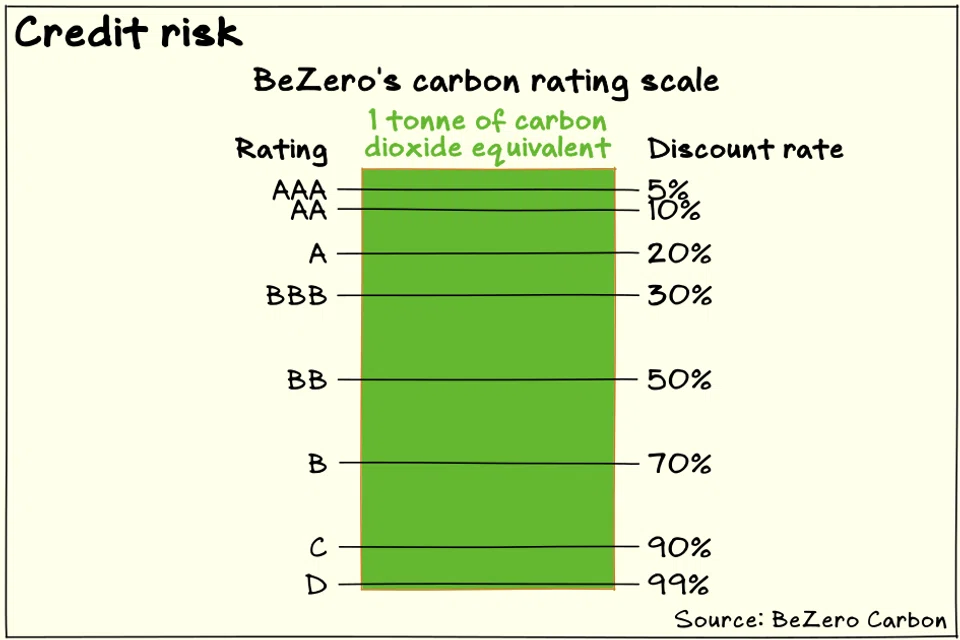
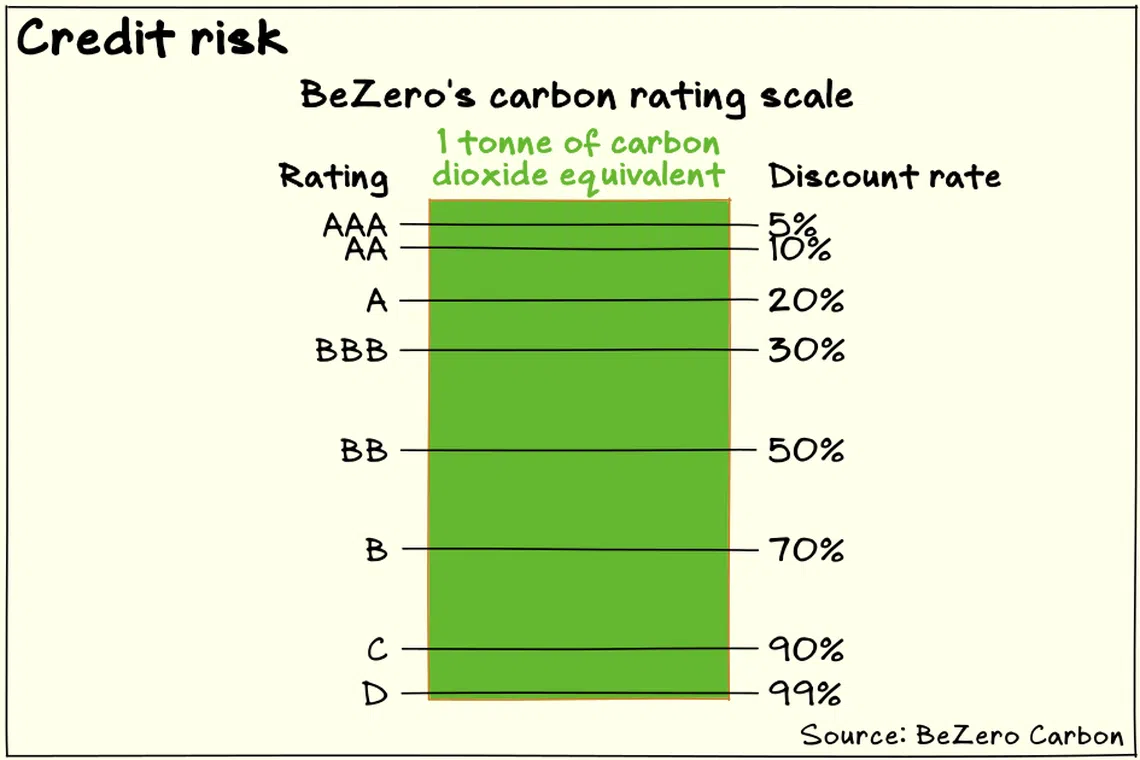
Under a new partnership with carbon ratings agency BeZero Carbon, CIX will include BeZero’s assessment of projects on its trading screens. BeZero’s ratings reflect the likelihood that a carbon credit will deliver one tonne of carbon dioxide equivalent avoided or removed.
It may seem like a minor change, but the use of a ratings system reflects a fundamental shift in what a carbon credit represents.
By convention, a carbon credit represents the avoidance or removal of a tonne of carbon dioxide equivalent.
The historical approach has been to treat credits like commodities, and quality assessment is typically binary. Currently, carbon credit verifiers like Verra or Gold Standard check projects to see if they meet certain criteria, and if the projects get a passing grade, their credits are accepted. Once verified, a credit is deemed to be equivalent to all other verified credits. After all, regardless of where or how one tonne of emissions removed is a tonne of emissions removed.
However, the commodities treatment has been problematic, especially with growing scrutiny about the quality of credits. In essence, since all credits are equivalent, a substantial enough presence of poor-quality credits tarnishes the entire population. Good-quality credits struggle to distinguish themselves from the bad ones, which stifles capital raising and price discovery, crippling the market.
In January 2023, The Guardian published articles that called into question the quality of most of the forestry-based voluntary carbon credits. Data from Ecosystem Marketplace showed that the total volume of voluntary carbon credits traded in 2023 fell 56 per cent to 110.8 million tonnes of carbon dioxide equivalent from the year before. The value of those credits dropped 61 per cent to US$723 million.
A tonne of probability
The risk-based approach to carbon credits seeks to make the market more discerning about carbon credits. The thesis is that the probability of successful delivery on a carbon credit is non-binary; it’s therefore wrong to accept a credit based on a binary pass-fail test.
Taking a leaf from credit ratings, carbon rating agencies assign grades to projects that reflect the likelihood that the project will deliver the avoidance or removal as promised. For instance, BeZero uses an eight-tier letter scale. At the top, a “AAA” rating represents a 5 per cent discount factor – meaning that a carbon credit is expected to deliver 0.95 tonne of reduction or removal, or that a buyer hoping to offset one tonne of emissions might need to purchase 1.05 of the credits. At the bottom, a “D” rating carries a 99 per cent discount and represents a failed credit.
The change is foundational. With commodities, there’s a very reasonable assumption that there’s a tangible underlying good backing each sale. With a risk-based system, a carbon credit no longer represents an actual tonne of emissions reduced or removed, only the promise to do so. It’s now a financial instrument, where some risk of default always exists.
In an article, BeZero argues that voluntary carbon credits are more like bonds than commodities, even though carbon credits are not financially settled.
BeZero says that carbon credits, like bonds, are contracts, promising a certain amount of greenhouse gas (GHG) reduction or removal for the duration of the contract.
“There is no underlying good to be delivered; you can neither take delivery of the GHGs nor measure them perfectly to ensure they have been achieved through the activity,” BeZero says.
Furthermore, just as a bond’s value reflects the issuer’s creditworthiness, the price of a carbon credit “is derived from the assessed likelihood that a project’s activity achieves the carbon it is issuing credits against”.
It’s still too early to determine whether the risk-based approach will revive the voluntary carbon market.
One might question whether carbon ratings are really that novel. Variance in project risk is a known phenomenon, and the current binary verification systems already address this by requiring “buffer pools” from issuers. Depending on the risk assessment, a project may have to hold a pool of unsold credits to insure against non-delivery. For example, a forestry project that can claim 10,000 credits might only be able to sell 8,000 credits while holding 2,000 credits in the buffer pool, so that if the project under-delivers by up to 2,000 credits – because of a forest fire, for instance – any emissions offset by the credits will still be valid. The size of the buffer pool, like carbon ratings, reflects the assessor’s view of delivery risk.
Everyone’s a rater
One challenge to acceptance is that there are now a number of ratings systems in the market. Crucially, it’s unknown how aligned the different ratings systems are. It’s a similar problem to environmental, social and governance (ESG) ratings for companies, where various ESG ratings have been found to be poorly correlated, leaving end-users unable to ascertain ESG performance with confidence. Credit ratings don’t have that problem because ratings by Moody’s, S&P and Fitch tend to be relatively similar when adjusted for their different scales.
One example of how the different carbon ratings can be fundamentally dissimilar is that BeZero’s ratings look purely at carbon efficacy. Broader ecological and social co-benefits don’t matter. However, at MSCI, co-benefits are an integral part of its rating system. Sylvera and Calyx assess co-benefits but keep those scores separate from the emissions ratings. Because of these core differences in definitions, it might be challenging to map one scale onto another.
The biggest test of carbon ratings could be their accuracy. If BeZero’s AAA rating implies a 5 per cent discount rate, is the actual failure rate of AAA-rated credits 5 per cent? Measurement could be difficult at this time, largely due to a lack of good data to ascertain whether delivery outcomes match the ratings’ implied outcomes. Besides, some elements can be difficult to validate, especially when dealing with avoidance credits. Avoidance credits are claimed for preventing an emitting activity. It can be challenging to say how much of an activity – like cutting down a part of a forest – wouldn’t have happened in the absence of the issuing project.
Nevertheless, the voluntary carbon market ultimately needs to figure out how to reliably separate good credits from bad. Regardless of whether carbon ratings are the way to go, better data about delivery outcomes is critical to that endeavour.
Sustainability reporting
Small-cap anxiety
With climate reporting set to be mandatory for all Singapore-listed companies from fiscal 2025 onwards, some small market capitalisation companies are getting anxious.
For a start, top management and directors are concerned about signing off on disclosures when they still feel unfamiliar with climate and sustainability reporting.
Some companies have also wondered if rushing small caps towards mandatory reporting might lead to superficial compliance with the language of the regulations instead of the reporting process being part of a credible sustainability strategy.
Some of the companies’ reactions to mandatory climate reporting reflect an underlying perception that, outside of the regulatory requirement, the companies don’t face any real need to undertake these disclosures. For example, an executive director of furniture maker Koda thinks companies will undertake reporting just for the sake of addressing pressure to produce reports and suggested that regulators need to provide incentives for companies to become more sustainable.
There is still a substantial subset of Singapore-listed companies that don’t view climate change as a material risk or opportunity. This can be inferred from a 2023 review of Singapore-listed companies’ sustainability reporting practices, which showed that about one-third of companies were not reporting Scope 1 emissions or emissions directly generated by a company’s operations. One-fifth of companies were not reporting Scope 2 emissions, which are indirectly generated from a company’s purchased electricity, heating and cooling.
These companies might need to reassess their assumptions and step up engagement with their various stakeholders.
Most of the large banks are already committed to decarbonisation targets for their portfolios, which means that any business able to demonstrate alignment on decarbonisation will gain better access to financing. Most of the large investors have also integrated environmental, social and governance factors into their investment processes, and access to that capital requires accountability on climate targets. Some large companies are also tracking the carbon footprint of their supply chains. Surely there are many hospitality businesses that would be happy to use responsibly sourced furniture.
Even if a small cap isn’t interested in saving a couple of basis points from a sustainability-linked loan, or isn’t on the radar of the large funds, or isn’t supplying to any multinationals, there’s still a good chance that the business needs to consider its exposure to the physical and transition risks of climate change. Any company that deals with agricultural products has to prepare for supply chain disruptions. Every company should consider their facilities’ exposure to severe weather.
Embarking on climate reporting is understandably daunting for any company and for any director who has to sign off on the report. Even with the various resources provided by regulators and industry bodies – including the likes of the Singapore Exchange, the Singapore Institute of Directors and the Singapore Business Federation, to name a few – more can be done.
But if companies are still looking for reasons to craft a sustainability strategy and to take sustainability reporting seriously, they might need to look harder.
Other ESG reads
- DBS may finance the phase-out of steel plants in India and China
- Pacific International Lines adds five more LNG dual-fuel vessels in latest renewal process
- Mizuho buys minority stake in climate-focused investment firm for US$20 million
- Chinese solar firms, ever-nimble, go further afield where US tariffs don’t reach
- BlackRock hit by ESG fund setback in Europe, says Morningstar
- Trump return will slow, not stop, US clean energy boom