‘10% is nothing’: Singapore firms with US dealings soldier on, scale up despite Trump tariffs
Home-grown companies say the American market is as attractive as ever, even with import duties hurting margins

[SAN FRANCISCO] For Singapore businesses, the allure of the United States has long been clear, whether as a destination for expansion or simply for exports.
The country’s large talent pool and robust venture capital ecosystem make it attractive for startup founders and companies looking to go abroad. Exporters, meanwhile, may eye its mature consumer base, which has deep pockets.
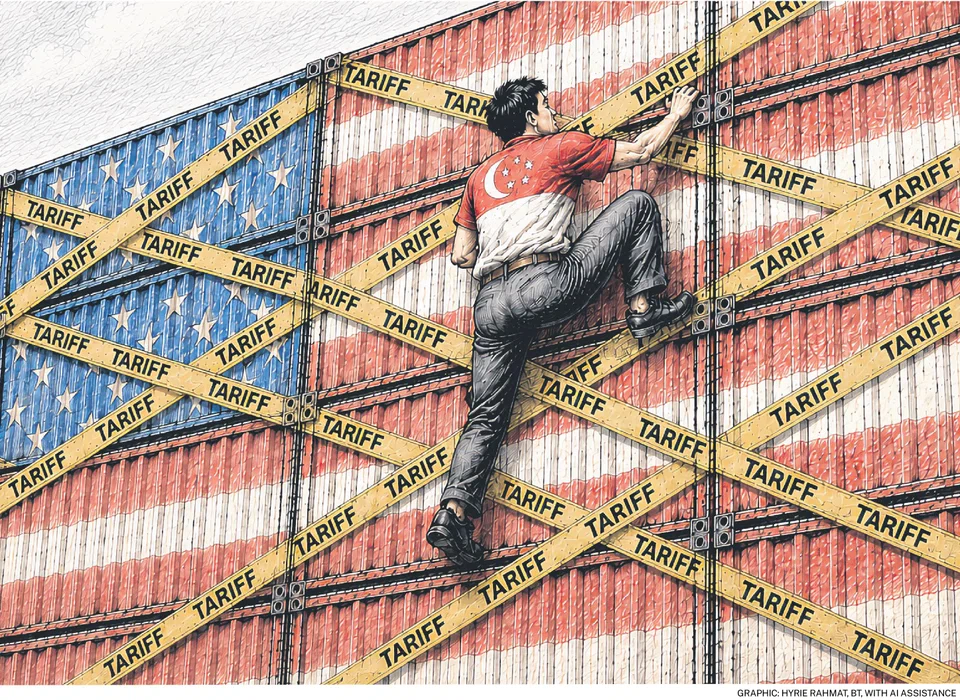
But when US President Donald Trump slapped tariffs on the country’s trading partners last April, America lost some of its shine.
Manufacturers with US-based operations faced supply chain disruptions as tariffs drove up the cost of imported inputs. And exporters to the US found that their goods stood to be far less cost-competitive there.
Singapore was not spared, with a 10 per cent baseline duty applied to its exports. Even for companies without manufacturing operations, the increasingly hostile political climate threatens to derail any US expansion plans.
Yet, some home-grown players are taking this in their stride. On a recent media trip to the US, The Business Times hears that tariff disruptions are a small price to pay for the scale and opportunities offered by the American market.
Outweighing the costs
The US has long been a trade partner of Singapore and was the Republic’s fourth largest in 2025, with S$139.2 billion in total trade.
It is also Singapore’s largest destination for non-oil domestic exports (NODX). Last year, the city-state exported S$27 billion in NODX to the US, based on Department of Statistics data.
Both countries are also major investors in each other. Singapore is the third-largest Asian investor in the US, with investment stock of US$71.1 billion in 2024.
Over 250 Singaporean companies now have a presence in the US, across more than 45 of the country’s 50 states – and the numbers are steadily rising despite geopolitical uncertainties, says Lim Seow Hui, director of the Americas division at Enterprise Singapore (EnterpriseSG).
“It is an important market that cannot be avoided or overlooked,” she notes, adding that not only is it “big and growing”, but the country is also a tech leader in areas such as biotechnology, semiconductors and other manufacturing capabilities.
While tariffs have dented earnings for Singapore companies that export to the US, they are not necessarily dissuading manufacturers.
“There is no way around it – it is just a simple cost increase,” says Ivan Gunawan, co-founder of Irvins. He is also general manager for North America at the salted egg yolk snack producer.
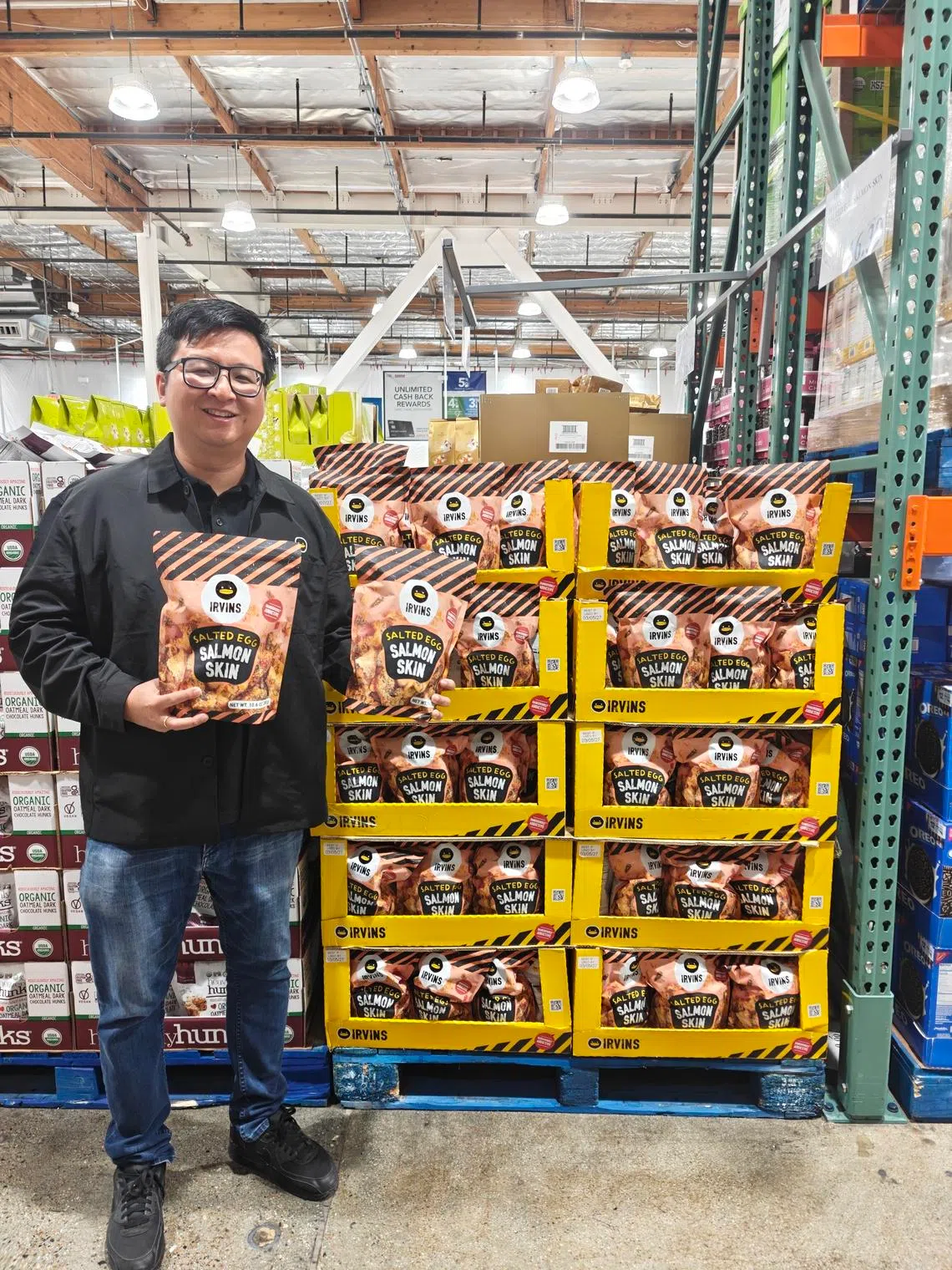
The brand manufactures its signature snacks in Singapore, and therefore incurs the 10 per cent duty implemented by Washington.
Gunawan describes the tariff as “unfortunate” and “one of the big things” that hit the company in 2025. It absorbs some of the burden, and passes the rest on to US customers through higher prices.
He insists, however, that tariffs are not a deal-breaker for Singaporean companies looking to enter the US.
Its large scale makes it compelling, he adds. Since Irvins made its US debut in 2020, the market now accounts for about a quarter of its revenue.
Gunawan is optimistic that this share will rise to a third in the long run, given a shift in US consumer preferences as “Asian flavours are getting cool”. To meet this rising demand, Irvins is adapting to their tastes.
This involves starting a sub-brand for the American market that focuses on healthier flavours, and potentially opening another manufacturing line in South-east Asia or within the US on an original equipment manufacturer basis.
“I think if the market opportunity is bigger than the cost, you should still look at it,” he says.
A matter of scale
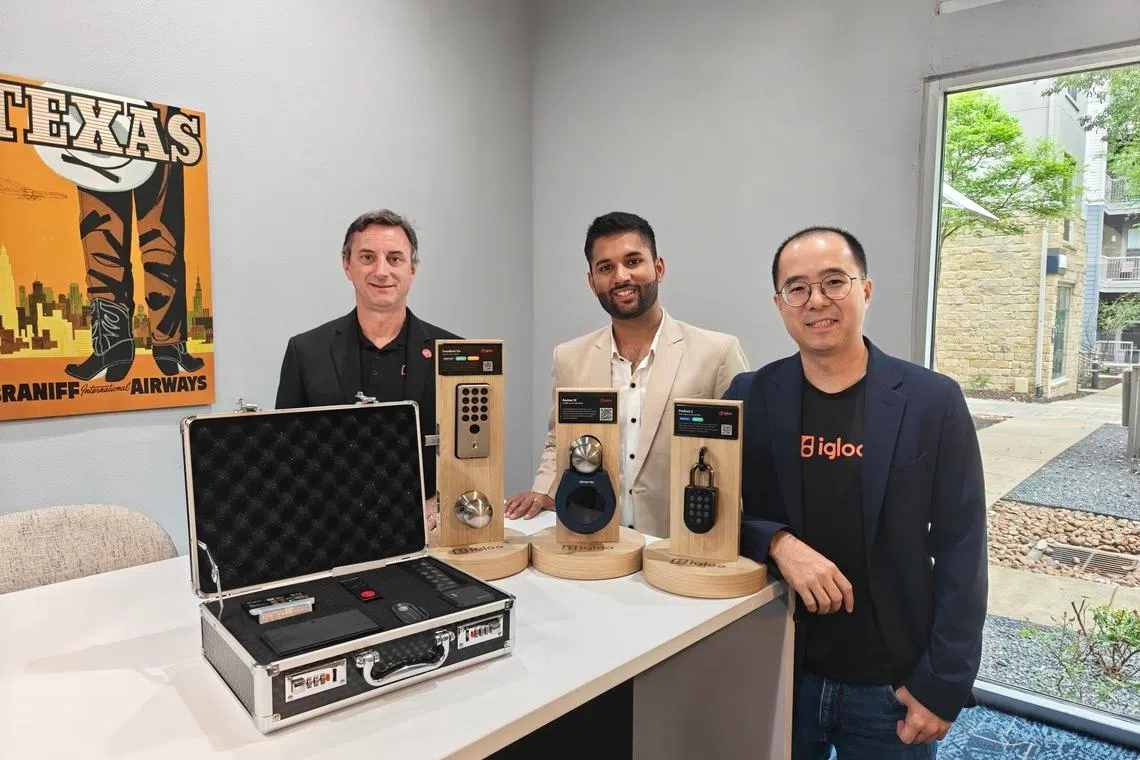
Similarly, digital lock maker Igloo is facing price pressures from Washington’s tariffs, but is staying for the long haul.
The Singapore company has a significant presence in the US through partnerships with Airbnb and other renting platforms.
Previously, the bulk of its products’ components was manufactured in China – the biggest target of the tariffs, with rates as high as 145 per cent at one point.
Igloo therefore adopted a “China-plus-a-few” strategy to diversify its exposure to tariff risks. It has moved some manufacturing into markets that face lower duties – such as Vietnam, Malaysia and Taiwan – and exports its products to the US from those places.
This reduces the tariff impact on the company, says Igloo chief executive officer and co-founder Anthony Chow.
Still, he acknowledges that product price hikes are inevitable. “We (will) just follow what other players are doing in the US, with some of the costs being passed on to the consumers.”
Unlike other digital locks, Igloo’s products do not require a Wi-Fi connection to operate. Instead, they rely on satellite positioning and cryptography technology for locking and unlocking.
This gives the company an edge in the US, as many rental units are in remote areas where Wi-Fi is unreliable or absent.
Plus, digital locks have a penetration rate of just 5 per cent in the rental market – creating a chance for Igloo to thrive, says Chow. He highlights the magnitude of the US rental market, where there are more than 50 million units.
High gross margins
Despite the tariffs, some Singapore-based tech manufacturers are still enjoying high gross margins.
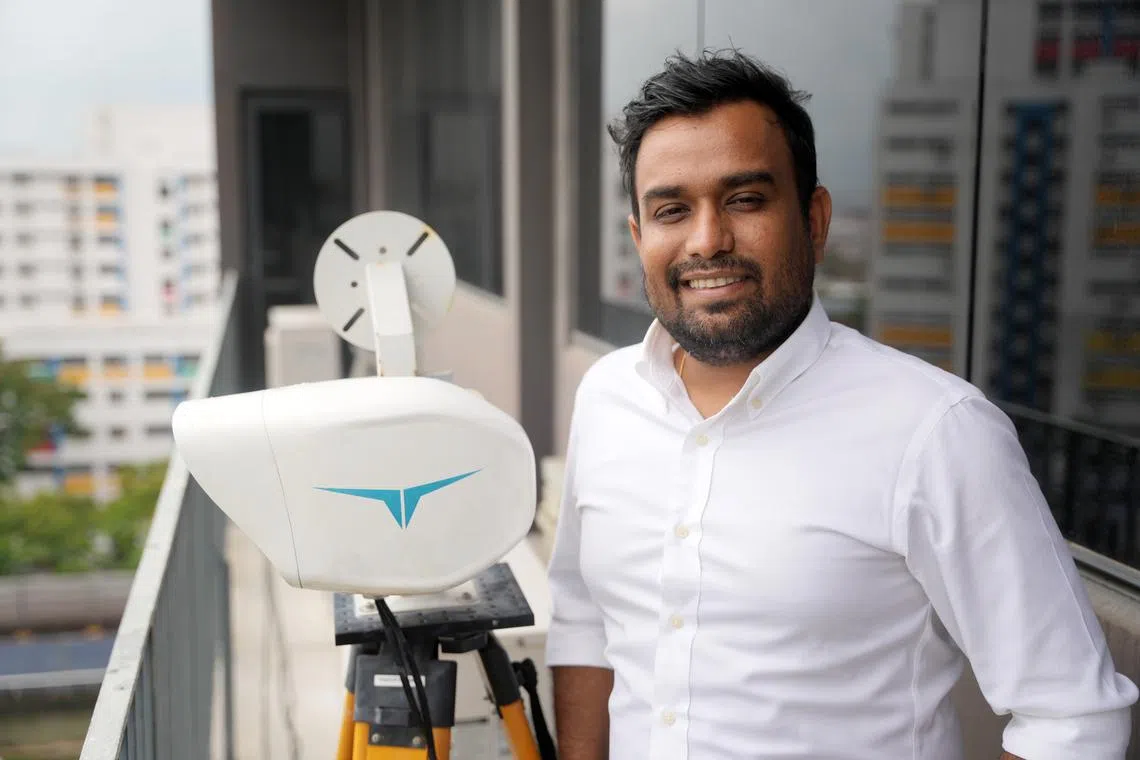
One of them is satellite communications company Transcelestial, which produces shoebox-sized devices that enhance signals by shooting lasers from one unit to another. This bypasses the need to lay expensive fibre optic cables underground.
After entering the US through smaller contracts, Transcelestial reached a turning point in 2024, when it clinched a contract from T-Mobile – a major network operator there – to provide telecommunication services for the Coachella music festival.
This paved the way for larger contracts with organisations such as Microsoft, the US Department of Defense and telco AT&T, boosting Transcelestial’s presence in the country.
Last November, in the first phase of its contract with T-Mobile, the company set up 42 cell towers in Kansas and Florida.
Although its communication boxes are manufactured in Singapore and exported to the US, CEO Rohit Jha is not worried about the tariffs.
“Ten per cent is nothing,” he says, noting that this is especially true for deep-tech companies, which could have gross margins of between 50 and 70 per cent.
Moreover, if a firm is market-leading, customers would be willing to absorb any price increase resulting from the tariffs, he adds.
Over the last year and a half, Transcelestial’s US revenue has risen to eclipse its earnings from its other markets combined. In the last four months, about 90 per cent of its production has been shipped to the US.
Apart from being home to large corporate clients with deep pockets, the nation has a mature venture capital scene – from which Aevice Health has benefited.
The Singapore-headquartered medical technology company, which uses AI to detect respiratory irregularities, in 2024 secured a US$7 million Seed Plus round led by Coronet Ventures to expand abroad.
Seeds Capital, the corporate investment arm of EnterpriseSG, was also involved in the fundraising.
Coronet Ventures is the Singapore-based venture unit of Cedars-Sinai Intellectual Property, part of a major American healthcare group. Aevice Health’s made-in-Singapore products are now being used in two hospitals in the US, one of which is under Cedars-Sinai.
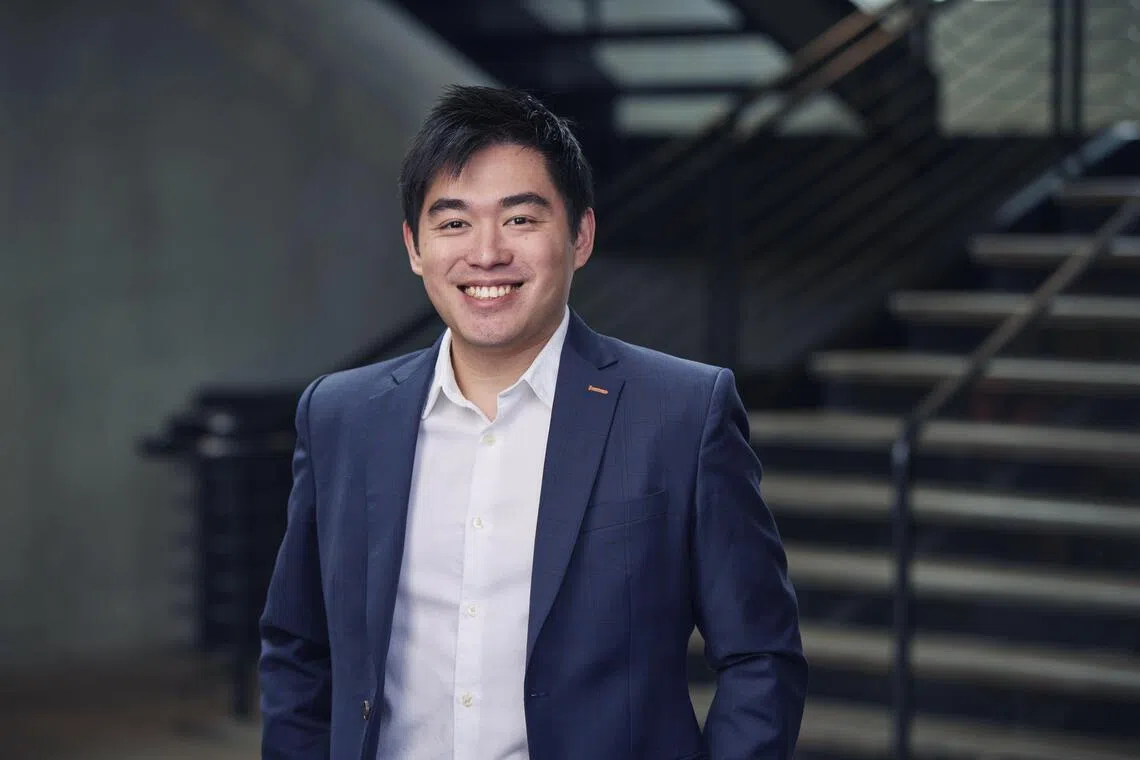
The tariffs did disrupt operations, admits Aevice Health CEO and co-founder Adrian Ang. The company had to calibrate its pricing strategies, passing costs to its buyers through a 10 per cent price increase.
But they have not dissuaded the firm from staying in the market. In fact, with American demand still rising, Ang is not ruling out starting a new manufacturing line in the US or elsewhere, “whichever is more cost efficient”.
Talent supersedes tariffs
For manufacturers operating in the US, the tariffs mean paying more for imported inputs. But finances are not the only considerations in siting facilities.
Semiconductor equipment maker AEM views the country as a source of niche talent that cannot be found elsewhere.
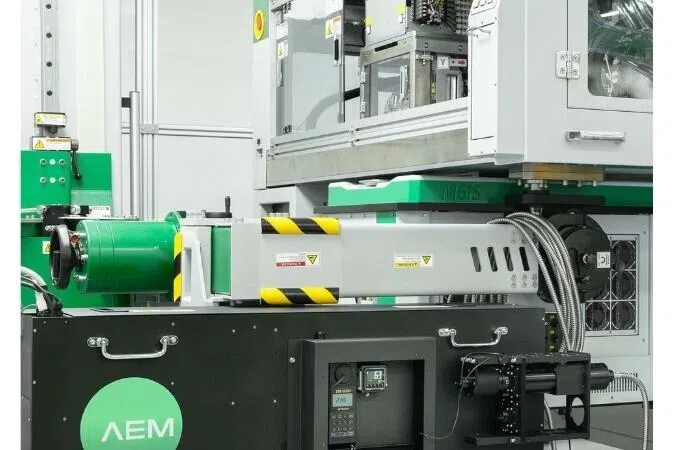
In 2025, the Singapore Exchange-listed manufacturer opened a new production facility in San Diego, California, to meet growing US demand for semiconductor testing equipment.
By setting up in San Diego – which has a long history of military R&D – AEM can tap the city’s highly specialised talent pool, says senior director of engineering and operations Cristina Schafer.
Of the just under 20 staff at the San Diego facility, about five were hired for their “skills and decades of experience” related to specific advanced engineering materials.
Used to make testing equipment, these materials – which cannot be named due to non-disclosure agreements – are imported mainly from Japan and Taiwan.
Their prices have climbed 50 per cent from the year before, Schafer notes. This is due to both the tariffs and the direct impact of the Iran war, which has pushed up raw material prices.
While other manufacturing businesses may be able to pass on costs to buyers, the semiconductor equipment industry is so competitive that clients expect prices to fall instead of rise, says Samir Mowla, chief of staff at AEM.
Nonetheless, the company still considers the US market crucial to its growth.
After setting up its first office there in 2013 to support key customers, AEM has opened three more in various states. The San Diego location acts as its American headquarters.
With booming demand for AI – and therefore also for the chips that enable AI models – the US market is a key base for capturing the corresponding surge in demand for semiconductor testing.
The Singapore shield
For Singapore firms still keen on the US, there remain advantages to manufacturing at home, tariffs notwithstanding.
EnterpriseSG’s Lim notes that the “Made in Singapore” label carries a premium, particularly for companies seeking to enter the American defence and tech markets.
This is because of the strong rule of law and intellectual property regulations associated with the city-state, she says.
Jha from Transcelestial argues that assembling a product in Singapore is “actually cheap” because the Republic’s free-trade agreements allow components to be imported at cost.
In contrast, if manufacturing were to be sited in the US, components would incur import levies.
Furthermore, Singapore’s space constraints force manufacturers to build modular, automated systems from the start – making it easier to later scale up, he adds.
With Singaporean companies remaining interested in the US in spite of the geopolitical situation, EnterpriseSG is also doing its part to facilitate such market entry, says Lim.
The statutory board helps firms navigate the complex regulatory landscape in the US, including by providing access to trade consultants and lawyers who are familiar with the rules there.
“Every single product has a different percentage of tariff… it is our job to go and understand it,” she says.
The need for such guidance may intensify as the circumstances remain fluid. Earlier this year, the US Supreme Court ruled Trump’s tariffs illegal, and his administration began paying out some refunds this month.
Still, observers expect the US leader to reinstate them through other means – adding yet another layer to an already complex situation.