

18 months into Ukraine war, world powers wade in
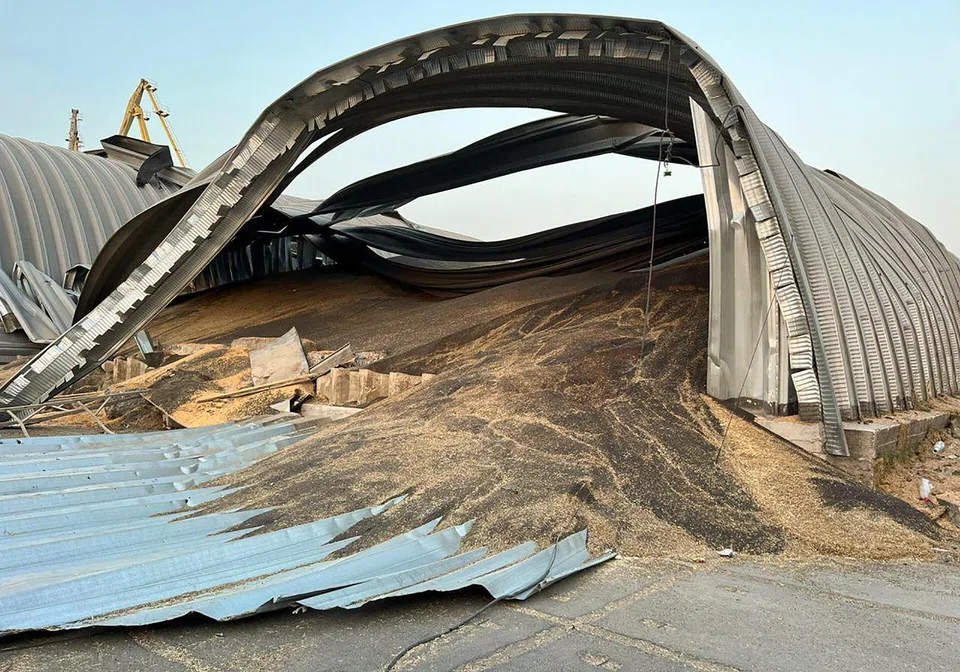
A YEAR and a half since Russia’s invasion, there are growing signs that the Ukraine war could continue into 2024. However, while peace seems far away, right now, much thinking is already going on across the world about the shape of an agreement to end hostilities – from Beijing to Brussels, and Washington, DC to Wellington – so that multibillion dollar reconstruction can move into full swing.
The rebuilding of Ukraine will resemble that of Western Europe after World War II, Eastern Europe after the Cold War, and the Western Balkans after the violent break-up of Yugoslavia. It will cost many hundreds of billions of dollars, and be the most ambitious post-war reconstruction effort in modern times.
The broad sweep of 20th-century history shows that wars that have ended in conclusive, lasting ways have generally been preceded by decisive military victories on the ground. A standout example here is the allied victory in World War II, which paved the way for reconstruction in nations such as Japan and Germany.
Conversely, conflicts that have ended through negotiations and diplomatic pressure, without clear-cut military outcomes, can quite often lead to long periods of “frozen conflict” and/or instability. This includes the Minsk Agreements, brokered with the help of Germany and France, after Russia’s incursions into Eastern Ukraine in 2014.
Such a messy outcome to this war could hinder, significantly, Ukraine’s reconstruction given that security and rebuilding are mutually reinforcing. Durable security arrangements give businesses and investors confidence to take risks and make long-term commitments.
Of course, there are limited exceptions to the binary pattern outlined above. For instance, there was lasting peace without a decisive military victory in the Finnish-Soviet war of 1939 to 1940. This began with a Soviet attack on Finland and ended with the Treaty of Moscow, which gave the Soviet Union the key territories it wanted, while Finland retained its independence.
Set in this context, the current Ukraine-Russia war appears unlikely any time soon to see an overwhelming conventional military victory for either side. To be sure, the Ukrainian counteroffensive has made some significant headway in recent months.
However, Ukrainian progress is uneven so far, not least because of heavy military mining by Russia. Ukraine’s defence minister Oleksii Reznikov said on Aug 13 that his nation’s soldiers have been unearthing five mines for every square metre in some places.
Despite the growing signs that the conflict may well extend into 2024, some key figures – including former US secretary of state Henry Kissinger – believe the war could end in 2023. The big reason for this, in Kissinger’s view, is the involvement of China in the Ukrainian peace process following the release of Beijing’s 12-point position paper published earlier this year.
In May, Kissinger said that “now that China has entered the negotiation, it will come to a head, I think, by the end of the year. We will be talking about negotiating processes and even actual negotiations”.
While Kissinger’s prediction remains a possibility, this would require vast preparation work in coming months. The recent Jeddah dialogue, a widely welcomed attempt by the Saudis to push this agenda forward, was not technically a peace negotiation at this stage since Russia was not formally involved.
It was, however, an important exercise to broaden diplomatic support for a peace process, including attendance of the United States and other North Atlantic Treaty Organization (Nato) allies. It is potentially significant that China attended too and participated constructively – alongside several states from the Global South which have previously insisted on neutrality such as India, Brazil, Indonesia, Egypt, Chile, Mexico and Zambia.
While key Western governments attended the Jeddah talks, there is a significant body of opinion in many of these countries that Ukraine should not rush into a potentially messy peace with Russia in 2023. This is reflected in an important recent report by the Chatham House think tank which features contributions from more than half a dozen key thinkers, including Simon Smith, former UK ambassador to Ukraine and director of Russia in the UK Foreign and Commonwealth Office, plus Professor Kataryna Wolczuk, who specialises in East European politics.
A starting point for this analysis is that the best outcome of the war would be a comprehensive, clear Ukrainian victory. By contrast, a protracted or frozen conflict benefits Russia, as does a ceasefire or negotiated settlement on Moscow’s terms.
On the latter point, the authors seek to demolish what they assert are inaccuracies widely peddled in debate. These include: the assertion that Ukraine must give up territory, including Crimea, in a peace deal; that Ukraine should (again) declare itself neutral, as it was between 1991 and 2014; the claim that a defeated Russia must not be pushed into a punishing Treaty of Versailles 2.0, given concern this might result in a more resentful, lawless nation; and that this is simply “not our war”, and the West and wider international community has no obligations beyond potentially humanitarian support.
The report’s argument that the best outcome is a full, clear victory for Kyiv is not just to preserve Ukraine as a sovereign state. It would also remove the threat to wider European and global security, including the viability of the rules-based international order in place since 1945. If Russia is perceived to win, a precedent is at stake that could encourage other states with extraterritorial designs.
The nature of the peace deal advocated in the report therefore includes the following. Firstly, the removal of Russian forces from the occupied territories; and the reintegration of those territories into Ukraine; recognising the principle of respect for the country’s sovereign independence and pre-2014 territorial borders. Secondly, better defence against wider, Russian military and non-military threats, including protection of economies and trade routes.
Ukraine will also need future security and political guarantees. So the plan’s chances of success, the report argues, will also be greater if Ukraine’s aspirations for Nato and European Union membership are delivered, as previous sceptics like Kissinger have now argued too.
The study makes clear that any permanent or interim solution that partially preserves the current battlefield status quo will allow Russian forces to regroup, leaving Ukraine less than fully sovereign. This may merely postpone later offensives since Russia would be in the same position, or better, compared to Feb 23, 2022, the day before its invasion.
Taken together, the deep details of any eventual Ukraine-Russia peace will therefore really matter, whatever the timing. A bold agreement that benefits Ukraine while safeguarding Euro-Atlantic and wider security may be key to any potentially lasting peace and reconstruction.
The writer is an associate at LSE IDEAS at the London School of Economics
TRENDING NOW
Olivia Lum, ex-CFO not giving evidence in their Hyflux trial
Bank on AI-resilient Singapore property via deep-value listed property groups
Positive pivot or premature? Analysts split on Keppel Reit’s S$610.9 million buy

Once staunchly pro-China, Malaysian Chinese businesses are now distancing themselves from Beijing

