

2024 is shaping up to be a better year to invest in S-Reits


SINGAPORE-LISTED real estate investment trusts (S-Reits) have had a rough time over the past two years, as investor sentiment took a beating from the large increase in global interest rates.
Since end-2021, the i-Edge S-Reit index has mostly been on a downward trajectory, delivering negative total returns of 8.3 per cent as at Dec 26, assuming dividends were reinvested in the index.
But in recent weeks, the index has rebounded from the multi-year lows registered in October, tracking a retreat in global benchmark interest rates.
A continued improvement in interest rate sentiment, coupled with low valuations in the sector, could make 2024 a much better year for Reit investors than the last two years have been.
Rate reprieve
Prices of S-Reits have tracked a volatile path in the past two years, mirroring fluctuations in benchmark lending rates as the US Federal Reserve aggressively hiked interest rates to combat sticky inflation.
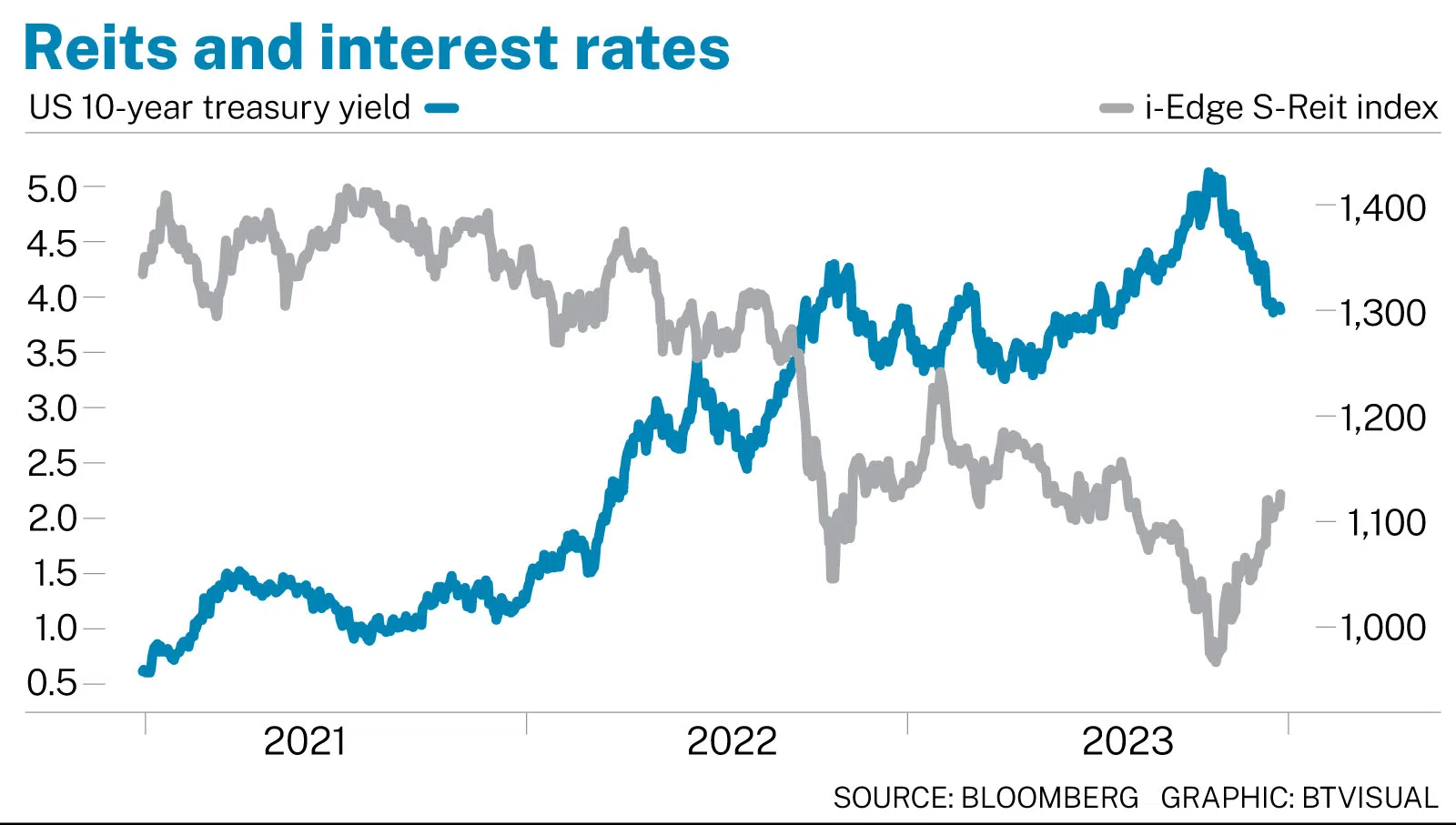
From near zero levels in end-2021, the federal funds rate target was hiked to between 5.25 and 5.50 per cent currently.
This has weighed on sectors that are sensitive to interest rate movements, including S-Reits.
Recent results by S-Reits have mostly shown declines in their distributions per unit (DPUs) due to the effects of higher financing costs.
Another concern has also been the negative impact interest rates have had on property valuations, with some Reits – especially those with overseas assets – reporting sharp declines.
In October this year, the i-Edge S-Reit index fell to its lowest levels since March 2020. This came as US 10-year treasury yields crossed 5 per cent for the first time since 2007, amid expectations that interest rates will stay elevated.
But a silver lining is starting to emerge.
Inflation in the US has started to show signs of improvement, and the Fed has also pivoted to a more dovish stance in its December meeting, signalling that it will cut rates next year.
Such expectations have already sparked a rally in Reits over the past month – tracking a decline in 10-year treasury yields.
The rally could sustain into next year, if interest rates go on a downward trend. This would benefit Reits with floating rate debt, or that require refinancing next year.
The room for Reits to rally would also come from the discounted valuations that the sector currently trades at.
Even after the recent rebound off the multi-year lows, the sector is still trading at a discount to its historic valuations.
Currently, the FTSE ST All-Share Reit index trades at a price-to-book ratio of around 0.9, below its 10-year historical average of just above 1.0, Bloomberg data showed.
This could be an attractive entry point for bargain hunters who believe that macro conditions are improving.
Investors may also draw confidence from the fact that most S-Reits’ operational performances have remained robust – despite the macroeconomic headwinds – with stable occupancies and positive rental reversions.
Staying focused
Investing in the Reit sector is looking more attractive than it has been in previous months, but investors should still recognise that there would be some bumps in the road to full recovery.
Interest rates may have peaked, but they remain high compared to historic levels. This would still be a drag on DPU in the coming quarters, especially for S-Reits that employ less hedging on their debt.
The impact of higher interest rates on property valuations has also not been fully reflected.
Earlier this month, CapitaLand Investment had warned of a “significant decrease” in total net profit for FY2023 due to fair value losses on its portfolio of investment properties.
With many S-Reits set to report their year-end valuations, it remains to be seen how much of an impact on asset prices has materialised, and whether it has any impact on gearing levels.
DBS Group research analysts have observed that such valuations are the “last data point holding back investors”.
They have projected that around 90 per cent of S-Reits are still likely to be within the 45 per cent gearing limit after the assumed cuts to book values.
Even as investors take a more optimistic view on S-Reits in 2024 amid the improving interest rate environment, it is important to also stay selective.
Finding counters that have maintained low gearing levels below 40 per cent and that employ active hedging to manage the high interest rate environment would be a prudent way to ride out the potential sector recovery.
TRENDING NOW

World’s largest offshore wind platform by Seatrium consortium on track to be completed by 2028

Is stamp collecting enjoying an analogue revival or are its best days over?

GovTech retrenches another 38 staff in second round of layoffs

MBS adjusted property Ebitda falls 20.6% in Q3 with fewer high-roller visits, weaker hold

