500 days into Ukraine war, what business should expect next
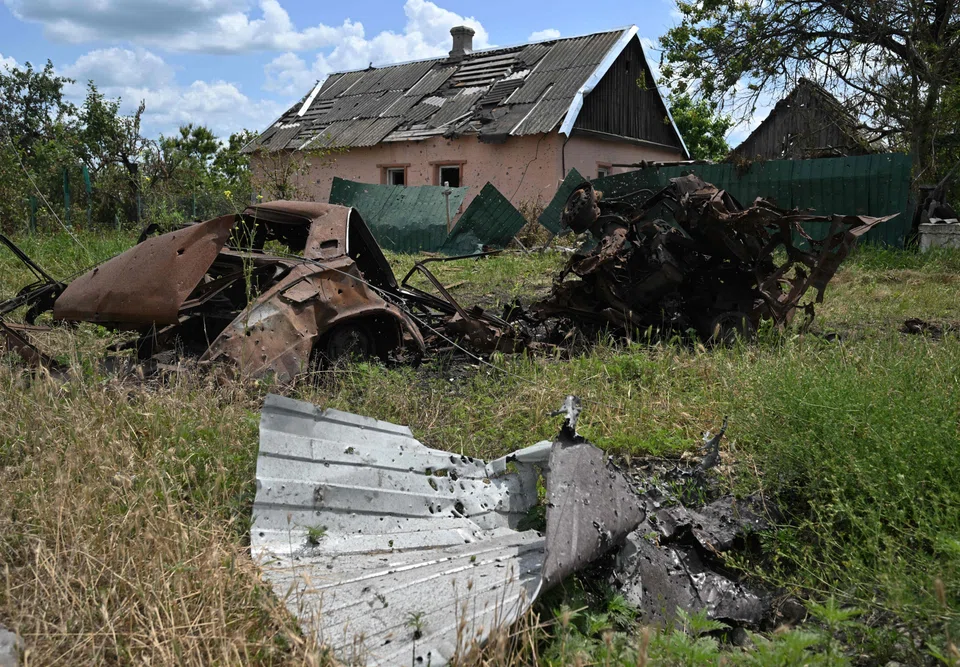
AS THE Ukraine conflict nears its 500th day of grinding “war of attrition”, a slim but significant window of opportunity for peace may be opening up.
This potential window in autumn and/or winter 2023/2024, while not the most likely scenario, has the highest chance of being realised if the war of attrition continues for months more with heavier casualties taken by each side. Although neither Moscow nor Kyiv is showing strong signs, right now, of wanting to negotiate seriously, this could therefore change.
On Ukraine’s side, for instance, if its much anticipated counteroffensive yields little fruit, pressure may grow significantly in the West to explore a peace deal. There would be a lot of opposition to this, of course, but diplomacy may help smooth this process.
For instance, key Western leaders could highlight to Ukraine that, during the Cold War, the US-led alliance did not recognise Soviet control of the three Baltic states. Ultimately, these countries emerged free and democratic after the end of the Cold War. There are potential parallels with those parts of Ukraine now occupied by pro-Moscow forces, and this could be strengthened too with generous Western construction assistance, and security guarantees, for Kyiv.
For Russia too, a peace deal might have growing political utility for Vladimir Putin ahead of the presidential election in spring 2024. The Russian leader could seek to argue, despite the manifest failures of Moscow’s military campaign, that his “mission has been accomplished” with the seizure of significant slices of Ukraine’s former territory.
Another factor that may also increase prospects for peace is the growing interest of China in the conflict. President Xi Jinping, who has already tabled a vague peace plan, has the most influence with Putin of any world leader, and his involvement could therefore be pivotal.
Yet, as much as prospects for peace have potentially increased, the most likely scenario remains the war continuing into 2024. This seems especially likely while both sides are still prepared to expend massive resources.
Some Western intelligence sources estimate that more than 200,000 Russian soldiers have already died on the battlefield, illustrating the terrible human carnage that Putin is prepared to unleash on his nation in pursuit of his geopolitical objectives. Meanwhile, the West has committed vast sums to Ukraine in aid and military support.
Historically, wars tend to end when one side imposes its will on the other on the battlefield, then at the negotiating table; or when both sides embrace a compromise they deem preferable to fighting. While one of these outcomes could emerge, for instance if the Ukrainian counteroffensive makes massive, spectacular gains, this seems a stretch at the time of writing amid fast-moving events in late June.
While a continued war of attrition may imply a degree of stability in the conflict, the level and range of risks actually remain exceptionally high, and this is why the outcome remains so unpredictable. In part, this is because of Russia’s reckless sabre-rattling around its potential use of nuclear weaponry, and also its plan to station such arsenal in Belarus.
This is compounded by the fact that Putin appears to have no clear “exit strategy”, and he may yet miscalculate, including the non-trivial possibility not just of nuclear weapons, but also chemical arsenal, not least if Ukraine were to chalk up significant further conventional battlefield wins.
Moreover, it is also important to highlight that the announced strategy of the US-led Western alliance is to try to inflict a “defeat” on Russia. In the history of Nato in the post-war era, this is a very important difference from before, and raises the stakes, if Western resolve is maintained.
On that latter issue, while there will probably be further intra-Western tensions over strategy towards Russia in coming months, the most likely scenario is that the alliance will remain intact over the summer and autumn. In part, this is because of US leadership which will corral the partners together, including the disparate EU27.
US President Joe Biden’s Democratic Party unexpectedly retained last November the Senate and minimised losses in the House of Representatives. This means that Biden has more political leeway than expected in 2023, although the outcome of the 2024 presidential ballot could yet be a “game changer” if a Republican sceptic of the war comes into office, especially the maverick Donald Trump.
Thirdly, away from the battlefield, one other dynamic probable to continue in the second half of 2023 is a continuing exodus of Western companies from Russia. Since Moscow’s invasion, over 1,000 major firms have now already cut (or reduced) business ties with Russia, by withdrawing (completely halting Russian engagements/exiting Russia); suspending (temporarily curtailing operations while keeping return options open); scaling back (reducing some business operations while continuing others); and/ or buying time (postponing planned investment while continuing substantive business).
As Western sanctions grow, with the EU for instance recently having formalised its 11th round of measures against Moscow, this economic decoupling will proceed apace. Today, it is estimated that only around 200 major Western firms continue to operate in Russia.
One reason there is likely to be a continuing outflow of Western businesses, especially in the energy and extractive sector, is the increasingly complex, difficult operating environment in Russia. Moscow is increasingly impatient, nationalistic and still reeling from what it considers to be illegal Western sanctions and expropriation of Russian assets overseas.
Pessimistic as this central scenario of a continued war of attrition into 2024 may seem, with the human cost – including for millions of refugees – largest of all, it is not the worst-case outcome. That would materialise if the conflict escalates beyond Ukraine to involve Nato countries, as remains a small but significant possibility.
While this still seems highly unlikely to many, it cannot be dismissed, given the volatility of the situation. While Nato is doing what it can to support Ukraine without getting itself entangled in a direct military confrontation with Russia, miscalculation by one or both sides is a real concern.
Such miscalculation could lead to a genuine catastrophe for many. Not only would the regime of sanctions and counter sanctions grow, there would also be wider economic collapse.
However, this worst-case outcome is still not the central scenario. That is instead that a war of attrition grinds away for months more with the slim but significant possibility that this might create the conditions for a fragile peace in autumn and/or winter amid a Russian and US election year.
The writer is an associate at LSE IDEAS at the London School of Economics