
Bob Iger just learnt a hard lesson

Jimmy Kimmel’s return to late-night TV taught Disney’s CEO and the rest of corporate America that playing yes-man to the Trump administration is bad for business
Summarise
    • Iger has morphed from outspoken CEO to capitulating yes-man – a transformation that encapsulates the narrative arc of most of corporate America.
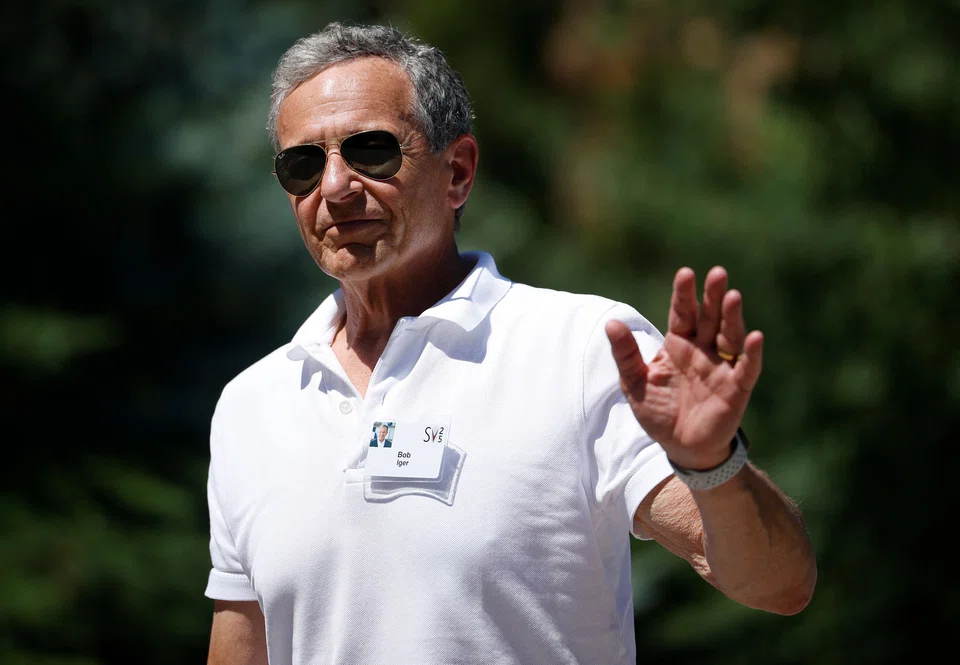
    • Iger has morphed from outspoken CEO to capitulating yes-man – a transformation that encapsulates the narrative arc of most of corporate America. PHOTO: AFP
    Published Thu, Sep 25, 2025 · 04:46 PM

    OTHER than Jimmy Kimmel himself, the only person who had as much to gain or lose on Tuesday (Sep 23) from the comedian’s return to late-night television was Bob Iger, the chief executive officer of Walt Disney.

    It had ultimately been Iger’s call to sideline Kimmel – a decision that would have seemed unthinkable three years ago when he returned to Disney for a second run at the top job.

    Since then, Iger has morphed from outspoken CEO to capitulating yes-man. It is a transformation that encapsulates the narrative arc of most of corporate America during that period. Rather than acting as a counterweight to the White House as they did during President Donald Trump’s first term, CEOs are lining up to kiss the ring and complain quietly in private.

    But now, Iger’s ultimate decision to reinstate Kimmel in the face of enormous political pressure is a sign that the narrative is shifting again – that companies are realising they need to find their red lines and push back against the administration.

    This should not be confused for Disney or Iger suddenly rediscovering moral high ground; instead, it is a realisation that submitting may come with a higher price than pushing back.

    During his first stint as CEO, Iger made taking a stand part of his personal brand. He was part of a group of business leaders who criticised Trump’s travel ban targeting Muslim-majority countries. He called for action from politicians after a Las Vegas mass shooting. He left the president’s advisory council as “a matter of principle” after the Trump administration pulled out of the Paris climate accords.

    Iger kept speaking out even after stepping down as CEO, planting the seeds for his return as the kind of leader the moment demanded. When his hand-picked successor, Bob Chapek, first stayed silent on Florida’s so-called “Don’t Say Gay” Bill, Iger tweeted his opposition to it and told CNN: “I just think you have to do what is right and not worry about the potential backlash to it.”

    And after returning to the job, he fought back against Florida Governor Ron DeSantis, who made Disney one of the first corporate targets of what he called the “anti-woke” era. Iger called DeSantis’ efforts to penalise the company “not just anti-business, but anti-Florida”. The company sued, positioning the lawsuit as a matter of free speech.

    Giving away the milk money

    Since Trump has taken office for the second time, Iger seems to have forgotten how to deal with a bully. Rather than standing his ground, he gave away the company’s milk money before Trump even demanded it.

    He cut back Disney’s diversity equity and inclusion (DEI) efforts and shifted its content, axing a transgender storyline from a show and scaling back the roll-out of what some critics said was a controversial Snow White remake.

    And, most fatally, Disney said in December that it would donate US$15 million to Trump’s presidential foundation or museum to settle a defamation suit against its ABC network. Yet, despite all the concessions, the Federal Communications Commission still sent a letter to Disney saying it was investigating the company and ABC for “promoting invidious forms of DEI”.

    So when the Kimmel backlash began, Iger already should have known appeasement does not work – that the goalposts would only keep shifting.

    What was different this time around was the public outcry over Disney’s capitulation: Demonstrators gathered outside the company’s headquarters; consumers cancelled their Disney+ accounts; 400 celebrities including Tom Hanks and Meryl Streep signed an open letter from the American Civil Liberties Union protesting the decision; Barack Obama posted his concerns on X; and former Disney CEO Michael Eisner posted on his account, asking: “Where has all the leadership gone?”

    The backlash has shifted Iger’s calculus: protecting the company now requires pushing back rather than staying quiet.

    Despite Kimmel’s return, the nightmare is far from over for Disney. Trump has threatened to sue ABC again, citing his previous victory against the network. Nexstar Media Group and Sinclair, large owners of ABC TV stations, are continuing to boycott the show.

    Iger, whose contract expires at the end of 2026, returned to Disney to save the company and salvage his legacy. How he navigates the company through a mess that is partly of his own making will go a long way in determining what that will be. BLOOMBERG



