

Is accessible data the hot button shipping needs to self-disrupt?
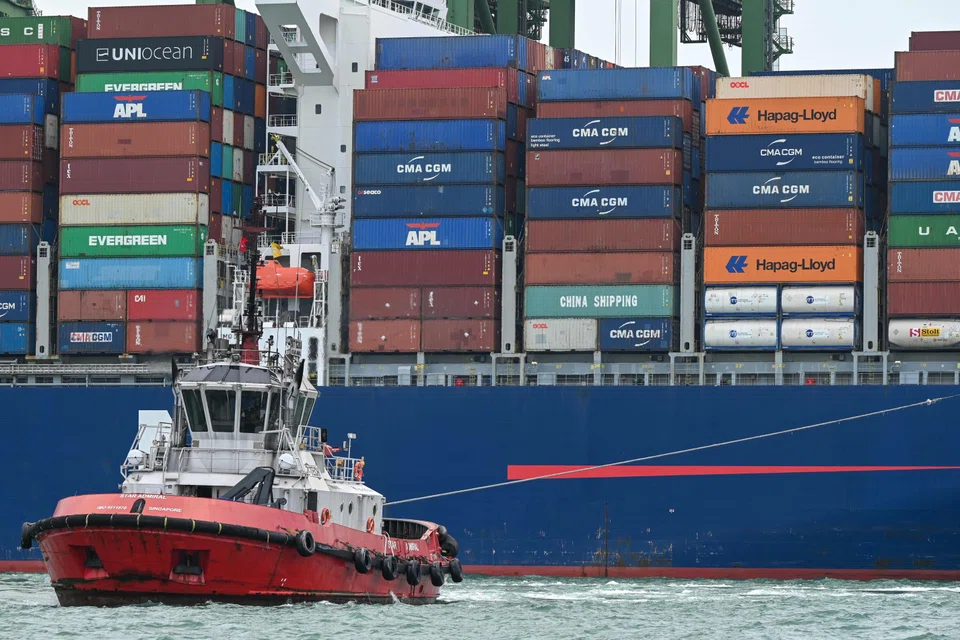
DATA is being “democratised” in the maritime sector, with greater transparency and sharing of key facts and figures. This is significant because it means that the industry is on the cusp of radical self-disruption, and Singapore is at the heart of the revolution. If the industry can get this right, it can leap forward in its journey to a greener, safer, fairer maritime community.
The sector has historically been a “dark” one. Data was siloed, and seldom shared; vessel owners would have their operational data, while ports and terminals would have theirs, and regulators and policymakers would have to make their decisions with little information at hand. This was partly a business culture that prized competitive advantage over collaboration, but it was also due to a lack of appropriate channels and methods of effective data-sharing.
However, there are signs this is changing, with Singapore at the forefront. In 2021, the government committed to S$80 million of funding to the Singapore Maritime Institute (SMI). The funding has been used to launch a series of collaborative research and development initiatives, including the Maritime AI R&D Programme, which aims to address the gaps and opportunities created by greater automation in the sector. If the sector can harness this collaborative approach effectively, the opportunities are enormous.
Greater data sharing can accelerate progress in decarbonisation, which is front-of-mind for many in the sector. For example, green marine fuels such as biofuels are a cornerstone of the maritime sector’s decarbonisation prospects, and various shipboard trials have shown promising results. However, isolated trials continue to leave gaps in understanding.
Recognising the need for greater collaboration and data sharing, Singapore’s Global Centre for Maritime Decarbonisation (GCMD) last year convened an 18-partner consortium to develop an assurance framework for the entire supply chain based on live trials. The shipowners in the pilot will trial various fuel blends and share performance data for analysis, while blockchain startup BunkerTrace will validate the authenticity of the fuel at various points in the supply chain. The resulting framework will be a leap forward for the industry’s adoption of biofuel and will provide a template for future green marine-fuel companies to use.
If we can continue to democratise data and collaborate as a sector, we can do even more. Look beyond the maritime sector and you will see that we are experiencing a moment of profound cultural shift with data. Take, for example, the meteoric impact of OpenAI’s ChatGPT. Within a matter of months, it has sparked a revolution in terms of how people access and share information – and this success is largely due to that fact that it is open. The company could have closely guarded their technology and allowed only paying customers to use it, but by choosing to make the product widely accessible, it unlocked a wave of experimentation and innovation. This symbolises a moment of real change, with tech-enabled data openness and transparency at the fore.
We need such a moment in maritime. In terms of decarbonisation, the sector is still lagging behind in its goals. In terms of safety, it has not made significant progress since the introduction of automated identification systems (AIS). Incremental improvements are good, but it needs to catalyse a more significant change with solutions that can lower the barriers to data, allowing access to the wealth of information that maritime players have at hand, and making it possible for companies, researchers and even students around the world to utilise accumulated industry knowledge to advance the sector. A solution like this would also be invaluable as a live platform open for industry players to add data on an ongoing basis.
The time is right for the maritime sector to disrupt itself. Recent years have seen a spate of partnership agreements designed to share expertise and resources to spur innovation and accelerate decarbonisation, with Singapore playing a central role. If we can keep up our momentum, the nation will be home to a new ecosystem of green maritime companies and economic activity.
The writer is chief technology officer of RightShip
TRENDING NOW

Simba admits exceeding spectrum limits amid failed M1 deal; full-year profits surge 277%
Temasek’s Wan Chee Foong to helm PIL, Lars Kastrup to be board adviser

He built the Vingroup empire. Now South-east Asia’s richest man is handing some key roles to his sons
One-third of Singapore-listed firms at risk in severe AI downturn: MAS

