Addressing Asia’s digital conundrum is key to fulfilling net-zero ambitions
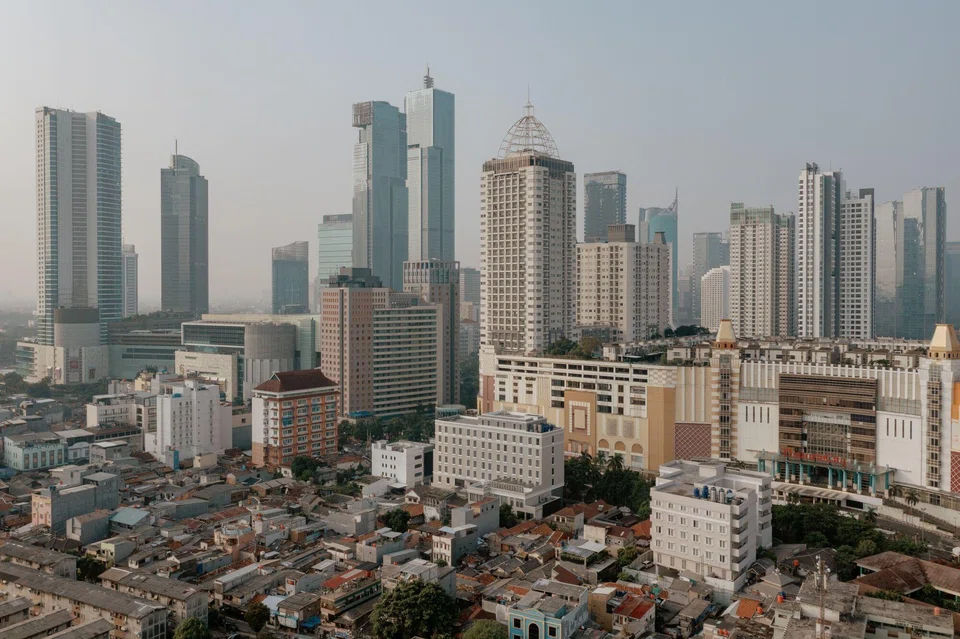
IN A matter of two decades, the Asia-Pacific has emerged as a global economic growth engine. Now, in the middle of a digital revolution, Asia faces newly emerging challenges that, if left unaddressed, may curtail its growth.
Specifically, digital technologies have injected new life, and potential, into critical sectors ranging from agriculture to manufacturing, and hold the key to supporting emerging economies to move up the value chain. Yet, as home to some of the world’s fastest-growing economies, there is also burgeoning demand for more, lower-cost energy that is only set to grow in tandem with digital ambitions.
Therein lies the conundrum: Asia is digitalising at breakneck speed, and while the region stands to gain from this rapid development, it also has more to lose than most from climate change. Paradoxically, opportunities realised by Asia’s transformation in recent years are simultaneously responsible for enormous amounts of carbon emissions that are exacerbating its climate-related risks.
Opportunities within Asia’s diverse landscape
The region’s ascent is no coincidence but rather, driven by government ambitions and resulting frameworks. This ardent regulatory push has accelerated both innovation and economic growth amid global headwinds.
Indonesia is a prime example of a country striving to tap into its digital capabilities, with the aim of unleashing a new level of economic growth. This has been especially clear to see in recent months, with the Indonesian government capitalising on the country’s unique ability to establish itself in the electric vehicle (EV) value chain – a development highlighted recently after talks with Tesla’s Elon Musk to promote EV manufacturing in Indonesia.
This is a clear testament to Indonesia’s will to translate its ample reserves of critical materials for electronic manufacturing into realised ambitions of becoming a global manufacturing hub. Ultimately, the impact of Indonesia’s national digital push is expected to generate US$150 billion by 2025.
However, Indonesia is not a standalone example. India is also shoring up its digital capabilities to tap into the opportunities 5G will give its industrial sector. This is alongside nationwide digital-inclusion schemes, such as Digital India, that aim to ensure unfettered digital access for all communities regardless of location.
Similarly, stalwarts of innovation such as Singapore are not sitting still. Even without the edge that comes with natural reserves, or untapped potential in connecting rural communities, Singapore is investing heavily in its people by building up a digital talent pipeline while simultaneously boosting innovation, research and development capabilities to establish its position as the region’s foremost advanced manufacturing hub.
The unavoidable cost
What this means for Asia is that economies of scale at every level in the region are investing heavily to grow their digital economy. While these developments are sure to benefit individual countries and the collective regional economy in the short term, they also contribute immensely to greenhouse gas (GHG) emissions. Continuing urbanisation, coupled with rising income levels that feed consumption-related emissions, will further exacerbate these challenges. In fact, the region has been identified as the sole contributor of an estimated 50 per cent of annual global GHG emissions.
Without addressing this and making substantive efforts towards climate action, the region could stand to not only see significant losses to its people and their livelihoods, but also its economies. That could amount to 26.5 per cent of its GDP by 2050, based on a 3.2 deg C increase in temperatures. This would mean more frequently destructive climate-related natural disasters that will especially impact developing economies in the region.
Furthermore, the impact of Asia’s climate response cannot be considered in a vacuum. After all, Asian climate action has a direct impact on the health of the whole planet – economies such as Indonesia, Malaysia, and Japan play a significant role in global supply chains that result in large interregional flows of embedded CO2 emissions.
As it stands, extreme climate change will disproportionally impact Asia, and South-east Asia in particular. Crucially then, it is now more urgent than ever to consider the challenges and opportunities that come with decarbonisation in the region.
In pursuit of sustainable innovation
Asia’s decarbonisation rate is below the global average, and faces challenges at both regional and corporate levels. Fast-growing economies that rely on low-cost energy face a unique transition to cleaner energy, despite government pledges. Meanwhile, half of Asian businesses see addressing environmental issues as material to business results in the next five years, but lack strategy and funding to achieve goals.
More pertinently, many lack the capabilities needed. For instance, data is critical to benchmark climate action and set targets. Yet, 59 per cent of South-east Asian businesses have unsatisfactory means of measuring their environmental impact, and 20 per cent rely solely on assumptions and estimates to assess the environmental impact of their supply chains. Particularly for carbon-intensive sectors like manufacturing, transport, and real estate, the lack of a holistic view of their total organisational carbon output is severely hampering the region’s net-zero pursuit.
Couple this with the fact that 90 per cent of businesses in the region are small and medium-sized enterprises, often still in the early stages of digital technology adoption. Digitalisation, however, remains key to providing organisations with an integrated perspective of their carbon footprint.
For example, Scope 3 emissions contribute primarily to businesses’ overall share of climate impact – up to 70 per cent of carbon emissions are generated by external third-party vendors. Reducing Scope 3 emissions also holds the key to unlocking new efficiencies and eliminating resource and energy wastage. To drive a sizeable impact in reducing the region’s collective carbon footprint, addressing the challenges businesses face will be critical.
Paving the way for climate action
Thankfully, the path forward is not necessarily marred by doom and gloom. Asia has an enormous stake to lose in a climate emergency, but it also stands to gain the most with climate action. A recent report by the World Economic Forum, in collaboration with SAP and the Boston Consulting Group, found there is a global revenue opportunity of US$10.1 trillion by 2030 from activities such as the expansion of renewable power, energy efficiency in buildings, and greater circularity in producing industries. Of that total, 43 per cent – totalling up to US$4.3 trillion – is available for Asian businesses.
To realise these opportunities, businesses must recognise that sustainability and digitalisation go hand in hand. A strong digital core is the foundation for increased energy efficiency and other climate actions; it enables not just data visibility across the value chain to reduce overall carbon output, but also provisions new digital capabilities that enable the automation of repetitive tasks and therefore more efficient and less resource-intensive processes.
This, in effect, will increase businesses’ ability to realise new, and even more, high-value producing opportunities – with proven results across the transportation, real estate, and manufacturing industries.
Businesses cannot ignore the impact of their operations on the environment. Specifically, businesses of all sizes have a vital role to play in Asia’s push towards net-zero carbon emissions, which makes achieving this goal complex. It is then only through a concerted effort, involving all parts of the business ecosystem – governments and businesses alike – that a well-managed and just transition to a greener Asia-Pacific region can be achieved.
The writer is president of SAP Asia Pacific Japan