

Adopting Japan or South Korea’s stock market reforms in Singapore not that straightforward
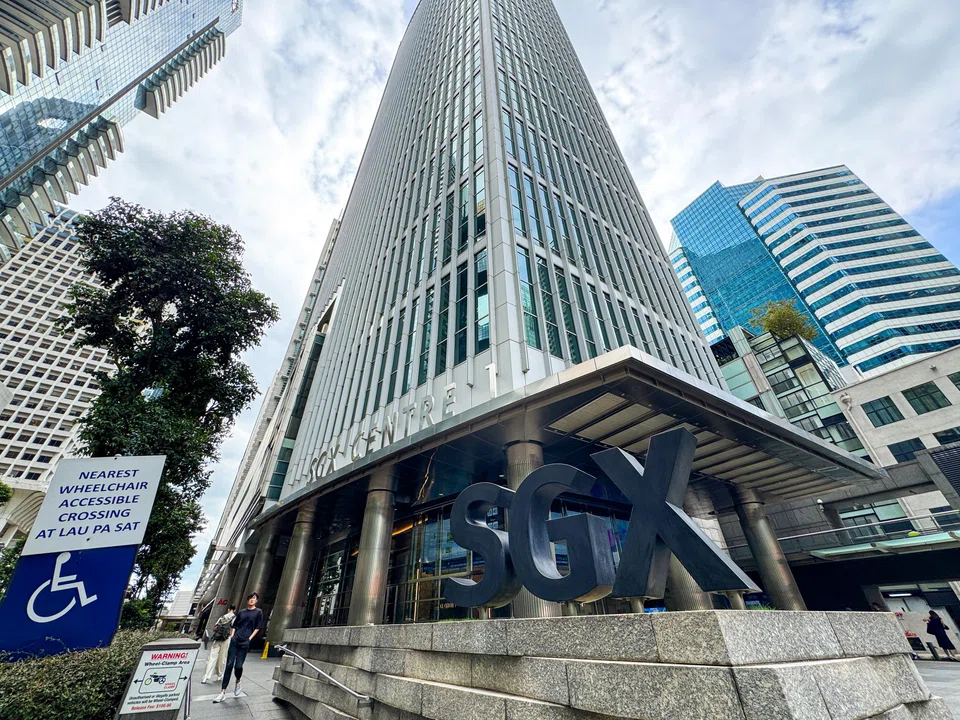
[SINGAPORE] Several commentators (myself included) have urged local market regulators to follow the examples of Japan and South Korea, where measures were introduced recently to raise the quality of listed companies.
In theory, the more listed firms of quality, the better off investors and the market as a whole. More importantly, the Japanese and South Korean requirements shift responsibility for addressing share price undervaluation to companies themselves – something that is currently lacking in Singapore’s listing rules.
In practice though, Japan, at least, has seen a mass exodus, because rather than stay and adapt to a more onerous regulatory regime, many companies have opted to delist.
Over in South Korea, the jury is still out because the rules took effect only in January. But according to a Korea Economic Daily report in January, under the new requirements to remain listed, which include higher revenue and market capitalisation thresholds, some 200 companies will be delisted in 2029 versus an average of 25 per year between 2019 to 2024.
The question that local regulators have to ask is: If similar rules were introduced here, what might happen to the local market if the response is similar to that in Japan and possibly, South Korea?
Can the Singapore Exchange afford to lose what could potentially be a sizeable number of firms if many also decide against remaining listed?
In January, The Japan Times reported that 94 companies were delisted from the Tokyo Stock Exchange (TSE) in 2024 – the highest number since it merged with the Osaka Securities Exchange in 2013. This compares with 61 delistings in 2023, and 77 in 2022.
“Analysts say that the latest figure reflects recent trends in the market. Listed companies have been under pressure to improve governance and capital efficiency, while some have chosen to go private to seek more flexibility in their business strategies,” reported The Japan Times.
In March 2024, the TSE told all companies listed on the Prime and Standard boards to increase corporate value in the medium to long term, and to announce concrete plans on how this is to be achieved.
In particular, the TSE pushed companies with price-to-book ratios of under 1.0 to take steps to bridge the valuation gap between market price and net asset value.
From April this year, all Prime market-listed companies are also required to release quarterly financial statements and other key information in both English and Japanese.
The requirement for companies to address the difference between asset values and share prices is said to be the most compelling measure that local regulators should consider, since companies should not expect the market to always correctly price their shares if they themselves have not played their part in addressing undervaluation.
Furthermore, there is the “survival of the fittest” argument to justify raising the governance bar – firms unable or unwilling to adapt should logically exit the public sphere, leaving only those who can survive under stricter rules.
It could be that Japanese and South Korean regulators anticipated the likely response, and are prepared to accept losing many firms in exchange for better quality. It could also be that their markets are large enough to have sufficient critical mass to withstand such losses.
Whether or not the same can be said of the much smaller Singapore market is open to debate. What is clear though, is that those studying ways to rejuvenate the Singapore market should ponder all possible eventualities before introducing similar measures here, because it is not as straightforward as might initially have been thought.
TRENDING NOW

Once staunchly pro-China, Malaysian Chinese businesses are now distancing themselves from Beijing
AI can become superior to humans in certain aspects: TikTok’s Chew Shou Zi

DBS, OCBC, UOB face rate hike reality check

‘The market has spoken’: DBS CEO Tan Su Shan says market is repricing AI financing risks

