

Advancing Singapore’s hydrogen journey: Opportunities and Challenges
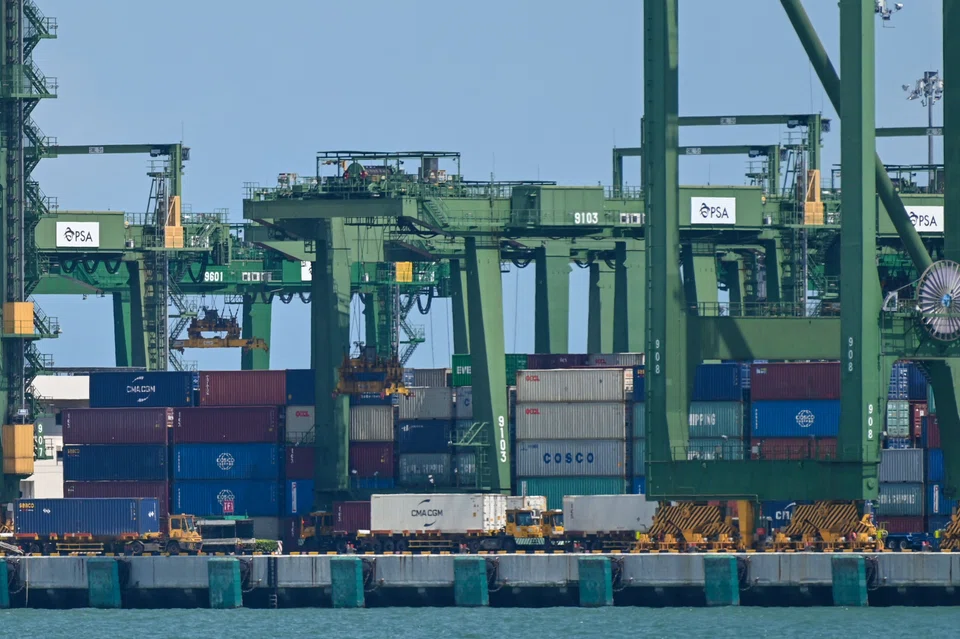
SINGAPORE is doubling down on its efforts to decarbonise in line with its commitment to reach net-zero emissions by 2050. Significant transformation of Singapore’s energy sector will be critical to achieving the goals while tapping on “four energy switches” – natural gas, solar, regional power grids and low-carbon alternatives.
It is therefore not surprising that the country is looking at developing hydrogen, as a low-carbon option and as a major decarbonisation pathway. Outlining Singapore’s national hydrogen strategy at the Singapore International Energy Week last October, Deputy Prime Minister Lawrence Wong said low-carbon hydrogen is an “increasingly promising solution” that could supply up to half of the country’s power needs by 2050, alongside domestic renewable energy sources and electricity imports.
Still, there are challenges to be tackled and a greater need to leverage technology in order to unlock the full potential of the power source and advance Singapore’s hydrogen journey.
The challenge of deploying low-carbon hydrogen
In the short and medium term, Singapore expects to have to import most of its low-carbon hydrogen. This means the cost of deployment will likely be higher than countries that have the ability to produce low-carbon hydrogen.
The green hydrogen industry is still in its infancy and determining how to achieve cost-effective production has not been an easy feat globally. The cost of green hydrogen is determined by the amount of energy required, the cost of energy supplied, the cost of the infrastructure to produce it, and the operating expenditure required to operate the system.
Today, less than 0.1 per cent of hydrogen today is produced through water electrolysis – a sustainable method of producing hydrogen. About 99 per cent of hydrogen today is produced using fossil fuels in an emissions-heavy process.
In addition, the process of producing low-carbon hydrogen is highly power-intensive and has until recently been limited to small-scale production levels.
There also remains the need to ensure the production of low-carbon hydrogen is safe – owing to the gas being highly flammable and combustible – to safeguard against accidents. This is why hydrogen safety research is critical and will play a more significant role globally.
There will also need to be developments in sustainability certifications in the green hydrogen space to ensure that the product is truly sustainable. Finding the forward path towards efficient green hydrogen production and deployment would therefore require new technologies and new thinking.
Using technology to transform low-carbon hydrogen aspirations to reality
To a large extent, the challenges in the scaled production of green hydrogen can be addressed by using new digital technologies available today.
For example, the use of digital twin systems can help in the safe scaling of green hydrogen manufacturing plants.
A digital twin is a virtual model of a physical object or system that can be programmed to test different scenarios and understand how the object or system will behave under different conditions.
In this regard, the use of digital twin systems can be employed to provide an end-to-end analysis of a yet-to-be-constructed green hydrogen facility, allowing engineers to test experimental designs, run through system processes, rectify any safety hazards, and prime the systems for efficiency and sustainability before implementing them as a physical construct.
Further, it is also pivotal to ensure that consumers will have steady and reliable access to energy. Here, off-grid microgrid solutions, such as those that are already deployed in Pulau Ubin, will be of great utility.
Microgrids are typically made up of a combination of various energy sources – such as solar, battery energy storage systems and backup generators – and can be used to generate and redistribute energy within a specified area. This ensures that in times when access to energy generated from low-carbon hydrogen is disrupted, consumers can still continue with their lifestyles without hindrance.
Opportunities abound in the green hydrogen economy
If successful in scaling up the use of green hydrogen, Singapore’s manufacturing sector – the single largest sector contributor to carbon emissions – can pivot to using low-carbon hydrogen and decarbonise, thus advancing the country’s net-zero goals. Low-carbon hydrogen can also be used in the maritime and aviation sectors effectively, enabling Singapore to do its part in catalysing towards greener shipping and aviation.
For businesses and workers, new opportunities along the hydrogen supply chain will be created. This will require both upskilling and reskilling of Singapore’s talent market, especially in the sectors that will be most affected by the implementation of green hydrogen: aviation, manufacturing, logistics, energy, and the like.
As it stands, the government has been exploring collaboration with industry partners to both spur interest in this emerging field, and to ensure that Singaporeans will be best prepared to capitalise on the green hydrogen economy when it eventually takes off.
The journey towards advancing low-carbon hydrogen is an exciting one. For now, there remains a lot more that needs to be done to ensure that low-carbon hydrogen can be effectively deployed at scale and play a greater role in Singapore’s energy landscape.
Yoon Young Kim is cluster president, Singapore, Malaysia and Brunei, of Schneider Electric.
TRENDING NOW
From legacy to launch: Francis Yeoh and Yeoh Pei Xien on family unity and YTL’s next‑gen ventures

Things to know about DBS’ incoming chairman Anthony Lim

Wealthy Indonesians snap up government bonds as yields near 8%: OCBC
From local AI partnerships to global opportunities: How MNCs help Singapore firms scale

