

After 20 years, it could be time for Singapore to relook personal income tax-free threshold

Sharon See
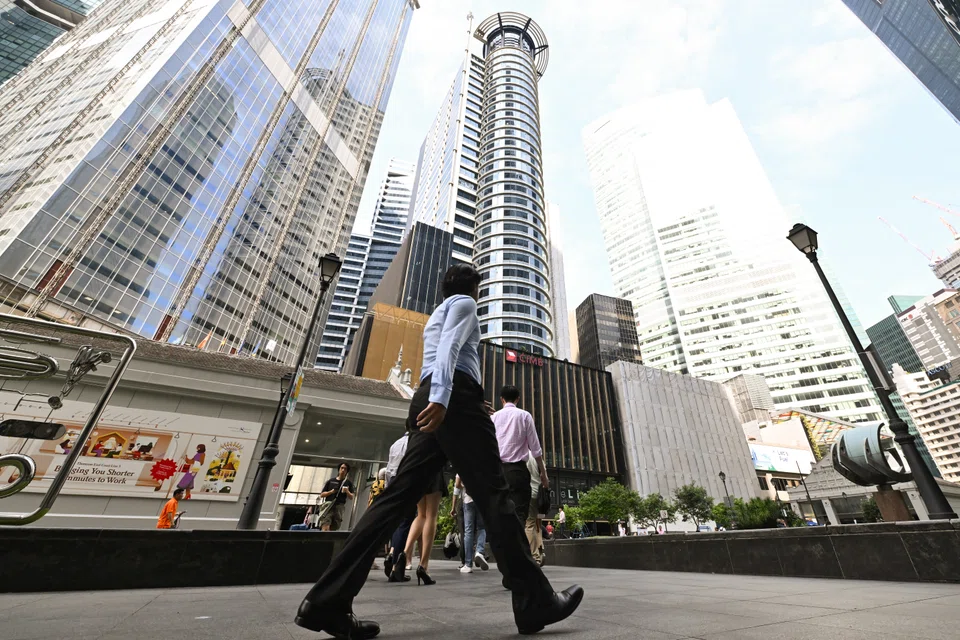
FOR the last 20 years, Singapore tax residents have not needed to pay tax on the first S$20,000 of chargeable annual income.
With wages having risen considerably over that same period, not least due to inflation, perhaps this threshold should be raised too – so that a higher income level is tax-free.
Doing so would ensure that the tax burden remains appropriate for low-income earners, tax experts told The Business Times.
“With a significant surge in living costs in Singapore over the past few years, it looks appropriate for the tax-free threshold to be revised accordingly,” said Panneer Selvam, EY Asean people advisory services tax leader.
“This adjustment could help to partially ease the burden of elevated living expenses, particularly for individuals within the lower and middle-income tiers.”
Simon Poh, a tax specialist from the National University of Singapore Business School, believes it may be timely to raise the threshold to S$30,000 or even S$40,000 to “reduce the tax burden of the lower-income group and help them cope with the cost-of-living issues”.
This, he added, would help “preserve the progressivity” of Singapore’s personal income taxes.
Singapore’s tax reforms
The Republic’s personal income tax regime has seen many reforms in the last three decades: first in the direction of an overall lighter tax burden, then towards increasing the burden at the top.
When the goods and services tax (GST) was introduced in 1994, personal income taxes were cut.
In the early 2000s, the government began to cut personal income tax rates further – to keep the city-state globally competitive. This was at the recommendation of an economic review committee chaired by Prime Minister Lee Hsien Loong, who was deputy prime minister at the time.
This series of tax cuts lasted into 2012. Since then, personal income taxes for low and middle-income groups have stayed largely the same. Taxes at the top were raised marginally in 2017, however, and again for Year of Assessment (YA) 2024.
As for the tax-free threshold, its origins lie in 2001. After GST was introduced, the government disbursed related income tax rebates for some years to soften its impact.
To streamline the individual tax structure, then finance minister Richard Hu decided to reduce the rebate over time, and instead incorporate its benefits into the individual tax structure. For a start, the first S$7,500 of an individual’s chargeable income would not be taxed.
The following year, Lee – who was the finance minister then – raised the threshold to S$20,000 for YA 2003. The figure has not changed since.
Growing tax burden?
In 2003, the median gross monthly income for full-time employees, including Central Provident Fund (CPF) contributions, was S$2,410. Income at the 20th percentile – generally used to define lower-income workers – was S$1,334.
This translated to an annual income of about S$28,920 at the median, and S$16,008 for the lower-income group.
Assessable income does not include CPF contributions. Taking this into account, but setting aside considerations of tax deductions and relief, a back-of-the-envelope calculation suggests that a worker earning median wage in 2003 would have assessable income of just S$474.
This would attract a 4 per cent rate, for a total of just S$18.96 in personal income tax. Lower-income workers would pay no personal tax.
Two decades later, the median monthly salary in 2023 was S$5,197, implying an annual salary of S$62,364.
Those at the 20th percentile earned S$2,826 per month, or S$33,912 per year. After accounting for CPF, but not reliefs and deductions, assessable income would be about S$23,188 – crossing the tax-free threshold.
They would have to pay a tax rate of 2 per cent on the S$3,188 in excess of the threshold, or a total of S$63.76.
Raising the tax-free threshold would reduce the tax burden on this group and increase their take-home pay, said EY’s Panneer. “Given that the last change to the tax-free threshold was in YA 2003, it is likely that the government could consider a review of the threshold in the near future.”
A review of the tax brackets could strike a balance between revenue generation and equitable tax distribution, said Sabrina Sia, global employer services leader at Deloitte Singapore and South-east Asia.
Revenue and support
One question, however, is whether the government can afford to lighten the tax burden directly, in the face of growing revenue needs. Another is whether raising the tax threshold is the best way to benefit those at the bottom.
Murray Sarelius, partner and head of personal tax and global mobility services at KPMG in Singapore, said that whether tax rates should be tweaked comes down to government revenue requirements, and the policy initiatives that need funding.
“Tax rate cuts in themselves tend to be fairly blunt policy instruments for the government, when seeking to impact specific groups of the citizenry,” he said, adding that they should be considered in conjunction with policy intent.
Barbara Kinle, also a partner for personal tax and global mobility services at KPMG in Singapore, noted that raising the tax-free threshold would mean less revenue for public spending.
“While doing so will have a greater proportionate impact on low-income earners, the change could also result in tax being ceded for all medium and high-income earners,” she said.
If the aim is to support specific groups, grants or benefits may be better than cutting taxes, she said, noting that the government has recently provided such support for cost of living, housing, retirement benefits and medical services.
Social transfers to vulnerable segments of society have indeed been rising, said EY’s Panneer. “There have been intentional efforts to alleviate the burden of cost of living and GST increases through initiatives like the Household Support Package, Cost-of-Living Package and Assurance Package, which specifically targeted the lower and middle-income earners and households.”
The government often points out, too, that lower and middle-income Singaporeans receive far more in transfers than they pay in taxes.
As for the longstanding S$20,000 threshold, the government has not explicitly said whether it would raise it, even as the question has been posed by Members of Parliament (MPs) over the years – most recently, Workers’ Party MP Louis Chua in November 2022.
In response, Deputy Prime Minister Lawrence Wong said then: “This S$20,000 threshold, together with our progressive tax rates, tax reliefs and tax rebate, result in half the workers in Singapore not needing to pay any personal income tax currently.”
But it is worth noting that not everyone gets to claim tax reliefs, as this depends on factors such as having young children. This means it is not necessarily the case that all workers earning below the median salary are those who do not have to pay tax.
For those who do pay, Wong said 80 per cent have an effective tax rate of less than 4 per cent; the top 10 per cent of income taxpayers pay the “vast majority” of personal income tax collections.
Wong did not outright reject the idea of a higher threshold. But these reassurances suggest the government’s sense that Singapore’s personal income tax regime is sufficiently forgiving to lower-income workers – even as it periodically reviews the system of taxes and transfers to keep it “competitive, fiscally resilient and progressive”.
TRENDING NOW

He built the Vingroup empire. Now South-east Asia’s richest man is handing some key roles to his sons
Can CDL become a powerhouse in fund management?

Canada is upping oil flows to Asia, but South-east Asia’s refineries aren’t ready to handle them yet
Data centre energy demand from Asean telcos not a ‘big risk’, says industry group

