

In the AI age, Singapore needs better learning, not just more courses
To build real capability, Singapore must redesign learning around how the brain does it best
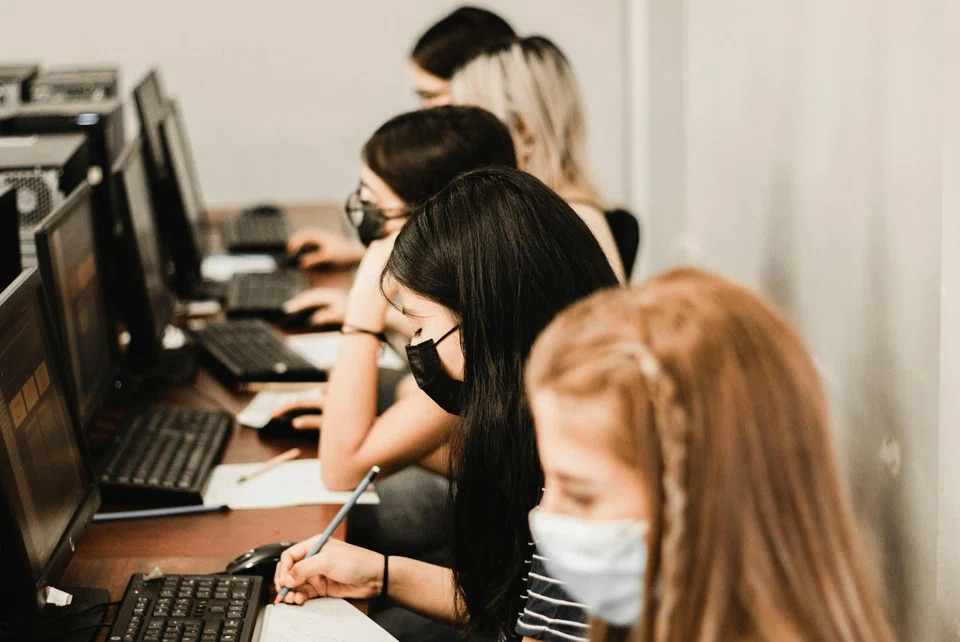
A PROFESSIONAL attends an artificial intelligence course on Saturday, completes the module, receives a certificate and returns to work on Monday. On paper, that looks like progress.
But when he has to use AI to analyse a report, question an output, make a judgment call or decide whether the tool has missed something important, is he actually better prepared?
That is the question Singapore now needs to confront.
For years, Singapore has rightly invested in lifelong learning through SkillsFuture and a broader national push towards continuous upskilling.
At the same time, the country is moving hard on AI adoption, including a new National AI Impact Programme that aims to support 10,000 enterprises and help 100,000 workers become more AI fluent.
The direction is correct. The urgency is real.
But in the age of AI, the challenge is no longer simply getting more people into courses. It is ensuring that learning is effective.
Too often, we still treat lifelong learning as a numbers game: enrolments, attendance, completion rates, certificates earned. These are easy to count.
But they do not necessarily tell us whether people have learnt in ways that change how they think, work and adapt.



Tapping into how the brain learns
A person may sit through a class, pass an assessment and receive a certificate, yet retain little, apply little and transfer little to real-life situations.
That is why brain-based learning matters more than ever.
Brain-based learning begins with a simple idea: People learn best when teaching and training are aligned with how the brain actually works.
The brain is not a storage device waiting to be filled with information. It is an active, adaptive organ that learns through relevance, emotion, attention, meaning, practice, feedback and reflection.
This is especially important in the age of AI because information is now cheap.
AI can generate content, summarise documents, answer questions and automate routine tasks within seconds. The real premium now shifts elsewhere: to judgment, discernment, contextual understanding, creativity, ethical reasoning, collaboration and wisdom.
These are deeply human capabilities. They are not built through passive exposure to information. They grow through deeper learning.
Implications for Skillsfuture, workplace learning and professional development
If lifelong learning is to remain meaningful in the AI era, it must focus on building capability.
The real question after any training is whether the learner emerges more able to think critically, apply knowledge, solve unfamiliar problems and adapt with confidence.
Educators and trainers should consider this.
Many adult learning programmes are still too content-heavy, lecture-driven and assessment-focused. Learners are overloaded with information, but given too little room to discuss, question, apply, revisit and internalise what they have learnt.
The brain learns poorly through passive listening alone. It learns more deeply when learners are engaged, emotionally safe, socially connected and given repeated opportunities to practise and reflect.
Likewise, employers should take note.
If business leaders want their employees to use AI well, innovate continuously and adapt quickly, then they must create brain-friendly workplaces.
People do not learn well under fear, embarrassment or constant judgment. They learn far better in environments where they can ask questions, test ideas, make mistakes, receive feedback and improve without feeling threatened.
A brain-friendly workplace is not a soft idea. It is a strategic one.
Many organisations say they want innovation, experimentation and transformation. But employees often sense the opposite. They feel pressured to perform, appear competent and not to slow things down by asking “basic” questions.
In such settings, learning becomes defensive. People may comply outwardly but they will explore less deeply, take fewer thoughtful risks and build less real capability.
That is why business and enterprise leaders must rethink not just training programmes, but the environments in which learning happens.
Singapore already offers examples of what better practice can look like.
Micron Singapore, for instance, launched an in-house AI upskilling initiative that trained more than 300 employees in generative AI tools. The programme did not stop at awareness. Over three months, employees used tools such as Python and Power BI to extract insights faster, analyse risks better, automate routine tasks, plan projects more efficiently and improve decision-making.
Their example reflects several brain-based learning principles. The learning was tied to real work. It was applied rather than abstract. It unfolded over time rather than in a one-off session. And it connected learning to authentic workplace problems, which is precisely what makes learning more memorable and transferable.
Professionals, too, need to change their mindset.
For too long, many have treated learning as an event: attend lessons, complete a programme, obtain a certificate. But that model is no longer enough.
Professionals need to learn more actively and more intentionally. They need to experiment with tools, reflect on mistakes, connect new knowledge to actual work, learn with others, revisit ideas over time and unlearn outdated assumptions.
Build capability, not collect credentials
In a world where AI can instantly provide information, the real advantage lies not in knowing more facts but in thinking better.
Singapore has done well to make lifelong learning part of the national conversation. But the next step is now clear. We must move beyond the assumption that more courses mean better outcomes.
Today, what matters is not just access to learning, but the quality of learning itself.
If we continue to confuse participation with transformation, we may end up with a workforce that is well-certified but underprepared – trained on paper but not truly ready for complexity, change and judgment.
If SkillsFuture is to remain truly future-relevant, the next step is not just more upskilling. It is brain-based learning that helps people think better, adapt faster and use AI with wisdom rather than dependence.
The writer is an emeritus professor at Nanyang Technological University
Decoding Asia newsletter: your guide to navigating Asia in a new global order. Sign up here to get Decoding Asia newsletter. Delivered to your inbox. Free.
Share with us your feedback on BT's products and services
TRENDING NOW

Once staunchly pro-China, Malaysian Chinese businesses are now distancing themselves from Beijing

Stocks to watch: HPL, Aims Apac Reit, Zico, Advanced Systems Automation, ComfortDelGro
‘How many will survive?’: Bubble fears arise as China’s humanoid robotics face reality check

Smaller board lots can’t fix a market run by three banks

